Research Paper:
Temporal nutrition analysis associates dietary regularity and quality with gut microbiome diversity: insights from the Food & You digital cohort, Nature Communications (2025). DOI: 10.1038/s41467-025-63799-z
Temporal nutrition analysis associates dietary regularity and quality with gut microbiome diversity: insights from the Food & You digital cohort, Nature Communications (2025). DOI: 10.1038/s41467-025-63799-z
Do they have the same effect in your glucose and TG as regular old vinegar? I take it because I can see clearly the effect. If you tell me there are other ways I will change no doubt 
Can some one summarized “five everyday”?Skimming through the article I could spot only two!
First, they found that it’s not just the consumption of fruit, vegetables and grains that create a healthy gut microbiota, but whether you eat them regularly or not. While there’s always been a hunch that it’s important to eat good food regularly, encouraged by campaigns such as 'five fruits and vegetables a day,
“This research clearly shows that you cannot binge on vegetables on your healthy day and then eat in an unhealthy way for the rest of the week or month,” said Associate Professor Marcel Salathé, head of the Digital Epidemiology Lab and co-director of the EPFL AI Center.
Here’s a summary of the paper “Temporal nutrition analysis associates dietary regularity and quality with gut microbiome diversity” plus a note on what the “five everyday” items are (or likely are) in context.
Goals and motivation
Key findings
Interpretation & implications
You asked: “identify the ‘five everyday’ items”. I suspect you mean “five everyday” dietary items or food groups that the paper highlights as key regular components. The phrase “five everyday” appears in public health contexts (e.g. “five-a-day” for fruits and vegetables). In this paper, I did not spot a literal label “five everyday” items, but I infer the likely meaning is the five food groups or items that show up most in the predictive or microbial associations.
Based on the paper’s results (and especially the ML classifiers), the following five everyday dietary components emerge as particularly relevant:
Sorry, but I don’t know. It is a good question. I may experiment some time using a CGM
Part of this article from Crissman Loomis includes:
The traditional Mediterranean diet builds on these daily foundations:
While minimizing:
 The 6 Natural Compound Types That Science Can’t Stop Talking About:boom:
Forget the fads. These natural compound types have real clinical backing—and they’re quietly transforming how we think about disease prevention and health promotion.
 Based on thousands of studies—ranging from randomized clinical trials to mechanistic deep dives—these compounds consistently deliver.
Let’s break down the science-backed heavyweights:
 Polyphenols
Includes: Quercetin, Resveratrol, Curcumin
 Effects: Antioxidant, anti-inflammatory, chemopreventive
 Benefits: Reduced risk of cancer, cardiovascular disease, and metabolic syndrome
 Note: Bioavailability is a challenge, but new delivery systems are closing the gap fast.
Carotenoids
Includes: Lycopene, Beta-carotene
 Effects: Potent antioxidants with cardioprotective and anticancer properties
 Bonus: Found in tomatoes, carrots, and vibrant veggies.
Phytosterols
 Clinically proven to lower LDL cholesterol and fight atherosclerosis
 Supported by RCTs and embedded in international health guidelines.
Omega-3 Fatty Acids
Source: Marine & plant-based oils
 Outcomes: Improved cardiovascular health, anti-inflammatory, neuroprotective
 Cognitive and mental health benefits are emerging areas of strong interest.
Organosulfur Compounds
Sources: Garlic, onions, cruciferous vegetables
 Anticarcinogenic and cardioprotective effects seen in both experimental and human studies.
 Other rising stars:
• Epigallocatechin gallate (EGCG) from tea
• Anthocyanins
• Lignans
• Probiotics
All show promise in cognitive health, mental well-being, and metabolic regulation.
 Key Insight:
It’s not about supplements alone. The real power lies in a diverse, whole-food diet. Synergy matters. Safety matters. Science says: eat your rainbow 
 KEY LITERATURE REFERENCES:
 doi:10.3390/ijms25084505.
doi:10.1016/s0002-9343(01)00995-0.
doi:10.3390/ijms25052671.
doi:10.3390/ijms21041250.
doi:10.3390/molecules28020887.
doi:10.3390/nu14091712.
doi:10.1016/j.atherosclerosis.2020.11.015.
doi:10.3390/ijms26188907.
doi:10.3390/molecules24050917.
doi:10.1016/j.freeradbiomed.2021.06.006.
For more than three decades, Marion Nestle has been telling people what to eat.
In the late 1980s, she edited the first Surgeon General’s Report on Nutrition and Health, then went on to co-write the federal government’s Dietary Guidelines for Americans and co-found New York University’s influential food studies program.
Nestle, now an emerita professor at NYU, says her time in government opened her eyes to the multi-billion-dollar food industry’s enormous influence over Congress. By the early 2000s, she became a critic of the food industry and an advocate for major food reforms, which she made the case for in best-selling books.
In 2002, Nestle published “Food Politics,” an exposé that argued that the food industry is at the root of many of the country’s nutritional problems.
AI Icon
The industry rakes in ever-growing profits by churning out highly processed foods laden with additives, Nestle wrote, and then aggressively markets those foods to children and adults while lobbying against regulations and trying to co-opt nutrition experts.
Over the years, Nestle’s blunt nutrition advice, sharp criticism of food companies and frequent media appearances made her one of the most recognizable names in nutrition. In 2006, she published one of her most popular books, “What to Eat,” which showed consumers how to navigate supermarkets and improve their health by deciphering food labels.
What’s your general approach to food?
I follow Michael Pollan’s famous mantra: Eat food, not too much, mostly plants. And I define food as being unprocessed or as minimally processed as possible. Not ultra-processed. I really think that takes care of it. That doesn’t mean I’m perfect. I’m an omnivore. I eat everything. I just don’t eat very much in part because metabolism drops with age, and I don’t have much metabolism left.
I eat pretty healthy, but I don’t obsess about it. If I have a bad day of eating, I don’t worry about it. By this time, it’s pretty clear I’m not going to die prematurely. Obviously, what I’m eating is working for me because I’m 89 and I’m still here.
Read the full story: At 89, she’s a top nutrition expert. Here’s what she eats in a day. (WaPo)
After one month, the portfolio diet group reduced their blood LDL levels by about 29 percent — nearly as much as the statin group’s 31 percent.
gift link to the article:
If hit podcasts, best-selling books and influencer culture are any indication, millions of people are obsessed with longevity.
But just as important as your life span is your health span, or the number of years you live in good health, said Susan B. Roberts, the senior associate dean for research at the Geisel School of Medicine at Dartmouth.
The length and quality of your life will be determined in part by your genetics, she said. But how you live your life is important, too, including how much you exercise and sleep, whether you drink excessively or smoke — and how you eat, Dr. Roberts said.
Eating for longevity isn’t an exact science, of course. It’s unrealistic, and possibly unethical, for researchers to ask people to faithfully follow various diets for decades and then see how their lives turn out, said Dr. Frank Hu, a professor of nutrition and epidemiology at the Harvard T.H. Chan School of Public Health.
But researchers can look for associations between people’s dietary habits and their long-term health, he said.
Here are the best clues we have for how to eat for a long and healthy life.
Read the full story: How to Eat for a Long and Healthy Life (NYT)
New interview with Walter Willett, he recently celebrated his 80th birthday.
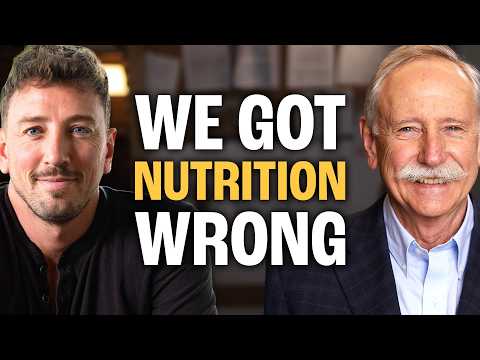
I’ve listened to one third of it, very interesting but sometimes I lose track of started videos.
willet and Gardner, combined together, are maybe the best sources to design a healty diet.
I tried to have Gemini3pro suggest an optimum daily diet based on the video. However, I used Gemini’s GEMS similar to GPT’s projects and my master prompt includes suggestions from Longo and Attia. This may have influenced the answer. I report it as a whole because in Gemini’s GEM I have not a share link. Interesting anyway because it uses Willet’s reccomenations as a foundation, then includes consensus and an actionable diet plan.
Based on an extensive analysis of Dr. Walter Willett’s recent communications (including the specific YouTube interview provided), his seminal work with the EAT-Lancet Commission, and cross-referencing with the consensus opinions of leading longevity experts (Longo, Fontana, Attia), here is a detailed, evidence-based dietary protocol for a healthy, active 65-year-old male.
Probability of Health Benefit: >90% for cardiovascular disease (CVD) reduction; >80% for metabolic stability; Moderate-High uncertainty regarding optimal protein thresholds for maximal muscle retention vs. mTOR inhibition in this specific age bracket (65+).
The Core Philosophy:
Dr. Willett’s approach, often described as the “Planetary Health Diet” or a “Traditional Mediterranean” pattern, is characterized by high unsaturated fats, moderate-to-high plant protein, and low glycemic load.
For a 65-year-old male, a critical physiological inflection point exists. Unlike middle-aged adults, seniors face the risk of sarcopenia (muscle loss). Therefore, while Willett emphasizes plants, we must integrate the “Longo Rule” (Valter Longo), which suggests increasing protein intake slightly after age 65 to preserve lean mass and immune function.
Caloric Target: ~2,200–2,500 kcal (Adjust for activity level).
Macronutrient Split (Approximate):
In the provided video, Willett re-emphasizes:
To maximize Healthspan (living healthy) and Longevity (living long):
Confidence Level: High. This approach triangulates the epidemiological massive data sets of Willett (Harvard) with the mechanistic biology of Longo and the clinical pragmatism of Attia.
Willett claims there isn’t much data on legumes.
He actually prioritizes nuts around meals it sounds like, feels a bit unique. Seeds are good as well.
I went thru the whole interview, and I think the actionable quality is exceptionally good. Walter Willet is THE king of epidemiological nutrition, reasons in cool and objective terms, illustrating both evidence and the eventual issues about evidence in neutral terms. No bombastic affirmations like some other influencers, even though credible.
BEANS & LEGUMES: considering how much their benefits have been touted by other very eminent personalities (Valter Longo for example, the blue zones narrative, Dr. fuhrman), the epidemiological evidence would seem underwhelming, although in the words of WW it may be due to scarcity of data.
NUTS & SEEDS: Here the epidemiological studies seem to be overwhelmingly suggestive of extensive benefits. This in contradiction to the most extreme group of vegan lowfat doctors, whose narrative I find absolutely and inexplicably flawed.
DAIRY PRODUCTS: Here the epidemiological evidence is mixed. Best to eat lowfat products and add vegetable oils to the diet, and eat fermented products probably beneficial because of their contribute to gut biome. This I find is a group of foods which necessitates a strict evaluation of the INDIVIDUAL needs and tolerances.
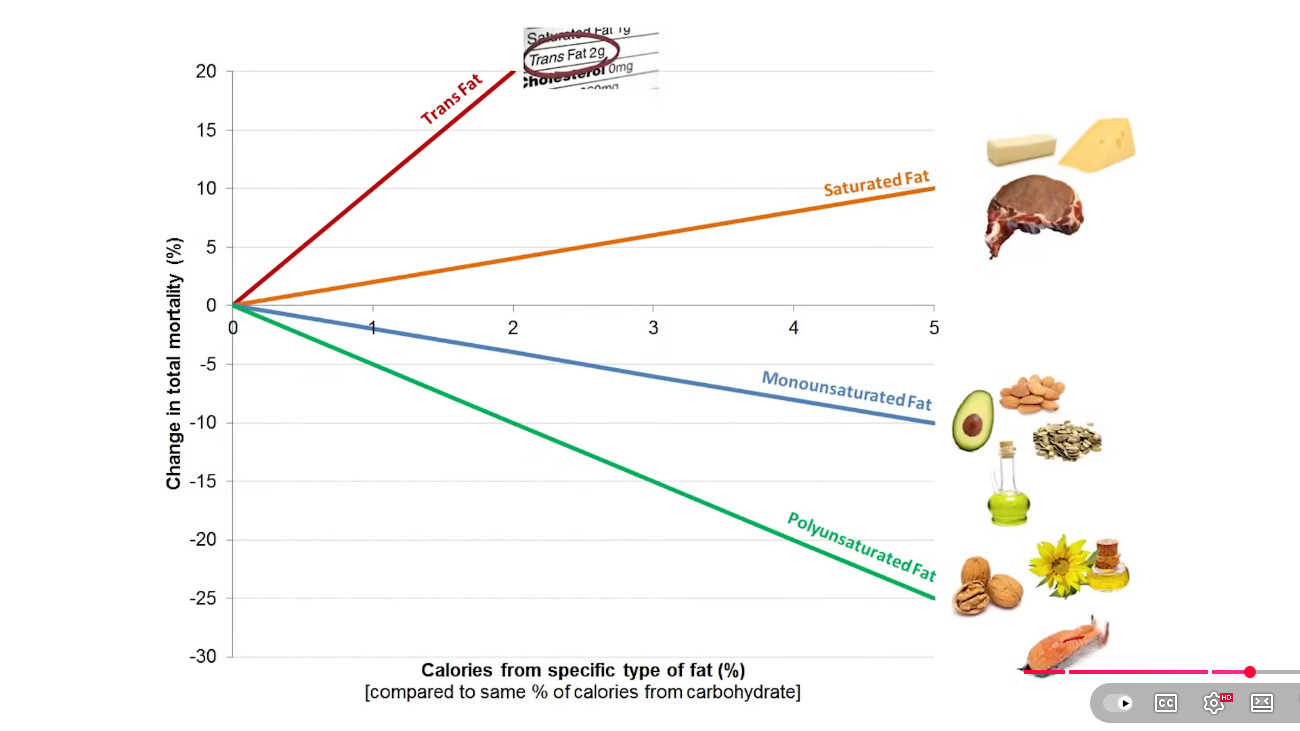
Viva Longevity altered his long term low fat diet to including nuts and oils after speaking with Walter Willet.
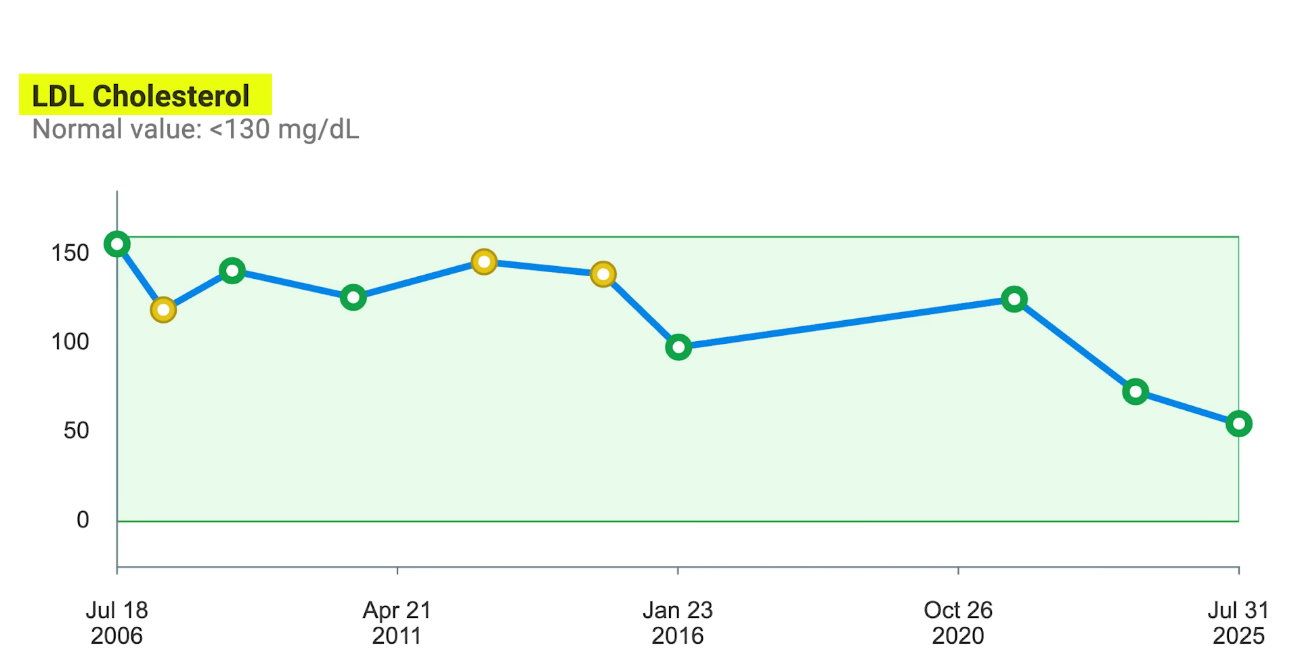
His stubborn LDL-C around 130-150 mg/dl dropped to 55 mg/dl. Triglycerides from 250 to 81.
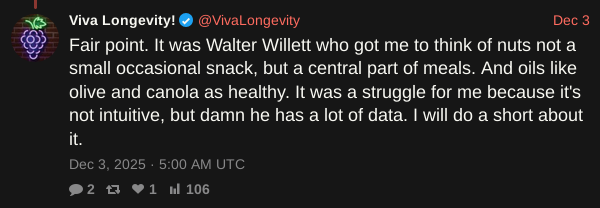
Very counterintuitive but it is easy to formulate some hypotheses, like Chris might be a hypersinthesizer of cholesterol, and some compounds present in oils, like phytosterols and others, counteract such a tendency.
Anyway, it is all so clear that extremism, be it the VLF vegan diet or the carnivore diet, carries the highest probability of hazard.
When listening to the ZOE podcast, I remember finding it so interesting/surprising that when you eat nuts, they are not nearly as fattening as we were all taught to believe because we don’t chew them up finely enough.
I’ve read articles where they estimated about 20% of oil remained encapsulated in the matrix and found undigested in stools. This doesn’t happen with nuts butters.
It has something to do with the fats not phytosterols. PUFA nukes apoB when replacing SFA, for instance. I’m not surprised there are weird effects when you eat very little dietary fats at all and replace carbs for mainly PUFA and MUFA.
Spinach is one of the highest-oxalate foods, with about 970 mg of oxalate per 100g of raw spinach. Oxalates bind with calcium in the kidneys to form calcium oxalate crystals, the most common type of kidney stone. Most healthy people (usually under 40) can safely eat spinach, especially if they stay hydrated and consume adequate calcium with meals. However if your eGFR is not perfect it’s better to exclude spinach from your diet.