In a significant advancement for longevity medicine, researchers at the Mayo Clinic have demonstrated that a brief, 5-day “hit-and-run” treatment with the senolytic cocktail Dasatinib and Quercetin (D+Q) can structurally rejuvenate the diabetic kidney. While previous human pilots confirmed D+Q clears senescent cells in adipose (fat) tissue, this study provides the first direct evidence that this regimen specifically targets the kidney—a critical organ of aging.
Crucially, the study reveals a novel mechanism: D+Q didn’t just remove “zombie cells”; it spontaneously restored the body’s intrinsic anti-aging defense proteins, α-Klotho and SIRT1, which are typically decimated by diabetes. This suggests that removing the toxic burden of senescence allows the organ to naturally “reset” its geroprotective machinery. Given that Diabetic Kidney Disease (DKD) accelerates systemic aging and mortality, this intervention offers a potential disease-modifying strategy that goes beyond merely controlling blood sugar.
Source:
- Open Access Paper: Senolytics, dasatanib plus quercetin, reduce kidney inflammation, senescent cell abundance, and injury while restoring geroprotective factors in murine diabetic kidney disease
- Journal/Date: eBioMedicine (part of The Lancet), February 2026
- Impact Evaluation: The impact score of this journal is ~9.0 (Impact Factor) and 15.0 (CiteScore), evaluated against a typical high-end range of 0–60+ for top general science. Therefore, this is a High impact journal (Q1 in Biochemistry/Genetics).
Part 2: The Biohacker Analysis
Study Design Specifications
- Type: Pre-clinical In vivo (Mouse) & In vitro (Human Cells).
-
Subjects: Male C57BL/6J mice (N=13 treatment, N=9 vehicle).
- Model: Streptozotocin (STZ)-induced Type 1 Diabetes (Toxic model of hyperglycemia).
- In Vitro Models: Human HK2 (kidney tubule), HUVEC (endothelial), and U937 (macrophage) cells.
Lifespan Analysis
- Lifespan Data: Absent. This study was a toxicity/injury recovery model terminated at Day 120 (approx. 4 months of age).
- Context: Standard C57BL/6J mice live ~900 days. This study does not support claims of “life extension” in healthy animals, but rather “healthspan restoration” in a disease model.
Mechanistic Deep Dive
This paper validates a “removal-restoration” hypothesis:
- The Trigger: Hyperglycemia drives kidney cells (tubular and endothelial) into senescence via the NF-κB pathway.
- The Damage: These cells secrete SASP (IL-6, IL-1$\beta$, Activin A), which shuts down the production of Klotho (a potent anti-aging hormone) and SIRT1 (a master metabolic regulator).
- The Fix: D+Q induces apoptosis specifically in these senescent cells (via SCAP network targeting).
- The Result: Once the “screaming” senescent cells are silenced, the remaining healthy tissue spontaneously upregulates Klotho and SIRT1, reducing fibrosis (TGF-β) and scarring (Collagen I).
Novelty
We knew D+Q killed senescent cells. We didn’t know that a short 5-day burst could restore Klotho levels in the kidney without exogenous Klotho replacement. This implies the kidney has the capacity to heal itself if the senescent “brake” is removed.
Critical Limitations
- Model Mismatch: STZ induces Type 1 Diabetes (insulin deficiency), whereas most biohackers/longevity seekers face metabolic dysfunction closer to Type 2 (insulin resistance).
- Short Duration: The “hit-and-run” effect was measured 20 days after dosing. We do not know how long the benefits last—does senescence return in 30 days? 60 days?
- Sample Size: Small groups (N=9−13) increase the risk of noise.
- No Functional Longevity: No grip strength, frailty index, or maximum lifespan data was recorded.
Part 3: Claims & Verification
| Claim | Verified Source (Live Search) | Evidence Level | Translational Gap |
|---|---|---|---|
| D+Q clears senescent cells (p16/p21 reduction) in humans. | Senolytics decrease senescent cells in humans (2019) | Level B (Pilot RCT) | None (Proven in adipose tissue). |
| D+Q restores α-Klotho and SIRT1 levels. | Senolytics… restore geroprotective factors (2026) | Level D(Murine) | Significant. Murine kidney response may not map 1:1 to humans. |
| D+Q reduces kidney fibrosis (TGF-β, Fibronectin). | Senolytics… reduce kidney inflammation (2026) | Level D(Murine) | Moderate. Fibrosis pathways are conserved, but timeline differs. |
| Dasatinib + Quercetin is safe for human use. | Dasatinib Safety Profile (FDA) | Level A(Safety Data) | CAUTION: Safe in protocols, but Dasatinib has severe toxicity risks (fluid retention, QT prolongation). |
| Diabetes induces senescence via NF-κB. | NF-kappaB activation… in diabetic nephropathy (2004) | Level C(Human Observational) | Low. Well-established mechanism. |
Part 4: Actionable Intelligence
The Translational Protocol (Rigorous Extrapolation)
- Regimen: “Hit-and-Run.” The study used only 5 days of dosing to achieve lasting effects 20 days later. This supports the intermittent dosing strategy (e.g., 2 days on, 14 days off) popularized in human trials to minimize toxicity.
Human Equivalent Dose (HED) Calculation
- Mouse Dose: Dasatinib (5 mg/kg) + Quercetin (50 mg/kg).
- Conversion Factor: Mouse Km (3) / Human Km (37) ≈0.081.
-
Dasatinib HED: 5×0.081=0.405 mg/kg.
- For 70kg Human: ≈28 mg.
-
Quercetin HED: 50×0.081=4.05 mg/kg.
- For 70kg Human: ≈283 mg.
- Critique: Standard human clinical trials (e.g., Hickson et al.) typically use 100 mg Dasatinib and 1000 mg Quercetin.
- Implication: The effective dose in mice is ~3.5x lower than the dose currently used in human trials. Biohackers should note that “more is not better” with chemotherapy agents; lower doses may be sufficient for senolytic activity.
Feasibility & ROI
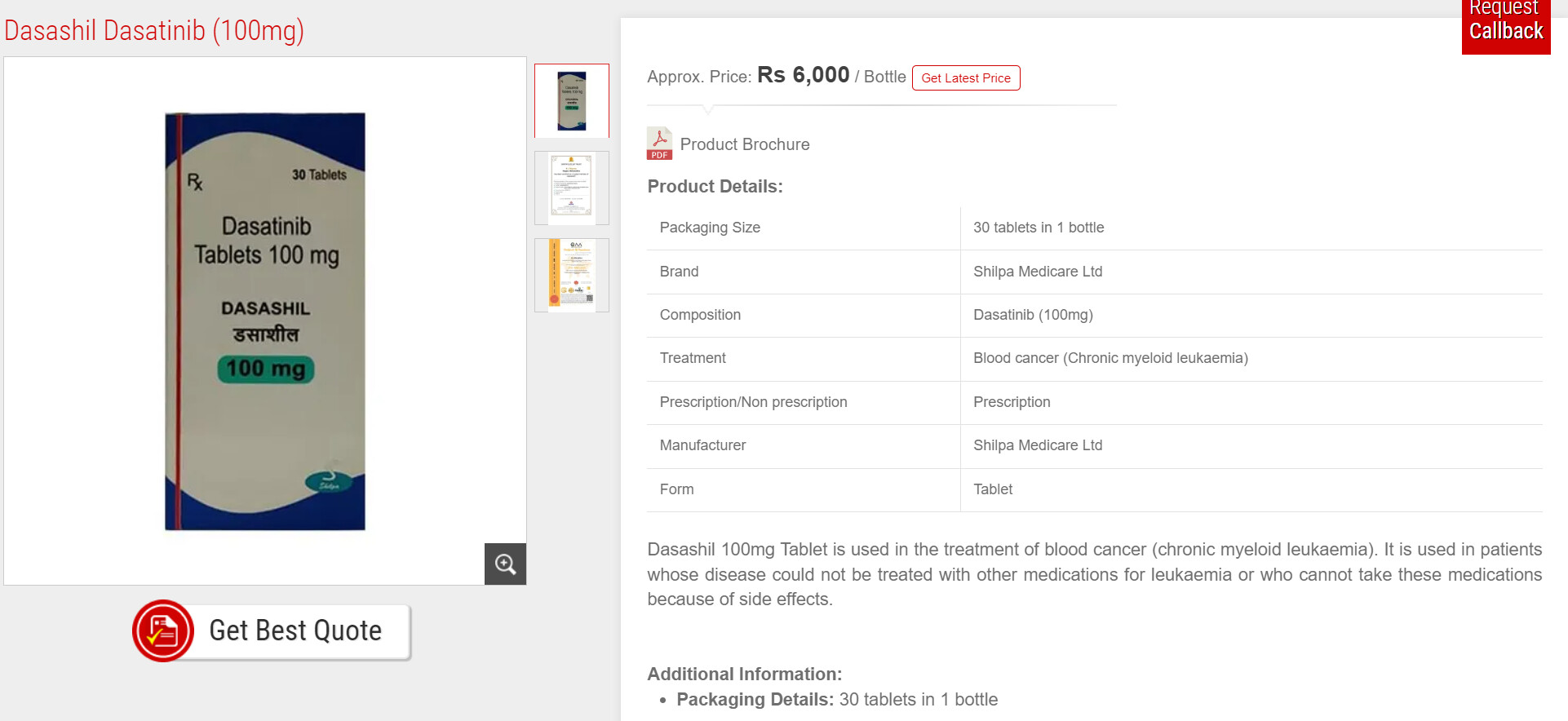
- Dasatinib (Sprycel): Prescription-only tyrosine kinase inhibitor. Cost: High (). Availability: Difficult (RX required). Note: inexpensive (and available without prescription) from Indian Online Pharmacies such as those listed here: Buy Rapamycin Online - List of Reliable Pharmacies
- Quercetin: Over-the-counter flavonoid. Cost: Low ($). Bioavailability: Poor. Must use phytosome or liposomal formulations to match the “oral gavage” efficiency.
- ROI: High risk, potentially high reward for specific DKD indications. Not recommended for casual “anti-aging” without medical supervision due to Dasatinib toxicity.
Safety Monitoring (Mandatory)
If considering this protocol (under medical supervision):
- ECG: Monitor for QTc prolongation (a known Dasatinib side effect).
- CBC: Monitor for myelosuppression (low white blood cells/platelets).
- Pulmonary: Watch for shortness of breath (pleural effusion risk).
Part 5: The Strategic FAQ
1. Is Dasatinib essential, or can I just take high-dose Quercetin? Answer: Dasatinib is likely essential for the kidneybenefits shown here. Quercetin targets endothelial cells, but Dasatinib specifically targets senescent adipocyte progenitors and likely the tubular cells involved in this study. The synergy (D+Q) is what drives the broad-spectrum clearance. Quercetin alone is a weak senolytic.
2. I take Rapamycin. Can I combine it with D+Q? Answer: Use caution. Rapamycin inhibits mTOR (an anabolic signal), while D+Q induces apoptosis in stressed cells. There is a theoretical conflict: Rapamycin might “protect” senescent cells from apoptosis by suppressing the translation of pro-apoptotic proteins. Strategy: Cycle them. Pause Rapamycin for 1-2 weeks before and during the D+Q “hit,” then resume Rapamycin after the “run” phase.
3. Will this work for non-diabetic kidney aging? Answer: [Confidence: Medium] Likely yes. The pathways identified (p16/p21 accumulation, loss of Klotho) are universal features of renal aging, not just diabetes. However, the effect size might be smaller in non-diabetic kidneys where the inflammatory “fire” is less intense.
4. How often should this “Hit-and-Run” be repeated? Answer: Unknown. Human trials often use a cadence of 2 days every 2 weeks or 3 days every month. Given the toxicity of Dasatinib, the lowest effective frequency is optimal. This study showed benefits persisted for 20 days after a single 5-day course.
5. Does D+Q interact with Metformin? Answer: Unlikely to have a negative interaction. In fact, Metformin (an AMPK activator) may help prevent the formation of new senescent cells after D+Q clears the old ones. They attack the problem from opposite ends (prevention vs. clearance).
6. What about Fisetin? Is it a safer alternative? Answer: Fisetin is a flavonoid structurally similar to Quercetin but with higher senolytic potency in some tissues (like fat). However, this specific study highlights the restoration of Klothousing D+Q. We lack head-to-head data confirming if Fisetin achieves the same Klotho restoration in the kidney.
7. Why did the study mention “Sex Differences”? Answer: The study explicitly excluded female mice because females are historically resistant to STZ-induced diabetes. This is a major limitation—we do not know if D+Q is as effective in female kidneys, which have different hormonal protection profiles.
8. Can I use SGLT2 Inhibitors (Jardiance/Farxiga) instead? Answer: SGLT2 inhibitors are the current “Standard of Care” for DKD and have proven mortality benefits (Level A evidence). D+Q is experimental (Level D/B). Do not replace SGLT2i with D+Q. SGLT2i reduces glomerular pressure; D+Q clears cellular debris. Theoretically, they could be complementary.
9. What blood tests confirm it’s working? Answer: Standard Creatinine/eGFR are lagging indicators. You would need to look at Cystatin C (more sensitive for kidney function) and potentially Urine Albumin-to-Creatinine Ratio (UACR). A reduction in hsCRP and IL-6 would confirm the anti-inflammatory (SASP-reduction) effect.
10. Is “Phytosome” Quercetin necessary? Answer: Yes. The study used oral gavage, forcing high absorption. Standard Quercetin has <2% bioavailability. To mimic the “drug-like” effects seen in mice, you must use a form with enhanced absorption (e.g., phytosome, liposomal, or enzymatic modification) to achieve therapeutic serum levels.ss