Keurig pods usually contain a small paper filter.
2 Likes
4 surprising (and evidence-based) health benefits of drinking coffee
Hundreds of studies have shown that a cup of joe — or more! — every day may protect against some major diseases.
In the decades since, hundreds of studies have painted coffee in a different light, showing that it may be protective against some major diseases, including several cancers. As scientists began to take a closer look at the compounds in coffee, they discovered that a number of them have anti-inflammatory and anti-cancer properties.
One large meta-analysis that reviewed decades of research on 67 health outcomes concluded that for most adults, drinking coffee on a daily basis was “more likely to benefit health than harm” it. On average, the analysis found, people who drink several cups of coffee a day are nearly 20 percent less likely to die early compared with people who drink little or no coffee.
We reviewed the data and interviewed experts to find out which of the health benefits of coffee consumption are backed by the strongest evidence. Here’s what we found.
The four evidence-backed benefits it highlights:
Liver health — One of the most consistent findings. Coffee drinkers show lower rates of liver cancer, fatty liver disease, and cirrhosis, plus healthier liver enzyme levels. A ~500,000-person, 11-year study found ~21% lower risk of chronic liver disease and ~49% lower risk of dying from it. Benefits appeared with as little as one cup/day, peaking around 3–4 cups, and held across espresso, instant, and decaf. Chlorogenic acid (improving insulin response) and anti-inflammatory compounds are proposed mechanisms.
Type 2 diabetes — Three-to-four cups/day is associated with ~25% lower risk, with roughly a 6% risk reduction per daily cup up to about six. The dose-response is bidirectional: increasing intake lowered risk (~11%), decreasing it raised risk (~17%); tea showed no equivalent effect. Polyphenols like chlorogenic acid improve insulin sensitivity and appear to protect pancreatic beta cells.
Parkinson’s disease — Attributed largely to caffeine. A meta-analysis (~1 million people) found up to ~28% lower risk in coffee drinkers; tea drinkers saw a similar ~26% reduction. Caffeine may protect the dopaminergic neurons whose degeneration drives the disease.
More physical activity — A 2023 NEJM crossover study (100 participants, wearables) found people took ~1,000 extra steps on coffee days. Since an added 1,000 daily steps maps to roughly a 6–15% mortality reduction, the authors suggest increased movement may partly explain coffee’s mortality benefit.
Read the full article: Surprising (and evidence-based) health benefits of drinking coffee
4 Likes

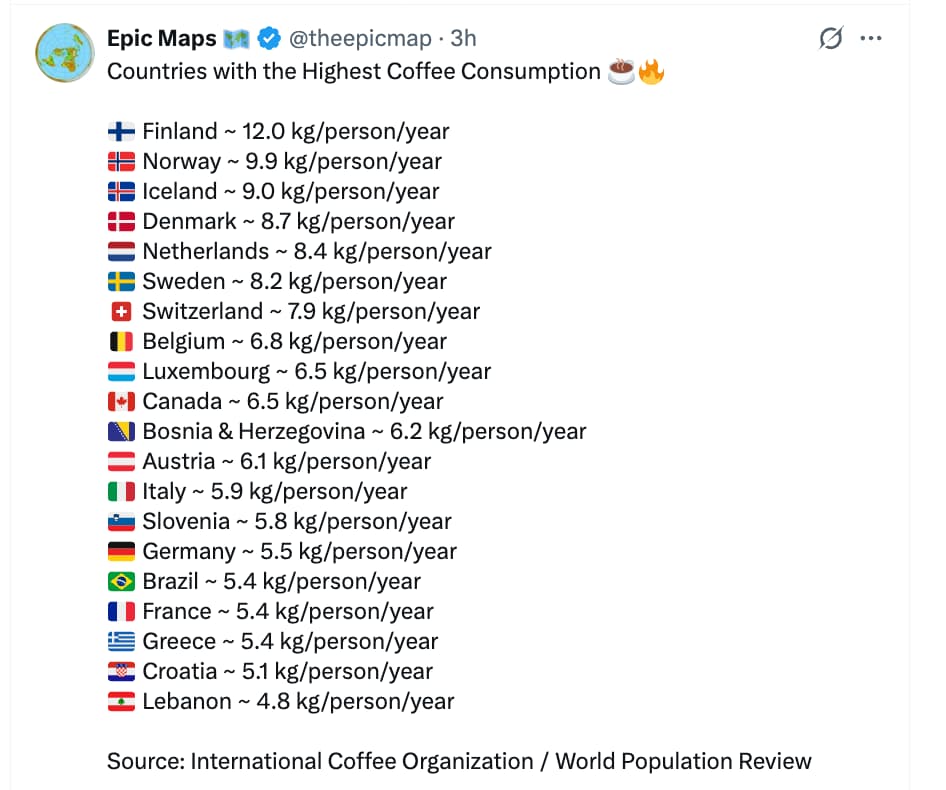
Perhaps someone could do a plot of national average lifespan vs coffee consumption ?
“Drink coffee live longer!”
FWIW…
AI-generated answer.
Please verify critical facts.
…meaning 12 kg can generally produce between 960 and 1,500 cups of coffee.
For a daily drinker consuming 2 coffees per day , a 12 kg supply would last approximately 120 to 240 days (4 to 8 months), depending on the dose size.
AI-generated answer.
Please verify critical facts.
1 Like
Can AI do math that wrong?
It would be 480-750 days which is a unusual error for a person to make and improbable that a computer would make.
I guess you get to the 480 and divide by 4 again and forget the 1500 or 750 ever existed?
Google AI had 600-1500 for me which is 50 to 125 per kilo.
2 Likes
Curious how much I drink / yr. Usually 2 cups/day ( 730 cups/yr ) run through a single Melitta-type filter, fresh ground, medium roast. About 12g ± / day, so about 4.5kg/yr ±. Right now 12kg, for me, would last ~857 days @ 2 cups/day. But if I had a cuppa or two (or more) in the middle of many days (like when I was still working), I can imagine that 12kg would last half that long.
2 Likes
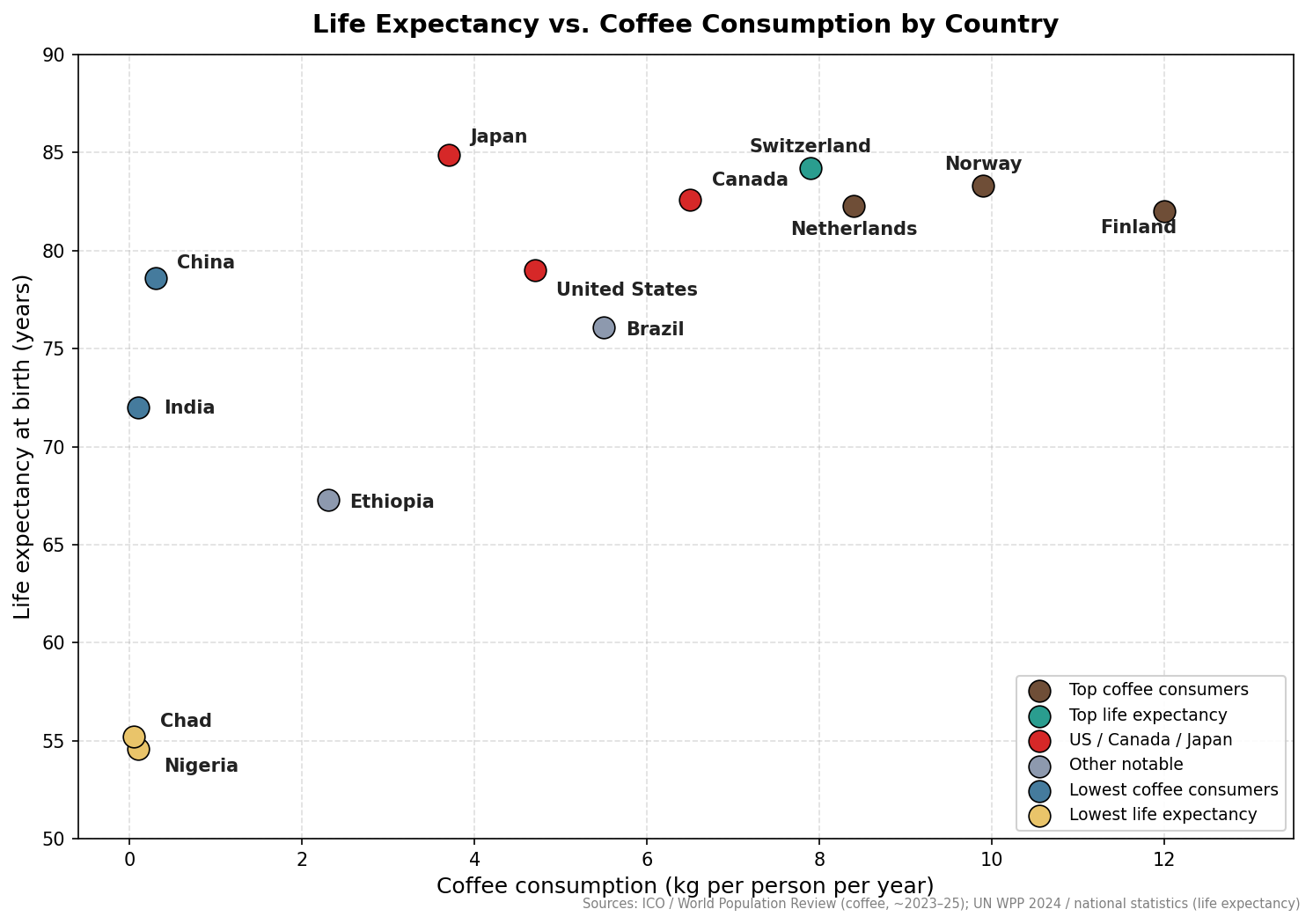
This is what Claude did for me, I specifically asked for US, Canada & Japan to be included due to personal interest. Its conclusion was:
“ The pattern you’ll notice in the plot is really a wealth story, not a coffee story: rich countries both drink more coffee and live longer, while Japan is the fun outlier — highest life expectancy among major nations on a fairly modest 3.7 kg habit.”
My eye sees a point around 8 kg where there isn’t additional benefit. Also perhaps differences between populations (genetics, diet or something else) where there are separate relationships for European, Asian & (maybe) African usage.
3 Likes
Japan drinks a lot of tea which has similar health benefits to coffee. So, it’s not an outlier if you include tea.
2 Likes
Right, the data seems to be coffee or tea with some studies showing benefit for one versus the other but consistently either is better than neither.
3 Likes
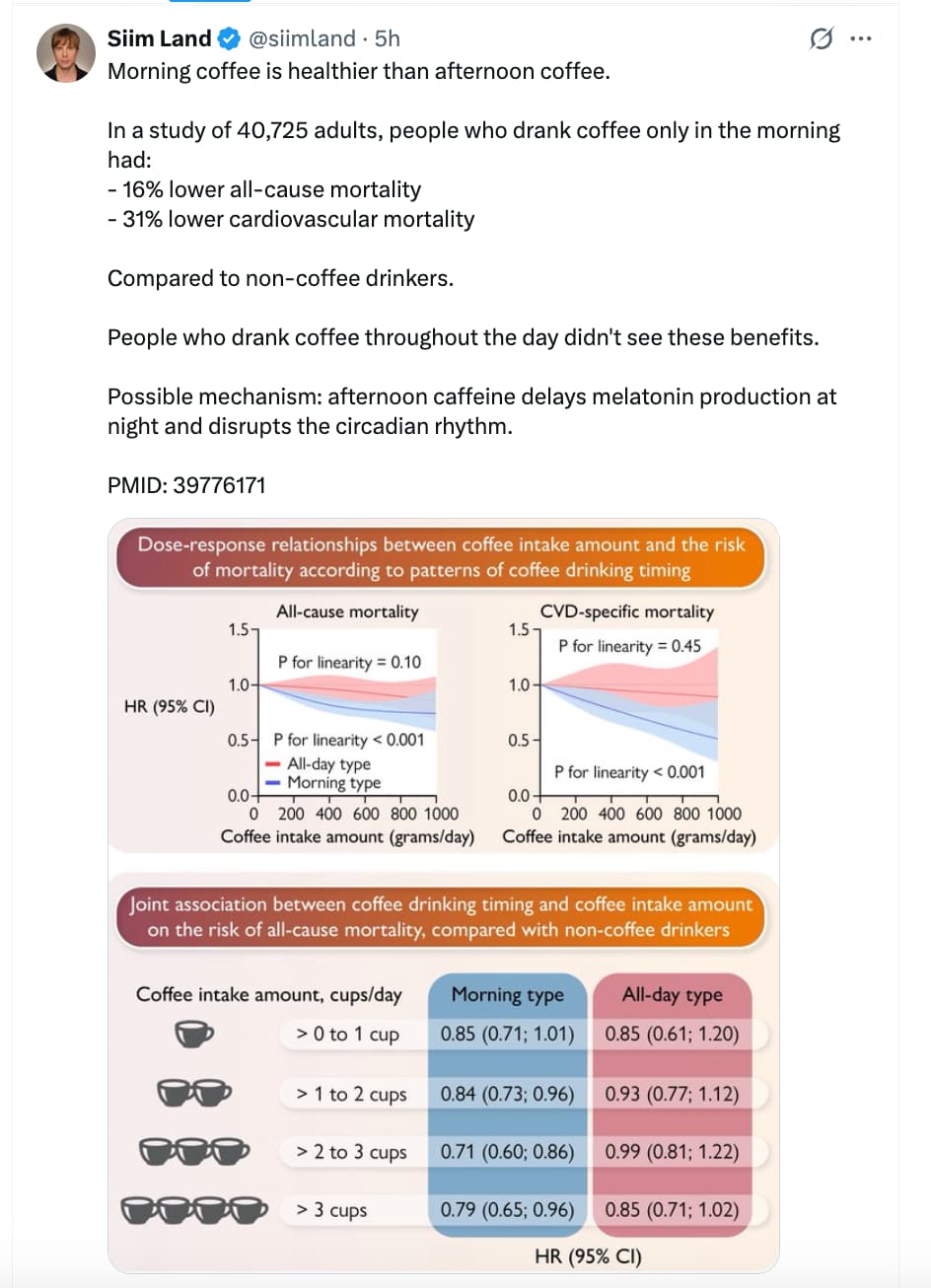
How much coffee is best for the heart? I breakdown the AHA guidelines (via Vinay Prasad MD MPH)

4 Likes
I haven’t seen him before… I like him!
3 Likes
Has anyone looked into or tried Rutecarpine? It supposedly causes the body to metabolize caffeine faster.
Theoretically it is something we could take before bed to eliminate caffeine from impacting sleep though the evidence for this isn’t super great. It is mechanistically interesting and for a long time I’ve desired a tool like this.
This is something already available over the counter. It is also possibly liver toxic so this is not a recommendation, just something I found fascinating.
Wikipedia entry:
"Rutecarpine or rutaecarpine is a COX-2 inhibitor isolated from Tetradium ruticarpum, a tree native to China.[1] It is classified as a non-basic alkaloid.[2]
In contrast to synthetic COX-2 inhibitors like etoricoxib and celecoxib, rutecarpine does not appear to cause negative effects on the cardiovascular system.
Microsome studies suggest that rutaecarpine may be at least a weak inhibitor of CYP1A2, CYP2C9, CYP2C19, CYP2E1, and CYP3A4 enzymes.[4][5] At the same time, it is believed to be a strong inducer of CYP1A2 and CYP1A1.[6]
Rutecarpine metabolism is complex and proceeds along several routes, primarily involving the addition of a single hydroxyl group by CYP3A4. Six monohydroxylated and four dihydroxylated metabolites have been identified. To a much lesser extent, rutecarpine may be metabolized by CYP2C9 and CYP1A2, according to liver microsome studies.[7]
Rutecarpine has been shown to decrease the overall bioavailability of caffeine in rats by up to 80 percent,[8] likely through induction of enzymes CYP1A2 and CYP2E1.[9]" Rutecarpine - Wikipedia
Theoretically if it is the induction of both CYP1A2 and CYP2E1 then inducing both of these via other methods could have a similar caffeine metabolism effect. Here are some things that can induce both of these enzymes (not making claims of efficacy or safety):
CYP1A2 inducers (mostly via AhR activation):
- Cigarette smoke (PAHs) — one of the strongest known inducers, clinically relevant for smoking-cessation dosing adjustments
- Char-grilled/smoked meat (PAHs, heterocyclic amines)
- Cruciferous vegetables — indole-3-carbinol and its condensation product (indolo[3,2-b]carbazole) are potent AhR ligands
- Omeprazole and other PPIs (also AhR-mediated)
- Rifampicin (though its dominant action is PXR-mediated CYP3A4 induction; CYP1A2 induction is secondary)
- Carbamazepine, phenytoin (broad-spectrum inducers via CAR/PXR crosstalk)
- Modafinil
- Chronic high-protein, low-carbohydrate diets
CYP2E1 inducers (mostly via substrate-mediated protein stabilization rather than classic transcriptional induction):
- Chronic ethanol consumption — the textbook inducer, works partly by stabilizing the enzyme against proteasomal degradation rather than upregulating transcription
- Isoniazid — inhibits acutely but induces with chronic dosing (this is why isoniazid + alcohol hepatotoxicity risk is additive/synergistic)
- Fasting, starvation, and ketosis — elevated ketone bodies (acetone, β-hydroxybutyrate) induce CYP2E1
- Uncontrolled diabetes/obesity, particularly with elevated ketones
- High-fat, low-carbohydrate/ketogenic diets
- Pyrazole and pyridine (research compounds, not relevant outside lab contexts)
There is evidence for the above inducing those enzymes though it is not equal among all of them. I’ll also note that most of these things are incredibly unhealthy lol. I don’t think taking modafinil at 5pm to metabolize caffeine faster is the move.
The only ones worth trying at all are cruciferous vegetables and high protein diet. Even if fasting worked it’s not something that can be used all the time.
Cruciferous veg - Indole-3-carbinol induction of CYP1A1, CYP1A2, and CYP3A1 activity and gene expression in rat liver under conditions of different fat content in the diet pubmed.ncbi.nlm.nih.gov
High protein - The effect of obesity, macronutrients, fasting and nutritional status on drug-metabolizing cytochrome P450s: a systematic review of current evidence on human studies pubmed.ncbi.nlm.nih.gov
There are 60 studies that mention Rutecarpine on Pubmed. I’ve gone through and found ones that seem relevant to what health effects it might have. Only a few of them are specifically about caffeine metabolism but I think knowing these other effects can be useful if people want to experiment with this for its effects on caffeine.
Many of them are Chinese studies, which I know some people here are sceptical of their validity. Just a heads up on that.
CAFFEINE RELATED STUDIES:
“Following oral administration of 80 mg/kg rutaecarpine for three consecutive days, caffeine (20 mg/kg) was given orally. Plasma and urine were collected serially for up to 24 h and the plasma and urine concentrations of caffeine and its metabolites were measured, and compared with those in control rats. The areas under the curve of both caffeine and its three major metabolites (paraxanthine, theophylline, and theobromine) were significantly reduced by rutaecarpine, indicating that caffeine was rapidly converted into the desmethylated metabolites, and that those were also quickly transformed into further metabolites via the hydroxyl metabolites due to the remarkable induction of CYP1A2 and 2E1. The significant induction of ethoxyresorufin O-deethylase, pentoxyresorufin O-depentylase, and p-nitrophenol hydroxylase strongly supported the decrease in caffeine and its major metabolites in plasma, as well as in urine. These results clearly suggest that rutaecarpine increases the metabolism of caffeine, theophylline, theobromine, and paraxanthine by inducing CYP1A2 and CYP2E1 in rats.” - Effects of rutaecarpine on the metabolism and urinary excretion of caffeine in rats Effects of rutaecarpine on the metabolism and urinary excretion of caffeine in rats | Archives of Pharmacal Research | Springer Nature Link
“Orally administered rutaecarpine at 100 mg/kg in suspension form significantly decreased the oral systemic exposure and mean residence time of caffeine and its metabolites (paraxanthine, theophylline and theobromine), as early as 3 h before oral caffeine administration in rats. Similarly, the systemic exposure of caffeine and its metabolites was also decreased when caffeine was given intravenously, though the effect was less pronounced compared to when caffeine was given orally. Furthermore, in vitro MROD data also showed that as early as 3 h after oral rutaecarpine administration, CYP1A2 activity in the liver tissue was significantly increased (almost 3-fold compared to control rats) and the highest activity (7-fold compared to control) was found in the liver of rats in 12-h treatment group.” - Time effect of rutaecarpine on caffeine pharmacokinetics in rats Time effect of rutaecarpine on caffeine pharmacokinetics in rats - PMC
NON-CAFFEINE RELATED STUDIES:
“In summary, Rut alleviates lipid accumulation and oxidative stress by promoting activation of the AMPK/ULK1 signaling pathway and autophagy, providing foundational theoretical and experimental support for its potential application in treating lipid metabolic disorders.” - Rutaecarpine Attenuates Hepatic Lipid Accumulation and Oxidative Stress by Activating Autophagy Through the AMPK/ULK1 Pathway pubmed.ncbi.nlm.nih.gov
“Collectively, RUT attenuated inflammation, airway remodeling, and oxidative stress in OVA-induced asthmatic mice by inhibiting the NF-κB pathway, highlighting its potential as an adjunct therapy for pediatric asthma and providing a theoretical basis for future clinical translation.” - Rutaecarpine Attenuates Ovalbumin-Induced Asthma in Mice by Regulating the NF-κB Pathway pubmed.ncbi.nlm.nih.gov
“Collectively, our findings demonstrate that Rut ameliorates AP by upregulating EZH2, thereby enhancing H3 methylation and suppressing FBXW11 expression.” - Rutaecarpine targets F-box and WD repeat domain containing 11 to inhibit inflammatory infiltration and alleviate acute pancreatitis pubmed.ncbi.nlm.nih.gov
“Validation experiments confirmed that rutaecarpine reversed LPS-induced fibrotic changes and modulated TRPV1 and Cx43 expression in a dose-dependent manner. TRPV1 negatively regulated Cx43 in liver fibrosis, and rutaecarpine alleviated liver fibrosis by modulating the TRPV1/Cx43 axis.” - Rutaecarpine alleviates liver fibrosis by modulating the TRPV1/Connexin 43 axis: A study based on transcriptome data, single-cell sequencing data, and cell experiments pubmed.ncbi.nlm.nih.gov
“These findings demonstrate that RUT protects against aspirin-induced gastric mucosal injury by suppressing oxidative stress and inhibiting ferroptosis signaling pathways.” - Rutaecarpine alleviates aspirin-induced gastric injury via oxidative stress and ferroptosis inhibition pubmed.ncbi.nlm.nih.gov
“RUT alleviated MSU-induced peritonitis and inhibited the TNFR1-MAPK/NF-κB and NLRP3 inflammasome signaling pathway to attenuate gouty inflammation induced by LPS/MSU in THP-1 macrophages, suggesting that RUT could be a potential therapeutic candidate for gout.” - Rutaecarpine Attenuates Monosodium Urate Crystal-Induced Gouty Inflammation via Inhibition of TNFR-MAPK/NF-κB and NLRP3 Inflammasome Signaling Pathways pubmed.ncbi.nlm.nih.gov
“Notably, in vivo experiments demonstrated that RUT significantly inhibits mouse NSCLC tumor growth in mice, exhibiting anti-tumor activity by elevating CD8+ T cells. These findings strongly support RUT as a promising anti-cancer drug for NSCLC.” - Rutecarpine Suppresses Non-Small Cell Lung Cancer Progression Through Activating the STING Pathway and Elevating CD8+ T Cells pubmed.ncbi.nlm.nih.gov
“Network pharmacology analysis indicated that Rut exerts its therapeutic effects through the PPAR signaling pathway and the lipid pathway. Molecular docking results revealed that Rut forms stable protein-ligand complexes with PPARα and PPARγ. Animal experiments showed that Rut improved motor function in PD mice, protected dopaminergic neurons, ameliorated lipid metabolism disorders, and reduced neuroinflammation. This study identified the critical molecular mechanisms and therapeutic targets of Rut in the treatment of PD, providing a theoretical foundation for future investigations into the pharmacodynamics of Rut as a potential anti-PD agent.” - Revealing rutaecarpine’s promise: A pathway to parkinson’s disease relief through PPAR modulation pubmed.ncbi.nlm.nih.gov
“The study findings demonstrate that rutecarpine ameliorates cisplatin-triggered nephrotoxicity through its antioxidant and anti-inflammatory properties, suggesting that rutecarpine supplementation alongside cisplatin treatment could potentially reduce nephrotoxicity in cancer patients.” - Ameliorative effect of rutecarpine supplementation against cisplatin-induced nephrotoxicity in rats via inhibition of monocyte chemoattractant protein-1, intercellular adhesion molecule-1, high-mobility group box 1, and nuclear factor kappa B pubmed.ncbi.nlm.nih.gov
“In summary, this study is the first to find that Rut can suppress ECM production and inflammation in HG-treated SV40 cells by inhibiting the activation of TGF-β1/Smad3 and NF-κB signaling pathways and targeting CK2α. Thus, Rut can potentially become a novel treatment option for DN.” - Rutaecarpine alleviates inflammation and fibrosis by targeting CK2α in diabetic nephropathy pubmed.ncbi.nlm.nih.gov
As interesting as this is, it seems it probably won’t work how I’d like it to.
One other thing I discovered recently is paraxanthine which is a metabolite of caffeine. It has a much shorter half life than caffeine obviously, but it also seems to have less jitteriness and other negatives caffeine can have. Perhaps instead of seeking to eliminate caffeine via something like rutecarpine we could simply replace coffee/caffeine intake after 11am with paraxanthine.
I tried a “caffeine free” pre-workout sports drink. It contained paraxanthine. It was stimulating and felt good, but it didn’t cause sleep issues.
3 Likes
Cox 2 inhibitors are interesting for possibly treating atrophic gastritis and preventing stomach cancer.
rutecarpine might have some benefit in this context.