I’m sure that someone somewhere has already tried that. And if it was any good, we’d be drinking it by now.
But, who knows?
I’m sure that someone somewhere has already tried that. And if it was any good, we’d be drinking it by now.
But, who knows?
Guess I won’t be swallowing coffee beans… read on!
AI Overview
While humans cannot replicate civet digestion internally, scientists and food companies have developed external methods to mimic the process and produce similar “animal-free” coffee. The fundamental differences between the human and civet digestive systems mean a person cannot simply consume coffee berries and have the same outcome.
Key differences between civet and human digestion
The unique traits of the civet’s digestive tract are what produce the distinct flavor of kopi luwak (civet coffee).
| Feature | Civet digestive tract | Human digestive tract |
|---|---|---|
| Digestion speed | The civet’s gut passage time is relatively fast, under 9 hours. | Human digestion is much slower. |
| Key enzymes | Digestive enzymes in the civet’s stomach break down proteins in the coffee beans that contribute to bitterness. Research also shows that specific bacteria, such as Gluconobacter, are highly abundant in the civet’s gut and play a key role in fermentation. | The human digestive system metabolizes caffeine primarily through the liver enzyme CYP1A2, which affects the caffeine itself, not the bean proteins. Humans do not possess the same mix of enzymes and gut microbes to perform the crucial fermentation process that modifies the beans. |
| Aromatic compounds | The civet’s digestive process significantly alters the chemical composition of the beans, yielding a different profile of fats and flavor-enhancing compounds. | The human system is not designed to ferment and modify the coffee beans in this way. The beans would likely be excreted intact but without the unique fermentation effect. |
| Ethical concerns | Consuming coffee processed by a civet encourages the inhumane practice of keeping the animals in captivity and force-feeding them. For this reason, many companies and animal rights groups actively discourage purchasing civet coffee. | While a human could conceivably consume and excrete coffee cherries, it is neither practical nor sanitary. Furthermore, a human digestive tract would not produce the desired flavor outcome. |
It is neither practical nor sanitary. Furthermore, a human digestive tract would not produce the desired flavor outcome.
While on the topic of  poop…
poop…
Why does pooping feel so good? | Live Science
I already mentioned a while back about an article on defecation before gym workout. Have found this a real plus.
Good news for coffee drinkers. Caffeinated coffee reduces atrial fibrillation.
How great is coffee consumption. Worth 5 extra years.
There’s this:
But, you dont have to be crazy to get the benefit.
Read nurses study below… 2016.
https://www.sciencedirect.com/science/article/pii/S002231662300651X
Just a general note - for any link you can delete all the tracking codes, etc. starting at the “?” mark, to make the links shorter and more useable, or go to the link and then select the URL before the “?”.
So your link above could be shortened to just this:
https://www.sciencedirect.com/science/article/pii/S002231662300651X
Thanks … I thought it was excessive.
Will use next time. Updated… yeah that works!
After the ? is the query parameters which is an instruction to the server. This can but normally won’t affect what is provided. It would be more likely to affect a search.
But is it the coffee or the caffeine? Are the same benefits derived from caffeine tablets?
And is it the coffee beans or the civet poop? Maybe the civet poop could be brewed into an expensive drink that’s celebrated by influencers.
Would think that it is the total coffee supplement.
Otherwise, they would say it’s caffeine and be done.
Well gaining 3-5 years of life expectancy in a population (those with psychiatric disorders) is quite interesting, though not quite the same as a population without this… I don’t quite fit this group, though have some depressive symptoms at times.
Looks like its the anti-oxidants and chlorogenic acid in coffee that make the difference. Still, being linked to a younger biological age is great news.
Hahaha… exactly.
The follow-up link… Coffee Consumption Is Positively Associated with Longer Leukocyte Telomere Length in the Nurses’ Health Study.
Shows it works for those with non-mental health issues too!
My morning Joe includes a scoop of taurine and creatine.
I was curious about this video and what Arthur Brooks had to say. I had not heard of this “90 minute delay” strategy with coffee, for better productivity and sleep, that is mentioned:
Adenosine Clearance Theory: Caffeine intake is strictly delayed 90 minutes post-waking. The goal is to allow the Cortisol Awakening Response (CAR) to naturally clear residual adenosine before blocking receptors.
See the full video summary and analysis after the video:
Source Material: Transcript (Likely featuring Arthur Brooks/Peter Attia or similar guests on Tim Ferriss Show)
Date of Review: February 14, 2026
The subject outlines a highly aggressive, pharmacologically intensive morning protocol designed to maximize neurocognitive output (focus/creativity) and maintain lean body mass under sleep-deprived conditions. The core thesis relies on adenosine manipulation (delayed caffeine) and saturation of high-energy phosphates (supraphysiological creatine) to offset fatigue, paired with a “feast-like” protein bolus to bypass anabolic resistance.
While the specific ingredients (creatine, caffeine, whey) are standard, the dosages are extreme outliers compared to general medical guidelines. The protocol advocates for ~4x the standard maintenance dose of creatine and a near-maximal safe daily dose of caffeine consumed in a single sitting. Scientifically, recent high-impact papers (2023-2024) validate the “anabolic uncapping” of protein and the cognitive benefits of multivitamins, effectively modernizing outdated nutritional dogma. However, the protocol is strictly for high-tolerance phenotypes; the stimulant load poses significant anxiety/HPA-axis risks for the average individual.
| Claim from Transcript | Scientific Reality (Current Data) | Evidence Grade | Verdict |
|---|---|---|---|
| “Creatine is really good when you don’t sleep [and for] creativity.” | Verified. Meta-analyses confirm creatine mitigates cognitive decline during sleep deprivation and stress. | Level A (Meta-Analysis) |
Strong Support See Prokopidis et al., 2023 |
| “High dose… 15 to 20 grams [creatine] a day.” | Debatable. Standard maintenance is 3-5g. 20g is safe for healthy kidneys but likely hits diminishing returns (excretion) after saturation. | Level C (Expert Opinion/Safe but Wasteful) |
Plausible / Excessive See Antonio et al., 2021 |
| “Delay caffeine… to clear adenosine endogenously.” | Mechanistically Sound, Clinically Unproven. Theoretically aligns with receptor kinetics, but no direct RCT confirms it prevents “crash” better than immediate intake. | Level E (Mechanism/Expert Opinion) |
Plausible See Huberman/Sapolsky (Theory) |
| “Limit of 30g protein… is old school research/not true.” | Verified. A landmark 2023 study showed 100g protein sustains muscle protein synthesis (MPS) for 12+ hours vs 25g. | Level B (RCT) |
Strong Support See Trommelen et al., 2023 |
| “Older adults absorb protein more effectively in a larger bolus.” | Verified. Elderly populations exhibit “anabolic resistance” and require higher per-meal doses (leucine threshold) to trigger MPS. | Level A (Systematic Review) |
Strong Support See Moore et al., 2015 |
| “Multivitamins… have neurocognitive protective benefits.” | Verified. The COSMOS-Mind and COSMOS-Clinic trials (2022-2024) showed significant memory benefits in older adults. | Level B (Large RCT) |
Strong Support See Vyas/COSMOS et al., 2024 |
| “380mg Caffeine [single dose]… easy to self-manage.” | Safety Warning. This nears the FDA daily limit (400mg) in one dose. High risk of anxiety, GI distress, and sleep disruption for slow metabolizers (CYP1A2). | Level E (Anecdote) |
Red Flag / Individual Variance See FDA Caffeine Safety |
1. Adenosine & The “Crash” Mechanism
2. Anabolic Resistance & Protein Distribution
3. Phosphocreatine Shuttle (The Brain Energy Battery)
FWIW, I’ve heard Huberman say the same thing. This week, I also heard Dr Michael Breus say it on Diary of a CEO podcast.
60-90 minutes is a bridge too far for me. Brush teeth, feed pets, have latte… no exceptions!
I take 4 cups of coffee in the morning with 10g of Creatine. I get up take a shower and get ready for work and have my coffee about 45 minutes after waking. I guess I should add a cup of water beforehand but I’m afraid I wouldn’t make it to work without having to take a rest stop. : 
Exactly, my early-morning routine consists of coffee and protein drinks. It does affect my morning shopping; I can’t get it all at once because the smaller stores either don’t have a restroom or they hide it, so I have to interrupt my planned shopping by returning home for a pit stop.
My usual breakfast is coffee and a protein drink.
I often try new (to me) protein drinks because I don’t like the bother of mixing them myself.
My new favorite because of flavor is Nurri, found at Costco, Sam’s Club, Amazon etc.
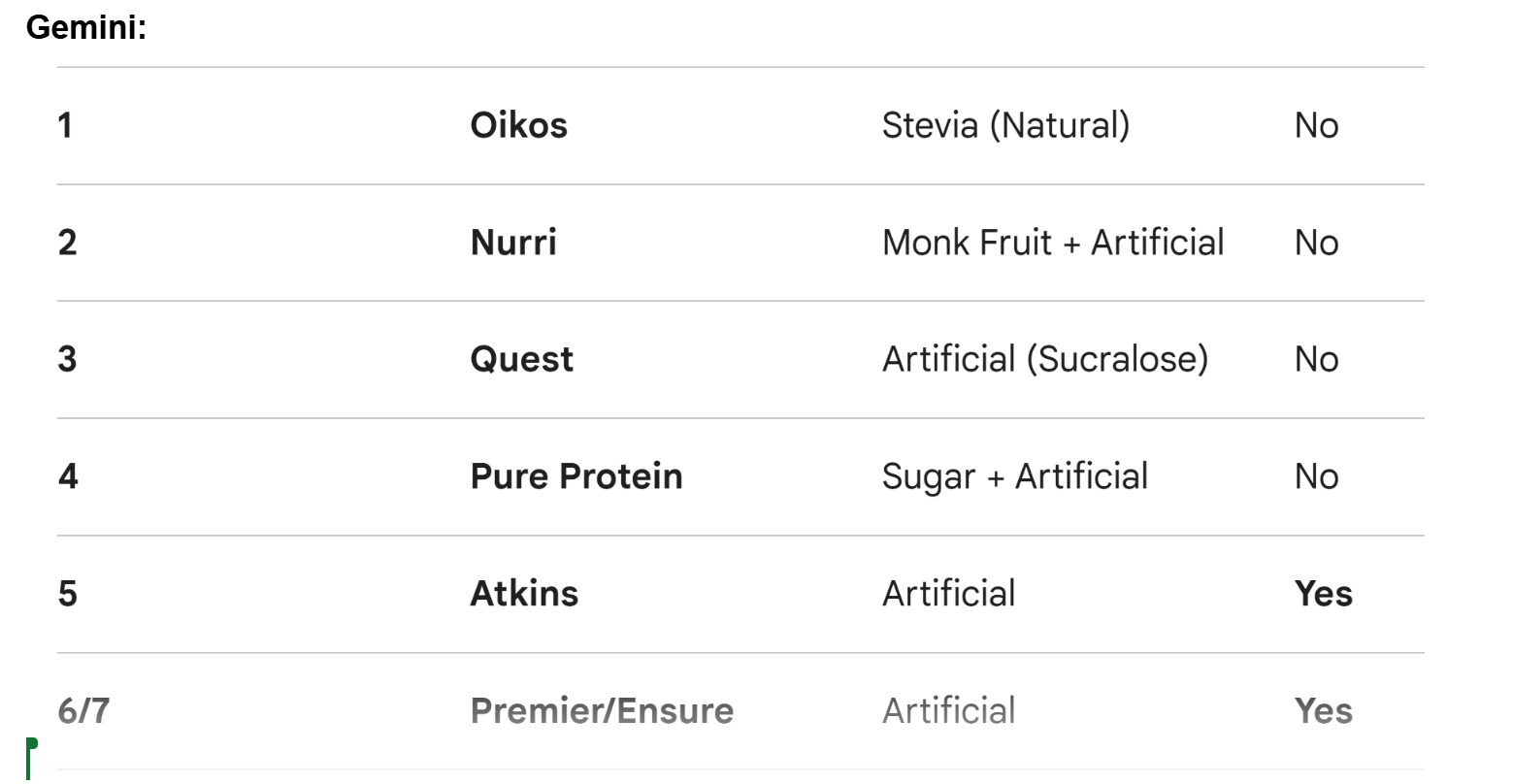
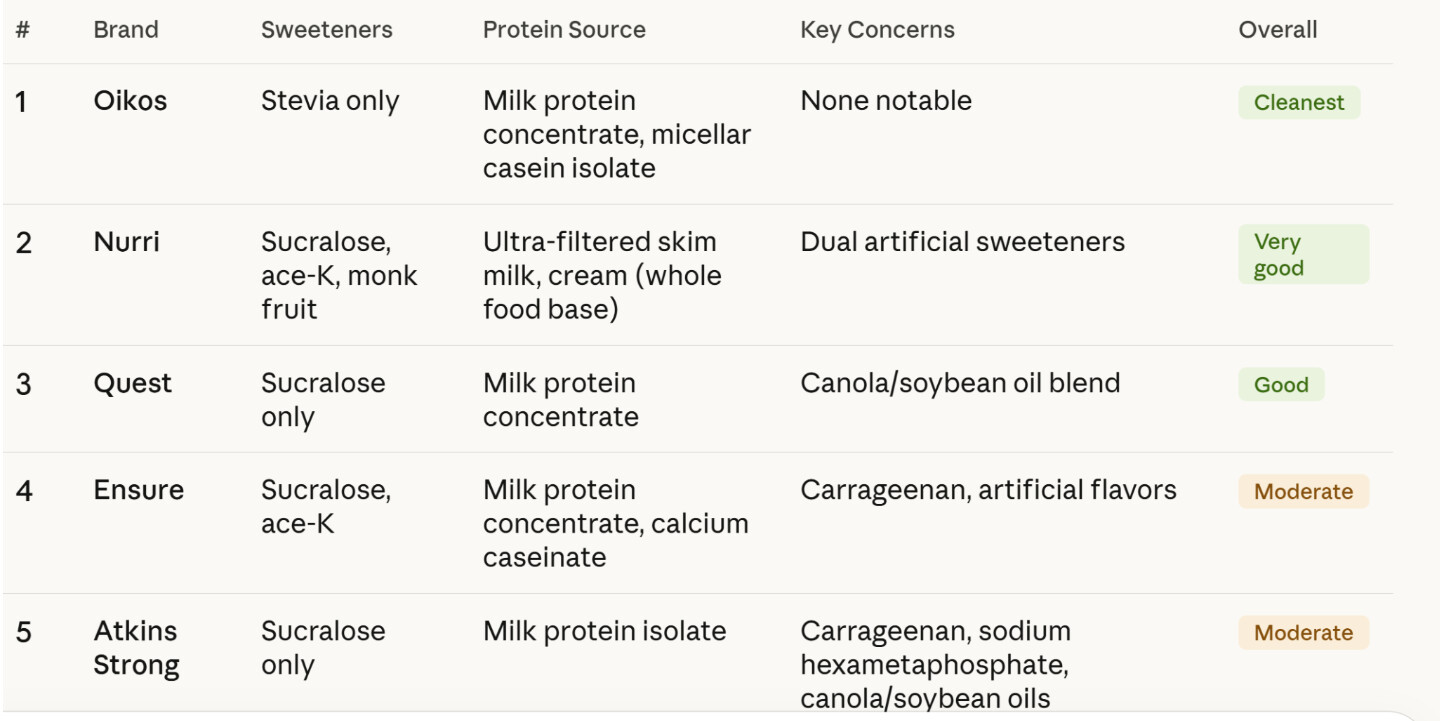
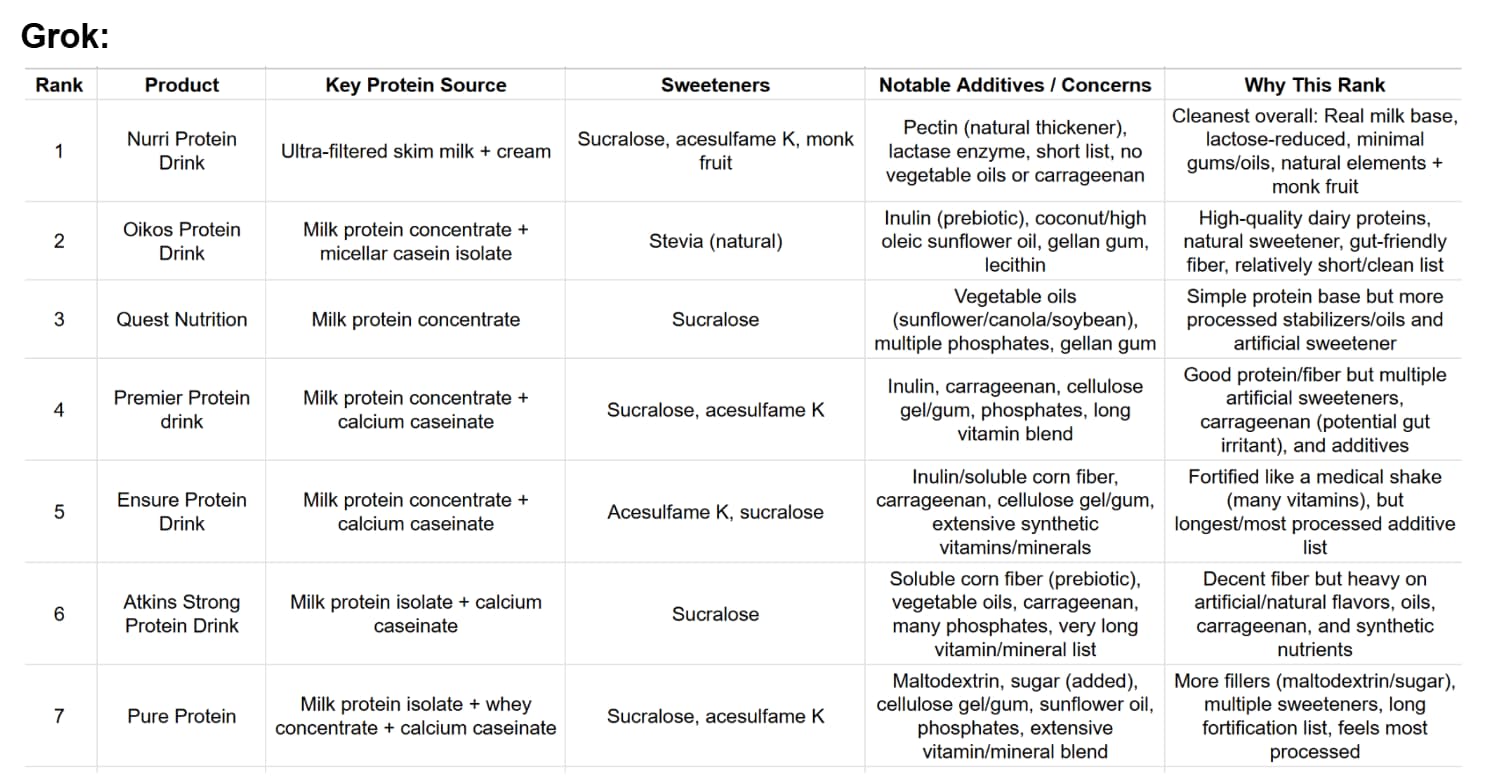
Though protein drinks usually describe themselves as milkshakes, that is a stretch IMO. I like the Nurri because it is about the same consistency as chocolate milk and has clean ingredients compared to most of the protein drinks. I asked three different AIs to rank some of the more common protein drinks. I prefer the taste of Nurri to Oikos.
Claude
Genetic predisposition to coffee consumption and the association with the early risk of atherosclerosis
Any thoughts or suggestions for Keurig users? Perhaps it’s not as big of an issue, but curious if and how filtering would occur.