
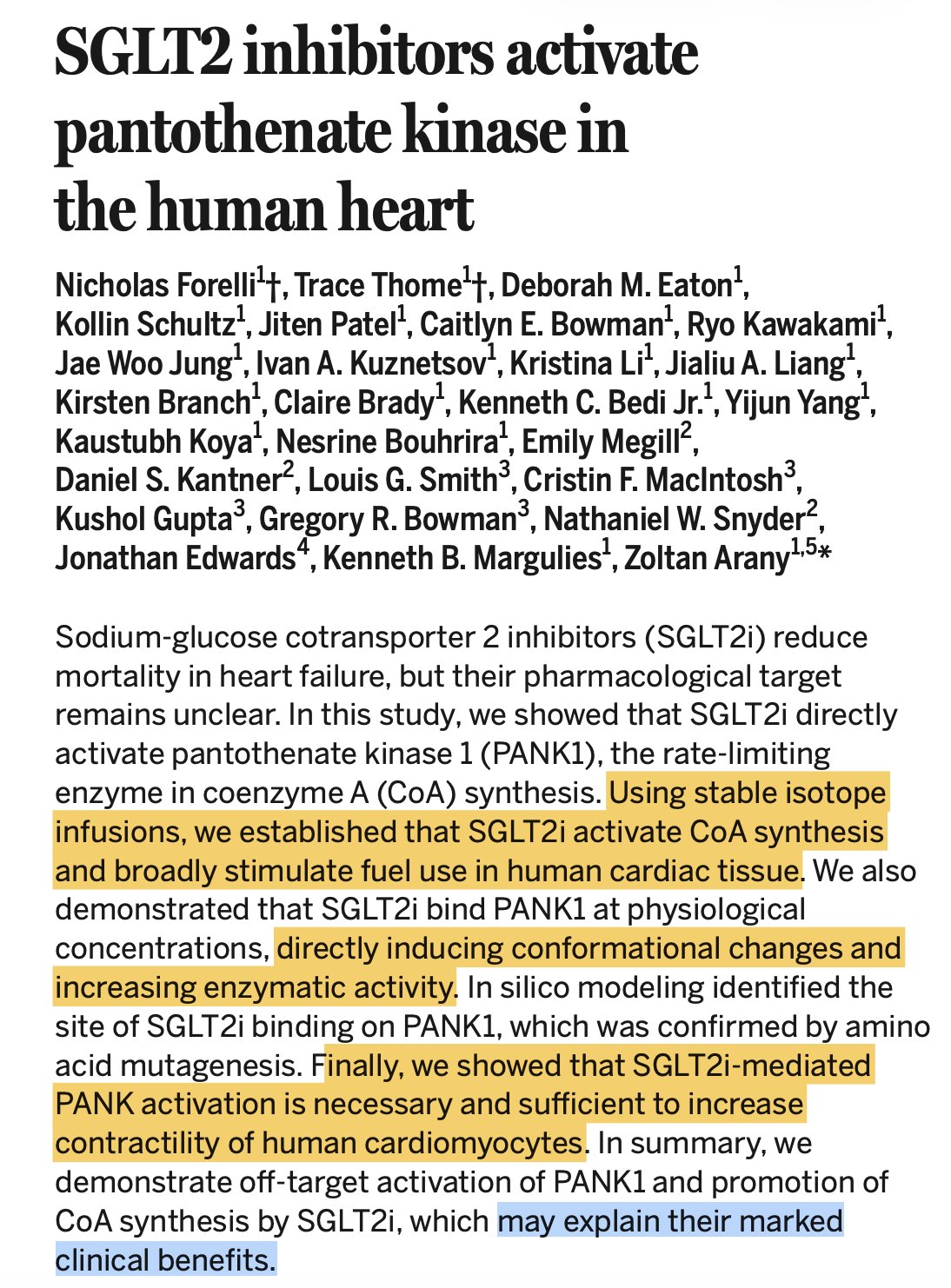
Paywalled Paper: https://www.science.org/doi/10.1126/science.aeh4856
6 Likes
Recombinant shingles vaccination and the risk of cardiovascular events
https://www.nature.com/articles/s41591-026-04606-0
A Common Vaccine May Protect the Heart for Years After the Shot
“A new study based on 70,000 people in the US found that older adults who received the new recombinant shingles vaccine were significantly less likely to suffer from cardiovascular disease than the people who got a previous version. The effect showed up most clearly for ischemic heart disease and heart failure, and it persisted for years. The study suggests that the modern shingles vaccine may change the immune system in ways that reach well beyond shingles.”
3 Likes
Association Between Cardiovascular-Kidney-Metabolic Health and Early Arterial Injury in Young Adults in the United States: The Future of Families–Cardiovascular Health Among Young Adults Study
https://www.ahajournals.org/doi/10.1161/CIRCOUTCOMES.125.013042
Abstract
BACKGROUND:
The American Heart Association recently introduced the novel construct of Cardiovascular-Kidney-Metabolic (CKM) Syndrome, but it is unclear how the CKM staging construct applies to young adults and how it may correlate with cardiovascular health status and carotid artery health.
METHODS:
In the FF-CHAYA study (Future of Families–Cardiovascular Health Among Young Adults), we defined CKM stages using the American Heart Association’s framework. Cardiovascular health was measured by Life’s Essential 8 scores (a composite metric consisting of dietary quality, physical activity, sleep, nicotine exposure, body mass index, blood glycemia, blood lipids, and blood pressure). We examined cross-sectional associations of CKM stages with Life’s Essential 8 scores and carotid ultrasonography measures using multivariable regression models adjusted for age, self-identified gender, and self-identified race/ethnicity.
RESULTS:
Among 1283 FF-CHAYA participants (mean [SD] age, 22.9 [0.7] years; 54.4% women), 20.7% of participants were classified as Stage 0 CKM (no risk factors), 40.2% as Stage 1 CKM (excess adiposity), 36.2% as Stage 2 CKM (metabolic risk factors), and 2.8% as Stage 3 CKM (subclinical cardiovascular disease or advanced kidney disease). Compared with Stage 0, participants in Stages 1 to 3 had significantly lower Life’s Essential 8 scores (β, −7.6 [95% CI, −9.4 to −5.8] for Stage 1, −13.9 [95% CI, −15.7 to −12.0] for Stage 2, −13.2 [95% CI, −17.4 to −9.0] for Stage 3). In addition, Stages 1 to 3 had significantly higher mean-mean and mean-maximum carotid intima-medial thickness and lower gray scale median compared with Stage 0. For example, mean-maximum carotid intima-medial thickness was 0.014 mm higher (95% CI, 0.005–0.020) for Stage 1, 0.020 mm higher (95% CI, 0.017–0.035) for Stage 2, and 0.100 mm higher (95% CI, 0.085–0.128) for Stage 3, compared with Stage 0.
CONCLUSIONS:
Among young adults, a more advanced CKM stage was associated with worse cardiovascular health, including greater evidence of early arterial injury. These findings elucidate the need for earlier preventive efforts and population-level interventions to address upstream drivers of CKM health.
What Is Known
•
Cardiovascular disease risk factors are increasing in prevalence among young adults, and strategies are needed to identify and intervene early in the life course.
•
The American Heart Association’s Cardiovascular-Kidney-Metabolic (CKM) Syndrome staging model provides a framework for specific prevention strategies by CKM stage.
•
Data are sparse regarding how CKM stages may be applied among younger adults, including its associations with subclinical disease markers.
What The Study Adds
•
In this sample of young adults across large US cities, CKM Syndrome was highly prevalent, and a more advanced CKM stage was associated with greater evidence of early arterial injury.
•
These findings identify opportunities for preventive efforts among young adults and underscore the urgency to address the upstream drivers of CKM health earlier in the life course.“
I read about the upcoming release of this new study in the Washington Post today. I had seen something about this once, but now there it appears there even more evidence. (I don’t know how good the evidence is).
I can’t think of any foods I consume that have this ingredient, but I have become a devotee of Dr Ellie’s oral care protocol which means consuming xylitol mints/gum throughout the day.
I wanted to give @Joseph_Lavelle and @medaura a heads up, but I also wanted to see if I/we should err on the side of caution and consume none vs some.
4 Likes
I suspect you’d have a I eat a LOT of Zellies to get a high blood level of xylitol though. To be honest I haven’t been using it much as I am not a snacker and forget. Besides I’ve got Invisalign right now. But find it easier to comply with the mouth rinses and oral hygiene routine. I’ve actually gone down the rabbit hole and discovered a lot of compounds that should help with the mouth, but waiting for the kids to go back to school before I attempt a skunkworks.
1 Like
Wow, 47% increase in MACE over 6 yrs for highest vs. lowest quintile of serum xylitol, independent of lipids and other CVD risk factors.
3 Likes
I use xylitol gum for oral health, but spit after checking / don’t swallow
Perhaps some exposure still, but think that cuts it like 95%
1 Like
It’s not clear whether it’s endogenous xylitol that’s the problem or dietary. Like erythriol, or advanced glycation end products, though the latter to some extent is known to be.
But the risk:reward ratio for eating lots of xylitol is clearly bad only based on this.
1 Like
All artificial sweeteners have possible associated health problems, with the exception of Allulose and Tagatose.
I haven’t used Tagatose, but have used Allulose regularly for some time.
Allulose has no aftertaste, and is OK for baking, replacing sugar 1 for 1.
1 Like
Tagatose tastes better than allulose (essentially identical to sugar at 90% sweetness potency), but comes with the caveat that it’s more like a fiber and can be fermented in the colon to produce gas. I use half allulose/half tagatose in my morning coffee.
3 Likes
Thanks. I can’t imagine a few pieces of gum will be a problem, but if you qualify as “high risk” (per association study) then worry. That said, I’ve strayed from the true xylitol path (no gum for me). After all this time I’m just now solving my continuous tea drinking habit to allow an “empty and closed mouth nearly all the time”.
2 Likes
Personally I don’t think drinking a lot of tea is a problem. Is there evidence to.the contrary?
1 Like
I used to make really bitter loose green tea steeped in water EOD, it made me euphoric many times (too often and you lose the euphoria). It’s called being “tea drunk” apparently. I think I quit because I thought it was unhealthy. It had Bergamot orange as well in it.
1 Like
Warning signs of stroke - B.E.F.A.S.T. Only 48 years old. A huge gym enthusiast - don’t assume being physically fit makes you immune to stroke.
Man Ignored These Symptoms for Days. Then He Suffered a Stroke
“ B—Balance loss
E—Eye (vision) changes
F—Face drooping
A—Arm weakness
S—Speech difficulty
T —Time to call 911“
“ “I used to love going to the gym, but I can no longer do that. I’ve had to completely change my diet to soft food, and I can only eat little and often. I’ve even had to adapt my home. I now have a special adjustable bed, a seat so I can use the shower, and I can only walk short distances with a stick,” Wright said.”
“ He was then transferred to the stroke ward and received an MRI scan, which showed several blood clots on his brain. Wright was diagnosed with bilateral carotid artery tears, with significant damage caused on the left side, causing the blood clots that went to his brain.”
“ He told Newsweek: "I also have nerve damage in my neck, which they believe is from the artery tear, that caused paralysis on the left side of my tongue and affects my swallowing. I continue to have significant headaches and pain, and neuropathy on the left side of my face and head.”
All that time spent at the gym, then this. Stroke can happen at any age and any fitness level. Don’t ignore sudden powerful headaches, or the other symptoms - react immediately, time is of essence in limiting stroke damage.
2 Likes
The issue isn’t tea, which I understand (and hope) is very good for me. The issue is oral health. Instead of sipping tea continuously, I drink my tea (now) more quickly and only periodically (once an hour or so in the morning) to allow my mouth to be empty and closed nearly all the time
Per ChatGPT:
Saliva does several important things:
- Buffers acids produced by oral bacteria and acidic foods/drinks.
- Supplies calcium and phosphate that help remineralize enamel.
- Contains proteins and antimicrobial components that help control bacteria.
- Forms a protective film over teeth and oral tissues.
- Helps clear food particles and acids.
With a mouthful of tea every five minutes, you’re repeatedly interrupting that process. You’re also continually replacing saliva with the beverage, so the teeth spend much more of the day exposed to the beverage rather than being bathed in saliva.
I picked this up from Dr Ellie who improved my oral health significantly.
Proof? I don’t know any proof. I am not trying to change anyone’s oral health practices. If your oral health is good, keep going.
3 Likes
Statins can safely cut risk of heart attacks or strokes in healthy people aged over 70, world-first clinical trial shows
Australian-led trial finds low risk of side effects from common cholesterol-lowering medication for otherwise healthy older people
7 Likes
Nice. That’s the STAREE trial results reporting in.
30% reduction in MACE over 8 years in healthy 70+ year olds.
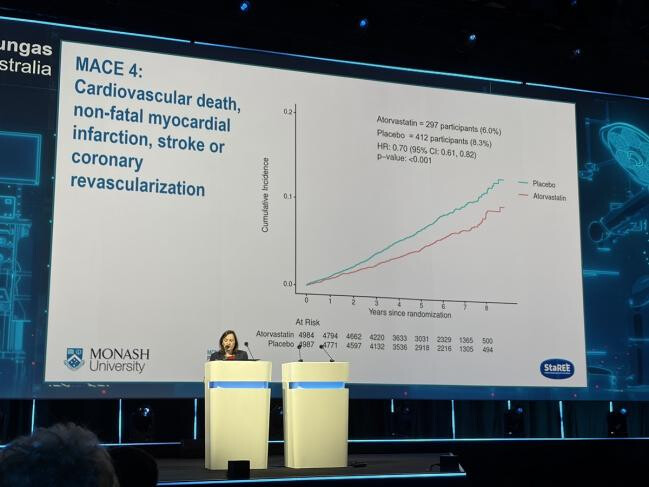
Compared with those given placebo, patients taking 40 mg of atorvastatin once daily had a 30% lower incidence of CV death, nonfatal MI, stroke, or coronary revascularization (6.0% vs 8.3%; P < 0.001) over the 6-year study period.
Despite the lack of impact on disability-free survival, Damluji said there is reason to be optimistic that the ongoing PREVENTABLE trial may provide evidence that statin therapy can help prevent dementia or disability in addition to CV events in older adults. With a planned enrollment of 20,000 patients and the same therapeutic dose of 40 mg per day of atorvastatin, PREVENTABLE should have more power to detect hard clinical outcomes than STAREE, he added.
https://www.tctmd.com/news/staree-statins-cut-mace-risk-30-older-adults-no-cvd-history
2 Likes
This may be seen as a positive for statins, but the flip side is that statins in this study also don’t seem to cut rates of dementia or ACM. Of course ACM findings need to be adequately powered, but there doesn’t seem to be a signal for a large effect size either. So, statins are “safe” for the elderly, but of limited benefit - not something to shout about from the rooftops. It might be useful in countering some statin skeptic propaganda vs dementia, but even here the fears caused a 15% dropout rate. This just makes me think about the “conscientience” factor, where there’s a common finding that people who tend to be conscientious also tend to do better healthwise - makes intuitive sense. So, if you’re over 70, statins likely won’t hurt you, but then again, going fishing won’t hurt you either. Maybe a wash? YMMV.
3 Likes
Generally to power for all-cause mortality, you’d need a 10 times larger study, it’s not practicable or feasible. When events are low in both groups random events like slipping on a banana peel dominates, it’s just noisy, and yeah that means the real effect size for total mortality that could be detected in the study period would be low.
30% reduction in mostly non-fatal heart attacks and strokes over 8 years is likely important for health reasons. It’s larger over time.
5 Likes