Yep, you managed to sound just like a statin denier, good job  . I don’t know, 30% MACE reduction over 8 years sound like a good deal to me. As for dementia, since statins arent’s prescribed for that, it’s a good sign that rates between users of both cohorts are roughly the same.
5 Likes
If statins are bad, imagine how bad everything else is what people are doing or taking. Let’s see an prospective, randomized, double-blind controlled trial for all-cause mortality for everything else.
The evidentiary bar for statins is on level 100, but level 1 for everything else, let’s do some b.s lifestyle or take some b.s supplement with a relative crumb of prospective human data in comparison.
Statins improve healthspan plain and simple, slows atherosclerosis, and in high risk patients reduce total mortality during the specific study duration.
An interesting discussion however is how little human prospective ACM clinical trial data there is.
Reality is likely more like stacking a dozen of things or more altogether stopping or preventing disease, than a readout from 1 single trial on ACM endpoint, like slowing atherosclerosis/reducing MACE, screening for cancer, slowing or preventing diabetes, hypertension, CKD, slowing frailty.
For healthy people slowing or preventing 10 processes is likely the large effect on both health- and lifespan, otherwise one intervention just runs into another’s bottleneck. So singling out 1 intervention might be missing the point. It might be that all interventions are seen as subpar in isolation, when actually the effect comes from all of them and with synergy.
This targets one thing: events from ASCVD and atherosclerosis.
8 Likes
Statins can reduce dementia risk by up to 15%, long-term study suggests
5 Likes
To add some details to that RCT:
average age at enrollment 74,7 - LDL matched at average of 127 mg/dl
Atorvastatin after 5,9 years: LDL lowered by 48 mg/dl
Placebo group: LDL lower by 16 mg/dl
Meaning, the achieved LDL was 111 for Placebo and 79 for the intervention arm.
So we have a primary prevention trial in a population that already got 75 years of ASCVD buildup. Achieved LDL is 79 - which is borderline in the area to halt ASCVD progression (though mostly studies find 60-70 mg/dl required).
I understand, the point was to keep it a statin-only RCT. But really at that age you would treat LDL much more aggressively, going as low as 30-40 mg/dl like Tom Dayspring is advocating for. 80 mg/dl may be fine for a 30 year old if sustained for decades. But it could not have a notable effect on mortality over 6 years for people at observed age from 75 to 81 against LDL of 111 mg/dl.
2 Likes
The point of the trial was actually to see if statins prevents dementia, not to reduce MACE, that’s why they chose 40 mg atorvastatin which is a high dose.
Adding ezetimibe to lower LDL-c further wouldn’t make sense.
Mortality as a primary endpoint is about reducing CVD deaths enough that it overtakes the noise from all of the car crashes and banana slips.
Because we already know that statins reduce ACM in high risk groups, multiple trials have proven this, doing this over and over makes no sense, it was done a couple of times since the 90’s when statins arrived and there were other harmful drug releases and this line of argumentation loud.
I think ACM is the best endpoint – but it’s not feasible, and CVD deaths have gone down so even less so. I wouldn’t worry about a drug or study that lowers MACE for instance but has no detect effect on ACM.
Not sure I agree with this interpretation.
There are two big “problems” with the study design:
- The placebo group actually lowered their average LDL-C over time. From 126mg/dl to 111mg/dl. That could be lifestyle changes, or because the placebo group ended up being prescribed statins by their doctor. In the end, the average difference between placebo vs statin was only 32mg/dl.
Or - they had a MACE and subsequently were treated using lipid-lowering therapies. Yet they still “count” as placebo group.
- There was a dropout rate of 15%, but only 7.2% was due to the statin side effects.
The headline effect is a 43% reduction in myocardial infarctions. That’s pretty impressive for 6 years and a reduction of LDL-C by only 32mg/dl between groups.
The definition of “disability free living” is VERY generous IMO. The definition was basically that you can’t look after yourself for 6 months. A non-fatal MI probably won’t ever meet that definition of rendering you disabled and unable to look after yourself. However, it’s still a few days in hospital, maybe some rehab etc at a minimum.
If you think about it, the implied (not by you) statement “Statins prevent heart attacks but provide no overall health benefit” doesn’t make sense. Any sort of heart attack means permanent loss of heart muscle tissue which will never be recovered. Nobody is ever better off for having an MI. So just because this study did not detect a statistically significant difference in the disability/death endpoint, doesn’t mean there is no benefit to preventing MI.
Totally agree. And it’s pretty obvious to me that if you prevent heart attacks, that does translate to an improved healthspan and quality of life, whether or not that meets whatever definition was set out in the trial.
3 Likes
Vitamin K2 and D3 Supplementation in Patients With Severe Coronary Artery Calcification: The DANCODE Trial
https://www.ahajournals.org/doi/10.1161/CIRCULATIONAHA.126.082363
“Among patients with severe CAC, supplementation with vitamin K2 and vitamin D3 reduced progression of CAC over 24 months. The reduction in calcification progression was not associated with an increase in noncalcified plaque volume.”
4 Likes
Surprised at how low the D3 dose was (1k IU), and how high the K2 (MK7) was at 720 mcg. Typical dose is 180-360mcg for cardiac health.
3 Likes
I thought this was worth chatGPT5.6max paid
Worked for 6m 47s
Overall assessment
The DANCODE trial provides fairly strong evidence that 720 μg/day of MK-7 plus 25 μg/day of vitamin D3 slows the rise in coronary calcium in older people who already have severe calcification.
It does not demonstrate removal of existing calcium, regression of atherosclerosis, fewer cardiovascular events, or benefit from vitamin K2 alone.
Summary
DANCODE was a three-centre Danish, randomized, double-blind, placebo-controlled trial:
398 participants with CAC scores ≥400 Agatston units.
Median age 71; 30% women.
Median baseline CAC 903; 44% had CAC ≥1000.
Approximately 87% were taking statins.
Intervention: MK-7 720 μg plus vitamin D3 25 μg—equivalent to 1,000 IU—daily for 24 months.
Noncontrast CT was performed at baseline, 12 and 24 months.
Twenty-four-month scans were available for 356 participants: 90% of the intervention group and 89% of placebo.
Principal results
Outcome over 24 months K2+D3 Placebo Between-group result
CAC-score increase 196 AU 248 AU −52 AU (95% CI −79 to −24), P<0.001
Calcified plaque-volume increase* 15.0 mm³ 22.8 mm³ −7.81 mm³, P=0.007
Total plaque-volume increase* 21.0 mm³ 30.5 mm³ −9.49 mm³, P=0.34
Noncalcified plaque-volume increase* 5.9 mm³ 7.7 mm³ −1.75 mm³, P=0.85
*Selected CT-angiography subset of 143 participants.
The 52-AU difference represents 21% less progression relative to placebo progression, not a 21% reduction in the participants’ total calcium burden. Calcium increased substantially in both groups. Despite the trial’s “decalcification” name, it did not demonstrate decalcification.
The effect was directionally similar:
Men: −47 AU.
Women: −61 AU.
Baseline CAC 400–999: −39 AU.
Baseline CAC ≥1000: −70 AU.
The interaction tests were nonsignificant, although the subgroups were not sufficiently powered to establish that the effect is genuinely identical across sex or disease severity.
Mechanistic and safety findings
Inactive matrix Gla protein, dp-ucMGP, changed from approximately 558 to 383 pmol/L with supplementation, versus 560 to 591 pmol/L with placebo. Vitamin D increased from approximately 65 to 90 nmol/L. These findings confirm substantial biological exposure and are consistent with enhanced vitamin-K-dependent MGP carboxylation.
Only five major cardiovascular events occurred—two versus three—so the trial provides essentially no information about heart attacks, strokes, revascularization or mortality. No important safety signal emerged, but 398 participants followed for two years cannot exclude uncommon or longer-term adverse effects.
What is genuinely novel?
- Prospective confirmation in severe CAC
The earlier AVADEC analysis found a signal only in a prespecified subgroup of men with CAC ≥400. DANCODE deliberately recruited this high-progression population and confirmed the signal in a trial designed around CAC as its primary outcome.
- Extension to women
The severe-CAC AVADEC evidence was restricted to men. DANCODE included women and found no evidence of a sex interaction, although only 120 participants were women.
- Convergence with an independent K2-only trial
DANCODE is not the first positive randomized trial. The 2026 VitaK-CAC trial found that 360 μg/day MK-7 alone slowed CAC progression in 167 people with milder CAC scores of 50–400. Together, VitaK-CAC and DANCODE provide more persuasive evidence for a vitamin-K-related effect than either trial alone.
- Plaque-composition evidence
The CT-angiography substudy attempts to address an important concern: that reducing macroscopic calcification might leave more lipid-rich, potentially vulnerable plaque. It found less calcified-plaque progression without a detected increase in noncalcified plaque. This is useful mechanistic evidence, but less conclusive than the authors imply.
Strengths
Proper randomized, double-blind, placebo-controlled design.
Good allocation concealment and blinded central CT assessment.
Balanced baseline characteristics and almost identical attrition between groups.
Repeated measurements at 12 and 24 months.
A prespecified primary endpoint with a clear, statistically strong result.
Results reportedly remained similar after log-transforming CAC, adjusting for baseline CAC and adjusting for statin use.
Biochemical evidence of target engagement.
The findings are coherent with both AVADEC and VitaK-CAC.
These features make confounding or simple measurement bias an unlikely explanation for the primary CAC result.
Important criticisms
- CAC progression is not a validated treatment surrogate
High CAC and naturally occurring CAC progression predict cardiovascular risk, but this does not prove that deliberately slowing CAC progression improves outcomes.
Statins illustrate the problem: they reduce cardiovascular events while sometimes increasing calcium density as plaques become more fibrotic and stable. Therefore, the direction of a treatment-induced CAC change cannot automatically be translated into benefit.
There is also no validated “minimum clinically important difference” for CAC progression. The confidence interval indicates 24–79 AU less progression, but its meaning for myocardial infarction risk is unknown.
- The trial cannot identify the active ingredient
DANCODE compared:
MK-7 + D3 versus placebo
It did not contain K2-only, D3-only or factorial arms. Consequently it cannot determine:
Whether K2 produced the effect.
Whether vitamin D contributed.
Whether the combination is synergistic.
Whether D3 reduced or enhanced the K2 effect.
VitaK-CAC makes K2 the more likely active component, but that is an inference across trials, not a DANCODE finding.
- The plaque substudy is considerably weaker than the primary result
Only 143 of 398 participants entered the plaque analysis, restricted to CAC <1000 and acceptable scans at both time points. Randomization was no longer well protected in this selected subset: baseline total plaque volume was 237 mm³ in placebo versus 193 mm³ in the intervention group.
Although baseline-adjusted sensitivity analyses reportedly produced similar results, residual selection and regression-to-the-mean concerns remain.
More importantly, “no increase in noncalcified plaque” should be phrased as no statistically detected between-group difference. Its 95% confidence interval ranged from approximately 19.5 mm³ less to 16.0 mm³ more noncalcified plaque with treatment. That interval does not establish equivalence or exclude a clinically relevant increase.
- There are prespecification and reporting discrepancies
The public statistical analysis plan raises several questions:
The paper states that the SAP was finalized and uploaded before the first participant was enrolled. However, the registry lists the actual study start as 8 February 2023, whereas SAP version 1.0 is dated 24 February 2023. An earlier plan or a distinction between study start and first randomization may explain this, but the apparent discrepancy should be clarified.
The SAP required a 100-imputation sensitivity analysis if more than 5% of 24-month observations were missing. Forty-two of 398 participants—10.6%—lacked a 24-month scan, yet this prespecified analysis is not reported among the paper’s listed sensitivity analyses.
The SAP specified a random-intercept model; the article added random slopes. This may be statistically reasonable, but it is a model change requiring explanation.
The SAP planned to report aortic-valve calcification, quality of life and low-attenuation noncalcified plaque in the primary publication. These are absent.
The planned cardiovascular composite comprised myocardial infarction, revascularization and cardiac death; the article instead describes myocardial infarction, stroke and revascularization.
None of these observations readily explains away the strong primary result, particularly given balanced attrition. They do, however, weaken the paper’s assertion that no important prespecified changes occurred.
- Generalizability is narrow
The results apply most directly to:
Older Danish patients.
Severe CAC ≥400.
Patients investigated because of possible coronary symptoms.
Predominantly male participants.
A population already receiving substantial preventive therapy.
People not taking vitamin-K antagonists and without previous coronary revascularization.
They should not be extrapolated directly to younger people, CAC-zero populations, general prevention, other K2 forms or doses, or people taking warfarin-type anticoagulants.
- Funding and replication
The trial was investigator initiated, but Kappa Bioscience/Balchem provided financial support, and Kappa and Orkla donated the tablets. The companies are reported to have had no role in design, analysis or publication. The design and blinding reduce concern, but fully independent replication would still be valuable.
Bottom line
My assessment is:
High confidence: the tested K2+D3 regimen modestly slows CT-measured CAC progression in this severe-CAC population.
Moderate confidence: the effect involves vitamin-K-dependent MGP biology.
Low or no confidence: that the effect represents plaque regression, improves plaque stability, prevents cardiovascular events or extends life.
Scientifically, this is an important and fairly convincing proof that the coronary calcification pathway is pharmacologically modifiable. Clinically, it is not yet practice-changing. The decisive next study would be a larger, longer, preferably 2×2 factorial K2/D3 trial powered for cardiovascular events and including rigorous plaque-phenotype imaging and adherence measurement.
6 Likes
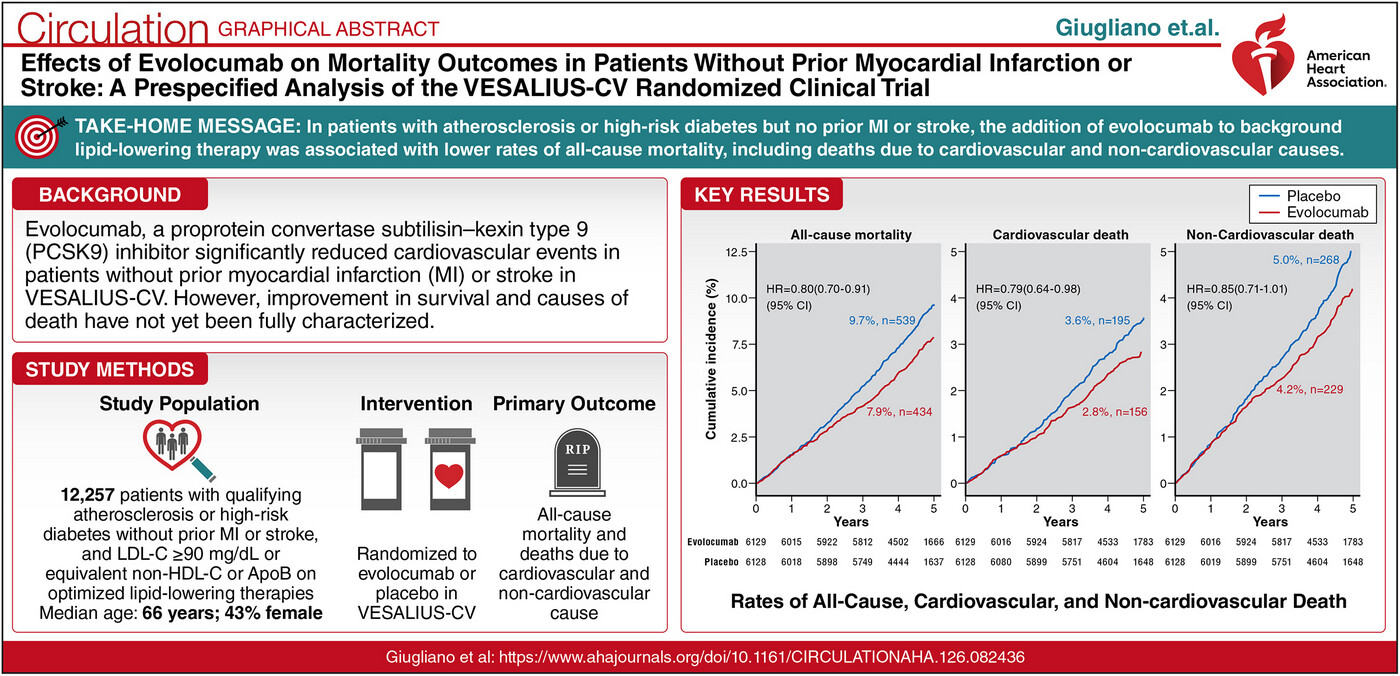
Repatha (pcsk9i) reduces CVD events and all-cause mortality over 5 year period in higher-risk patients who have not yet had CVD events.
https://www.ahajournals.org/doi/10.1161/CIRCULATIONAHA.126.082436
7 Likes
Evolocumab took average LDL baseline from 120 to ~45, and provided additional ACM reduction on top of statin therapy. The placebo group did not see any meaningful change in LDL levels. The “lower LDL is better” narrative holds strong.
7 Likes
It also reduced non-CVD related deaths by 15%, though it seems by reducing non-fatal CVD events that increased mortality.
ACM at 20% reduction was P=0.0005, so unlikely a false finding.
I always thought Repatha looked worse than Praluent, but now it’s the reverse.
4 Likes
New gene-editing drug for high LDL and triglycerides.
From May 2024 through August 2025, a total of 15 adults who had received a diagnosis of uncontrolled hypercholesterolemia, moderate or severe hypertriglyceridemia, or mixed dyslipidemia were enrolled in the trial and received one of five doses (0.1, 0.3, 0.6, 0.7, or 0.8 mg per kilogram of body weight) of CTX310. Here, we provide a 1-year follow-up for all trial participants.
At 1 year after treatment, among the four participants who received the highest dose of CTX310 (0.8 mg per kilogram), the mean percent change was −78.6% (range, −89.0 to −63.1) in ANGPTL3, −52.5% (range, −84.2 to −24.4) in low-density lipoprotein cholesterol, and −47.8% (range, −77.6 to −14.7) in triglycerides. Changes in individual participants are shown in Figure S2. Changes in non–high-density lipoprotein (HDL) cholesterol and HDL cholesterol were −52.0% (range, −79.4 to −25.2) and −23.5% (range, −44.9 to 0.0), respectively. Other percent changes — including −37.2% (range, −61.2 to −12.9) in apolipoprotein B and −71.7% (range, −87.8 to −56.1) in triglyceride-rich lipoprotein cholesterol — may be relevant to the potential for cardiovascular benefit.
https://www.nejm.org/doi/full/10.1056/NEJMc2609825?query=TOC
3 Likes
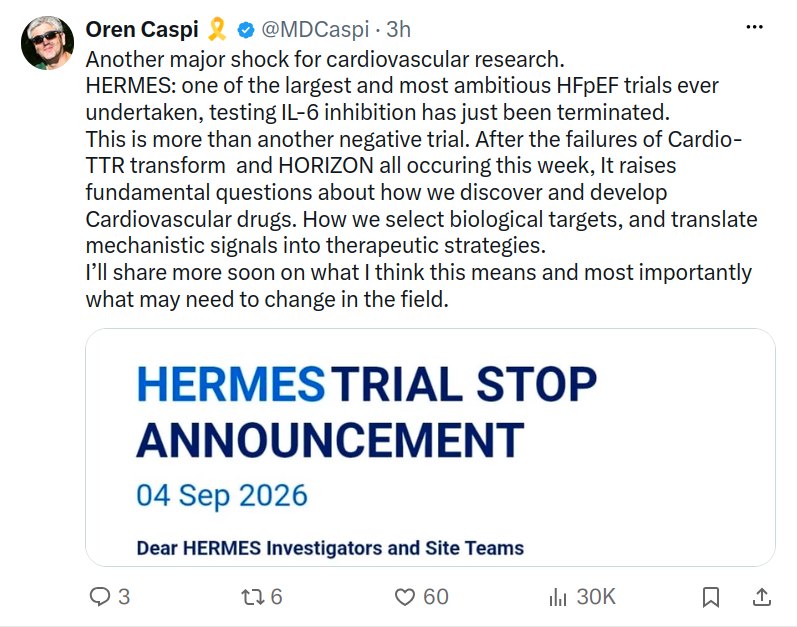
More trial cancellation for IL6 as target to reduce MACE, this time in HFpEF. HERMES trial has been cancelled.
2 Likes
Rates of Lipoprotein(a) Oxidation Accelerate at Elevated Levels and Attenuate With Atorvastatin Active Metabolites Compared With Other Statins
https://www.jacc.org/doi/10.1016/j.jacbts.2026.101664
Only atorvastatin (when compared to other statins) was shown to reduce oxydation rates of lp(a), and it did so without changing lp(a) levels. It’s possible that reducing oxydation rate might be as effective as reducing levels, since the oxydation is the risk we care about.
The findings of the current study suggest a possible mechanism for decreasing an aspect of Lp(a)'s atherogenicity with atorvastatin, which is independent of changes in Lp(a) or LDL levels
We previously found that the omega-3 fatty acid eicosapentaenoic acid (EPA), the active ingredient in icosapent ethyl, showed potent antioxidant activity in Lp(a) and other lipoprotein fractions arising from lipid-centric free radical scavenging by the methylene-interrupted double bonds of the acyl chain. The results of that study may help explain the reduction in ASCVD events in a subpopulation of REDUCE-IT (Reduction of Cardiovascular Events with Icosapent Ethyl–Intervention Trial) with elevated baseline Lp(a) with icosapent ethyl.36
5 Likes
Very good find, @qBx123Yk ! The individual profiles of statins are underappreciated in finding the best fit for any given patient. The usual practice is simply to prescribe whatever the formulary is of the insurance the patient has, and if there is some intolerance problem to then cycle through the statins and doses hoping to find one that doesn’t result in patient complaints. But the reality is that all statins have their specific characteristics that should be carefully evaluated to see how they impact a given patient in the context of their specific medical situation and the rest of their medicine and supplement stack. Here the implication is that if you have highish Lp(a) levels, you might look at atorvastatin compared to, say, simvastatin, unless your stack already addresses oxidized Lp(a), because of EPA etc.
We need a lot more studies of individual drugs within a class/category, because unfortunately prescriptions frequently go by insurance formularies, and “putting someone on a statin” is as far as it goes - same with “put them on a diuretic”, or “SGLT2i” or whatnot. You have to look at the totality of the patient medical situation and not just reflexively throw cookie cutter interventions at them.
This here is a nice addition to our store of knowledge about atorvastatin.
2 Likes
Here’s the EPA/Lp(a) study:
3 Likes
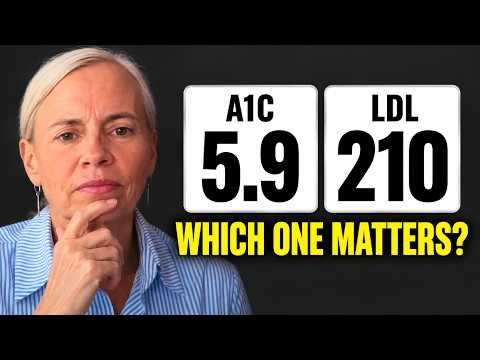
I swear, some doctors just puzzle the heck out of me. I don’t get them. They’re highly educated, practicing physicians, yet how they interpret data and decide on health interventions are - to me - extremely bizarre. I just can’t reconcile that. Here’s a cardiologist and nutrition advocate with decades of experience, a marathon runner and health fanatic - I can’t make heads or tails of this person. Maybe you are better at this; if so please help me, explain life and humanity to me.
Vegan Cardiologist Went Carnivore. Her LDL Hit 210. (via Jeff Nelson - VegSource)
4 Likes
She’s 64 now I think. At 61 she did a 100 mile long haul race in 31 hours and 5 minutes. I see a few other long races including a marathon in 5 hours. Ok so I could compete with some of this but I now get injuries when I try to do things like this. I’ve been recovering for a year and a half from psoas injury. Finally a week ago got PRP.
In our personal lives we do what we want and the story it tells is not always flattering. I’ve been wanting to do a glucose tolerance test for years with the insulin also like Ivor Cummins says. Then you know. Do it again in a few years and stare at it for awhile. It’s inexpensive and pretty easy but I’ve not gotten it done. My A1C is 5.2 a couple months ago and insulin was low. You know, I’m not on fire so what am I doing buying extinguishers. I have more interesting things.
She has been vegan for so long and taken such good care that at this age she can probably get by with it. I’m shocked that with her previous eating habits she has managed to get keto. It’s not easy at all. Also it does not improve your times. And running does not keep away heart disease. It goes the other way.
So I think looking forward she should get a CAC. If it comes back ok, then ignore the critics. Do what you want. She looks great and today can outrun me.
There is a sizable market of absolute contrarians (huge overlap with MAGA) who believe that all science must be wrong because some popsci article from 2010 claimed that a sociology study found that liberals are smarter than right-wingers. By targeting said market, you can grift yourself rich.