Thanks a lot!
And that would be?
The Cholesterol Balance Sheet: Why Your Lipid Ratio Outshines LDL for Sudden Death Risk
The Narrative Sudden cardiac death (SCD) remains a devastating cardiovascular outcome, often occurring without warning in individuals with underlying coronary heart disease. Traditional lipid management focuses heavily on individual markers like high-density lipoprotein (HDL-C) or low-density lipoprotein (LDL-C). However, a landmark study from the University of Eastern Finland published in Nutrition, Metabolism and Cardiovascular Diseases suggests that the “balance” between these lipids provides a far more accurate window into fatality risk.
Researchers analyzed data from 2,575 men in the Kuopio Ischemic Heart Disease (KIHD) prospective cohort over a median follow-up of 27.8 years. They focused on the non-high-density lipoprotein cholesterol-to-HDL-C ratio (NHHR). This ratio is calculated by taking total cholesterol, subtracting HDL-C to find the “pro-atherogenic” load (Non-HDL-C), and then dividing that number by the protective HDL-C.
The findings were stark: NHHR exhibited a linear, positive dose-response relationship with SCD risk. Men in the highest quartile of NHHR were 2.23 times more likely to suffer from sudden cardiac death than those in the lowest quartile. Critically, when NHHR was added to clinical models already accounting for smoking, diabetes, and blood pressure, it significantly improved risk prediction—something that measuring Non-HDL-C or HDL-C individually failed to do.
This research highlights that SCD is driven by a complex tug-of-war between plaque formation and cholesterol clearance. By integrating both atherogenic and anti-atherogenic fractions into a single index, the NHHR acts as a comprehensive “balance sheet” for arterial health. Because it can be calculated from routine blood tests without extra cost, it represents a practical, high-utility tool for clinical and personal health optimization.
Actionable Insights
-
Calculate Your Ratio : Monitor your NHHR regularly. In this cohort, the mean NHHR for survivors was 3.77, while those who suffered SCD had a mean of 4.26.
-
Target the Balance : Focus on both lowering atherogenic lipids (Non-HDL-C) and supporting protective HDL-C. Focusing on one while ignoring the other may obscure your true risk profile.
-
Standardize Testing : Blood samples in this study were taken after an overnight fast and 72 hours of alcohol abstinence to ensure accuracy. Replicate these conditions for consistent tracking.
-
Address Shared Risks : SCD risk is exacerbated by smoking, hypertension, and physical inactivity. Management of these lifestyle factors remains the foundation of cardiovascular longevity.
-
Monitor Inflammation : Higher hs-CRP levels (a marker of inflammation) were observed in SCD cases. Chronic inflammation works synergistically with high lipid ratios to promote plaque instability.
Context
- Open Access Paper: Serum non-high-density lipoprotein cholesterol to high-density lipoprotein cholesterol ratio and the risk of sudden cardiac death: findings from a prospective cohort study
- Institution : Institute of Clinical Medicine, University of Eastern Finland.
- Country : Finland.
- Journal Name : Nutrition, Metabolism and Cardiovascular Diseases.
- Impact Evaluation: The impact score of this journal is approximately 3.3 to 4.5, evaluated against a typical high-end range of 0–60+ for top general science, therefore this is a Medium impact journal.
4 Likes
My NHHR is 2.2. Maybe I’ll pull through till cyclarity is out.
1 Like
Did we/study establish what an optimal NHHR is? and it is obvious that cohorts in highest quarter percentile would be at VERY high risk since to have a NHHR above 4.5 it would mean their LDL-C is well over 150, since HDL is for most people in the range of 40-60. In other words, I think this study is just proving the obvious.
As an example, at my worst reading I had what I considered poor numbers total 175, LDL-c 124 and HDL-C 39 and even with these numbers my NHHR of 3.5 (last test my NHHR is 1.9) would still be below the mean for the survivors, so this would mean I’m good whereas looking at LDL-C alone tells a different story. So, am I not better off looking at the LDL-C still?
To be fair I’m only going by the summary you posted and did not click on the link for details. .
I wonder if ApoB/HDL-c would be an even better marker for risk ?
When asked, the Medical AI, OpenEvidence.com states: The American College of Cardiology/American Heart Association 2026 Dyslipidemia Guideline recommends apoB alone as the preferred measure of atherogenic lipoprotein burden for ASCVD risk assessment and does not endorse the ApoB/HDL-C ratio as a recommended metric. The guideline emphasizes that apoB directly quantifies the number of atherogenic particles (one molecule per LDL, VLDL, and Lp(a) particle) and predicts ASCVD risk more accurately than LDL-C, particularly in settings of discordance — most commonly in individuals with cardiometabolic disease, diabetes, and/or triglycerides ≥150 mg/dL. In primary prevention, only apoB remained significantly associated with incident MI when assessed together with other atherogenic lipid measures (adjusted HR per 1 SD: 1.27; 95% CI, 1.15–1.40; P 0.001). The guideline recommends integrating apoB into routine risk stratification, supported by large cohort studies and meta-analyses demonstrating its superior predictive value compared with traditional lipid markers. No recommendation is made for lipid ratios incorporating HDL-C as a denominator for apoB-based risk assessment.
I suspect they did not evaluate ApoB/HDL-C for its strength as a risk indicator.
Mine is .76.
My overall risk is not low, but I’ll celebrate the wins!
Drugs are great! Congrats!
So I went to a cardiologist recommended by my doc. He couldn’t figure out how to get me a CCtA with Cleerly paid by medicare so he sent me to her. She got me a echo and ordered a CCTA, but I asked about Cleerly and she hates the machines. No AI for this one. She practically yelled at me. She said she could read better than the machine and the machine doesn’t care anyway. She offered me Leqvio probably because she correctly guessed I’m a person that might back out of the other kind. Thinks she can get it for free. We’ll see what happens after the CCTA, it’s in a couple weeks.
2 Likes
All I can add is that machines are helping the farmer with things I never thought would work. I’m not worried about being replaced though. It can’t do a round without me. But at the end of the day I’m less tired and get more done.
I really think that she could do more working with the machine. More people could see her and her advice could be better. Machines scan more carefully and don’t make mistakes. I’m sure they need to be checked manually, but it would take less time.
Work with the machines!
3 Likes
That paper seems useless. They conclude “NHHR is a stronger predictor of SCD risk compared to non-HDL-C and HDL-C”. OK but we don’t care. The only question is: is it a better predictor of SCD (sudden cardiac death) than apoB (and maybe RW-ApoB: RW-ApoB -- Superior Metric For Lipid Related CVD Risk --- Using Lp(a), ApoB, and Triglycerides)?
We already have a gold standard, it’s apoB. All the BS ratios have been around for decades and haven’t proved to be better than apoB.
7 Likes
I don’t fully agree with this. Yes, inflammation is a driver - but the lipoproteins are still necessary parts.
These companies want to sell these expensive new IL-6 , NLRP3 inhibitors etc. But the fact is, if you can lower atherogenic particles (Lp(a) and Apo-B mostly), you’re most of the way there.
I think the new position paper here sums it up nicely: https://www.jacc.org/doi/epdf/10.1016/j.jacc.2025.08.047
Basically, you want lipoproteins and inflammation to be low. If you can’t get the lipoproteins down, you need to be aggressive in lowering the inflammation, and vice-versa.
If it works, I am curious what makes you want to change? I take the exact same Rosu + Ezetimibe 10mg each (the same combo Donald Trump takes too, apparently). Never had any noticeable side effect, no change in HBA1C, or anything else. So it’s hard to find a justification to change anything IMO.
This is a great paper IMO. The “predisease” simply means a person is on the path to the full disease. It’s not like your BMI is 29 and you’re ok, but once it hits 30, you’re not, or HBA1C of 5.8 vs 6.0%.
I would assume that all of us on this forum would agree about primordial prevention. A hell of a lot easier to keep that glucose down rather than deal with complications of diabetes.
IMO, the single largest (drug-free) lever that many people have for this is resistance training. You can control many things with drugs, but hitting a full body lifting program 2x per week is going to have a huge benefit across pretty much everything they mention - the blood pressure, visceral fat, waist circumference, cardiovascular fitness, glucose disposal etc etc. For the skinny-fat, BMI 23 person with emerging CVD, they don’t need a GLP1RA - they probably just need squats, deadlifts etc.
I asked Claude to pull together studies about weight training interventions on this health markers. Here’s a short selection of highlights, written out by me:
- A 10% increase in skeletal muscle mass correlates to 12% reduction in pre-diabetes
Various published weight training interventions of 12-24 weeks have shown:
-
HBA1C% reduction of -0.3 to 0.6% (i.e. similar efficacy to metformin)
-
Fasting glucose reduction of 9-15mg/dl
-
Visceral adipose tissue reduction of -0.3 to -0.5%
-
hsCRP reduction of 20-35% in chronic inflammation
-
Blood pressure reduction of -5 mmHg
4 Likes
What is the “this”?
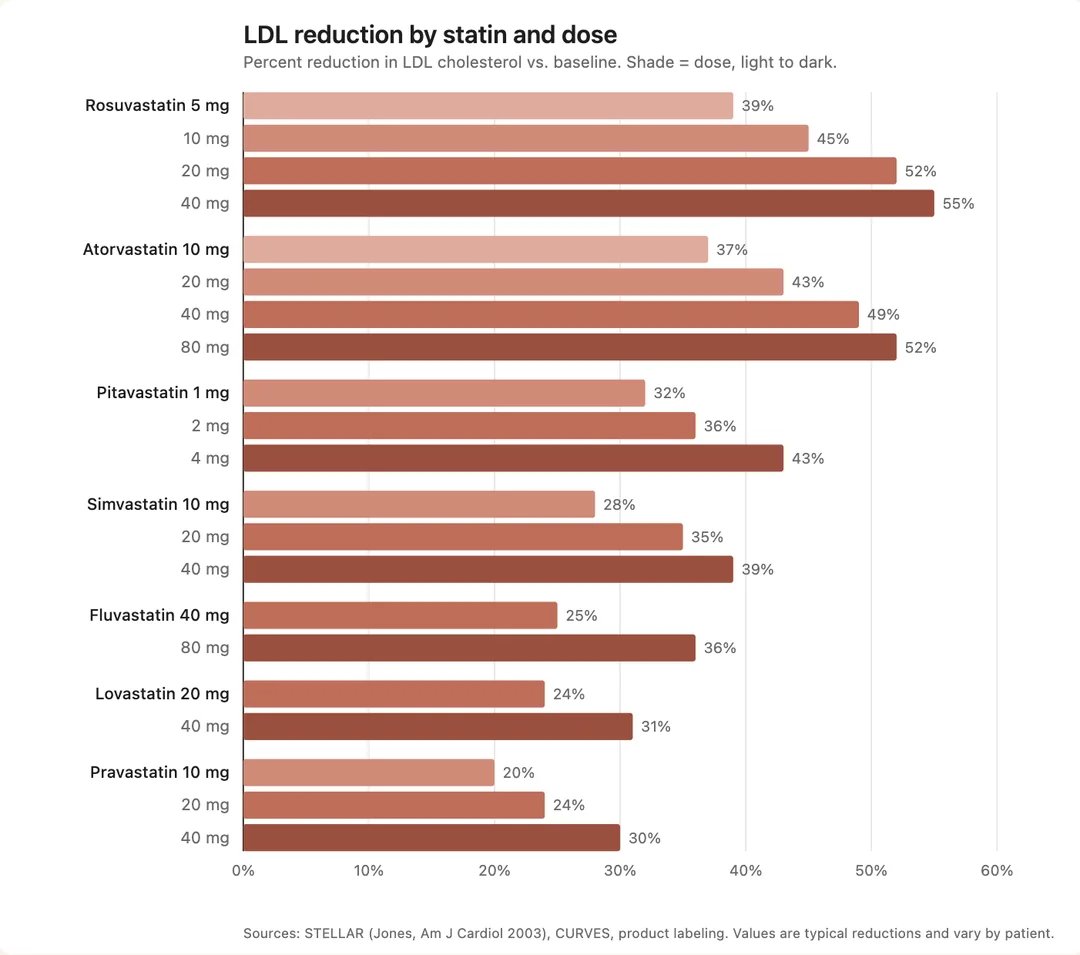
I have always had mild muscle aches. don’t know if it’s from the statins I have taken and am taking. maybe they will stop if i try pitavastatin
1 Like
Ah, sorry my quoting got messed up. It was about the discussion on IL6 testing, and the fancy graphic RapAdmin posted.
My muscle aches stopped with pitavastatin. I had muscle aches even with Atorvastatin 5 mg EOD.
3 Likes
No worries. For others who might wonder, it’s that one, I guess: Cardiovascular Health 2026 - #320 by RapAdmin
1 Like
no problem. but my aches started many decades ago when I started on statins. it was 1990. I remember because i was sent to Korea on orders that yr and started them there. a little purple colored one was the first statin of many to follow.
1 Like
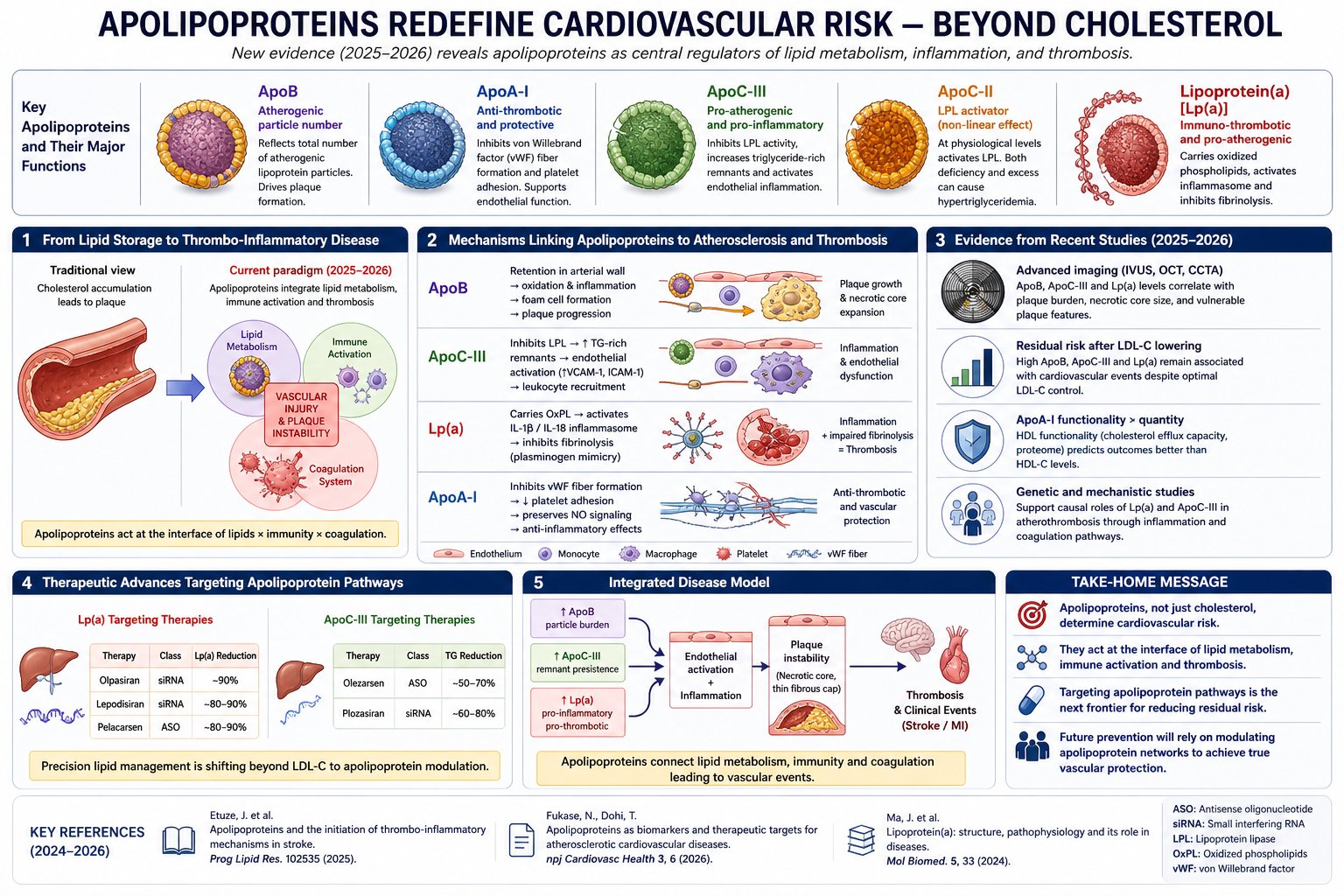
Its an interesting chart. One of my labs gives ApoA-I and I had not looked at it before. I have just looked at it and it varies quite a bit. I think I will try to find how how it varies (in the sense of what exogenous substance causes it to vary). That will have to wait as a project.
I managed to get an LLM to convert my lab tracker to a spreadsheet. I am not sure it worked that well, but this the variation: mg/dL
202.60 167.60 187.30 174.60 178.00 194.50 204.40 201.50 174.00 202.90 164.40 185.70 187.30 190.10 226.40 185.50 198.30 187.30 181.80 200.10 216.30 200.90 190.60 205.20 159.80 177.20 176.40 202.40 172.90 183.10 189.70 168.30 167.80 172.10 165.70 161.60 179.50 200.70 185.60 168.40 173.20 184.10 194.50 176.70 166.20 161.70 169.30 163.60 176.20 176.70 169.20 171.50 171.40 172.50 159.40 150.40 153.30 168.00 158.40 173.90 162.10 166.20 161.20 188.20 190.60