Mendelian randomization using large-scale genomic data shows that genetically predicted SGLT1 inhibition is significantly correlated with longer telomere length and a lower frailty index. And canagliflozin is the only gliflozin that actually does this effectively, as all the others are heavily biased toward SGLT2 inhibition. Turns out my intuition was spot on!
8 Likes
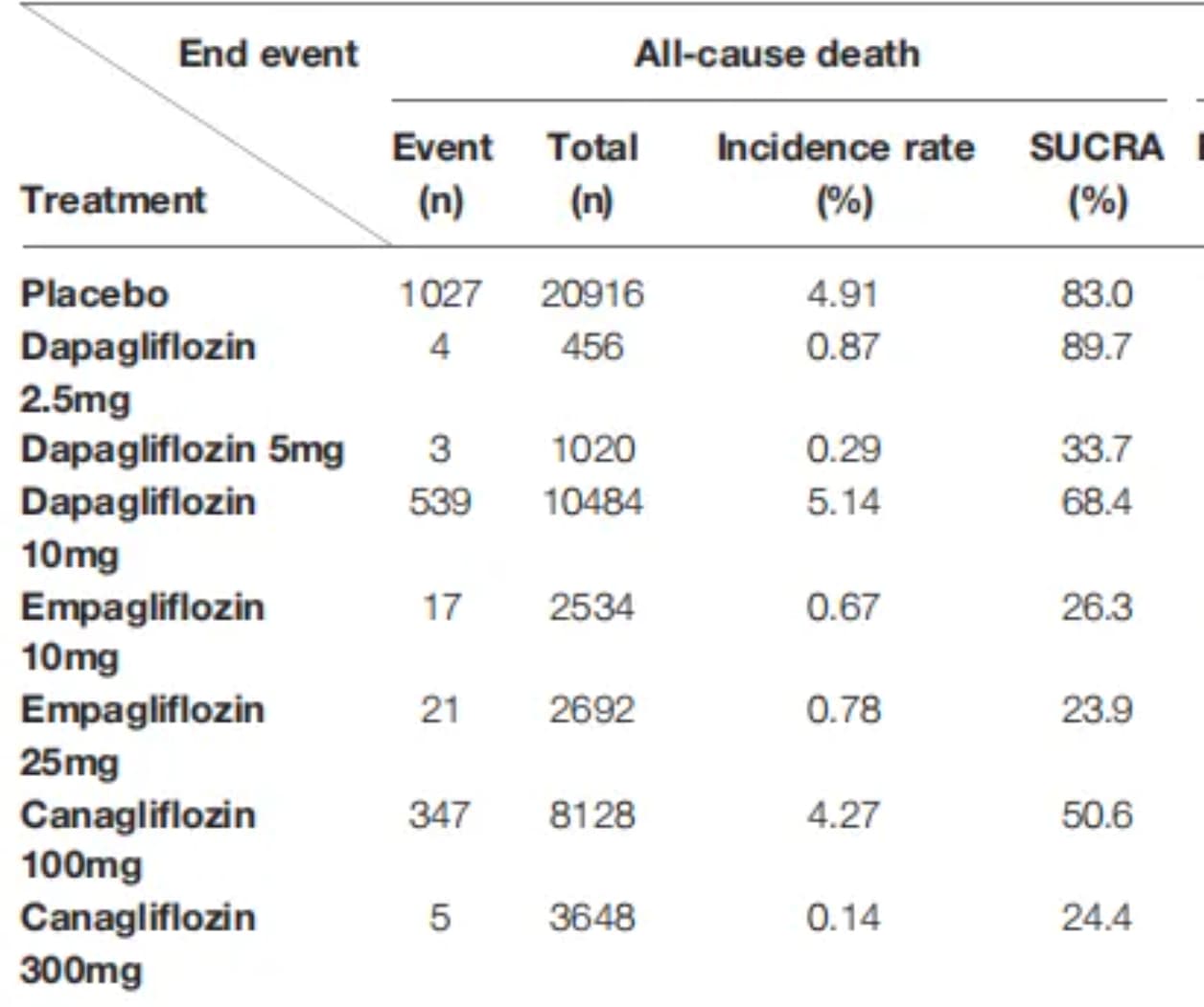
There is uncertainty about the mechanism by which Cana works, but there are clues related to SGLT2 inhibitors. One of my personal arguments for continuing dapagliflozin is… Association between prescription drugs and all‐cause mortality risk in the UK population - PMC
Despite the small sample size, the impact is notable.
5 Likes
This paper shows that empagliflozin only extended median lifespan in mice by 5.9%. Meanwhile, canagliflozin achieved a 14% extension in a separate study. While you generally shouldn’t compare results directly across different trials, there’s solid reason to suspect that canagliflozin might be the truly effective SGLT2i when it comes to longevity.
4 Likes
I’m pretty sure this empa vs cana lifespan issue has been thoroughly addressed in the earlier portions of this 2000+ long message thread, to the point where I concluded at some point to continue empa and avoid cana, but since the thread was started 5 years ago I don’t remember the details.
2 Likes
Actually, no. If you scroll back through the previous messages, people here have recently been discussing henagliflozin. It’s currently the only SGLT2i clinically proven to extend telomeres in human trials, whereas other gliflozins haven’t even shown efficacy in cell cultures—empagliflozin, in particular, was shown to be completely ineffective at slowing telomere attrition.
I think your impression of empagliflozin is probably based on its cardiovascular and renal benefits in patient populations. Empagliflozin definitely shines in those clinical endpoints, but that’s a fundamentally different topic from anti-aging in healthy individuals.
3 Likes
That is true, from one study out of China. But the value of telomeres in life extension is not widely supported in the Geroscience researcher world… see this thread: Telomere Testing (Length)
So - really, the best data we have (by far) is the ITP study in mice with canagliflozin (for life extension). We don’t know for sure if any of the other 'flozins actually increase lifespan. If you can tolerate canagliflozin, I’d take it.
7 Likes
Still waiting to see what growing my telomeres get me, aside from bragging about how much longer they are.
6 Likes
Telomerase does more than growing telomeres
Nonsense. The controversy of SGLT2i vs SGLT1 has been extensively discussed here, even before I found this site and became active here. The user @Neo was the one to first point out the possibility that cana gets its lifespan extending efficacy through the partial inhibition of SGLT1, which the more SGLT2 selective dapa and especially empa don’t duplicate. His main interlocutor in this discussion was @adssx. Ultimately there was no resolution, but many valid points were made. The ITP didn’t test other flozins, so firm comparisons can’t be made. Yes, there was that small Chinese trial in mice that showed small LE with empa, but, well, Chinese. More to the point, flozins might be different in humans, and here clinical experience shows dapa and empa to have superior health impact vs side effects profile, which raises the question of how can superior health effects translate into inferior LE. Also there was some initial flurry of excitement about sotagliflozin as it is heavily biased towards SGLT1 inhibition, but ultimately the efficacy in humans is underwhelming compared to empa and dapa, so it doesn’t seem to point to this as a fruitful direction for LE in humans. Henagliflozin is a distraction, with no proven benefits above empa and dapa, the telomere thing being a big lol. In short, nihil novum sub sole, go read up earlier in the thread to get your fill on this subject. As so often some people don’t acquaint themselves with the topic and out of ignorance like to “discover” something that has long been discovered.
EDIT: I went ahead and looked earlier in the thread. Start here and go further down from there:
4 Likes
Another key point about henagliflozin is how remarkably similar it is to canagliflozin in many aspects. Looking at 24-hour urinary glucose excretion (UGE), canagliflozin achieves around 100g (equivalent to 400 kcal burned), while henagliflozin reaches 98g (also 400 kcal). Empagliflozin, on the other hand, only achieves about two-thirds of that. When it comes to reductions in HbA1c and systolic blood pressure , henagliflozin is also the closest to canagliflozin.
Given empagliflozin’s poor performance in mouse lifespan studies alongside the other research mentioned, I personally believe canagliflozin and henagliflozin are indeed the superior choices.
On top of that, a paper published just a couple of days ago showed that henagliflozin lowered SBP by nearly 10 mmHg in patients with T2D and hypertension. In comparison, if I remember correctly, empagliflozin only manages around 3–4 mmHg.
1 Like
Plus, empagliflozin(25mg) and canagliflozin(300mg) show almost no difference when it comes to SUCRA. That’s why those additional factors become so crucial.
Target Population in LVMI Studies:
- henagliflozin: T2DM with concomitant hypertension
- empagliflozin: T2DM with established coronary artery disease (CAD)
The populations need to line up before beginning to compare data between them.
HbA1c Reduction (6 Months):
- henagliflozin: -0.42% median change
- empagliflozin: −0.70%
1 Like
Nonsense. Sotagliflozin has a far lower T2/T1 selectivity ratio than canagliflozin. Sotagliflozin is currently available in the US.
A Head-to-Head Comparison of SGLT2 Inhibitor Selectivity Profiles
1 Like
At week 12, adjusted mean difference versus placebo in change from baseline in mean 24-h SBP (ambulatory blood pressure monitoring [ABPM]) was -3.44 mmHg (95% CI -4.78, -2.09) with 10 mg empagliflozin and -4.16 mmHg (-5.50, -2.83) with 25 mg empagliflozin (both P < 0.001).
Patients (N = 825) with type 2 diabetes and hypertension
1 Like
Forgot to mention—I’m specifically limiting this comparison to the medications most frequently discussed in this thread: henagliflozin, empagliflozin, canagliflozin, and dapagliflozin. As for sotagliflozin, I haven’t really dug into the research on that one yet.
1 Like
I did a quick search on sotagliflozin, and it turns out there’s quite a bit of dirty laundry. Sanofi terminated its partnership with Lexicon because of its subpar efficacy, and the FDA rejected its approval for certain indications, among other messy issues. With a track record like that, it’s hard to stay interested in looking into this drug.
In that case, you should not have said “out of all gliflozins currently available [emph mine]” and instead said “out of all flozins most often discussed on this forum”. Btw., I’m not sure henagliflozin was discussed more often than sotagliflozin - certainly not earlier in the thread.
Also, if positing a thesis like “it is T1 that is important in LE” wrt. canagliflozin, you really should have “dug into” sotagliflozin research first before hanging your case on T1 seeing as the T2/T1 ratio is strongest in that flozin. Research first, generate hypothesis second.
1 Like
My bad ! I kind of glossed over sotagliflozin because I remembered seeing articles about all its corporate and regulatory mess, so I naturally excluded it from my literature search.
Also, I know I left out some of the other gliflozins. Maybe I’m just set in my ways, but up until now, my attention has pretty much been tied to dapagliflozin, empagliflozin, canagliflozin, and henagliflozin.
3 Likes
What a curious position to take! I myself pointed out the regulatory issues around sotagliflozin (including marketing decisions in Europe), earlier in the thread, so I’m well aware of this.
However, I find it astonishing, that you would see “subpar efficiency” of sotagliflozin in a clinical setting, and conclude that you should not be interested in this drug for research. Hello?! Isn’t that the entire point of research, to look at evidence for and against your hypothesis? A negative result is just as valuable as a positive one, often even more so. If you are positing that the T2/T1 ratio being low is what makes canagliflozin all that, then if presented with a case of a flozin with a lower yet ratio, and it is dramatically falsifying your hypothesis, that’s all the more reason, in Popperian terms to sit up and “dig into” the implication for your views re the centrality of T2/T1 ratio in the effectiveness of canagliflozin!
In fact, that is exactly what @adssx did earlier in the discussion of T2/T1 - he, unlike you, immediately saw the importance of sotagliflozin in clarifying this issue, and explored it earlier in the thread (@adssx has shown himself repeatedly to be a very good researcher of the literature - you may want to emulate his example, instead of doing the opposite as you so often tend to).
Remember, when generating and evaluating a hypothesis, you should not limit yourself to searching for all the evidence for your thesis, but even more importantly search for evidence against your thesis. That way your thesis won’t immediately collapse at the first presentation of a 101 level of critique. Get your basics solid first, long before boldly presenting a “novel” idea. Good luck!
4 Likes
Why debate which one to use when we can do both. As matter of fact, I’ve been doing Empa 12.5MG mornings for last 18 months but couple days ago I started Cana 100mg’s at night also. So, now I can have my 14% life extension and also protect my heart and kidneys LOL. I intend to keep it this way for a while and see how it goes.
1 Like