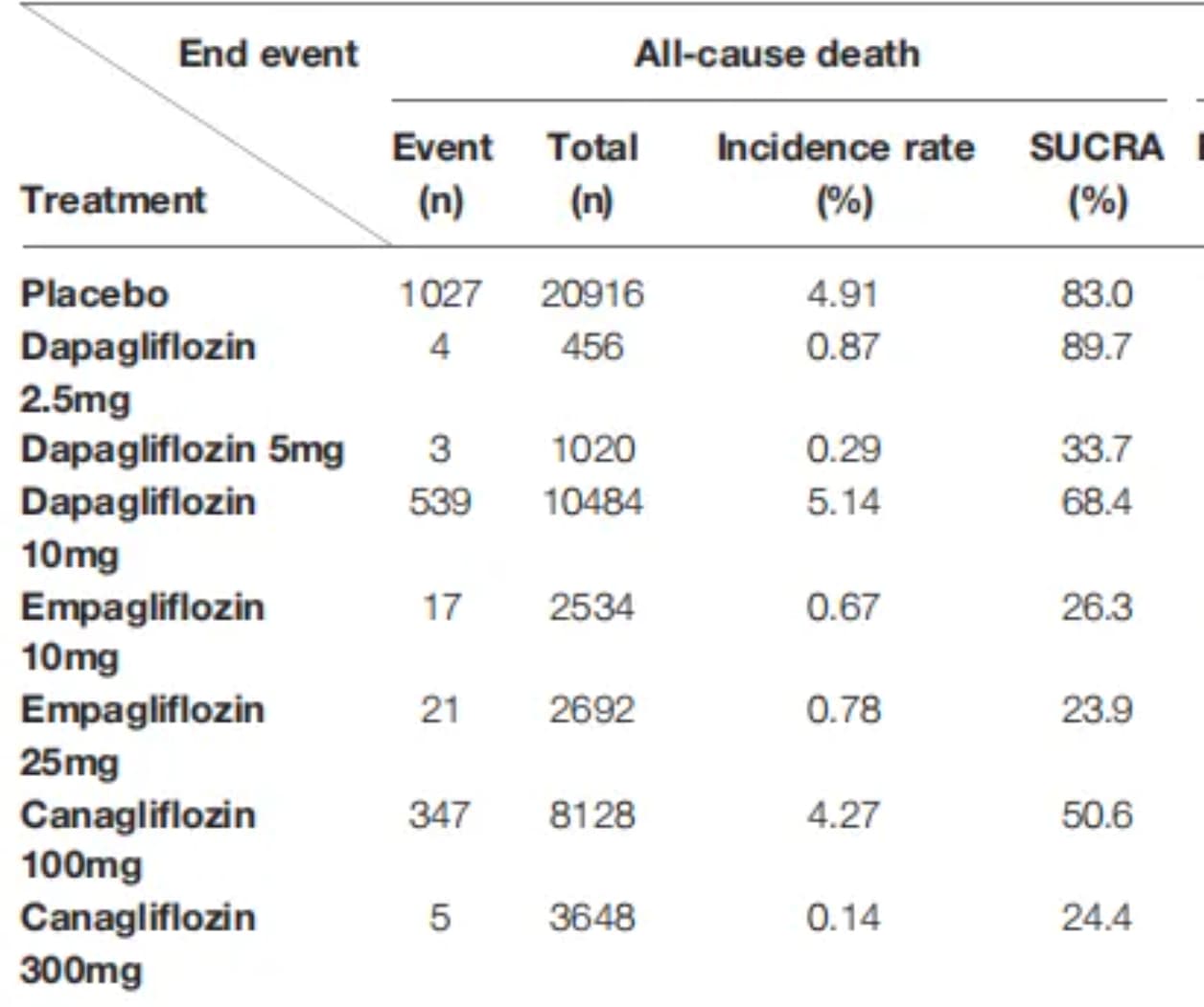
Do they cite the Mendelian randomization showing increased lifespan in males and increased IQ?
If not then it’s a low-quality review.
Do they cite the Mendelian randomization showing increased lifespan in males and increased IQ?
If not then it’s a low-quality review.
I noticed no diuretic effect either - which may mean it isn’t really doing much.
If you notice a diuretic effect, isn’t that because you spike your sugars high and subsequently dump them. So everyone is going to be different.
And if you have a strong diuretic effect, definitely keep taking it and maybe up the acarbose or watch sugar intake.
There is no diuretic effect:
Not for me either.
Has anyone read the paper? I’ve only been able to read the Abstract, which of course doesn’t mention Mendelian randomization.
If it hasn’t already been posted - a short 16 minute talk at ARDD2025 about 8 short term studies experimenting with SGLT2i off-label in “normal” people (younger that 60, no diabetes, no CKD, no HF ):
This can produce valuable information, as there is the core argument, that SGLT2i are simply normalizing detrimental effects of diabetes/CKD.
Thanks for sharing. Gemini summary (bold mine):
- Overview & Aim: The presentation discusses evaluating whether FDA-approved SGLT2 inhibitors (traditionally used for diabetes, kidney disease, and heart failure) can be repurposed as gerotherapeutics to optimize healthspan and lifespan in individuals without these diseases [03:30], [10:23].
- Mechanism: SGLT2 inhibitors work by inhibiting glucose reabsorption in the kidneys, causing the body to excrete glucose through urine [03:44]. This pleiotropic drug lowers blood pressure and offers systemic metabolic and cardiac benefits [04:12].
- Systematic Review Findings: A massive systematic review screened over 44,000 articles, ultimately analyzing 536 human studies [07:19].
- Off-Label Data: Looking strictly at 8 completed trials involving younger, conventionally “healthy” cohorts (ages 30–60) taking the drug off-label, SGLT2 inhibitors showed highly positive, statistically significant improvements across multiple organ systems—specifically cardiovascular, metabolic, renal, hepatic, and adiposity systems [08:31], [09:49].
- Research Gaps: Current off-label data severely lacks insights into how SGLT2i impacts the reproductive, immune, and nervous systems [10:51].
- The HEARTS Trial: To fill these gaps, a multi-disciplinary, 6-month clinical trial is being launched in Singapore [11:53]. It will evaluate the effects of 10mg of daily SGLT2i on healthy individuals (ages 35–65) with an optimal BMI, focusing on VO2 max as the primary outcome alongside digital and biological biomarkers [12:11].
SGLT2i are helpful in heart failure. But is that mostly true only in people with relatively rare genetic defects?
Effects of SGLT2 inhibition on incident heart failure in carriers of cardiomyopathy-associated genetic variants
https://www.nature.com/articles/s41591-026-04439-x
“Among 12,685 patients for whom sequence data were obtained, 121 carried a cardiomyopathy variant (76 dilated cardiomyopathy, 25 hypertrophic cardiomyopathy and 25 arrhythmogenic cardiomyopathy). Over a median follow-up of 4.2 years, dapagliflozin lowered the risk of HHF more strongly in carriers (hazard ratio 0.18, 95% confidence interval 0.04–0.86) than in noncarriers (hazard ratio 0.70, 95% confidence interval 0.57–0.86; P interaction 0.03). Absolute risk reduction was 13.0% in carriers and 1.0% in noncarriers (P interaction 0.03). Most carriers (82%) had no prior HF, and in carriers without prior HF, treatment with dapagliflozin reduced the absolute risk of HHF by 12.8%, compared with a reduction of 0.6% in noncarriers (P interaction 0.01).“
That may (or may not) be ultimately true. But most people here would consider SGLT2i for generally longevity and not specifically heat failure - which is different than ASCVD.
Kidney function in “normal healthy” people declines every year by about 1% of it’s original state - starting from mid age (40/50). So by age 90 you could loose about 50% of your kidney function, despite doing most things right.
This is similar to the rationale for lowering LDL or blood pressure: it’s just a very common issue even in “normal” people. So there may be an incentive to take preventative action, such as SGLT2i. In addition there’s a mild effect on weight loss and blood pressure (which could benefit most “normal” people).
Well, if you are very old and very sick (with multiple co-morbidities), and so ill with HF that you are hospitalized, it’s good to know that SGLT2i can still massively help with ACM (all cause mortality), hospitalization and composite outcomes. Observational study.
Efficacy and Safety of SGLT2 Inhibitors in Heart Failure: Observational Evidence in Geriatric Patients-AGING-HF
“SGLT2i use was associated with lower risks of all-cause mortality (hazard ratio, 0.67 [95% CI, 0.46-0.98]; P =0.031), HF rehospitalization (hazard ratio, 0.64 [95% CI, 0.42-0.97]; P =0.037), and the composite outcome (hazard ratio, 0.60 [95% CI, 0.44-0.82]; P =0.001) at 1 year, after multivariable adjustment.”
What many here are more interested in, is the effect of SGLT2i in nondiabetic conditions and what the possible mechanisms might be.
Mechanisms of heart failure and chronic kidney disease protection by SGLT2 inhibitors in nondiabetic conditions
https://journals.physiology.org/doi/full/10.1152/ajpcell.00143.2024
“This review provides an analysis of the multifaceted mechanisms underlying the cardiorenal benefits of SGLT2i in HF and CKD outside of the T2D context. Eight major aspects of the protective effects of SGLT2i beyond glycemic control are explored: 1 ) the impact on renal hemodynamics and tubuloglomerular feedback; 2 ) the natriuretic effects via proximal tubule Na+/H+ exchanger NHE3 inhibition; 3 ) the modulation of neurohumoral pathways with evidence of attenuated sympathetic activity; 4 ) the impact on erythropoiesis, not only in the context of local hypoxia but also systemic inflammation and iron regulation; 5 ) the uricosuria and mitigation of the hyperuricemic environment in cardiorenal syndromes; 6 ) the multiorgan metabolic reprogramming including the potential induction of a fasting-like state, improvement in glucose and insulin tolerance, and stimulation of lipolysis and ketogenesis; 7 ) the vascular endothelial growth factor A (VEGF-A) upregulation and angiogenesis, and 8 ) the direct cardiac effects.”
As much as I hate to add another daily pill to my regimen, it’s hard to ignore SGLT-2 inhibitors.
Going to a low-dose version because weight, A1c, glucose and insulin sensitivity are already well under control through a GLP1 agonist. In addition, studies that activate the following pleitropic effects :
-Ampk activation
Show that these are already activated at the minimum dose, as long as SGLT-2 receptors are sufficiently saturated to induce glucose excretion.
Curious about where egfr settles for me. After about 8 months on a GLP1/GCGR agonist, egfr rose to the mid 110s, supporting preliminary evidence that these drugs increase egfr through non-pathological hyperfiltration. SGLT-2 inhibitors initially lower it, although they stop the decline.
EGFR is just estimated. Any time you lose muscle mass or even just decrease protein intake, your eGFR will go up because the estimate is based on creatinine which is a muscle breakdown product.
Just like taking creatine will bring eGFR down. So would a hard workout before your blood draw.
Some labs are valuable to trend even while normal but trying to get meaning out of trending creatinine or eGFR is fraught when things are changing.
I say this because GLP-1s usually reduce muscle mass so would be expected to increase eGFR but not actually effect GFR. Even without weight loss, I would expect some effect only on the eGFR. Doesn’t necessarily mean your GFR didn’t go down, but you would need a better test to actually know.
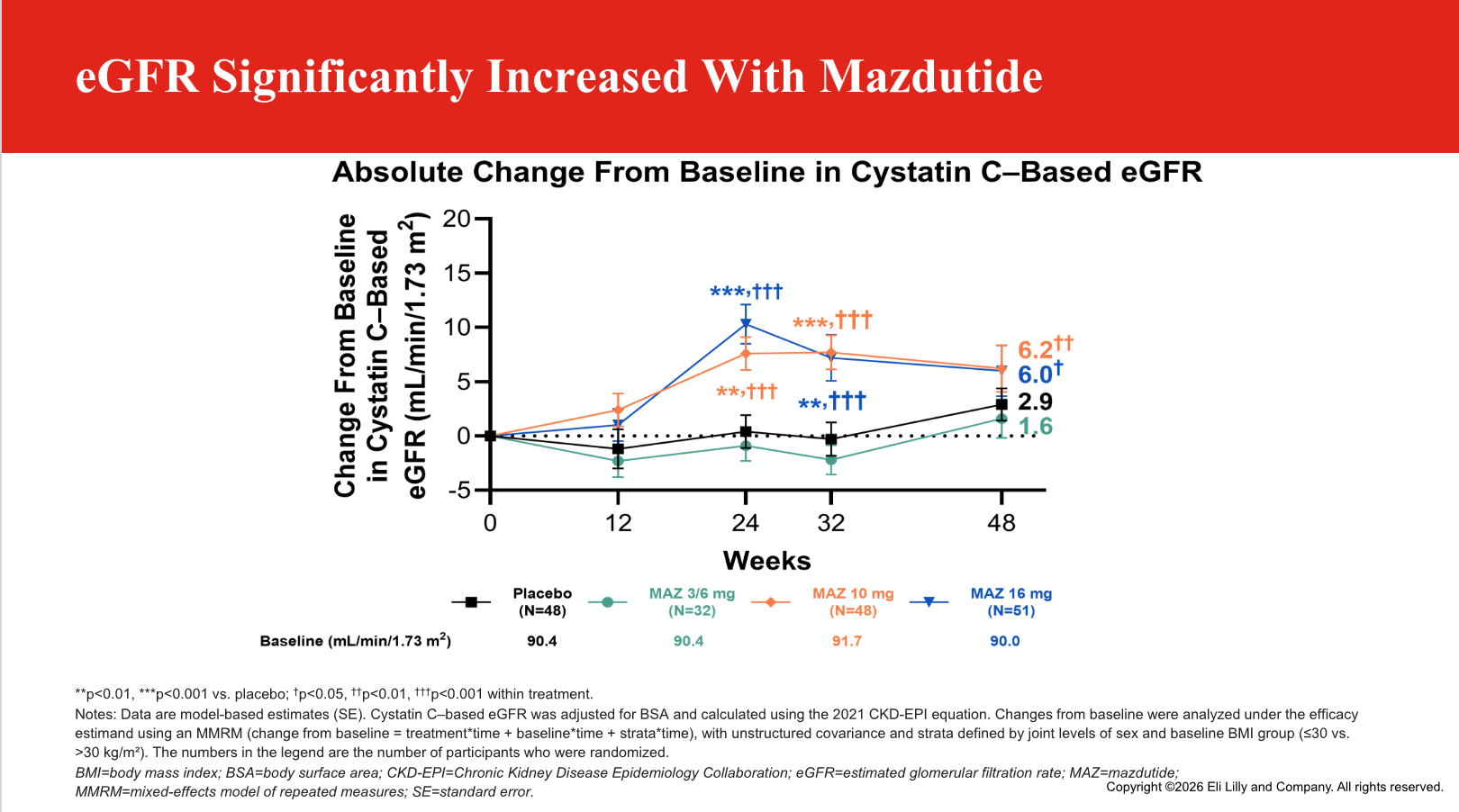
That’s good to know, about egfr, thanks. I’m basing my guess on this slide from phase 3 data on Mazdutide, which demonstrated statistically significant increase in Cystatin C-based eGFR by the end of the treatment period.
Note that:
All of this suggests a mechanism of increasing egfr independent of weight loss. Looking forward to the published data from Mazdutide and other GCGR agonists, hopefully some time this year.
Slides from ADA 2026:
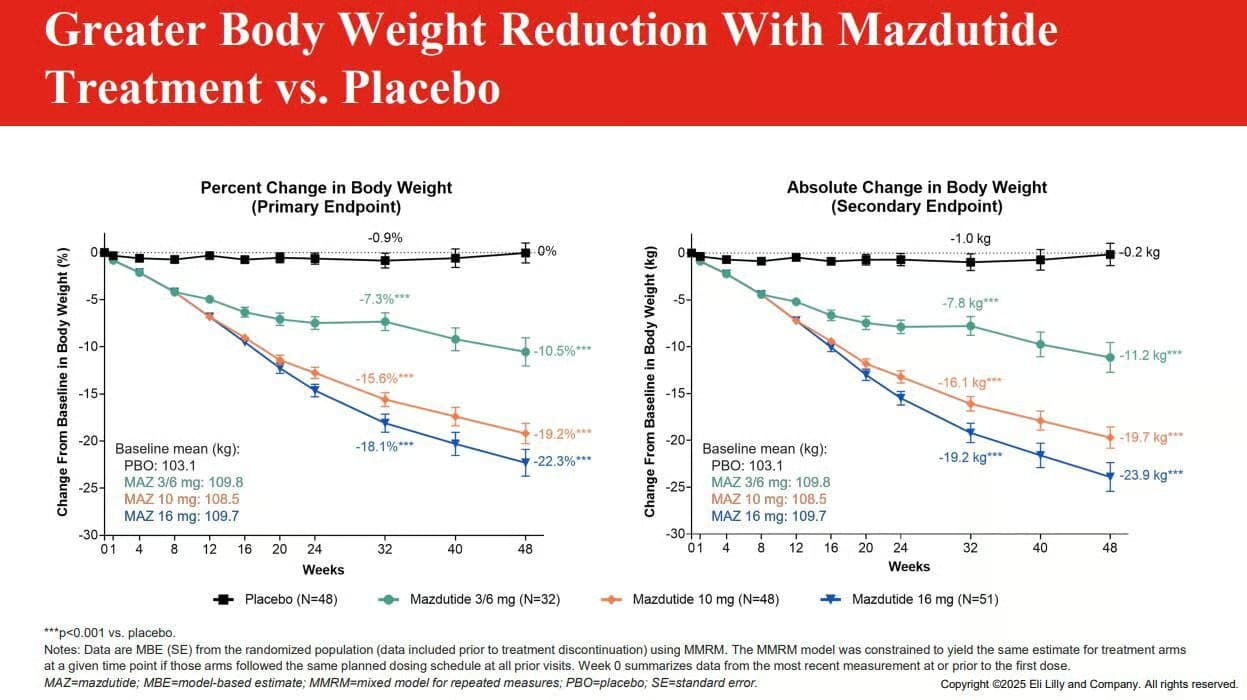
Weight loss curve for mazdutide
New pre-print paper showing that reducing the dose of canagliflozin in female mice does NOT reduce neurodegeneration (thus suggesting the lifespan enhancement in males but not females is also truly sex-specific and not due to the fact that the drug accumulates to much higher levels in female mice)
Females don’t need any life extension. They live longer than us already LOL
New paper pointing to another possible benefit of SGLT2i: slowing down aortic stenosis. Evidence found in mice and observational studies.
https://www.jacc.org/doi/10.1016/j.jacbts.2026.101595
One of the largest studies addressing the relationship between SGLT2i use and the natural history of AS was a multicenter observational retrospective analysis conducted by Shah and colleagues in 2025, which included 11,698 patients with early AS stages, ranging from aortic sclerosis to moderate AS, who underwent serial echocardiographic evaluation over a 3-year follow-up period.13 Among these individuals, 448 patients were treated with SGLT2i for diabetes management. After adjustment for baseline characteristics and comorbidities, SGLT2i therapy was associated with a significantly lower risk for progression to severe AS (HR: 0.61) compared with patients not receiving SGLT2i.13 In addition to the reduced risk for developing severe disease, the rate of echocardiographic progression (assessed by changes transvalvular gradients and valve area over time) was slower in the SGLT2i–treated cohort.
From the paper:
“Aortic stenosis (AS), the most common valvular heart disease in the aging population, is characterized by progressive valve calcification and chronic left ventricular pressure overload. No disease-modifying pharmacologic treatment has yet been found to slow AS progression or to prevent myocardial remodeling in AS.”
That is true in humans. That is not true in cats - the FDA has provisionally approved a formulated rapamycin for HCM in cats, one cause of which is frequently associated with AS. Regarding AS specifically, there is substantial data of AS attenuation in animals (mice) leading to downstream reversals of the AS resultant morbidities from cardiac remodeling (hypertrophy etc.); the impact on the biology of AS needs further elucidation.
Inhibition of mTOR reduces chronic pressure-overload cardiac hypertrophy and fibrosis
Chronic Rapamycin Therapy Ameliorates Hypertrophy and Systolic Dysfunction in Severe Chronic Heart Failure Due to Pressure Overload
https://onlinejcf.com/article/S1071-9164(10)00296-4/fulltext
This is an especially interesting (old!) paper that gets at heart failure through kidneys in mice, wherein rapamycin ameliorates the effects of cardiac remodeling while blood pressure lowering with drugs does not. Another win for rapamycin in kidney disease CVD complications!
Uremic cardiac hypertrophy is reversed by rapamycin but not by lowering of blood pressure
Novel Associations of Empagliflozin on the Gut Microbiome and Metabolome in Type 2 Diabetes
https://academic.oup.com/jcem/article/107/10/e4246/6604095?login=false
"The beneficial effects of sodium/glucose cotransporter-2 inhibitors (SGLT2is) in individuals with type 2 diabetes (T2DM) at high risk for cardiovascular disease (CVD) is well documented (1). In addition, their use in individuals with both diabetic and nondiabetic chronic kidney disease to attenuate disease progression is extensively validated (1). However, much less is known about the mechanisms behind these beneficial effects, including whether these agents can affect gut microbiome and metabolomics.
The article by Deng et al (2) reports on the association of cardiovascular benefits of empagliflozin with gut microbiota and plasma metabolites in individuals with T2DM. This trial included 76 treatment-naïve adults with diet-controlled T2DM and risk factors for CVD randomized in an open label, 2-arm clinical trial for 3 months. Patients were treated with either empagliflozin or metformin and the authors reported the following: (1) significant and similar reductions in glycated hemoglobin levels and improvements in glucose metabolism in the 2 groups with only empagliflozin improving CVD risk factors; (2) empagliflozin significantly reshaped the gut microbiota after 1 month of treatment and this effect was maintained until the completion of the study period; (3) empagliflozin elevated levels of sphingomyelin and demonstrated reduced levels of cis-aconitate, uric acid, and glycochenodeoxycholate; (4) empagliflozin increased favorable short-chain fatty acid–producing bacteria such as species from Roseburia, Eubacterium, and Faecalibacterium and reduced harmful bacteria such as Escherichia-Shigella, Bilophila, and Hungatella.
This study reaffirms further metabolic benefits of SGLT2is compared with metformin, particularly in relation to elevated levels of hematocrit and adiponectin, and reduced levels of blood pressure and uric acid observed only in individuals treated with empagliflozin.
While there have been previous studies investigating the effect of metformin on gut microbiota (3), there have been few studies in the literature regarding the effect of SGLT2is on the gut microbiome. In fact, the limited evidence in the literature did not demonstrate a difference in the composition of the gut microbiome with the use of dapagliflozin compared with gliclazide in those with T2DM (4). This is in contrast to the findings of the study by Deng et al, which found empagliflozin to increase beneficial levels of short-chain fatty acid–producing bacteria such as species from Roseburia, Eubacterium, and Faecalibacterium, and reduced those of several potentially harmful bacteria including Escherichia-Shigella, Bilophila, and Hungatella compared with the microbiome in individuals with T2DM treated with metformin. The inconsistent results between these 2 randomized controlled trials may be attributable to the limitations associated with selection of intervention, as some studies have demonstrated empagliflozin to be more effective than dapagliflozin at reducing glycated hemoglobin (5), patient cohorts, or analysis of the gut microbiome. Replication of these studies in larger numbers will help with validating such discrepancies.
SGLT2is by virtue of their mechanism of action of sodium and glucose inhibition in the proximal convoluted tubules cause glycosuria and natriuresis (1), resulting in a change in the biochemical milieu. The intestinal microbiota can be very adaptable to changes in the biochemical milieu. It was therefore interesting to observe the changes in the gut microbiome and plasma metabolites occurring early after the initiation of empagliflozin. In fact, the gut microbiome changes occurred as early as 4 weeks and were consistently stable over the 8- and 12-week study period. This highlights the importance of serial measurements to reflect potential early beneficial changes with intervention and to provide more consistent data. One limitation, however, is the study period was only 3 months, and we do not know whether these metabolome and microbiome changes lasted beyond the treatment period or whether they returned to baseline. A consideration for future design would be to sample even more frequently and perhaps even earlier at 2 weeks to determine whether changes occurred earlier and ensure follow-up over at least a 12-month period.
The inhibition of sodium/glucose cotransporter-2 reduces plasma glucose levels, thereby promoting lipolysis in adipose tissue, resulting in ketone generation. A feature of SGLT2i-treated individuals is the increase in circulating levels of ketone bodies (6). Ketone bodies or β-hydroxybutyrate, beyond acting as a carrier of energy from adipocytes to peripheral tissues, have important cellular signaling roles (7). It has been previously demonstrated that empagliflozin via increased serum β-hydroxybutyrate levels and reduced serum insulin significantly suppressed the NOD-like receptors (NLR) family, pyrin domain–containing (NLRP3) inflammasome activation, and subsequent secretion of interleukin-1β in human macrophages, thus reducing the pathogenic effect on T2DM and CVD (7). These effects were further verified ex vivo (7). The study by Deng et al also demonstrates a consistent increase in serum β-hydroxybutyrate levels in the empagliflozin group but is not statistically significant. The authors noted that after the 3-month treatment period with empagliflozin, there were increased levels of metabolites such as fatty acids, fatty acyls, organic acids, and phosphosphingolipids but reduced levels of metabolites such as amino acids and uric acid. Furthermore, there was no significant correlation between serum β-hydroxybutyrate levels and the differential metabolites in those treated with empagliflozin. This is an evolving area of interest and further study into the role of serum β-hydroxybutyrate levels to ameliorate inflammation would provide some insight into the cardioprotective role of SGLT2is.
The unanswered question is whether the metabolic effects of SGLT2i treatment result in an improved gut microbiome and plasma metabolite profile, or whether the metabolic effects themselves are driven by changes in the microbiome and metabolome. The authors postulate it may be the former and that modulation of the microbiome and metabolome may be another mechanism of action of SGLT2is in addition to the inhibition of sodium/glucose cotransporter-2. As pointed out by the authors, this inference would require the detailed investigation into further mechanisms of action of SGLT2is. This is pertinent, as human microbiome investigations are moving from bacterial description and investigation to an understanding of the mechanisms of action, paving the way for improved clinical intervention (8). Perhaps future studies could consider a focus on the gut microbiota’s metabolic activity as a better reflection of treatment intervention than the traditional microbiota richness or diversity (9), as understanding the metabolic capabilities of the gut microbiota is necessary in explaining their role in health and disease. Further areas for consideration are whether different types of SGLT2is result in similar or different changes in the microbiome and metabolome.
The authors are to be commended for this important addition to an ever-increasing knowledge on the benefits of SGLT2is, now particularly describing the potential novel benefits on the gut microbiota and plasma metabolites. However, the robustness of these associations needs to be tested in larger cohorts, over longer durations, and in replicated studies. We look forward to future studies that clarify the issues outlined above."
CAUTION: Chinese paper.
Empagliflozin ameliorates atherosclerosis via regulating the intestinal flora
https://www.sciencedirect.com/science/article/pii/S0021915023001132