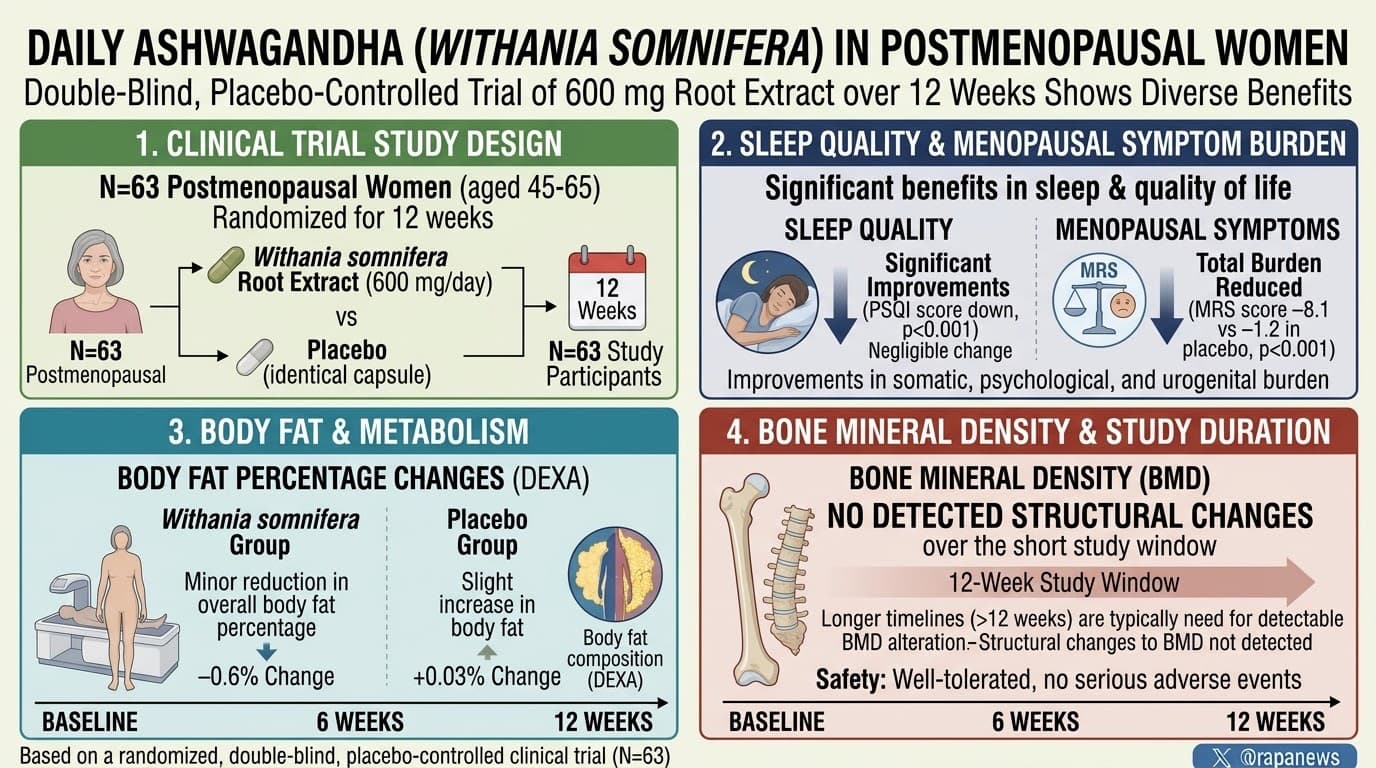
A randomized, double-blind, placebo-controlled trial investigated the effects of a 600 mg daily dose of Withania somnifera root extract on postmenopausal women over 12 weeks. The intervention resulted in significant improvements in sleep quality and a reduction in total menopausal symptom burden. Treated participants also experienced minor reductions in overall body fat percentage compared to a slight increase in the placebo group. However, structural changes to bone mineral density were not detected during the short 12-week study window.
The menopausal transition is a critical biological phase characterized by hormonal shifts that drive systemic aging, metabolic dysregulation, and a severe decline in quality of life. Current pharmacological interventions, primarily hormone replacement therapy, provide broad benefits but carry certain cardiovascular and oncological risks that limit widespread adoption among aging populations. Consequently, longevity researchers and clinicians have increasingly turned to adaptogenic compounds to address the overlapping neuroendocrine and inflammatory pathways involved in the postmenopausal aging process.
A new study from Guru Nanak Dev University evaluated ashwagandha root extract as a multi-target intervention for menopause-associated physiological decline. Ashwagandha contains bioactive withanolides that have historically been shown to modulate the hypothalamic-pituitary-adrenal axis, making it a strong candidate for treating age-related neuroendocrine dysfunction. The clinical trial enrolled 66 postmenopausal women and administered either 600 milligrams of ashwagandha root extract or an inert placebo daily for 12 weeks. The primary clinical endpoints measured by the research team were sleep quality, menopausal symptoms, and whole-body composition changes.
The empirical results demonstrate that ashwagandha drives a massive improvement in sleep architecture and overall symptom mitigation. Women taking the extract saw their scores on the Pittsburgh Sleep Quality Index plummet, indicating a rapid transition from chronic poor sleep to healthy sleep patterns. Symptom burden, which includes complex psychological, somatic, and urogenital complaints, was reduced by an amount that greatly exceeds standard clinical thresholds for significance.
Crucially, the intervention slightly altered human body composition. While the placebo group trended toward fat accumulation, the ashwagandha group lost body fat. Excess adipose tissue secretes pro-inflammatory cytokines that directly accelerate skeletal aging, increase allostatic load, and drive metabolic disease. By reducing adipose tissue without forcing severe caloric restriction, the intervention may dampen systemic inflammation and protect structural tissues.
Despite these clear systemic improvements, the 12-week intervention failed to produce measurable changes in bone mineral density. This outcome is biologically expected, as human bone remodeling cycles require a strict minimum of four to six months to manifest structural alterations detectable by dual-energy x-ray absorptiometry scans. The research team hypothesized that the documented improvements in sleep quality, cortisol modulation, and fat reduction create an endocrine environment favorable to skeletal preservation over longer timelines, though extended clinical trials are required to verify this specific claim.
Actionable Insights For individuals navigating postmenopausal physiological shifts, this study presents a highly actionable intervention with a strong safety profile. Daily supplementation with 600 milligrams of ashwagandha root extract yields practical benefits for longevity and healthspan.
The magnitude of the sleep enhancement is massive. The treatment group reduced their Pittsburgh Sleep Quality Index scores by 5 points, achieving a standardized effect size of r=0.80. This represents a transition from 82.4% of participants suffering from poor sleep down to only 12.1%.
Menopausal symptom burden also decreased by 8.18 points on the Menopause Rating Scale. This is a standardized effect size of r=0.78, indicating a large, real-world improvement in daily quality of life.
Body fat decreased by an absolute 0.62% in the treatment group, compared to a 0.03% increase in the placebo group, generating an effect size of r=0.63. While modest in absolute terms, reversing age-related adiposity gains is highly relevant for minimizing systemic inflammation.
Context/Source
- Paywalled Paper: Effects of Withania somnifera root extract on sleep quality, body composition, and menopausal symptoms in postmenopausal women: a randomized, double-blind, placebo-controlled trial.
- Institution: Guru Nanak Dev University, Amritsar, Punjab, India.
- Journal: Menopause.
- Impact Evaluation: The impact score of this journal is 3.9, evaluated against a typical high-end range of 0–60+ for top general science, therefore this is a Medium to Low impact journal.