ARDD 2025 Meeting Videos Now Available

See YouTube, they have (or are in the process of uploading of all videos from the conference). Post the videos you think are specifically very good or relevant (or translatable to action). Note, there are errors in some of the links to supporting papers in the transcript summaries below - I’ll be updating these over the next day or two.

I’ve tried to identify the videos that I think would appeal to the broadest audience below.

1 Like

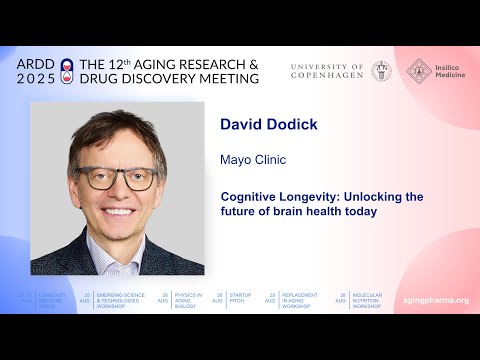
David Dodick at ARDD2025: Cognitive Longevity: Unlocking the future of brain health today

Gemini Pro AI Summary and Analysis of Video

David Dodick, Mayo Clinic, presents at the 27th Aging Research and Drug Discovery meeting: Cognitive Longevity: Unlocking the future of brain health today

David Dodick argues that cognitive decline is not an inevitable consequence of aging and that current estimates of dementia preventability (45%) are significant underestimates.


A. Executive Summary

Dr. Gregory Day posits that the “longevity boon” will be a failure if cognitive lifespan does not match physical lifespan. He highlights a critical “imagination gap” in medicine, where cognitive decline is treated as an inevitable age-related decline rather than a modifiable pathological process. Currently, 1 in 3 adults over 85 suffer from Alzheimer’s Disease (AD), with women facing a 20% lifetime risk.

The core thesis is that dementia prevention is significantly more achievable than the 45% figure cited by the Lancet Commission. By expanding modifiable factors beyond the Commission’s 14—to include sleep, shingles/flu vaccinations, and hormone replacement therapy (HRT)—Day suggests 47% to 73% of cases are potentially preventable. He emphasizes “precision longevity,” noting that interventions like Metformin or Rapamycin may have divergent effects based on genotype (e.g., APOE4 or TREM2 variants).

Day advocates for a “life course approach,” where brain health is treated as a recursive process starting in childhood. He presents emerging evidence for aggressive risk reduction: hearing aid use can reduce 3-year dementia risk by 48%, and specific vaccinations (shingles/flu) show a dose-response relationship with reduced neurodegeneration. He also highlights the transition from traditional evidence-based medicine to “evidence-informed, risk-adjusted care,” allowing for the use of emerging therapies like GLP-1 agonists, hyperbaric oxygen therapy (HBOT), and mesenchymal stem cells in high-risk patients before full clinical validation is complete.

The presentation concludes by identifying proteomic organ clocks (especially brain and immune clocks) as the future of diagnostics, outperforming chronological age in predicting mortality and disease. He calls for a deeply phenotyped, integrated clinical model that moves from one-on-one medicine to scalable public health interventions.


B. Bullet Summary

  • The Cognitive Gap: 89% of executives over 45 rank cognitive decline as their primary health concern regarding aging to 120.
  • MCI Prevalence: Approximately 25–33% of the global population over 65 currently meets the criteria for Mild Cognitive Impairment (MCI).
  • Preventability Underestimated: While the Lancet cites 45% preventability, including 61 modifiable factors suggests a ceiling of 73% or higher.
  • Vascular-Brain Link: 7 of the 14 Lancet risk factors are vascular; Day’s mantra is “Nourish the heart, fortify the brain.”
  • Hearing Aids as Neuroprotection: Wearing hearing aids in the context of hearing loss can reduce dementia risk by 48% over three years.
  • Blood Pressure Targets: Every 10mmHg drop in BP reduces stroke risk by 37% and dementia risk by 15%.
  • Precision Nutrition: Mediterranean diet adherence reduces dementia risk in APOE4 homozygotes by 35%.
  • The Vaccine Connection: Recombinant shingles vaccination is associated with a 32% reduction in 6-year dementia risk.
  • Flu Shot Efficacy: Receiving 4+ flu vaccine doses over a lifetime correlates with a 57% reduction in dementia risk.
  • p-tau217 Blood Tests: The FDA-cleared p-tau217 blood test is >90% predictive of brain amyloid and tau pathology.
  • GLP-1s in the Brain: Observational data suggests GLP-1 agonists reduce dementia incidence by 33–53% in diabetics.
  • Translational Nuance: Metformin and Rapamycin may have different (potentially negative) effects on cognition depending on APOE or TREM2 status.
  • Stem Cell Preservation: Bone marrow-derived mesenchymal stem cells (Longeveron) showed preservation of hippocampal volume in Phase 2 trials.
  • Hyperbaric Oxygen (HBOT): Emerging data suggests HBOT improves cerebral perfusion and cognitive performance in MCI.
  • Organ Aging Gaps: Proteomic clocks show that “brain age” is the strongest predictor of early mortality.
  • HRT & The Brain: Early menopause accelerates organ aging; estrogen therapy is strongly correlated with youthful multiorgan and brain profiles.
  • Inflammaging: Cytokine profiles (inflammaging clocks) are more predictive of frailty and cognitive decline than chronological age.
  • The Scalability Need: True prevention requires “deep phenotyping”—integrating proteomics, genetics, and continuous longitudinal monitoring.

D. Claims & Evidence Table (Adversarial Peer Review)

Claim from Video Speaker’s Evidence Scientific Reality (Best Available Data) Evidence Grade Verdict
Hearing aids reduce dementia risk by 48% Cites specific 3-year risk reduction figure ACHIEVE Trial (2023) showed this effect only in high-risk older adults. General population effect was null. B (RCT - Subgroup) Plausible (High Risk)
Shingles vaccine reduces dementia risk by 32% Recombinant vaccine naturalistic study (200k people) Taquet et al. (2024) confirmed Shingrix is associated with 17% more time lived diagnosis-free vs. older vaccines. C (Large Cohort) Strong Support
p-tau217 blood test is >90% predictive FDA-cleared test metrics ALZ-NET data confirms p-tau217 accuracy rivals PET scans for amyloid/tau. B (Diagnostic Validation) Strong Support
GLP-1s reduce dementia risk by 33-53% Observational studies in diabetics Meta-analyses of RCTs show promise, but primary outcomes for dementia in non-diabetics (EVOKE trials) are pending. C (Cohort) Plausible
Estrogen/HRT preserves “youthful” brain Organ-aging proteomic study (Wisay-Coray) The KEEPS trial showed neutral effects on cognition, though “Timing Hypothesis” suggests early initiation is key. C (Proteomic/Cohort) Plausible (Emerging)
Stem cells preserve hippocampal volume Longeveron (Lomecel-B) Phase 2 trial Phase 2a data showed safety and some volume preservation, but sample sizes are small (). B (Small RCT) Speculative
Metformin/Rapamycin may harm APOE4/TREM2 Mechanistic speculation / cohort variance Pre-clinical data suggests Rapamycin affects microglia; human evidence for APOE4-specific harm is currently low-grade. D (Mechanistic) Translational Gap

E. Actionable Insights

Top Tier (High Confidence - Level A/B Evidence)

  1. Aggressive BP Management: Target a systolic blood pressure below 130 mmHg (ideally near 120 mmHg) to significantly lower neurovascular risk.
  2. Audit Hearing Health: If hearing loss is detected, utilize hearing aids immediately. The cognitive load reduction is a proven “low-hanging fruit.”
  3. Vaccination Protocol: Ensure completion of the 2-dose recombinant Shingles (Shingrix) series and annual Influenza vaccines.
  4. Know Your Biomarkers: Request high-sensitivity p-tau217 testing if concerned about cognitive symptoms or family history.
  5. Metabolic Optimization: Target HbA1c < 5.6% and fasting insulin < 7 mIU/L for optimal brain health, rather than just “normal” lab ranges.

Experimental (Risk/Reward - Level C/D Evidence)

  1. HRT Timing: For women, consider Estrogen replacement therapy at the onset of perimenopause/menopause to mitigate accelerated organ aging.
  2. Precision Nutrition: If an APOE4 carrier, double down on strict Mediterranean dietary patterns (high polyphenols, Omega-3s).
  3. GLP-1 Consideration: For those with metabolic syndrome and high genetic AD risk, discuss GLP-1 agonists with a physician for potential off-label neuroprotection.

Avoid

  1. “Senior Moment” Complacency: Do not treat minor cognitive slips as inevitable. Screen early when the “pathological incubation” period is still active.

H. Technical Deep-Dive: Plasma Proteomics & Organ Clocks

The presentation relies heavily on the Wisay-Coray Organ Aging Model. This technology utilizes large-scale proteomics (SomaScan or Olink platforms) to measure thousands of proteins in plasma. By identifying protein subsets highly expressed in specific organs (e.g., GFAP or NEFL for the brain), researchers can calculate an “organ age.”

  • The Brain-Immune Axis: The finding that brain and immune clocks are the best predictors of mortality suggests that systemic aging is governed by central nervous system integrity and inflammatory signaling (Inflammaging).
  • Translational Risk: The speaker’s note on TREM2 and Rapamycin refers to the Triggering Receptor Expressed on Myeloid cells 2. In certain genotypes, autophagy enhancers like Rapamycin might inadvertently suppress the microglial response required to clear amyloid-beta, illustrating why “one-size-fits-all” longevity pharmacology is dangerous.

Next Step: Would you like me to perform a specific deep-dive into the upcoming EVOKE trial results (Semaglutide for Alzheimer’s) or retrieve the full paper on Plasma Proteomics Organ Aging?

1 Like

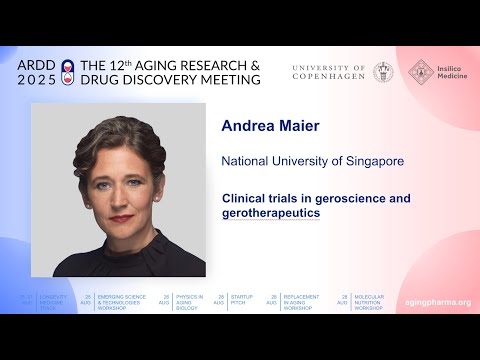
I see Andrea Maier gave a talk, and it was mostly about NUS’s AKG clinical trial results!:

The results were interesting. They didn’t really see much of an effect, exact when it came to people who were “physically active”. In that population they saw quite a large percent that had 1.5 year drop in DNAm change in the AKG group compared to placebo – and at all three testing points, mid-intervention, end-of-intervention, and follow-up. The p-values, however, could have been better; and the last one (follow-up) failed to reach statistical significance; the other two were p = 0.04 and p=0.0335.

It’s possible, though, that I’m just misinterpreting it.

Omg now I have to hold off watching them so I have something to watch next time I’m bedridden (eg from retatrutide overdose) or on the commuter rail…

1 Like

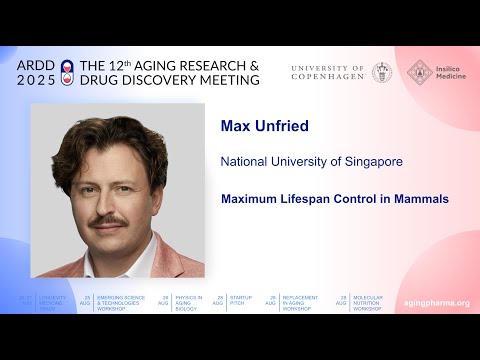
Max Unfried at ARDD2025: Maximum Lifespan Control in Mammals

Gemini Pro AI Summary and Analysis of Video

This transcript features Max Unfried, a computational biologist or evolutionary researcher (associated with Singapore’s NUS research foundation), presenting on the mathematical and molecular mechanisms governing maximum lifespan across mammalian species.


A. Executive Summary

The presentation addresses a fundamental biological question: Why is maximum lifespan right-skewed across almost all animal classes, and what stochastic processes govern its evolution? Max argues that lifespan evolution is not a random walk (Brownian motion) but is best modeled by the Ornstein-Uhlenbeck (OU) process, which incorporates a “stabilizing force” that pulls traits toward an evolutionary optimum.

Key research findings include a quadratic scaling law: longer-lived mammalian families (like whales) exhibit significantly higher variance in lifespan than shorter-lived ones, suggesting that evolution permits greater “aging diversity” and multiple adaptive paths to longevity in long-lived species.

On a molecular level, the speaker utilizes a lipidomic dataset of 34 mammalian species to demonstrate that a subset of approximately 100 lipids (grouped into 5 Principal Components) can predict not only maximum lifespan (explaining 60% of the variance) but also developmental milestones like sexual maturity and gastrulation. By applying multivariate OU processes to this lipid data, Max identifies two distinct regimes:

  1. Drifting Lipids: Low evolutionary pull; high exploration (e.g., triglycerides/storage lipids). Intervention here is low-risk but likely low-reward.
  2. Stabilizing Lipids: Strong evolutionary pull; highly conserved (e.g., cardiolipins for mitochondrial metabolism). Intervention here is high-risk/high-reward.

Max proposes that PC6 (Phosphatidylcholines) represents the “sweet spot” for intervention—moderately constrained but with enough drift to be targetable. The talk concludes with the announcement of a large-scale evolutionary drug discovery project aimed at building a biobank of 250+ species to identify the radical tweaks evolution utilized to extend lifespan beyond 120 years.


B. Bullet Summary

  • Extreme Value Distribution: Maximum lifespan across mammals, birds, and reptiles is consistently right-skewed.
  • OU Process Modeling: Lifespan evolution is best described by the Ornstein-Uhlenbeck process, which features a “selection strength” (α) pulling toward an optimum.
  • Scaling Law of Variance: Longer-lived animal families show much higher variance in lifespan, implying diverse evolutionary adaptations.
  • Lipidomic Predictors: Just 35 mammalian species’ lipid profiles can predict maximum lifespan with high accuracy.
  • The Aging-Development Link: The same lipids that predict lifespan also predict time to sexual maturity and gastrulation, suggesting a shared molecular program.
  • Eigen-Lipid Regimes: Molecular pathways are divided into “drifting” (low selection) and “stabilizing” (high selection) categories.
  • PC3 & PC4 (Drift): Dominated by triglycerides; associated with turnover and storage with low evolutionary constraint.
  • PC14 & PC24 (Stabilizing): Includes cardiolipins and sphingolipids; vital for mitochondrial function and inflammation.
  • Targeting the “Middle”: PC6 (Phosphatidylcholines) is identified as the optimal target for medium-risk, medium-reward longevity intervention.
  • Beyond 120 Years: Max argues we must move beyond homology (mouse models) to understand what evolution did “radically” to achieve extreme longevity.
  • New Biobank Project: A planned 250+ species atlas will include single-cell transcriptomics, glycomics, and metabolomics.
  • Data Uncertainty: Acknowledges that maximum lifespan estimates for long-lived species (e.g., Bowhead whales) are often underestimates.

D. Claims & Evidence Table (Adversarial Peer Review)

Claim from Video Speaker’s Evidence Scientific Reality (Best Available Data) Evidence Grade Verdict
Lifespan follows OU process evolution AIC metric comparison (OU vs Brownian Motion) Widely accepted in comparative biology; OU models better account for selective constraints on traits like body size and lifespan. C (Computational Modeling) Strong Support
Lipidome predicts Max Lifespan (60% variance) PC analysis of 34 species (Gorbunova/Seluanov data) Supported by Jaeger et al. (2015)and others; lipid membranes are key longevity determinants (Membrane Pacemaker Theory). C (Observational/Omics) Plausible
PC6 is the “Sweet Spot” for intervention OU parameter modeling (α vs σ) Theoretical. No current RCT or human data supports PC6 modulation specifically for maximum lifespan extension. D (In silico/Mechanistic) Speculative
Cardiolipins are highly stabilizing/conserved Lipidomic evolutionary drift analysis Well-supported; cardiolipin is essential for mitochondrial cristae and energy production. Mutations are usually lethal/severe (e.g., Barth Syndrome). D (Mechanistic) Strong Support
Lifespan/Development link is a “Program” Correlation with sexual maturity/gastrulation Consistent with “Pleiotropy” and “Developmental Theory of Aging.” High correlation between maturity rate and lifespan is a known biological rule. C (Cohort/Species) Strong Support

E. Actionable Insights

Top Tier (High Confidence - Level A/B Evidence)

  • Monitor Mitochondrial Health: Given the evolutionary stability of Cardiolipins (PC14/24), interventions that support mitochondrial membrane integrity (e.g., exercise, specific precursors) are fundamentally sound, though current data is more about preventing decline than extending the 120-year limit.

Experimental (Risk/Reward - Level C/D Evidence)

  • Phosphatidylcholine (PC) Optimization: PC6 was identified as a targetable axis. While direct lifespan extension is unproven, ensuring adequate dietary intake or supplementation of Phosphatidylcholines may support the “medium-risk” pathway identified by the speaker.

Image of Phosphatidylcholine molecular structure

Shutterstock

Explore

  • Evolutionary Track Discovery: Instead of following standard mouse-model drug discovery, look toward compounds produced by long-lived species (e.g., Naked Mole Rats, Bowhead Whales).

Avoid

  • Triglyceride-Centric Longevity focus: PC3/4 (Triglycerides) are high-drift/low-selection. While important for general health (metabolic syndrome), the speaker suggests they are unlikely to move the needle on maximumspecies lifespan.

H. Technical Deep-Dive: The Ornstein-Uhlenbeck (OU) Process

In the context of this talk, the OU process is used to distinguish between neutral drift and adaptive selection.

  • The Equation: dXt​=α(θ−Xt​)dt+σdWt​
    • θ: The long-term mean (evolutionary optimum).
    • α: The rate of “reversion” or strength of selection.
    • σ: The volatility (random drift).
  • Biological Significance: If a lipid class has a high α, it is essential for life; any deviation is “pulled back” by natural selection. If it has a high σ and low α, it is likely an “evolutionary accessory” that can change without high fitness costs. The speaker’s discovery is that longevity itself—and the lipids supporting it—are under stabilizing selection, not just random mutation.

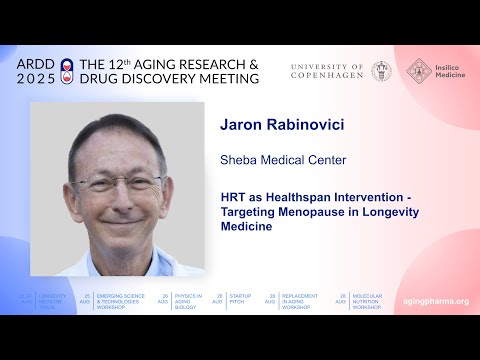
Jaron Rabinovici at ARDD2025: HRT as Healthspan Intervention - Targeting Menopause in Longevity

Gemini Pro AI Summary and Analysis of Video

This transcript features Jaron Rabinovici, a gynecologist and longevity specialist at the Sheba Medical Center in Israel, discussing the transition of Hormone Replacement Therapy (HRT) from a symptom-management tool to a robust geroprotective intervention. The speaker argues that estrogen is a master regulator that influences all 12 hallmarks of aging and that its decline during menopause triggers systemic decay.


A. Executive Summary

The presentation redefines menopause not as a natural transition to be endured, but as a state of hormonal deficiency that accelerates biological aging. The speaker posits that Estradiol (E2) is a true geroprotector because it extends healthspan, delays age-related diseases, and modulates all 12 hallmarks of aging.

A central pillar of the talk is the “Timing Hypothesis”: HRT initiated during the perimenopausal window (ages 50–59) provides significant cardiovascular and neuroprotective benefits, whereas late initiation (post-age 60) may be ineffective or even harmful due to established atherosclerotic plaques. The speaker aggressively critiques the Women’s Health Initiative (WHI) study, labeling it a “killer of women” for misrepresenting HRT risks by focusing on an older, unhealthy demographic.

The analysis concludes that transdermal estradiol combined with micronized progesterone is the optimal longevity protocol. This regimen has been shown to reduce all-cause mortality by 30% over five years. The speaker advocates for universal screening and “precision” HRT based on blood level monitoring to maximize the “hormonally balanced menopause.”


B. Bullet Summary

  • Gynecology as Longevity: Ovarian health is the “clock” of female longevity; early/late menarche and irregular cycles are predictive of all-cause mortality.
  • The 12 Hallmarks: The speaker claims estrogen receptors exist in nearly every organ, allowing E2 to positively influence all 12 hallmarks of aging simultaneously.
  • The Timing Hypothesis: HRT must start early to keep arteries plaque-free; starting too late cannot reverse existing damage.
  • Mortality Reduction: New data indicates a 30% decline in all-cause mortality for women on transdermal HRT for five years.
  • Neuroprotection: Estrogen improves hippocampal plasticity and reduces amyloid-beta deposition, significantly lowering dementia risk if started early.
  • Bone Health: HRT reduces vertebral and hip fractures by up to 34%, with benefits persisting even after stopping treatment.
  • The WHI Rebuttal: The speaker argues the 2002 WHI study used the wrong demographic (average age 63) and outdated oral formulations.
  • Breast Cancer Perspective: While there is a slight increase in risk (10%), the absolute numbers are low (15-20 cases per 100k), and early diagnosis ensures high survival.
  • Metabolic Health: E2 improves glycemic control, counteracts adiposity, and reduces insulin resistance.
  • Transdermal Advantage: Transdermal E2 does not increase blood clot (coagulation) risks, making it safer than oral versions.
  • Male Estrogen: 17-alpha estradiol (a non-feminizing isomer) shows life-extension promise in rodents but remains experimental for men due to side effects.
  • Measuring Levels: The speaker emphasizes that HRT should be dosed by measuring blood levels (Precision Medicine) rather than “one size fits all” prescribing.

D. Claims & Evidence Table (Adversarial Peer Review)

Claim from Video Speaker’s Evidence Scientific Reality (Best Available Data) Evidence Grade Verdict
HRT reduces mortality by 30% 5-year study on transdermal HRT Supported by Danish Osteoporosis Prevention Study (DOPS), showing long-term mortality benefits when started early. B (RCT) Strong Support
Estrogen affects all 12 Hallmarks Mechanistic list of receptor interactions Highly plausible mechanistically. Reviews in Nature Aging confirm E2’s impact on telomeres, proteostasis, and inflammation. D (Mechanistic) Plausible/Strong
HRT reduces Dementia risk Cites “Timing Hypothesis” ELITE-Cog trial confirms no harm, but primary prevention of dementia is still debated in literature; timing is critical. B (RCT) Plausible (Early)
Transdermal E2 has zero clot risk Comparison to oral estrogen Large observational studies show transdermal E2 does not increase VTE risk, unlike oral E2 which has first-pass liver effects. C (Cohort) Strong Support
17-α Estradiol extends life in males Cites rodent studies Interventions Testing Program (ITP) data confirms 17-α-E2 extends lifespan in male mice by ~19%, but human safety data is absent. D (Pre-clinical) Translational Gap

E. Actionable Insights

Top Tier (High Confidence - Level A/B Evidence)

  • Prioritize Transdermal Delivery: Use patches or gels rather than oral pills to bypass the liver and eliminate the risk of blood clots.
  • The 10-Year Window: For maximum neuro- and cardio-protection, HRT should be initiated within 10 years of the onset of menopause.
  • Bone Density Preservation: HRT should be considered a first-line defense against osteoporosis, especially in women with a family history of hip fractures.
  • Sleep and Quality of Life: Utilize HRT to resolve vasomotor symptoms (hot flashes) and associated sleep disturbances, which are independent drivers of aging.

Experimental (Risk/Reward - Level C/D Evidence)

  • Precision Dosing: Work with a provider to measure serum levels of Estradiol, FSH, and Progesterone to find the “Goldilocks” zone rather than using standard doses.
  • Micronized Progesterone: Opt for natural micronized progesterone (e.g., Prometrium) over synthetic progestins to reduce breast cancer risk and improve sleep quality.
  • Vaginal DHEA: Consider local DHEA for Genitourinary Syndrome of Menopause (GSM) to support sexual health and the local microbiome without significant systemic elevation.

Avoid

  • Late Initiation for Prevention: Do not start HRT at age 65+ solely to prevent heart disease if you have established atherosclerosis.
  • Synthetic Progestins: Avoid older synthetic progestins (like Medroxyprogesterone acetate) which were linked to the negative outcomes in the original WHI study.

H. Technical Deep-Dive: Estrogen and the Hallmarks

The speaker emphasizes that estrogen’s geroprotective power lies in its genomic and non-genomic signaling.

  1. Genomic: Estrogen binds to receptors (ER-α and ER-β), which then travel to the cell nucleus to turn on genes related to Telomerase (hTERT) and DNA repair.
  2. Non-Genomic: Estrogen acts on the cell membrane to trigger rapid signaling pathways (like PI3K/Akt) that inhibit Cellular Senescence and promote Mitochondrial Biogenesis.

Image of the Estrogen Receptor signaling pathway

By stabilizing the Extracellular Matrix (ECM) through fibroblast stimulation, HRT not only improves skin appearance but maintains the structural integrity of blood vessels and joints, addressing the “Compromised ECM” hallmark.

Sophia Liu at ARDD2025: Architectures of immunological aging and regeneration

Gemini Pro AI Summary and Analysis of Video

Sophia Liu, Ragon Institute of MGB, MIT, and Harvard, presents at the 25th Aging Research and Drug Discovery meeting: Architectures of immunological aging and regeneration

This transcript features Dr. Sophia Liu, a researcher who started her lab in 2023, presenting on the intersection of spatial transcriptomics, long-read sequencing, and immunological aging. She argues that the decline of the immune system is a better predictor of cancer and infectious disease than the mere accumulation of somatic mutations.


A. Executive Summary

Dr. Liu’s research focuses on the Thymus, the primary lymphoid organ responsible for T-cell production. Unlike other organs, the thymus undergoes involution (shrinking) starting as early as age 16 in humans, with a half-life of 16 years. This early-onset aging leads to a drastic reduction in T-cell diversity and an “immune escape threshold” where pathogens and cancers evade detection.

The technical core of the talk introduces Slide-seq combined with long-read sequencing. Dr. Liu identifies a major technological gap: standard short-read sequencing (Illumina) misses novel isoforms and splice variants that are functionally critical for aging. By applying these tools to a 20-point longitudinal mouse study, her team discovered that:

  1. Notch signaling is lost early (around 5 weeks in mice), causing progenitor cells to default into B-cells instead of T-cells, creating dysfunctional “B-cell aggregates” in the aged thymus.
  2. T-cell receptor (TCR) diversity collapses, leaving “dead zones” in aged tissue where no diverse immune response can be generated.
  3. Endothelial cells are the primary drivers of thymic involution, becoming “leaky” with age.

Crucially, Dr. Liu demonstrates that simply increasing thymic size (a common startup goal) is insufficient if the internal organization (Cortex vs. Medulla) and functional diversity are not restored. Her work suggests that macrophage restoration can regenerate thymic size and that targeting specific novel proteins identified through spatial data offers a new frontier for immunotherapeutics.


B. Bullet Summary

  • Immune Escape Threshold: Aging is characterized by a declining ability to recognize and neutralize pathogens and nascent cancer cells.
  • Thymic Involution: The thymus peaks at puberty and shrinks thereafter; by age 30, it is roughly half its adolescent size.
  • Sampling Bias: Traditional aging studies (comparing only “young” vs. “old”) miss the critical peak and initiation of the aging process.
  • The Microscope Evolution: From Van Leeuwenhoek to modern spatial omics, the goal has shifted from seeing cells to mapping all 20,000+ genes in their original tissue context.
  • Long-Read Sequencing Advantage: Essential for identifying the CDR3 region of T-cell receptors, which determines what an immune cell actually targets.
  • B-cell Encroachment: Aged thymi show a surprising increase in B-cell populations, likely due to a failure in Notch-mediated T-cell commitment.
  • Recombination Bias: The process of making T-cells, once thought random, becomes biased with age, favoring specific “V regions” and reducing protection.
  • Functional Dead Zones: Spatial maps reveal that aged thymic tissue loses the ability to support high-diversity cell interactions.
  • Macrophage Perturbation: Deleting macrophages causes thymic shrinkage; restoring them doubles thymic size, though functional “youth” is harder to achieve.
  • Endothelial Leaks: Endothelial cells show the strongest aging signal in Liu’s tissue clock, contributing significantly to organ decline.
  • Centenarian Insight: Long-lived individuals maintain a much higher diversity in their T-cell repertoire compared to average aged peers.
  • CMV Dominance: By age 60, a massive portion of the T-cell pool is often reactive only to Cytomegalovirus (CMV), leaving the body vulnerable to new threats.

D. Claims & Evidence Table (Adversarial Peer Review)

Claim from Video Speaker’s Evidence Scientific Reality (Best Available Data) Evidence Grade Verdict
Immune decline drives cancer more than mutations Cites mathematical modeling paper Palmer et al. (2018) supports that declining T-cell surveillance explains the exponential rise in cancer risk better than mutation accumulation. C (Modeling) Plausible
Thymic involution begins at age 16 Longitudinal human/mouse size data Well-established in classic immunology; the thymus starts replacing functional tissue with fat (adipose) post-puberty. B (Clinical/Obs) Strong Support
Standard RNA-seq misses novel aging proteins Discovery of novel isoforms in spatial data Supported by recent long-read advances (e.g., Oxford Nanopore/PacBio); 30-40% of genes have unannotated isoforms. B (Technical) Strong Support
Notch signaling loss causes B-cell aggregates Receptor-ligand interaction maps (Slide-seq) Mechanistically sound; Notch is the “master switch” for T-cell fate. Recent studies confirm B-cell accumulation in aged thymi. D (Mechanistic) Strong Support
Endothelial cells drive the “aging clock” Aging clock analysis of 20 time points Consistent with “inflammaging” and vascular aging theories, though causal proof for thymic involution is still emerging. C (Omics) Plausible

E. Actionable Insights

Top Tier (High Confidence - Level A/B Evidence)

  • Early Intervention: Since thymic aging begins at 16, longevity interventions focused on the immune system should ideally target early adulthood rather than waiting for geriatric decline.
  • CMV Awareness: Given that CMV (Cytomegalovirus) “hogs” the immune repertoire in older age, monitoring CMV status and maintaining overall immune health is a high-confidence strategy for longevity.
  • Vaccine Efficacy: Recognize that the “immune escape threshold” means traditional vaccines may be less effective in the elderly; consider higher-dose or adjuvanted versions.

Experimental (Risk/Reward - Level C/D Evidence)

  • Thymic Regeneration: Watch for startups or trials focused on restoring the Thymic Microenvironment(Cortex/Medulla organization) rather than just organ volume.
  • Long-Read Diagnostics: For deep health insights, seek out sequencing services that use Long-Read technology to identify personal novel isoforms or T-cell repertoire diversity.
  • Macrophage Support: Interventions that support healthy macrophage function (e.g., specific metabolic precursors or anti-fibrotic agents) may help slow thymic adipose replacement.

Avoid

  • Volume-Only “Cures”: Be skeptical of supplements or treatments claiming to “regrow the thymus” without data on T-cell diversity or tissue organization.
  • Late-Life Only Screening: Avoid the mindset that immune aging starts at 60. Screen for T-cell repertoire shifts (like CMV expansion) much earlier.

H. Technical Deep-Dive: Spatial Transcriptomics & Slide-seq

Dr. Liu emphasizes that Slide-seq provides a bridge between single-cell data and histology.

The Mechanism of CDR3 Sequencing: The T-cell receptor (TCR) is formed by the random recombination of Variable (V), Diversity (D), and Joining (J) genes. The CDR3 region is the specific sequence that contacts the antigen. Short-read sequencing often cuts this region off.

The Notch/B-cell Switch: In the youthful thymus, the ligand Dll4 binds to Notch1 on incoming progenitor cells. This interaction inhibits the B-cell program and activates the T-cell program. As the thymus ages, the loss of this spatial interaction (visualized by Liu’s receptor-ligand maps) leads to the accumulation of B-cells in what should be T-cell-only zones.

Lars Hartenstein, McKinsey Health Institute, presents: Accelerating Healthspan Science: Seven Shifts and a Cross-Sector Agenda

Gemini Pro AI Summary and Analysis of Video

This transcript features Lars, a representative from the McKinsey Health Institute (MHI), presenting at a major longevity conference. He provides a macro-level, “size of the tent” analysis of the longevity field, aimed at accelerating the transition from a niche scientific community to a mainstream global industry.


A. Executive Summary

Lars presents a critical view of the current state of longevity: while lifespan has increased since 1960, every year of life extension is currently bought at the cost of six months of poor health, a “terrible deal” for humanity. McKinsey identifies a massive gap between scientific potential and institutional investment. Currently, the total global burden of age-related disease is 600 million DALYs (Disability-Adjusted Life Years)—one-third of the global total and 2.5 times larger than oncology.

Despite a 400% increase in biotech investment over the last decade, the field remains nascent, with investment levels 200 times smaller than oncology. Lars identifies seven key “unlocks” required to scale the industry, including standardized terminology, global data sharing, and consensus on surrogate endpoints for clinical trials. He introduces “Health Span Science” as a more palatable public health term and emphasizes that the field’s growth is currently throttled by a “talent shortage” and the lack of established regulatory pathways.


B. Bullet Summary

  • The Longevity Gap: Global lifespan is rising, but healthspan is not keeping pace, creating an economic and social burden.
  • Latent Demand: 60% of global consumers are “very interested” in longevity products and are willing to pay out of pocket.
  • Massive Disease Burden: Age-related diseases account for 1/3 of the global disease burden, far exceeding oncology or neurology.
  • Investment Disparity: Investment in longevity is currently 1/200th of oncology and 1/70th of neurological disorders.
  • MHI Definition: “Health Span Science” is the pursuit of targeting the underlying process of aging through biological or medical interventions.
  • Data Fragmentation: MHI calls for connecting major global datasets to study aging at a “humanity-wide” scale.
  • Biomarker Consensus: The field needs a shift from diagnostic biomarkers to surrogate endpoints to enable faster, cheaper clinical trials.
  • The “Nacent” Pipeline: While the pipeline shape resembles mature areas, it is 200 times smaller and lacks marketed “geroscience-approved” assets.
  • Regulatory Challenges: The lack of a clear regulatory pathway for “aging” as an indication creates profound investment risk.
  • Blended Finance: Lars advocates for high-net-worth “risk-accepting” capital to de-risk projects for larger blue-chip investors and Big Pharma.
  • Talent Shortage: There is a critical lack of practitioners and leaders capable of practicing and managing “longevity medicine.”
  • Stakeholder Agenda: MHI provides specific roadmaps for 10 different stakeholders (governments, investors, etc.) to move them “off the fence.”

D. Claims & Evidence Table (Adversarial Peer Review)

Claim from Video Speaker’s Evidence Scientific Reality (Best Available Data) Evidence Grade Verdict
Aging is 1/3 of global disease burden McKinsey Health Institute analysis Global Burden of Disease (GBD) studies generally support that NCDs (Non-Communicable Diseases), mostly age-related, dominate global DALYs. B (Statistical Analysis) Strong Support
Longevity investment is 1/200th of Oncology Internal McKinsey benchmarking Generally accurate; while “Longevity” as a buzzword is high, true Geroscience-focused R&D is a fraction of the $200B+ annual oncology market. C (Industry Analysis) Plausible
60% of consumers are interested in longevity Global consumer survey data Consistent with recent market research showing a $1.8T wellness market with a focus on longevity. C (Survey) Strong Support
Every year of life adds 6 months of sickness 1960–present healthspan trends WHO data confirms that “Healthy Life Expectancy” (HALE) has increased slower than total Life Expectancy. B (Global Health Data) Strong Support

E. Actionable Insights

Top Tier (High Confidence - Level A/B Evidence)

  • Standardize Terminology: Adopt the term “Health Span Science” when communicating with institutional funders or government bodies to align with public health priorities.
  • Target Surrogate Endpoints: Researchers and biotech leaders should prioritize finding surrogate biomarkers that correlate with multi-morbidity to reduce the duration and cost of clinical trials.

Experimental (Risk/Reward - Level C/D Evidence)

  • Blended Finance Models: Entrepreneurs should seek “blended” funding structures where philanthropic or high-net-worth capital “absorbs the first loss” to attract institutional “blue-chip” investors.
  • Human-Scale Data: Support initiatives like the UK Biobank or similar global cohorts to provide the “human data” required to convince Big Pharma of target validity.

Avoid

  • “Black and White” Indication focus: Avoid assuming that a drug must be labeled for “Aging” to be successful; focus on the underlying biology while using existing disease indications (e.g., metabolic or cardiovascular) as the regulatory wedge.
  • Out-of-Pocket Hyper-Growth: While consumer demand is high, be wary of products that bypass scientific validation, as Lars notes this can cause “trouble” and “problematic” outcomes for the field’s reputation.

H. Technical Deep-Dive: DALYs and the Longevity Dividend

Lars focuses on DALYs (Disability-Adjusted Life Years) as the primary metric for defining the field’s value.

DALY=YLL(Years of Life Lost)+YLD(Years Lived with Disability)

  • The Longevity Argument: By targeting the underlying processes of aging, a single intervention could theoretically reduce YLD across multiple diseases (diabetes, dementia, heart disease) simultaneously. This is the “Longevity Dividend.”
  • The Oncology Comparison: Oncology interventions often extend life (YLL) but frequently do so in a state of high disability or side effects (YLD). Longevity science aims to compress morbidity, essentially shrinking the YLD portion of the equation relative to YLL.

James Kirkland at ARDD2025: Clinical Trials and Future Directions of Gerotherapeutics

Gemini Pro AI Summary and Analysis of Video

James Kirkland, M.D., Ph.D, presents at the 25th Aging Research and Drug Discovery meeting: Clinical Trials and Future Directions of Gerotherapeutics

This transcript features a prominent geroscience leader discussing the operational and clinical landscape of the Translational Geroscience Network (TGN). The speaker shifts the focus from theoretical lifespan extension to the practical, regulatory-friendly world of treating and reversing specific diseases driven by fundamental aging processes.


A. Executive Summary

The presentation outlines a pragmatic framework for moving geroscience into the clinic. The speaker argues that primary prevention trials for lifespan are currently impossible due to their duration and cost. Instead, the TGN focuses on repurposing drugs and interventions to treat acute and chronic conditions where no good treatments exist—such as idiopathic pulmonary fibrosis (IPF), preeclampsia, and childhood cancer survivorship.

A major theme is the use of senolytics to clear senescent cells, which the speaker identifies as “root cause” contributors to morbidity across the lifespan, even starting before conception. The TGN utilizes a “parallel trial” approach, running 87 clinical trials simultaneously across the US, Europe, and Canada. These trials prioritize academic exploratory outcomesand surrogate biomarkers over traditional drug registration.

The talk also highlights a shift toward innovative trial designs (Adaptive trials, N-of-1 trials) and novel biomarkers(mitochondrial DNA in urine, viscoelastic properties of cells). A groundbreaking frontier mentioned is organ rehabilitation, where senolytics are used to “refresh” kidneys and hearts from older donors, potentially solving the global organ shortage.


B. Bullet Summary

  • Practical Regulatory Strategy: Focus on “treatment and reversal” of existing diseases to satisfy FDA/EMA frameworks rather than “prevention of aging.”
  • The TGN Ecosystem: A coordinated network providing centralized biobanking, geroscience analysis, and standardized trial design across 87 studies.
  • Senolytics in Action: Early trials in IPF and Alzheimer’s suggest that individuals with the highest “senescence burden” derive the most clinical benefit.
  • Pre-Conception Aging: Evidence suggests maternal PTSD or stress can accelerate aging processes in offspring, indicating that aging begins even before conception.
  • Diverse Patient Populations: Trials span from children (cancer survivors) and pregnant women (preeclampsia) to astronauts and agricultural species.
  • Organ Rehabilitation: Using senolytics in cold-perfusion systems to make older donor kidneys and pancreases viable for younger recipients.
  • N-of-1 Trials: A design where individuals serve as their own controls, cycling on and off interventions to determine personal efficacy.
  • Urine as a Bio-Fluid: Ratios of analytes in urine (like Alpha-Klotho) are emerging as reliable, non-invasive markers of gerotherapeutic response.
  • Nasal Swabs for Brain Health: 50% of the fluid in superior nasal swabs is CSF, offering a potential “liquid biopsy” of the brain without a lumbar puncture.
  • Physical Interventions: The speaker hints that electrical impulses or viscoelastic-targeting technologies may be more effective than small molecules at clearing senescent cells.
  • Fitzpatrick Standardization: A call to adjust biomarker readers for skin tone to ensure accurate data across diverse global populations.
  • The “First Do No Harm” Philosophy: Initial trials target life-threatening conditions (like Stage IV Glioblastoma) to balance the risk-benefit ratio of experimental agents.

D. Claims & Evidence Table (Adversarial Peer Review)

Claim from Video Speaker’s Evidence Scientific Reality (Best Available Data) Evidence Grade (A-E) Verdict
Senolytics improve physical function in IPF 2019 Phase 1 open-label trial Justice et al. (2019) showed improved 6-minute walk distance, but the study was small (N=14) and lacked a control group. C (Pilot RCT) Plausible (Early)
Aging begins before conception Maternal PTSD affects offspring aging Pre-clinical and cohort data suggests epigenetic “weathering” can be transmitted, though direct “aging” is hard to define in utero. C (Cohort) Plausible
Senolytics rehabilitate donor organs Cold-perfusion experiments by Stefan Tulius Pre-clinical work shows clearing senescent cells in donor kidneys reduces post-transplant inflammation. D (Pre-clinical) Strong Support (Experimental)
Alpha-Klotho is a geroprotective factor Restored in 20/20 subjects in senolytic trial Extensive literature supports Klotho as a longevity protein that declines with age and kidney disease. B (Human/Animal) Strong Support
Electrical impulses kill senescent cells Interim analysis of Phase 2a trial Highly novel and largely unpublished. Relies on the distinct physical/electrical properties of senescent vs. healthy cells. E (Anecdote/Interim) Speculative

E. Actionable Insights

Top Tier (High Confidence - Level A/B Evidence)

  • Target the Burden: Do not use senolytics (like D+Q) unless there is evidence of a high senescent cell burden. The trials show benefit only when the “problem” is present.
  • Monitor Klotho: If undergoing gerotherapeutic trials, Alpha-Klotho in urine is a high-value biomarker to track for systemic rejuvenation.
  • Sleep and Clearance: Support the “brain squeezing” and glymphatic clearance mentioned by other speakers (Meldal) to assist the interventions being tested by the TGN.

Experimental (Risk/Reward - Level C/D Evidence)

  • N-of-1 Self-Tracking: For those using off-label longevity agents, adopt a “cycle on/off” approach with blood/urine testing at each interval to establish personal efficacy and safety.
  • Organ Transplant Advocacy: If a loved one is on a transplant list, stay informed on “organ rehabilitation” centers that may soon be able to utilize older, refurbished organs safely.

Avoid

  • Primary Prevention of Aging (as a trial): Avoid investing time or hope in “lifespan” trials for healthy 20-year-olds; the data is shifting toward treating “accelerated aging” states (like cancer survivors or Down Syndrome) first.

H. Technical Deep-Dive: Cellular Senescence and Viscoelasticity

The speaker introduces a shift from chemical to physical properties of senescent cells. Cellular Senescence is characterized by the SASP (Senescence-Associated Secretory Phenotype), which poisons neighboring cells.

Image of Cellular Senescence and SASP signaling

Getty Images

  • Viscoelasticity: Senescent cells are physically “stiffer” and more resistant to deformation than healthy cells. The speaker suggests that vibrational Doppler or ultrasound could localize these cells based on their unique mechanical signature.
  • Electrical Susceptibility: Because senescent cells have altered membrane potentials and enlarged sizes, they may be selectively susceptible to specific electrical frequencies that “pop” them without harming healthy surrounding tissue.

Evelyne Yehudit Bischof at ARDD2025: Healthpan Protocol in the Clinical Practice

Gemini Pro AI Summary and Analysis of Video

Evelyne Yehudit Bischof, Sheba Longevity Center, presents at the 25th Aging Research and Drug Discovery meeting: Healthpan Protocol in the Clinical Practice

This transcript features Dr. Evelyne Bischof, a leading physician in healthy longevity medicine, discussing the clinical application of longevity diagnostics and interventions across diverse patient populations. She advocates for a “reciprocal pathway” where longevity medicine works in tandem with traditional curative medicine (oncology, cardiology, internal medicine) to optimize healthspan for everyone, not just the “healthy.”


A. Executive Summary

Dr. Bischof’s presentation focuses on the integration of Healthy Longevity Medicine into the hospital setting (specifically Sheba Medical Center). She defines the “longevity population” as essentially everyone—excluding only the terminally ill or severely cognitively impaired—with a focus on measuring and achieving **“Healthspan Optimization”**for specific individuals over time.

Key findings from the SHARP (Sheba Healthy Longevity Prospective) study include:

  1. Geroncology: Cancer survivors show a high incidence of sarcopenia but do not necessarily have a significantly higher biological age delta than non-cancer peers, suggesting a specific window for stamina-focused interventions.
  2. Cardiovascular AI: Utilizing three different biological clocks (Hematologic, AI-Echo, and ECG) provides unique, non-overlapping insights, allowing for better clinical triage and surgical risk assessment (e.g., predicting TAVI outcomes).
  3. Andropause (Male Health): Subjective feelings of decline (questionnaires) correlate more strongly with cognitive and functional outcomes than objective serum testosterone levels.
  4. Cognitive Training: Longitudinal data shows that 78+ year-old individuals were the most motivated users of digital brain training and showed significant improvements in reaction time, proving it is “never too late to learn.”

B. Bullet Summary

  • Defining the Field: Longevity medicine aims to anticipate age-related diseases and modulate the aging process rather than just treating established pathologies.
  • The Inclusion Rule: Longevity medicine applies to chronic disease patients and cancer survivors, not just the “worried well.”
  • SHARP Study Insights: A large prospective study tracking 1,000+ people using deep phenotyping (biomarkers, stamina, imaging).
  • Geroncology vs. Geriatric Oncology: Geroncology focuses on optimizing healthspan for survivors, whereas geriatric oncology treats age-specific vulnerabilities during active cancer.
  • Biological Age vs. Chronological Age: In the TAVI (heart valve) cohort, the “Delta Age” (difference between bio and chrono) was a better predictor of post-op complications and mortality than chronological age alone.
  • Cardiology Overlap: Different aging clocks (Blood vs. Echo vs. ECG) catch different “accelerated agers,” highlighting the need for multi-modal testing.
  • Sarcopenia in Cancer: Cancer survivors are uniquely prone to muscle loss, making stamina and body composition the primary therapeutic targets.
  • The Testosterone Myth: Total and free testosterone showed weak correlations with objective agility; SHBG (Sex Hormone Binding Globulin) was a more sensitive marker for body fat and muscle mass.
  • Subjective Andropause: Men’s self-reported “functional decline” is highly predictive of objective depression and anxiety scores.
  • Digital Brain Training: Reaction times improved across all age groups with usage, but the most consistent users were the oldest (70+).
  • Attention Span: Younger participants had surprisingly shorter attention spans in digital tasks compared to older participants.

D. Claims & Evidence Table (Adversarial Peer Review)

Claim from Video Speaker’s Evidence Scientific Reality (Best Available Data) Evidence Grade Verdict
Biological age predicts TAVI outcomes Retrospective study of 380 patients Supported by studies showing that “frailty” and “biological age” outperform age in predicting surgical recovery. C (Retrospective) Strong Support
Sarcopenia is predominant in cancer survivors Baseline DEXA data from SHARP cohort Well-documented. Chemotherapy-induced sarcopenia is a major cause of disability in survivors. C (Observational) Strong Support
Bio-clocks (ECG/Echo/Blood) have low overlap Direct comparison of 3 clocks in SHARP Emerging research suggests “organ-specific” aging means one person might have an “old heart” but “young blood.” C (Pilot Data) Plausible
Subjective feeling > Testosterone for andropause Correlation matrix of QAM vs. serum levels Controversial. While subjective symptoms are critical, serum levels remain the clinical gold standard for diagnosis. C (Observational) Plausible/Experimental
Digital brain training reduces reaction time Longitudinal training data (400+ users) Systematic reviews show brain training improves specific tasks (reaction time), but “far-transfer” to general life is debated. B (Prospective) Strong Support (for specific task)

E. Actionable Insights

Top Tier (High Confidence - Level A/B Evidence)

  • Combat Sarcopenia Early: Especially for cancer survivors, resistance training and protein optimization are essential to counteract the high prevalence of sarcopenia.
  • Cognitive Agility: Engage in consistent digital or analog “brain training” at any age. The data confirms that 70+ year-olds can still significantly improve processing speed and reaction time.
  • Pre-Surgical Triage: If you or a loved one are facing surgery (like a valve replacement), ask for a frailty or biological age assessment. A “high delta” indicates a need for more aggressive post-op monitoring and pre-habilitation.

Experimental (Risk/Reward - Level C/D Evidence)

  • Multi-Modal Aging Clocks: If pursuing longevity diagnostics, do not rely on a single “blood age” clock. Incorporate ECG-AI or Echo-AI to get a view of organ-specific (cardiovascular) aging.
  • Andropause Screening: Men should use both subjective questionnaires (like the QAM) and blood tests (including SHBG) to evaluate health. Don’t ignore “feeling old” just because testosterone is in the “normal” range.

Avoid

  • Isolated Longevity Silos: Avoid clinics that don’t communicate with your primary specialists. Longevity medicine is most effective when integrated with oncology, cardiology, and internal medicine.

H. Technical Deep-Dive: Biological vs. Chronological Age in TAVI

Dr. Bischof highlights that in the TAVI (Transcatheter Aortic Valve Implantation) study, the Biological Age Delta was the key predictor of clinical outcomes.

  • The Delta Significance: Patients who were “biologically older” than their birth certificate age stayed in the hospital longer and had higher rates of:
    • Acute Kidney Injury (AKI)
    • Post-op Pacemaker Implantation
    • Stroke and Bleeding
  • The Mechanism: This likely reflects “Systemic Resilience.” A high biological age suggests an exhausted “physiological reserve,” meaning the body cannot bounce back from the stress of surgery.

Nir Barzilai at ARDD2025: From Pathways to Patients: Translating Geroscience into Gerotherapeutics

Gemini Pro AI Summary and Analysis of Video

Nir Barzilai, Albert Einstein College of Medicine, presents at the 25th Aging Research and Drug Discovery meeting: From Pathways to Patients: Translating Geroscience into Gerotherapeutics

This transcript features Dr. Nir Barzilai, a prominent figure in geroscience, discussing the repurposing of FDA-approved drugs to target the hallmarks of aging. He argues for a shift from treating individual diseases to optimizing healthspan and lifespan using “gerotherapeutics.”

Core Argument: FDA-Approved Drugs as Gerotherapeutics

Barzilai posits that repurposing existing drugs is the most practical path forward because their safety profiles and long-term data are already established. He proposes a 12-point scoring system (6 preclinical, 6 clinical) to identify true gerotherapeutics.

Top-Tier Candidates (12/12 Score)

The following drugs were highlighted for their ability to target multiple hallmarks of aging and reduce all-cause mortality in human data:

Drug Class Scoring Key Geroscience Insight
SGLT2 Inhibitors 12 / 12 The only drugs to receive a “perfect” score. They reduce all-cause mortality by ~31% and are considered powerful “calorie mimetics.”
Metformin 11 / 12 High pedigree for targeting metabolism and immunity. Data suggests it reduces “Long COVID” by 60% and lowers hospitalization rates.
Bisphosphonates 11 / 12 Originally for osteoporosis, these show a staggering ~59% reduction in ICU mortality. They may act by modulating stem cell populations in bone marrow.
GLP-1 Agonists High High-impact calorie mimetics; human data shows up to a 43% decrease in overall mortality in certain cohorts.

Critical Scientific Distinctions

  • The “Statins” Counter-Example: Barzilai clarifies that while Statins are vital for cardiovascular health, they are not gerotherapeutics because they do not extend lifespan in mammals or broadly target the hallmarks of aging.
  • The Rapamycin Gap: Despite strong animal data, Rapamycin did not meet his criteria for the top tier because it failed a Phase 3 trial for immune healthspan and lacks definitive human mortality data.
  • The Age Factor: He warns against certain drugs for the young. For example, Metformin may lower $VO_{2}$ max and testosterone in some contexts, suggesting interventions must be optimized for specific age brackets (primarily 50+).

Knowledge Gaps & Research Directions

  • Polypharmacy/Interactions: A major gap is the lack of data on how these supplements and drugs interact. Barzilai warns that combinations may be antagonistic rather than synergistic.
  • Implementation Strategy: The field lacks a “protocol” for which drug to start first. He suggests a “secondary prevention” model (starting after age 65 or after the first age-related diagnosis).
  • The 18-Month Goal: Through the ARPA-H FAST initiative, Barzilai is working to identify universal “omics” biomarkers that can prove a drug’s anti-aging efficacy within just 3 months of treatment.

Scholarly Context

The debate persists regarding “preventative” vs. “therapeutic” timing. While the Harvard colleague in the transcript suggested starting before age 50, Barzilai maintains that starting trials in younger populations is currently financially and practically unfeasible.