I’m planning to use it, but it’s been sitting in a box for a while as I also am a bit scared of it. While 1.25mg is reportedly low and safe, I am a bit concerned about accidentally potentiating it with something else without realizing, boosting the effective dose such that tyramine or other interactions do become significant.
2 Likes
I thought I would look at this particularly given Paul Kiesow’s recent promotion of it. As part of that I had chatGPT produce a research table of lifespan research that I copy below.
I think it clearly has an effect on mitochondrial function that slows down deterioration, but the way it does this has other potentially negative effects as well. Perhaps more of a curate’s egg than rapamycin.
I do, however, intend looking into this further and perhaps taking a small dose. It strikes me, however, that unlike rapamycin it is a continuous low level of dosing that matters rather than intermittent dosing.
chatGPT
Here is a compact table of the main lifespan experiments with selegiline / L-deprenyl that are commonly cited.
| Study | Species / model | Treatment details | Lifespan result | Takeaway |
|---|---|---|---|---|
| Bene et al., 2025 meta-analysis | Rodents, 22 lifespan experiments | Random-effects meta-analysis of published rodent studies | Overall positive effect on mean lifespan, but with high heterogeneity; larger effects tended to appear with higher doses and later-life treatment starts. (PMC) | Best overall summary: selegiline looks promising but inconsistent. |
| Knoll, 1988 | Male rats | Long-term L-deprenyl treatment | Positive lifespan extension reported in rats. (PubMed) | Early foundational positive rat study. |
| Knoll, 1989 | Male rats | Long-term treatment in aged rats | Mean lifespan reported as about 191.9 weeks in treated rats, with the longest-living rat dying in the 226th week; this was presented as exceeding the prior rat maximum cited by the author. (PubMed) | One of the strongest positive animal results. |
| Kitani et al., 1993 | Male Fischer-344 rats | Chronic (-)deprenyl treatment | Reported to prolong lifespan in male Fischer-344 rats. (PubMed) | Independent positive replication in rats. |
| Kitani et al., 1994 | Male Fischer-344 rats | 0.5 mg/kg/day, subcutaneous, 3x/week from 18 months | Remaining life expectancy increased; average lifespan after 24 months was 34% greater than controls. (PubMed) | Strong positive result, especially for late-life initiation. |
| Stoll et al., 1997 | Syrian hamsters | 0.05 mg/kg selegiline | Females lived longer, but males did not; MAO-B inhibition occurred in both sexes. (PubMed) | Clear sex-specific effect. |
| Archer et al., 1996 | Aging mice, two hybrid strains | 0.25 mg/kg, injected 3x/week; started at mean ages 26 months and 18.5 months depending on strain | Lifespan increased about 6–9%; not significant within each sex/genotype subgroup, but significant when all data were combined. (PubMed) | In mice, effect was small and statistically fragile. |
| Freisleben et al., 1997 | Immunosuppressed mice | Selegiline and lipoic acid studied for life expectancy | Study examined life expectancy in an immunosuppressed mouse model, but it is not one of the clearest standard positive longevity studies in healthy aging animals. (PubMed) | Harder to generalize to normal aging. |
| Carrillo et al., 2000 | Fischer-344 rats | High-dose long-term deprenyl | High dose lost the beneficial survival effect seen at lower doses. (PubMed) | Suggests a dose window / hormetic pattern rather than “more is better.” |
| Ruehl et al., 1997 | Elderly dogs (beagles) | 1 mg/kg oral selegiline daily | Authors suggested benefit when begun in relatively healthy dogs aged 10–15 years. (PubMed) | Often cited as positive, but not very secure statistically. |
| Bene et al., 2025 reanalysis of the dog study | Same dog dataset reanalyzed | Adjusted for age at enrollment and sex | After adjustment, the dog study no longer showed a significant survival effect, though the sample was small. (PMC) | The canine evidence is weaker than it first appeared. |
| Szepesy et al., 2021 | DBA/2J and BALB/c mice | Chronic oral selegiline | No beneficial effect on survival in either strain. (PMC) | Modern mouse evidence is negative for lifespan, despite some functional benefits. |
Bottom line
| Pattern | Conclusion |
|---|---|
| Rats | Mostly the strongest positive lifespan signals. (PubMed) |
| Hamsters | Positive in females only in the best-known study. (PubMed) |
| Mice | Mixed to negative overall; small positive pooled signal in one older study, but later work was negative. (PubMed) |
| Dogs | Suggestive historically, but not robust after reanalysis. (PubMed) |
| Overall | Selegiline has shown real lifespan extension in some animal experiments, but the effect is species-, sex-, dose-, and protocol-dependent, not a universally reproducible longevity intervention. (PMC) |
I can also do a second table with just these columns: species / dose / age treatment started / % lifespan change / significance.
4 Likes
I had bought 5mg tablets about 1 year ago and never tried them and actually wasn’t going to until renewed interest and talk about it lately, so I decided to try this morning 1.25mg (1/4th of 5mg) I think i am being a bit more upbeat than early morning (i was kind of in a down mood). Other than that, I didn’t notice anything else (good or bad).
3 Likes
When I took 1.25 mg/day, lunalae appeared on my fingers; they disappeared when I stopped. I stopped because I felt weird in my heart (very subjective, yes, but it does seem to have negative effects per this recent paper: MAO-B inhibition by selegiline blunts cardiac functions improved by high-fat diet: Role of inflammation, apoptosis, and calcium-handling 2025) and wasn’t sure about long-term safety. Unfortunately, we’ll only get the ITP results in September 2028…
5 Likes
started taking 1.25 mg after seeing Paul Keisow’s talk. No noticeable effects after 3 weeks but I am looking for long term benefits as have a family history of PD
2 Likes
There’s no evidence that selegiline can prevent PD before diagnosis or slow it down after diagnosis. For PD prevention, I would look at:
- SGLT2i (dapagliflozin or empagliflozin)
- Telmisartan
- Amlodipine
- UDCA
- Avoiding statins
- Lithium orotate
- Rapamycin
See the dedicated thread: Parkinson's disease
6 Likes
I’m still taking 1.25mg tabs every morning upon waking. I think I have been taking this for almost ten years now. I don’t notice anything from it, but I’ve also been using it for such a long time.
3 Likes
It would be interesting if you were to stop it for couple months to see if you notice anything different.
BTW, since you started it such long time ago what was your reason (initially) for starting it?
1 Like
For the sake of completeness, one can add a couple more things which are not decisive in any way, but might be helpful in some cases, just really throwing the kitchen sink at this terrible disease. One is to top up vitamin b1/b2 (I mention both because taking larger amounts of one can imbalance the other) to at least RDA. Keep inflammation low, perhaps add astaxanthin, maintain gut integrity against LPS with some probiotic additions or even direct tributyrin, avoid pesticides in general maybe eat organics in F&V. And super speculative - add some magnesium threonate (I’ll post a study in the PD thread). There’s a bunch others, but all speculative.
1 Like
I initially started it because I saw an article in Life Extension magazine when I really started to get into health and they made it sound really good so I ordered some. I did stop at one point and then started it again. I can’t say I noticed too much of a subjective difference either way.
2 Likes
After reading grok’s answer to what I asked, I think I will increase my dose to 2.5 mg. I feel like the 1.25mg isn’t really doing anything. The human equivalent doses used in the studies were mostly 1.5-3mg for a 70kg human (I’m 94kg)
Grok
The evidence for selegiline (L-deprenyl) extending lifespan in animals is moderately strong overall, primarily driven by a 2025 meta-analysis synthesizing decades of rodent data, though results show notable variability and are weaker/less consistent in non-rodents. 
A random-effects meta-analysis (published in Ageing Research Reviews) of 22 rodent lifespan experiments (covering mice, rats, and hamsters across 8 strains, 6 countries, 27 years of research, 6 doses, and 2 delivery methods) found that L-deprenyl significantly increases average lifespan with a moderate effect size (standardized mean difference [SMD] = 0.6773, p = 0.0002). There was no significant publication bias, but substantial heterogeneity between studies. Effects were dose- and age-dependent: higher doses and starting treatment later in life produced larger benefits. Short-lived control groups did not explain the results.  
Key supporting studies include:
• Joseph Knoll’s seminal 1988 work (and follow-ups): Male rats treated with 0.25 mg/kg s.c. three times weekly from ~24 months of age showed dramatic extensions (average lifespan ~147–148 weeks in controls vs. ~192–198 weeks in treated; some individuals exceeded the species’ estimated maximum of ~182 weeks). Sexual activity and other markers also improved markedly.  
• Replications by Kitani et al. and others in F344 rats (e.g., 0.5 mg/kg s.c. three times weekly from 18 months): ~10–34% increases in average remaining lifespan, with parallel upregulation of antioxidant enzymes (SOD/catalase) proposed as a mechanism. 
• Positive but smaller effects in mice (e.g., ~7–9% in aged animals at 0.25 mg/kg), Syrian hamsters (especially females at low doses like 0.05 mg/kg), and other rodent strains. 
Limitations temper the strength:
• High heterogeneity: Some studies (especially in mice) found null, minimal, or even negative effects at improper doses (hormetic/inverted-U response—too high a dose can shorten life). 
• One beagle dog study (Ruehl et al., 1997): 1 mg/kg oral daily in elderly dogs (10–15 years at start) showed apparent survival benefit in a subset (80% treated vs. 39% controls survived study period), but reanalysis adjusting for age/sex found only a non-significant trend (limited power, small n).  
• No consistent effects across all protocols or species; mechanisms (MAO-B inhibition, catecholaminergic enhancement, antioxidant upregulation) are plausible but not fully proven as causal for longevity.
Overall, this is one of the more robust pharmacological lifespan datasets in mammals (far more studies than most compounds), but replication inconsistencies and lack of modern standardized trials mean it’s not “conclusive” like caloric restriction or certain genetic interventions. No human longevity trials exist (though selegiline is FDA-approved/safe for Parkinson’s/depression at low doses).
Human equivalent doses (HED) from the effective animal studies are low and overlap with or fall below standard clinical doses.
Allometric scaling (FDA body surface area method: rat Km=6, human=37 → multiply animal mg/kg by ~0.162; adjust for intermittent dosing) from the most common/effective rodent protocols (0.25–0.5 mg/kg s.c. three times weekly, or daily averages ~0.1–0.2 mg/kg) yields ~1.5–3 mg/day oral for a 70 kg (~155 lb) human. This matches statements from summaries of the meta-analysis. 
• Knoll’s classic 0.25 mg/kg rat dose (3x/week) ≈ ~1–1.5 mg/day HED.
• Kitani-style 0.5 mg/kg ≈ ~2–3 mg/day HED.
• These are roughly equivalent to (or below) typical Parkinson’s oral tablets (1.25–10 mg/day) or well below the transdermal patch (6–12 mg/day). The meta-analysis notes that higher animal doses (and later start) were more effective, so the patch range might align better if translating directly. 
Dog doses (1 mg/kg oral daily) scale higher (~30–40 mg/day HED) but are less relevant given the weaker evidence. Low “enhancer-only” doses (e.g., 0.001–0.1 mg/kg in later Knoll work) had smaller or inconsistent effects.
Bottom line: Solid preclinical signal in rodents (meta-supported moderate extension, dose/age optimized), translatable to very low human-equivalent oral doses already used safely in medicine. Human anti-aging trials would be needed to confirm any benefit—none exist yet. Consult a physician before any off-label use, as selegiline has interactions (e.g., with certain antidepressants/foods at high doses).
3 Likes
Did this trial ever take place, and can you share any more info. Thanks,
1 Like
I did take it for a while but haven’t lately. I ended up not noticing much beyond an initial libido boost which was nice but short lived. I never had any interactions with tyramine rich foods when I was on it.
2 Likes
Maybe I missed something, but you and others appear to be taking too low of a dose, unless you are taking the orally disintegrating form. Is anyone using the patch form?
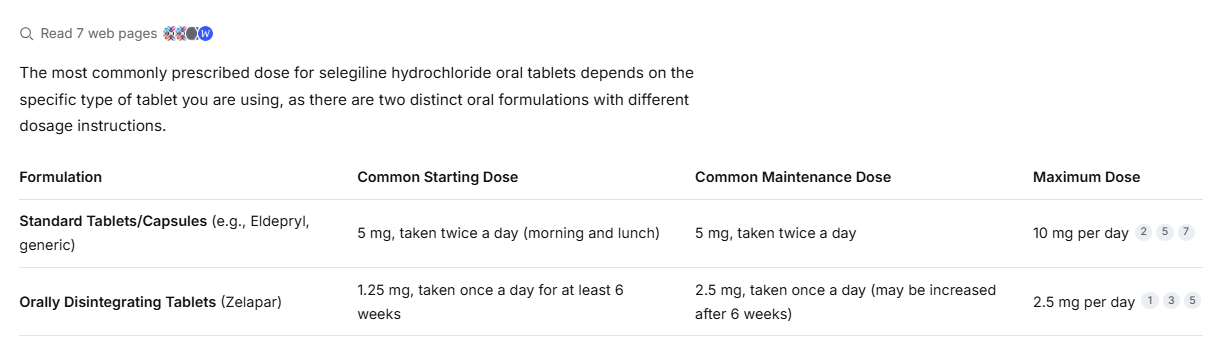
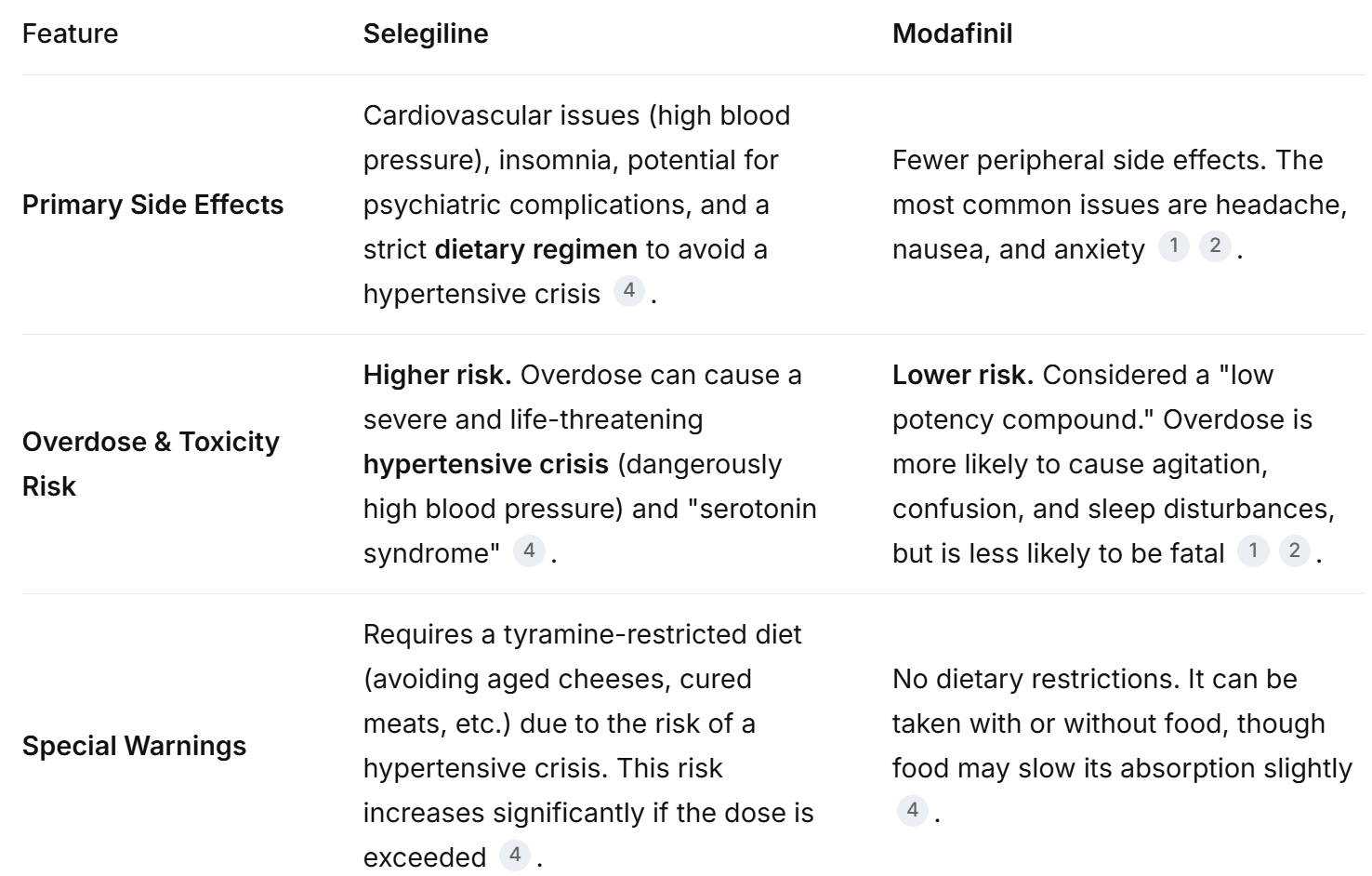
I don’t think it is a high-risk drug, but I commonly eat tyramine-rich foods. Also FWIW: AI thinks that selegiline is the more risky drug for the elderly.
The risk of a hypertensive “cheese reaction” from eating tyramine-rich foods (like aged cheese or cured meats) is generally considered low but not zero. Rare cases have been reported, so some caution is still advised.
I was considering trying selgiline, but I think that I will pass for now. Modafinil is serving me well.
2 Likes
I agree with you after doing a little more research the other day and decided to increase my dose to 2.5mg every morning
2 Likes
whatever happened to those two?
I used to follow them
1 Like
@CronosTempi: what are your views on selegiline?
Who are the selegiline users here? @LukeMV: how is your higher dose experimentation going?
I’m considering giving it another try… Of maybe I should just wait for the ITP results but 2y is a long time 
2 Likes
Every biohacker has their own risk tolerance and stack inclusion criteria. This may be surprising to some, but I am pretty conservative wrt. my stack, and selegiline is outside my comfort zone. I regard it as a research molecule. The studies out there are quite unsatisfying and all over the place - nothing there inspires my confidence. Dosing protocols are a huge unknown. DDI potential is high - I prefer to protect the rest of my stack which I have a decent degree of confidence in, and do not see the sense of introducing an unpredictable stranger to our stable little family.
General remark: there are literally thousands of molecules about which there are claims that they are beneficial for something or other. But if I feel that for example my systemic (dry) inflammation is already quite low (hsCRP, IL-6, GlycA, WBC, netrophils etc.), why should I care that Latest Wonder Drug supposedly is “good for dry inflammation”? There are a thousand other “good for inflammation” supps out there - I feel no need to add them to my stack. Same for “neuroprotection”, “endothelium”, “x, y, z”. If my biomarkers are where I want them (example: inflammatory markers) I don’t need more. In the film industry there is an expression describing excessive effects: “a hat on a hat”. I already have a hat, I don’t need to put another hat on top of my hat. This in general is a huge problem in the approach of many biohackers: a shiny new - or old - supp/drug has its 15 minutes of fame and everyone jumps on the bandwagon regardless of whether they need it or not, just because “it’s beneficial for x”… fishoil anyone? “Oh, it’s neuroprotective!”… please🙄.
Why do I need - or want - selegiline? It must show that it does something that no other drug/supp in my stack does, OR does it better than a drug in my stack, and fits within my specific medical situation. And the inclusion bar is VERY high - even ITP results don’t assure inclusion. Metformin + rapamycin give good longevity results in rodents, but I STILL do not take metformin, because it does not fit with the rest of my regimen and personal medical situation.
Of course, selegiline has a PD indication. OK. But, call it prejudice, or excessive caution, but anything that touches dopamine in PD I am super careful and paranoid about (for example levodopa). Furthermore, I want to see long term effects, and lifespan data is not encouraging for selegiline in PD. I have an open mind about deprenyl and PD, but I am pretty cautious about it.
Bottom line: for me selegiline is a PASS at this time.
Sorry for the length, and YMMV - of course others may have a different experience or evaluation, no judgement from me, just giving my one man opinion (and only because I was asked).
1 Like
Thanks. I agree and that’s why I stopped it but a conversation with a researcher yesterday made me question that. Anyway, did you share your whole stack somewhere on the forum?
2 Likes
I haven’t had any side effects at all other than very bitter taste. I am very careful also when it comes to substances that mess with DOPA but this one seems very subtle to the point most may not notice anything, yet it must do something since for me I do get benefits. Comparing it with Modafinil as an example I would not take Moda long term even though the effects are more pronounced but it definitely has side effects and you can easily tell when it wears off whereas Selegiline nothing none just a small but much needed uplift in mood and wellbeing and you don’t feel anything while it wears off. The only time I feel a bit of a difference is if I don’t take it for 3-4 days and then my mood goes I guess to baseline. It is my opinion that everyone should take. Benefits are small but noticeable for me in form of uplifting mood and calmer. I do 1.25mg under the tongue. It is something that I’ll continue for life, definitely.
BTW, what is DDI? (you said DDI potential is high)