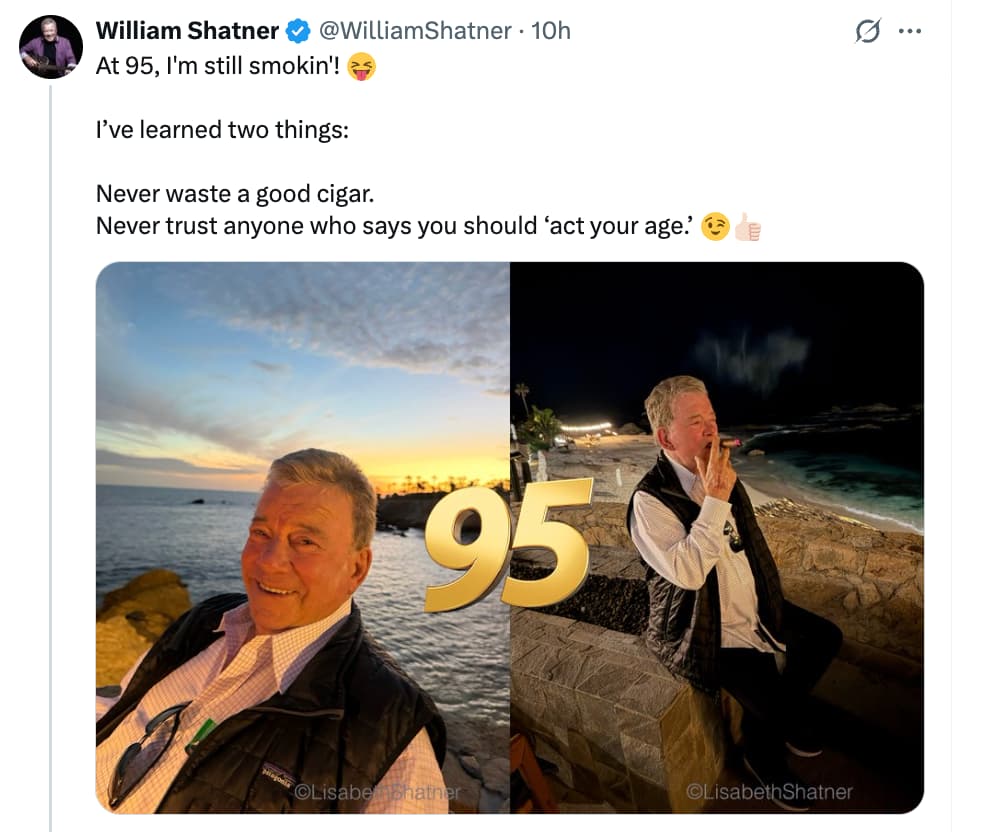
At 94, William Shatner is plugging in and cranking up. He’s boldly going into the heavy‑metal universe. Shatner calls metal “a place where imagination gets loud,” and he’s right—music is an arena where you come alive and express yourself. It doesn’t shrink you; it amplifies you. Aging isn’t about withdrawing from the world or becoming smaller. He’s doing the opposite—he’s taking up space.
What inspires me isn’t the novelty of a 94‑year‑old making a metal record. It’s the message: curiosity doesn’t retire, living boldly matters, taking action matters, finding your own expression matters, and enjoying the journey matters.
In our own biohacking journeys into the future, we’re boldly going too—just like so many of the people featured in this thread.
died on the morning of March 19, 2026, at the age of 86.
His family confirmed the news in a statement on Friday, March 20, 2026, noting that he passed away “suddenly” but was “at peace” and surrounded by his loved ones. While the specific cause of death has not been disclosed, he had been hospitalized in Kauai, Hawaii, following a medical emergency just prior to his passing.
Going that way is okay by me. Live long and fall off a cliff.
All that exercise worship, tsk, tsk, tsk. Keels over right on schedule. From the vague description it sounds like some weakest link got him. That’s why, kids, we must each pay attention to our individual weakest links, except Charles who doesn’t have any😜.
Exercise and good health habits are better at improving healthspan than lifespan. I still consider genes my primary strength and weakness. After reading endless trials and threads, I come away with one thought. Nothing I am doing is going to extend my lifespan other than rapamycin.
While I do agree, I would adjust your statement slightly i.e. "other than rapamycin +acarbose + SGLt2) in other words combined (not alone) should yield better results. Everything else IMHO is to help us reach the nice ripe old age (basically improve health span) yet will do zilch to increase lifespan. That’s where I’m at right now, and I do feel good about the progress in longevity journey (more so in understanding the factors as opposed to having already achieved any measurable lifespan results).
I don’t know if this one has been posted yet, but here it is:
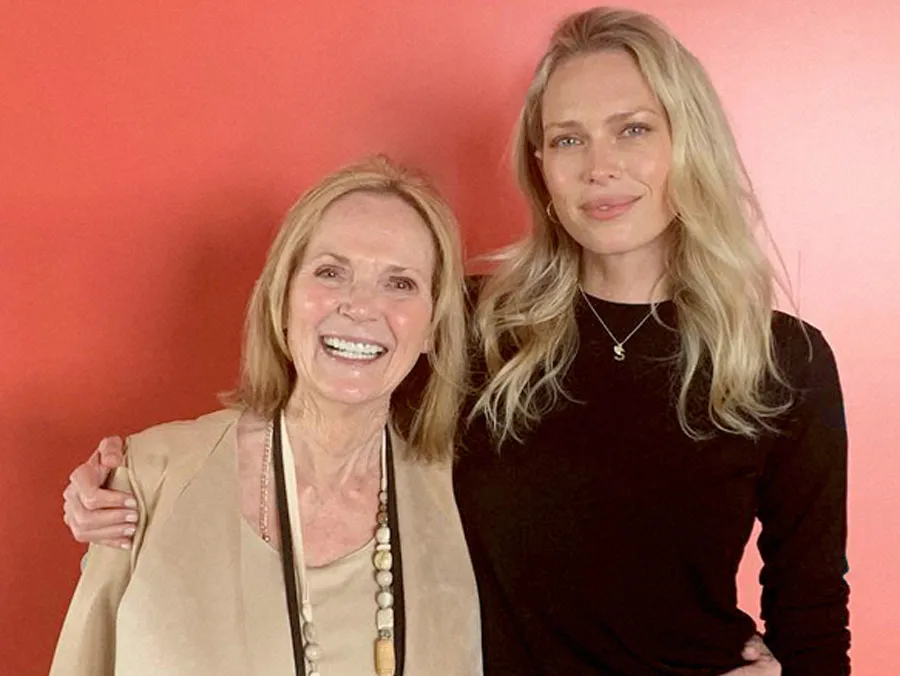
That article is a few years old now. The woman was 89 at the time, but looked 60ish. I would guess the main things that kept her young-looking (besides genetics) were skin exfoliation and sunscreen.
The Longevity Secrets Helping Athletes Blow Past the Limits of Age
With cutting-edge sports medicine and sci-fi gadgetry, more and more athletes are figuring out how to extend their careers.
Partly what’s driving the changes is the size of the fortunes at stake. The typical salary for an N.B.A. player is now close to $12 million a year. Career reserves — not just the stars — often employ their own trainers, dietitians, chefs and assortments of recovery gizmos. When a member of James’s inner circle claimed in 2018 that [LeBron] James was spending about $1.5 million a year on caring for his body, it accelerated an arms race across sports, helping to power a consumer-tech boom that has already trickled down to the $314 billion market for wearable devices that track things like sleep and heart rate.
In 1994, Boggs’s salary was $3.1 million; over the course of his 18-year career, he made about $32 million. Now consider the San Francisco Giants’ All-Star third baseman Matt Chapman — same position as Boggs, broke into the majors less than 20 years after Boggs retired. Chapman, 33, is in Year 2 of a six-year, $151 million contract that will end when he’s 37, and he is already conditioning his body to play at 38 and beyond. “I do want to play after this contract,” he told me.