chatGPT:
Below is a cleaned-up transcript based on the text you provided, followed by a summary and critique. I have corrected obvious transcription errors, punctuation, and speaker flow, but I have not invented content beyond what appears to have been said.
Tidy transcript
Interviewer:
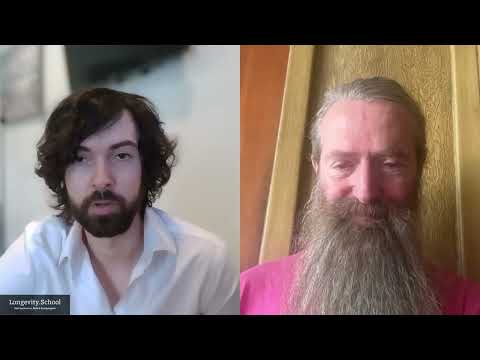
Today we have Dr. Aubrey de Grey of the LEV Foundation, who I’m sure many people know already, and we’re going to talk about his RMR projects in a lot of detail. So let’s get into it. Aubrey, do you want to introduce yourself and your projects?
Aubrey de Grey:
Yes, thank you, Oliver. My name is Dr. Aubrey de Grey. I am the President and Chief Science Officer of LEV Foundation, which is a public charity based in California, a 501(c)(3) for those of you who pay tax in the US. It is focused on research to bring aging under medical control.
We focus on early-stage research, so we don’t do anything with human beings. We work entirely with mice. Our flagship research program is the attempt to find ways to make mice live a lot longer. The way we’re doing it is by taking interventions that have already been shown by others to extend life in mice and putting them together, combining them to see whether we can get an additive effect.
There are plenty of good reasons to suppose we could get an additive effect because many of these interventions are very different from each other. They attack different aspects of aging. Furthermore, we’re especially interested in interventions that don’t just slow aging down, but actually reverse it, that rejuvenate the mice. For that reason, we are doing experiments that begin when the mice are already in middle age.
In actual numbers, we’re talking about mice that normally live to about two and a half years, and we start our experiments when the mice are already one and a half years old.
For many years, in fact probably half a century now, there has been a way to extend lifespan in mice or rats by about four months if you start at that kind of age, and that method is called calorie restriction. It just means you give the mice less food than they would like. More recently, in the past 15 years or so, people have discovered drugs that can effectively mimic calorie restriction. They can trick the mice into thinking they’re in a famine when they’re not, and these work more or less as well.
So our goal is to beat that record of four months. We want to maybe get eight or twelve months of life extension. We believe that if we can do that, then this will be extraordinarily impactful in terms of public attitudes to the genuine possibility that aging can be brought under medical control.
Interviewer:
Great. And you think a combination intervention is the solution to that?
Aubrey de Grey:
We do. Partly that’s on theoretical grounds: aging consists of the accumulation of a wide variety of different types of molecular and cellular damage in the body. If you try to fix one or more of those types of damage, then you’ll have some effect, but you really need to fix all of them, or at least most of them, in order to have a big effect. So we would expect some kind of additivity.
The other reason why we now feel confident that this is true is because we’ve already done one experiment of this nature. We started it about three years ago, and it was pretty successful. We took four interventions. One was one of these drugs that I just mentioned, a calorie-restriction mimetic, and that was introduced as a kind of positive control just to make sure we were doing the experiment well, because we’d never done anything like this before.
The other three were all some kind of damage repair, some kind of rejuvenation, and they were very different. One of them was giving the mice additional doses of telomerase. This is an enzyme that’s very important for cellular replicative lifespan, and mice don’t make enough of it. They make some more than we do, actually, but not enough to keep going. It was shown maybe a decade ago that this is very beneficial if you give them more, so we did that.
The second was heterochronic bone marrow transplant. So that means we killed a lot of young mice, scraped bone marrow, purified out the stem cells, and injected them into the old mice in such a way that some of those stem cells would survive long term. Again, this has been shown by other groups to actually work, to extend life.
The third one was a senolytic. The idea was to remove senescent cells, which, as many people will know, are generally damaging. They accumulate during life and seem to be actively toxic, so removing them is good.
So we did all these things, and the result confirmed our hypothesis. We did get an additive effect. We got more benefit. It was less clear in male mice than in female mice, for reasons we don’t fully understand, but at least in female mice it was a nice clean result. We got additivity.
What we did not get, however, was any kind of record-breaking result. We did not exceed this four-month record that already exists. So that has led us to feel that the right next thing to do is to double down, so to speak. In other words, do an experiment that’s even bigger, involving not three damage-repair interventions but eight, some of which are not really damage repair but more slowing of damage. We feel we have a pretty damn good chance with this experiment of actually getting the result we want.
Interviewer:
And just a note on that bone marrow transplant: for people who don’t know, how does that work without getting rejected in this mouse study?
Aubrey de Grey:
One useful feature of mice is that they have been bred in captivity in laboratories around the world for many years, literally more than a century. What this has led to is that these mice are what’s called inbred. That means they’re very closely related to each other and basically have the same genes.
So that means that when you give cells from one mouse to another mouse of the same strain, you don’t get any rejection whatsoever. This is actually one reason why we have chosen not to go the route that some researchers have and deliberately avoid using these inbred strains.
There’s a strain, HET3, which is a four-way cross. You take four different strains with different genetic variations and cross them together. So you get a bunch of mice that are all genetically different from each other. If you use those, then there are some advantages. You get more of what is known in genetics as hybrid vigor. Essentially, because they’ve got different versions of different genes, they have more chance of avoiding any deficiency in one type of gene.
But the downside is that you do get this rejection problem. So if we were to use those outbred strains, then we would either have to not do cell therapies at all, or we’d have to use some kind of immune suppression, and we don’t want to do that.
Interviewer:
And in humans, you’ll probably have a source of young cells which are not immune rejected, so it’s not really an issue there?
Aubrey de Grey:
I wouldn’t quite go that far. Immune rejection is something that always has to be thought about when we come to humans. For example, right now there are various cell-therapy clinical trials going on for Parkinson’s disease. Some of those trials are allogeneic: you use cells from elsewhere. That kind of seems to be just about good enough because the cells that you inject survive long enough in the brain to do the job. But a lot of people feel they won’t survive long enough long term.
One of the trials that’s going on, run by Aspen Neuroscience, is using autologous cells: cells that have been taken from the person you’re eventually going to treat, differentiated back into a pluripotent state, and then redifferentiated into dopaminergic precursors, which are the cells that need to be used for this kind of study.
So yes, there are ways around it, but it is still a big issue. It definitely makes it way easier in the mouse studies to study cell therapies because of this genetic matching.
The kind of strains that we really like to use are a two-way cross, not a four-way cross like HET3. In a two-way cross, every mouse is heterozygous: they’ve got one chromosome from one strain and one chromosome from the other strain pair. What you have there is that you pretty much solve the hybrid-vigor problem, but you don’t have a rejection problem because every mouse is still matched.
It’s only when you do an F2 cross, a four-way cross, that you get the problem I described. Unfortunately, nowhere like Jackson Lab has any of these two-way-cross mice in sufficient numbers for our experiment. We need a lot of mice, a couple of thousand. So if we were to go that route, we would basically have to breed our own, and we may do that in the future.
My personal feeling is that the arguments in favor of using an outbred four-way cross like HET3 in order to get reliable results have been rather overblown. I don’t think there’s a single example where C57BL/6, the standard mouse strain everybody uses for lifespan experiments and that we use, has ever actually misled us. I don’t think that case exists.
Interviewer:
That’s kind of the introduction. Let’s zoom out a bit, because I’m thinking of starting a project in this area as well. I think there should be loads of people doing what you’re doing. A question I get about this concept in general is: why hasn’t anyone done it before when it’s so obvious?
Aubrey de Grey:
It’s so painful. When I talk to my colleagues, other people in the expert community, everyone is really supportive. They say, yes, it’s fantastic that you’re doing this. There’s enormous consensus that these experiments are valuable, extremely valuable. But yet, as you say, nobody’s doing them. Why?
There are a few reasons. One is that they are genuinely very difficult experiments to do. The more interventions you throw into an experiment, the more ways there are for things to go wrong and for you to end up with a result that doesn’t really tell you anything. We’re very alive to that problem. That’s why we need so many mice, because we do a lot of different treatment groups with single treatments, all-but-one treatments, and so on, to identify antagonistic interactions where different interventions cancel each other out, and to make sure we have multiple different shots on goal.
So they’re very difficult to do.
The second reason is that in academia, the way you get ahead, the way you get your next grant funded or your promotion, is by publishing in top journals. And top journals have their own preferences for what they like to publish. People constantly complain that top journals will never publish negative results when something fails to work. It’s appalling.
Worse than that, what journals want to publish are tests of mechanistic hypotheses. They want people to see progress in science, as opposed to progress in medicine, which is what I’m interested in. So academics are just not incentivized; in fact, they’re disincentivized to do experiments like this.
Then in the private sector, you’ve got a different problem, but it’s just as strong. Anyone in the private sector wants to make money, and that means they want to leverage technologies that they own the intellectual property on, things they have patented. What we’re doing is taking things from multiple different sources. Many of them are not patentable at all, or they’re off patent. The ones that are patented are owned by different people. So again, there’s no real incentive, and there’s not really any new intellectual property created by an experiment like this.
It’s tragic. It’s ridiculous.
Interviewer:
So difficulty in grant strategy, lack of grant funding for this kind of work, and lack of patentability when you’re testing stuff that’s off patent or harder to protect. Your solution, then, is angel funders or donors?
Aubrey de Grey:
Yes, philanthropy. I’ve basically had this problem throughout my career, and I’ve had it on purpose. I have deliberately gone after things that are being neglected. Typically the reasons they’re being neglected are not because scientists are dumb or don’t understand that the things are important, but because the funding sources are not aligned for it.
So yes, for the past 20 years I’ve been able to attract occasional people who are willing to write big cheques, essentially just having faith that I know what’s important to do, and that has worked out pretty well over the years. Small donors are also really important, and we try to build that up, but we are still very much in the position where the bulk of our funding comes from large donations from a small number of people. Of course, that’s very sporadic and frustrating.
Interviewer:
One issue there is cost. Someone mentioned to me recently that they liked the idea but wanted to bring the cost per mouse down as much as possible using AI labs and cheaper jurisdictions like Brazil, India, or China. Is that realistic?
Aubrey de Grey:
We are constantly looking for ways to reduce the cost. But of course you can take that too far. Ultimately our goal is to maximize impact per dollar, and impact means the likelihood that the experiment works and the likelihood that the experiment will be believed to have worked. We don’t want to get into a position where people think our results are unreliable.
So yes, there are all manner of considerations, but we are constantly talking to people all over the world in an effort to bring the cost down, and it works to some extent. For example, we’re currently planning to do our next study in Spain at a facility that is going to be quite a bit cheaper than the place where we did the first experiment. We’re also forming good relations with various suppliers of the reagents we need, so we’re getting several of those reagents for free.
Another thing we’re doing is being creative about staggering the study. As I said, there are lots of treatment groups. In the first study, RMR1, there were—depending on how you count it—really about 38 treatment groups. This time there are probably going to be twice that. But we don’t have to do them all at the same time.
One option we are definitely not favoring at this point is to do only one sex. That would mean only half as many mice, but we feel that really risks a larger chance of failure. In our first experiment, the male mice results were a lot messier. It was much harder to claim we got the additivity we needed, whereas we did get it in the female mice. So we don’t want to take that risk.
However, there are other things we can do. For example, the treatment groups that get all but one of the interventions—those groups are mainly to identify antagonistic interactions, where things cancel each other out. But we don’t expect that to be a very common event. So we could do those groups with fewer mice, or do them later. We feel that we need to do the single-intervention treatment groups at the beginning because we want to be sure that we are doing the study correctly. And of course the main thing we want to do is the real McCoy: giving the mice absolutely everything. We want to do that at the beginning.
So there are various ways we can stagger the study so that we could get going with only a couple of million dollars rather than the full six or seven million that we need for the whole thing.
Interviewer:
Right. So there are the monotherapy groups, the leave-one-out combinations, and then the all-therapy group.
Aubrey de Grey:
That’s right. And there are subgroups within that. First of all, there’s everything you just said in males and also in females. Secondly, there is the question of how you do the controls. In the first study, RMR1, we had two types of controls for each intervention: a mock and a naive. The naive control would be that you just don’t give them the thing. The mock is that you give them an inactivated version of the thing. The idea is to check whether the method of delivery of the intervention is itself having an effect. We’re going to want to do something like that this time as well.
Another thing we want to do differently is the way in which we’re using rapamycin, which was one of our four interventions last time but, as I say, was more of a positive control. We are making it more explicitly a positive control this time around.
We’re also going to give the mice running wheels, which we didn’t have last time and which tends to be good for lifespan. One thing that’s very important is that we’re using smart cages. There’s a company called Oird Labs that has created cages that automatically record enormous amounts of data. That saves a lot of manpower, so it saves money, but it also means you just get more data than you could measure with technicians.
Interviewer:
That sounds useful. And the running wheels—out of all the mouse lifespan studies done currently with old-age starts, how many are using running wheels?
Aubrey de Grey:
I don’t know. A lot of studies do and a lot don’t. Realistically, we probably should have used running wheels last time. We kind of knew they were good, but budget reasons were a problem last time around as well.
For example, with the heterochronic bone marrow transplant, we were not able to replicate the published protocol because of cost. It just needs a lot of stem cells. So we were quite pleased that we did get some benefit from the HSCs, because the amount that we put in, and the amount of engraftment we got, was considerably less than what was published in the prior work.
Interviewer:
On rapamycin, there are longevity dosing protocols in humans like once-a-week dosing because of the longer half-life in humans, around 60 hours, although it’s very variable. The Cmax is variable too, so it’s hard to study without looking at total exposure, and many studies haven’t done that. There are also issues with formulation and gastro-protection.
There have been at least a couple of randomized trials where one didn’t meet a visceral-fat endpoint, and another recently showed a reduction in get-up-and-go type exercise capacity on 6 mg weekly dosing. There are caveats though, because we don’t know enough about exposure and washout.
Do you have any tips on how to validate benefits in humans in the way that we see more consistently in mice?
Aubrey de Grey:
First of all, I do not think that rapamycin or any other calorie-restriction mimetic will be particularly useful in humans, or in any long-lived species. That’s because, on theoretical grounds, from an evolutionary perspective, one expects caloric restriction to work less well in long-lived species simply because in the wild, long famines are less common than short famines, so there’s less selective pressure to optimize for them.
We also see it empirically. People have done caloric restriction experiments, caloric restriction mimetics, and genetic models. In species that live a few weeks, like nematode worms, you can multiply lifespan by five or ten. In mice you can get maybe a 50% increase if you start early in life. In dogs, Purina did an experiment 30 years ago with Labradors that live maybe 12 years on average, and they got about 10%. Of course, there were those two enormous monkey studies, which got a couple of percent; one of them kind of didn’t work at all.
So we know this is not going to work well, and we certainly know that mimetics are never going to do more than caloric restriction itself does because they activate the same pathways. So I’m not really interested in that. We’re using it in mice as a positive control because it works well in mice, but that’s a different question.
In terms of what to look for in clinical trials of things that might be more beneficial: there is now the Healthspan XPRIZE, which I largely designed. I was involved early and it is very much a rejuvenation prize. It’s got my fingerprints all over it.
The scientific advisory board is very cognizant of the problems of ensuring that you actually achieve something meaningful. The headline goal is that you need to rejuvenate people’s biological age by at least 10 years. You get more if you do 20 years, and you need to do it with an intervention that is performed for a maximum of one year. So that’s proper rejuvenation.
But how we measure biological age at the beginning and the end is not with epigenetic clocks or other modern approaches, because we just don’t feel those things are reliable enough. It’s all on the basis of function: immune function, muscle function, and cognitive function. For each of those things, we have three different required measures.
Interviewer:
So going back to the positive control: is there a disconnect between mouse and human biology in the case of rapamycin more than CR mimetics specifically?
Aubrey de Grey:
I don’t really think so. I think it’s all about lifespan. The longer you live, the less impact calorie restriction or any calorie-restriction mimetic is going to have.
Interviewer:
So damage removal is more important in longer-lived species, potentially?
Aubrey de Grey:
Definitely. But of course, since we’re starting late in life, anything that slows down the accumulation of damage, which is what calorie restriction and the mimetics do, is going to have a smaller effect than if you start early in life. In mice, calorie restriction started at middle age might get you maybe four months of life extension, whereas if you start at weaning and do it for the entire rest of their lives, you can get about a year.
I’m rather interested in people who have the misfortune to be already alive and to have accumulated a fair amount of damage already. So that’s another reason why I’m much more interested in bona fide rejuvenation, in turning the clock back, rather than just slowing it down.
Interviewer:
So there may be therapies that mainly slow damage, like CR and rapamycin, and then damage-removal or replacement approaches like stem cells. And perhaps the slowing strategies have effects exaggerated in mice compared with humans, whereas the opposite might be true for damage-removal even if started later in life.
Aubrey de Grey:
I would say that damage retardation like calorie restriction is a special case, in that it has evolved to exist as a life-extension strategy. But the pressures that caused it to evolve have this unfortunate feature that we end up with a weaker response in humans.
One can certainly imagine other damage-retardation interventions that are equally effective whatever the lifespan of the species. One of the interventions we’re planning to use in the next study is deuterated fatty acids. Essentially what we have there is a way to slow down the accumulation of oxidative damage. It is a retardation thing; it doesn’t remove pre-existing oxidative damage. But it certainly seems to work, and we believe it would work just as well in humans as in mice.
That said, it does not solve the problem of starting late in life. If you want to help people who are already in middle age, or mice that are already middle aged, then slowing the further accumulation of damage will have less effect, whereas damage repair will have more effect in late life than early in life, irrespective of species.
Interviewer:
There’s actually some interesting human data already for deuterated fatty acids. There have been case reports from the company trying to commercialize it. It was very expensive, though less so now.
Aubrey de Grey:
There was a huge breakthrough about five years ago. Initially the only way this stuff could be made was by total synthesis, a very laborious chemical procedure. Then a group, if I remember rightly in Australia, with an outpost in Serbia or somewhere like that, figured out a fantastic catalytic process. Now they can make grams of this stuff for pennies. It’s really fast and efficient.
It deuterates the exact correct hydrogen atoms. It does not work on linoleic acid; you need to have three double bonds rather than two. So arachidonic acid is the main one being used, and also DHA. This is really good. So yes, the cost is definitely not prohibitive anymore.
Interviewer:
Are you planning on doing omega-6 and omega-3, or EPA, DHA, and arachidonic acid?
Aubrey de Grey:
At this point, we’re just going to use arachidonic acid. That’s the one where the work has so far been done.
Interviewer:
How are you choosing these eight as the priority, taking into account all the mouse lifespan studies that have been done so far, including transgenic ones or things started before birth?
Aubrey de Grey:
The number one criterion is that somebody else has published successful life extension, ideally starting late in life. That’s a pretty high bar. Not many people have done such studies. If we had been doing this new experiment three years ago, when we did the first one, we would not have had the option to do eight interventions. There just weren’t enough things that had good enough positive data. But during the course of the first experiment, a real stream of studies came out showing that exactly this could be done.
That’s one criterion. It’s not absolute, but it is heavily weighted. Another important criterion is that the interventions should be as different as possible from each other, because we don’t want to duplicate things.
Beyond that, the other considerations are cost and practicality in terms of actually doing these things to the mice. We want to do every kind of intervention—cell therapies, gene therapies, and so on—which is something not done in the Intervention Testing Program, or indeed in pretty much any other programs looking at this kind of thing. They tend to stick to things that can be supplied in the food, whereas we are prepared to inject our mice.
Basically, we want to maximize the chance that we’ll see an additive effect, and ideally a really big additive effect. Our goal is to triple the effect size that calorie restriction can achieve. As I mentioned, calorie restriction gives about four months; we want to get to twelve.
Interviewer:
Twelve months started in old age and reproducible as well. How does that compare to the recent telomere-reversal preprint we were emailing about?
Aubrey de Grey:
I really don’t want to comment on that paper because, as of now, it doesn’t have much credibility. The lifespan curves shown in the preprint have problems. They don’t make sense. Several of us have written to the senior author asking for clarification and raw data, and he has declined to make anything available until the paper is accepted for publication, which is within his rights. No question.
But given that the questions arising from the preprint are really quite severe, I think there’s a reasonable chance that the paper may never actually be published because people will have too much difficulty with it.
Still, I remain hopeful. If it does get through peer review and the senior author then makes the raw data available, there would definitely be justification for other people trying to replicate the study. But the result shown is just really, really big, so it’s very hard to take at face value.
Interviewer:
So it’s a tricky selection process for choosing combinations because they have to be strong enough and ideally peer reviewed.
Aubrey de Grey:
We’re not too worried about peer review. For example, one of the interventions in the upcoming study is a senolytic, the same category as we did last time, but a different one. A lifespan study has been done, but it has not yet been published. We’re going with that one because we’ve seen the data and we believe that it works. We believe it’s a very promising approach with a very different mechanism from other senolytics. So we’ve made a judgment call that this is the right thing to go for.
In general, though, yes. I think out of our eight interventions, only two are unpublished. The other one is deuterated PUFAs. There have been lifespan experiments there as well that, in my view, look good, but haven’t yet been published.
Interviewer:
Is it ever tempting to do a Hail Mary and try 50 or 100 therapies all at once?
Aubrey de Grey:
At this point, probably not. I think eight is the right kind of number because there’s no way to describe how challenging these experiments are. So many things can go wrong and invalidate the experiment, where you didn’t get the result you wanted and didn’t do the experiment in the most informative way possible.
Even monotherapy experiments often go wrong. Anybody who has ever done lab work knows that. So we are already really pushing the boundary of what’s practical in an actual lifespan experiment.
Interviewer:
In clinical medicine, and a bit in preclinical work too, there’s the EQUATOR Network, which gives international consensus checklists for how trials should be designed and reported. I’m wondering whether something similar should be made for mouse lifespan studies.
Aubrey de Grey:
Yes, that would be good. Certainly a lot of studies have deficiencies that are a problem. Here’s an example: just a month or so ago, the Intervention Testing Program published a bunch of negative results. One of them was with alpha-ketoglutarate, which had positive results in other people’s hands.
But what the ITP did was measure the blood concentration of AKG in the mice, and they found that it was only one-sixth of the target concentration. For whatever reason, the experiment had not really worked. Now that’s bad. It means they didn’t really do the experiment they wanted to. And they didn’t draw enough attention to this. It was just in a table somewhere; they didn’t mention it in the text. I berated them for that.
But at least they measured it. Most studies don’t even measure the concentrations of things. They just hit and hope. So yes, that’s an example where you’re absolutely right.
However, for the experiments that we’re doing, that’s not really the main problem. The main problem is just doing the experiment correctly at all, because it’s so challenging with many different interventions.
Interviewer:
Aubrey had to jump at this point, so we ended it there. But it was a very interesting discussion. I’d like to see more projects in this space, as well as a mouse lifespan study design checklist and reporting checklist.
So, for example, using Aubrey’s AKG example, it should be required to measure certain blood, serum, plasma, whole-blood, tissue, or organ levels of the active compound as relevant in the design phase, and then in the reporting criteria it should be required to report them in an easy-to-view way rather than hidden in supplementary data or table descriptions.
Summary
This interview focuses on Aubrey de Grey’s Robust Mouse Rejuvenation (RMR) strategy at the LEV Foundation: testing combinations of life-extending interventions in middle-aged mice to see whether the effects are additive enough to beat the long-standing benchmark of roughly four months of life extension from late-start calorie restriction.
The main points are:
1. The central strategy is combination therapy, not single interventions.
De Grey argues that aging is driven by multiple forms of damage, so addressing only one type will likely produce modest gains. He believes substantial lifespan extension requires repairing or mitigating several forms of damage simultaneously.
2. LEV has already completed an earlier combination experiment.
The first RMR study used four interventions:
- a calorie-restriction mimetic as a positive control,
- telomerase,
- heterochronic bone marrow transplant,
- a senolytic.
He says the results showed additivity, especially in female mice, but did not beat the existing four-month benchmark.
3. The next experiment is much larger and more ambitious.
The proposed follow-up uses eight interventions, mixing damage-repair and damage-slowing approaches. The explicit target is to achieve something like 12 months of added lifespan when treatment starts in middle age.
4. He thinks this work is neglected for structural reasons, not because the idea is bad.
His explanation is that:
- academia rewards mechanistic papers more than translational combinatorial studies,
- negative or messy results are hard to publish,
- private companies prefer patentable, ownable interventions,
- mixed-intervention studies often do not create clean IP.
So philanthropy ends up being the main funding route.
5. He distinguishes “slowing damage” from “repairing damage.”
He is skeptical that calorie restriction or rapamycin-like approaches will be very useful in humans, arguing that these interventions likely scale poorly with species longevity. He is more optimistic about true rejuvenation approaches, especially for individuals already in midlife or later.
6. Practical experimental design is a major theme.
The interview spends a lot of time on:
- mouse strain choice,
- transplant immunology,
- treatment group design,
- sex differences,
- running wheels,
- smart cages,
- control design,
- staggering experiments to reduce cost,
- the importance of pharmacokinetic confirmation.
7. The conversation ends with a proposal for better reporting standards.
Both speakers converge on the idea that mouse lifespan studies need something like a checklist or reporting standard, especially around confirming exposure levels and presenting results transparently.
What is novel or most interesting here
The most interesting parts are not that combination therapy might help aging — that idea is not new — but the specific operational framing and experimental philosophy.
1. A deliberate attempt to build a “combo rejuvenation” platform
The novelty is in treating lifespan-extension work almost like combination oncology or combination infectious-disease therapy: not asking whether one intervention works, but whether multiple partially effective interventions can be assembled into a materially larger effect.
2. Late-life start is treated as a core design principle
De Grey emphasizes starting in middle-aged mice, not in young mice. That is important because it shifts the question from “can this change aging trajectories if started early?” to “can this rescue already-aged organisms?” That is more translationally relevant.
3. He openly prioritizes translational impact over mechanistic neatness
He is explicit that top journals prefer mechanistic elegance, while he cares more about whether the intervention package actually works. That framing is useful and unusually candid.
4. He proposes a mixed modality stack
The project is not limited to dietary or small-molecule interventions. He wants combinations that include:
- drugs,
- senolytics,
- gene therapy,
- cell therapy,
- lipid interventions like deuterated PUFAs.
That multimodal aspect is a real differentiator from many longevity studies.
5. Strong emphasis on antagonism testing
The “leave-one-out” groups are there not only to estimate contribution but also to detect negative interactions. That is a serious-minded design choice and one of the more scientifically valuable aspects of the project.
6. The idea of a mouse lifespan study checklist
The interviewer’s closing point is good: a field standard for
- exposure verification,
- intervention reporting,
- handling of controls,
- presentation of outcomes,
could genuinely improve reproducibility.
Critique
Strengths
1. The logic of combination treatment is plausible
If aging is multifactorial, then combination therapy makes sense. The argument is stronger when the interventions are mechanistically distinct.
2. Starting in middle age improves translational relevance
Many lifespan interventions look impressive only when started early. A late-start design is a stronger test of rejuvenation claims.
3. The speaker is aware of complexity rather than hand-waving it away
De Grey does not portray this as easy. He repeatedly emphasizes:
- combinatorial complexity,
- sex differences,
- strain issues,
- delivery effects,
- cost constraints,
- risk of uninterpretable results.
That realism is a strength.
4. Good attention to controls and experimental architecture
Mock vs naive controls, male/female stratification, monotherapy arms, and leave-one-out arms all improve interpretability.
5. The field-level criticism is largely credible
His point that academia and biotech are poorly aligned to fund cross-IP, combinatorial, translational longevity studies is persuasive.
Weaknesses and limitations
1. The causal story is still more asserted than demonstrated
The biggest conceptual issue is that “aging is multifactorial, therefore combinations should be strongly additive” sounds sensible, but biology often produces:
- redundancy,
- ceiling effects,
- shared downstream pathways,
- toxicity tradeoffs,
- unexpected antagonism.
So additivity is plausible, but far from guaranteed.
2. The interview does not sufficiently define success metrics beyond lifespan
They talk mostly about lifespan extension. But for a rejuvenation program, one would want a clearer hierarchy of endpoints:
- median lifespan,
- maximum lifespan,
- frailty,
- function,
- pathology burden,
- cause of death,
- tumour incidence,
- quality-of-life equivalents in mice.
Without that, a large lifespan shift could still mask problematic tradeoffs.
3. The female/male discrepancy is underexplored
He notes that the prior additive signal was much clearer in females than males, but the discussion does not really unpack:
- whether this reflects pharmacology,
- immune differences,
- baseline mortality differences,
- dosing,
- body-weight effects,
- background pathology.
That matters a lot if the project aims to support general claims about rejuvenation.
4. The selection logic for the eight interventions is still partly opaque
He gives broad criteria:
- prior late-life lifespan benefit,
- mechanistic distinctness,
- practicality,
- cost.
But the interview does not present the full shortlist, prioritization framework, or evidence ranking. That makes it hard to judge whether the chosen stack is truly the best available.
5. The dismissal of rapamycin-like approaches in humans may be too sweeping
His argument that CR-type interventions scale down with species longevity is interesting and may contain truth, but it risks overstatement. Even if effect size declines in long-lived species, that does not mean such interventions are clinically unimportant. A modest but robust human benefit could still matter.
6. Heavy reliance on unpublished or privately seen data is a risk
He says two of the eight interventions are supported by unpublished evidence that he has seen and considers convincing. That may be reasonable internally, but from an outside scientific perspective it weakens confidence. Private confidence is not the same as public evidence.
7. Big combinatorial studies can become hard to interpret
The more interventions included, the more one risks ending up with:
- a positive result that is hard to decompose,
- a negative result with many possible failure points,
- ambiguous interactions that cannot be cleanly explained.
This is not an argument against the work, but it is a major interpretive hazard.
8. There is some rhetoric-driven optimism
Statements like having a “pretty damn good chance” of hitting a large effect can sound stronger than the evidence warrants. Ambition is appropriate, but the uncertainty remains very high.
Specific scientific points worth flagging
Bone marrow transplant discussion
The transplant section is useful, but it also highlights a translational gap: mouse histocompatibility convenience is not human convenience. So positive results from syngeneic or near-matched mouse systems may overstate feasibility for human rejuvenation therapies.
Deuterated fatty acids
This is one of the more interesting sections. It is presented as a damage-slowing intervention that might be less species-dependent than CR-type interventions. That is an intriguing hypothesis, but in the interview it is still more of a strategic bet than a demonstrated principle.
Telomere/telomerase
Telomerase is treated as one rejuvenation module among others, but the interview does not discuss:
- cancer risk,
- tissue specificity,
- delivery constraints,
- whether prior positive studies were robust across labs.
That omission matters because telomerase-based interventions are often biologically appealing but translationally sensitive.
Senolytics
The rationale is standard and plausible, but again the interview does not examine:
- differential senescent cell populations,
- off-target effects,
- timing,
- dosing schedules,
- whether one senolytic class generalizes to another.
Overall assessment
This is a strong, thoughtful, strategically interesting conversation.
Its biggest value is not that it proves the RMR approach will work, but that it lays out a serious case for why large, late-life, multi-intervention mouse studies are both important and systematically underfunded.
The interview’s strongest contributions are:
- a clear translational rationale,
- an honest description of funding and publication barriers,
- an experimentally informed discussion of how hard these studies are,
- and a persuasive argument that the field needs better standards for design and reporting.
Its biggest weakness is that it sometimes moves from plausibility to confidence a bit too quickly. The framework is compelling, but the evidence base still seems early, heterogeneous, and in places partly unpublished.
Bottom line
The interview is most convincing as:
- a defense of why this kind of work should exist,
- a roadmap for how to design it seriously,
- and a critique of why the current system neglects it.
It is less convincing as:
- proof that large additive lifespan gains are likely,
- proof that these specific eight interventions are the optimal set,
- or proof that mouse results will translate cleanly to humans.
If you want, I can also turn this into a claim-by-claim table with columns for claim, evidence offered, strengths, weaknesses, and my assessment.