chatGPT(5.6): (I am using the extra High sol 5.6 which is quite slow)
LONGEVITY INTERVIEW REVIEW
Can Humans Live to 150?
Summary, evidence-based critique and edited transcript
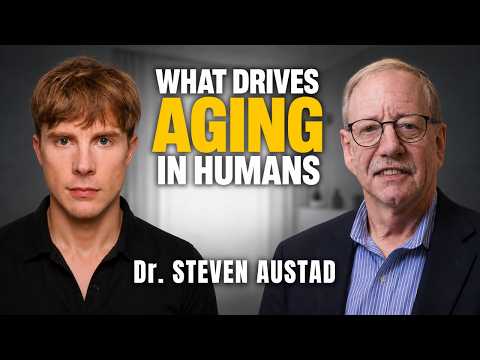
Siim Land in conversation with Dr Steven N. Austad · 59 minutes · 28 August 2026
Overall assessment: A strong, candid overview of evolutionary gerontology and the translation problem in longevity research. Its central cautions are sound; its forecasts about 150-year lives, rapid biomarker-led trials and AI simulation remain conjectural, and several broad claims need narrower wording.
1. Executive summary
-
Austad explains lifespan diversity through evolutionary life-history theory: when external hazards make late survival unlikely, selection favours earlier maturation and reproduction, while investment in long-term bodily maintenance is weaker. His island-versus-mainland opossum work is offered as a natural experiment in slower senescence under reduced predation.
-
Humans are already unusually long-lived terrestrial mammals, probably owing partly to social protection, cooperation and culture. Austad nevertheless maintains his wager that someone born before 2000 will be alive and cognitively functional at age 150 by 2150.
-
His most plausible route is not a single anti-ageing pill but drugs combined with exercise, diet, cognitive stimulation and other lifestyle factors. Candidate classes discussed include rapamycin/mTOR inhibitors, GLP-1 receptor agonists, metformin and SGLT2 inhibitors.
-
He argues that standard laboratory worms, flies and mice identify conserved pathways but are weak models of the full human problem because they are short-lived, highly controlled and often physiologically unlike wild animals. Long-lived species and more realistic environments should be studied alongside conventional models.
-
The practical warning is that longevity interventions can trade one benefit for another: mTOR inhibition, low-protein diets, calorie restriction and metformin may impair muscle or bone adaptation in some settings. For older people, frailty, falls and loss of function can outweigh a favourable molecular signal.
-
Austad is sceptical of resveratrol, NAD-boosting supplements and testimonial-driven claims. He wants independent replication, human trials and validated biomarkers rather than extrapolation from mechanisms or animal lifespan alone.
-
The interview ends conservatively: exercise, metabolic health, sleep, social connection and mental engagement matter now; longevity escape velocity is highly uncertain; and extending life is not worthwhile if the effort eliminates enjoyment of living.
2. Argument map
| Claim in the interview | What the evidence supports | Assessment |
|---|---|---|
| Lower extrinsic mortality can favour slower ageing. | Consistent with classical evolutionary theory and Austad’s opossum observations, but not a universal one-variable law. | Substantially supported |
| Late-life rapamycin can extend lifespan. | Robust in heterogeneous mice; effects vary by sex, strain, dose, diet and endpoint. Human longevity benefit is unproven. | Strong animal evidence |
| SGLT2 inhibitors are geroprotective candidates. | Canagliflozin extended male mouse lifespan; later analyses found female harm in some protocols. Human cardiorenal benefit is indication-specific. | Promising, context-dependent |
| Metformin may extend healthy human life. | Human observational data are confounded; trials in healthy older adults show mixed outcomes, including blunted hypertrophy with resistance training. | Uncertain |
| NAD boosters are overhyped. | They reliably raise circulating NAD metabolites, but durable clinical anti-ageing benefits remain inconclusive. Whole-blood NAD stability does not settle tissue-specific ageing. | Scepticism justified; wording too broad |
| A two-year biomarker trial could show a longevity drug works. | Biomarkers can accelerate screening, but no ageing biomarker is yet a clinically validated surrogate for morbidity or lifespan. | Aspirational, not established |
3. Critique
What the interview does well
-
It keeps evolutionary explanation separate from molecular mechanism. Austad is clear that predation can explain why selection favours a fast life history without telling us which cellular failures produce cataracts, arthritis or cancer in an opossum.
-
It treats animal-to-human translation as the central scientific problem. The distinction between finding a conserved target and finding a safe human intervention is particularly useful.
-
It foregrounds environment, diet, sex and genetic background. The 2026 Drosophila work he mentions reinforces his point: rapamycin can be beneficial, neutral or harmful depending on diet, strain and sex.
-
It is unusually candid about trade-offs. Preserving muscle, bone, immune function and real-world resilience is more important than improving an isolated pathway or clock.
-
It repeatedly asks for independent replication and controlled human evidence, especially for fasting-mimicking diets, metformin and supplements. That is the right evidential standard.
Where it overreaches or needs qualification
-
The evolutionary story is compressed too far. High extrinsic mortality can weaken selection at later ages, but the relationship is shaped by density dependence, age-specific hazards, reproductive schedules, body size, ecology and kin effects. The island opossum comparison is important evidence, not a complete causal proof: island and mainland populations may differ in food, pathogens, population density and other ecological variables.
-
The 150-year wager is not a forecast derived from a model. Calling 150 ‘only about 20% longer’ than Jeanne Calment obscures the problem. Extending the extreme tail of human survival is not equivalent to adding 20% to median mouse lifespan. Calment remains the validated record-holder at 122 years and 164 days, and no second person has reached 120. Animal interventions make 150 biologically imaginable, not probable.
-
Mouse-to-human age equivalence is rhetorically useful but biologically rough. The late-life rapamycin study began treatment at 600 days in mice and is a landmark result. Translating that to a precise human age such as 70 is not linear because maturation, disease incidence and mortality acceleration differ between species.
-
The muscle claims should be intervention-specific. Metformin blunted hypertrophy during a 14-week resistance-training trial in healthy adults over 65, but that does not mean metformin is generally ‘bad for muscle’ in every patient or disease context. Likewise, rapamycin effects depend on dose and schedule; chronic transplant immunosuppression cannot be equated with intermittent experimental geroscience dosing.
-
The discussion of SGLT2 inhibitors omits the strongest caveat. Canagliflozin’s mouse lifespan benefit was male-specific, and newer ITP analysis reports reduced survival in females in some late-life studies. That sex divergence is exactly the kind of translation hazard the interview otherwise emphasizes.
-
The supplement critique is directionally right but overly categorical. Resveratrol has no demonstrated human longevity benefit, and NAD precursors have not established anti-ageing efficacy. Yet ‘supplements are just drugs that do not need FDA approval’ collapses nutrients, deficiency correction, pharmacological doses and different regulatory systems. Omega-3 fatty acids, for example, have indication- and formulation-specific clinical evidence even though they are not proven lifespan extenders.
-
The NAD claim confuses blood with the whole organism. A 2026 study found whole-blood NAD+ stable across age, undermining its use as a general ageing biomarker. It did not establish that NAD never declines in particular tissues, cell types or diseases. The defensible conclusion is that human NAD ageing is tissue- and measurement-dependent, while clinical benefits of routine NAD precursor use remain unproven.
-
Biomarker optimism runs ahead of validation. Epigenetic, proteomic and metabolomic clocks can predict risk, and organ-specific proteomic ages are scientifically valuable. But a biomarker is not a surrogate endpoint until treatment-induced movement in it reliably predicts treatment-induced clinical benefit. No ageing biomarker currently meets that standard. A drug could improve a clock while harming function, or improve health without moving the chosen clock.
-
AI can prioritize experiments, not simulate unknown biology into truth. AI can integrate omics, rank compounds and model interactions, but it inherits missing mechanisms, biased training data and weak labels. The interview acknowledges catastrophic oversight, but the practical conclusion should be stronger: prospective experiments and clinical outcomes remain the ground truth.
-
Some host statements should not be treated as scientific conclusions. The Bon Charge segment is advertising, not part of Austad’s evidence. Its broad claims about red light therapy and ‘hormone optimization’ are not substantiated in the interview. The speculation about Jeff Bezos taking testosterone, the assertion that Japan has the lowest elderly healthcare burden, and the broad appeal to Blue Zones are also uncited and should be regarded as conversational claims.
Bottom line
The interview is most convincing when Austad argues for comparative biology, ecologically realistic animal research, preservation of physical function and scepticism about unvalidated interventions. It is least convincing when a plausible research programme is presented as evidence that 150-year human survival is likely. The correct present-tense conclusion is: ageing can be modified in multiple animal species; several human drug classes may affect age-related disease; but no intervention has yet been shown to extend lifespan in healthy humans by anything remotely approaching the amount required for age 150.
4. Tidied transcript
Editing note: This is a readability edit based on the supplied auto-transcript. Filler words, repeated starts, acknowledgements and verbal stumbles have been removed; technical names and obvious transcription errors have been corrected; the sponsorship segment has been omitted. The wording is lightly condensed and speaker turns are inferred from context, so this should not be treated as a court-style verbatim transcript.
00:25 | From lion trainer to ageing researcher
Siim Land: Dr Austad, welcome. You have worked in longevity and ageing research for decades, but your background is unusual: you began as a lion trainer in Hollywood. How did you move from that into the biology of ageing?
Steven Austad: It was a complex journey. Training lions made me interested in animal behaviour, partly out of self-preservation. When I decided not to spend my life in Hollywood, I went to graduate school and earned a PhD in behaviour. Ageing was not yet on my mind. During a postdoctoral project in South America, however, I studied opossums - marsupials about the size of a house cat - and discovered that they aged as fast as mice. I had assumed they would live 10 or 15 years, so the discovery captured my interest.
Steven Austad: The original project did well and was published in Nature, but by then I had shifted to the evolutionary puzzle of ageing. It is counterintuitive that evolution produces animals that age, and even more striking that species age at such different rates. After decades in the field, I still do not feel the problem is solved. That is why it remains endlessly fascinating.
03:20 | Why animal lifespans differ
Siim Land: Bowhead whales may live for more than 200 years, Greenland sharks for centuries, while mice live only a few years. Why are opossums so short-lived?
Steven Austad: There are two levels of answer. Evolutionarily, comparative research shows that animals in hazardous environments - where predators or climatic events are likely to kill them - tend to age quickly. Animals in safer environments tend to age slowly. Opossums face intense predation; roughly 80% die from predators. They lack the weapons or escape abilities of many similarly sized animals.
Steven Austad: Mechanistically, we do not know exactly what fails. Opossums have a surprisingly robust immune system and are resistant to venomous snake bites, yet they develop cataracts, cancer, arthritis and other mammalian ageing phenotypes very early. The field has generally been more interested in animals that age slowly than in dissecting why fast-ageing animals fail.
Steven Austad: My first ageing study compared mainland opossums with a population on an island lacking their major predators. The island population had been isolated for thousands of years. As predicted, those opossums aged more slowly and lived about 25% longer. Unfortunately, later introduction of mainland animals led to interbreeding, diluting the distinctive island genetic configuration before modern genomic tools became available.
07:25 | Natural selection and fast life histories
Siim Land: So natural selection did not directly choose a short lifespan. Hazardous conditions favoured earlier maturation and reproduction, and rapid ageing followed as part of that life-history pattern?
Steven Austad: Exactly. Longer or shorter life is not necessarily the trait directly selected. The reproductive pattern is selected. Becoming adult quickly and breeding rapidly has, as a consequence, rapid ageing.
08:40 | What limits human lifespan?
Siim Land: Humans are unusually long-lived and have largely removed predation by large animals. What limits us to roughly 110 or 120 years rather than 150 or 200?
Steven Austad: Humans are the longest-lived terrestrial mammal. Our sociality probably protected us from random hazards: we lived in groups, hunted cooperatively and protected one another. Some people may have reached their eighties or nineties even in the distant past; hygiene and medicine then extended survival further.
Steven Austad: Why nature did not give us 150 or 200 years is harder to answer. One factor may be that human reproduction historically ended at around 50, after which the force of selection is weaker. That does not mean science cannot improve on the pattern evolution gave us.
Siim Land: Women able to have children relatively late are more likely to reach 100, probably because slower ageing preserves both fertility and later health, rather than childbirth itself causing longevity.
Steven Austad: That raises the speculative question of whether menopause might shift over future generations now that far more people survive to that age. Contraception makes the selective picture much more complicated because reproductive success is no longer simply a matter of having as many children as possible.
12:10 | Sponsorship
Editor: Paid advertisement omitted. It was not part of the scientific interview.
13:00 | The wager on a 150-year-old person
Siim Land: About 25 years ago you bet that someone already alive would reach 150. Do you still believe that?
Steven Austad: Yes. Jeanne Calment remains the validated record-holder at 122 years and 164 days, and no one has approached her record. S. Jay Olshansky, who took the other side of the wager, regards that as evidence I will lose. I remain confident because only one person has to reach 150, and laboratory interventions often extend animal lifespan by 20% or more.
Steven Austad: Much of what works in short-lived animals may not translate to an already long-lived species such as humans. But some of it may. Late-life treatment can also matter: rapamycin extended survival when begun in older mice. That suggests future interventions need not always start in early adulthood.
Siim Land: What is the deadline?
Steven Austad: By 2150 there must be at least one 150-year-old person who is cognitively intact enough to hold a conversation.
Siim Land: The oldest living person is a 117-year-old British woman.
Steven Austad: I call being the oldest person the world’s most dangerous job: nobody keeps it for long and nobody gets out alive. More people now reach 116 to 118, but apart from Calment nobody has reached 120. My likely candidate would be a woman, probably from a population with exceptional female longevity.
17:40 | How might humans reach 150?
Siim Land: What might make the wager come true?
Steven Austad: The most promising route at present is drugs combined with lifestyle. Laboratory animals usually have limited exercise and mental stimulation, so we do not test interventions against the kind of healthy, enriched life humans can create. A drug that improves health in animals may do more when combined with an optimised human lifestyle.
Steven Austad: GLP-1 drugs look promising, and better versions with fewer side effects will probably be developed. AI may help discover additional drugs. The eventual solution is likely to be a combination because every drug has side effects: one treatment might help the brain but harm the kidneys, requiring another measure to protect the kidneys.
Siim Land: So there is no magic pill that makes exercise unnecessary?
Steven Austad: Exercise has so many benefits that replacing all of them with a pill seems unlikely. Today there is no longevity pill, so lifestyle and exercise remain the best course. We also have not discovered a universally optimal eating pattern. Time-restricted eating and other fasting regimens are interesting, but the best diet will probably vary between people. Omics may eventually help personalise drugs and lifestyle in ways we rarely attempt in animal experiments.
21:40 | mTOR and the limits of standard model organisms
Siim Land: Which molecular drug targets interest you most?
Steven Austad: mTOR is clearly one. Its longevity effects are robust across short-lived model organisms, and it will be important to learn whether they apply to people. But ageing research has relied mainly on worms, flies and mice - species that are exceptionally short-lived within their groups. It is odd to study animals that perform poorly at resisting ageing if our aim is to understand exceptional longevity.
Steven Austad: Making a two-year mouse live for three years does not mean the same method will make an 80-year human live to 120. Conventional models are good for identifying conserved targets, but less reliable for telling us how to manipulate those targets in a long-lived species. We should also study bowhead whales, Greenland sharks and other species more successful than humans at resisting ageing.
Siim Land: The pathways are still highly conserved, so model organisms can identify targets even if they do not determine the intervention.
Steven Austad: I agree. But trade-offs are unavoidable. Many lifespan-extending interventions in animals are not favourable for muscle. Rapamycin and metformin can impair muscle adaptation in some contexts. We may eventually combine an mTOR inhibitor with something that preserves muscle growth.
25:45 | Rapamycin, diet and laboratory context
Siim Land: What do you think of rapamycin?
Steven Austad: It is a very interesting drug with some of the most robust lifespan effects in experimental animals. But a recent fly study found that rapamycin extended life on one diet and shortened it on another. We usually test animals on one standardized food and in one environment. That can conceal interactions with diet, stress, sex and other conditions.
Steven Austad: Before launching large human trials, we should ask whether an intervention remains beneficial across good and poor diets, stressful and unstressed environments and diverse genetic backgrounds. People do not live in identical cages.
Steven Austad: Wild mice illustrate the problem. Laboratory mice are to wild mice what a Chihuahua is to a wolf. In a standard grip test, a lab mouse hangs from a wire until it falls; a wild mouse simply pulls itself onto the wire and runs away. Lab mice also have immature-like immune systems after generations of pathogen protection. Environmental enrichment can transform their brains so strongly that it overwhelms some effects neuroscientists want to study - but humans live in enriched environments too.
29:15 | Protein restriction, muscle and ageing
Siim Land: Because protein and excess calories activate mTOR, is protein restriction viable for human longevity?
Steven Austad: I prefer ‘low-protein diet’ because the protein level in laboratory chow is arbitrary. In younger people with ample muscle, a lower-protein diet may be tolerable, especially with exercise. In older people - particularly those without a history of training - limiting mTOR and protein can make it harder to build or preserve muscle. That increases the risk of falls, frailty and mobility loss.
Steven Austad: Calorie restriction creates a similar tension. It has kept many experimental animals healthier for longer, but it is not necessarily good for muscle or bone. That may not matter in a cage; it matters greatly to an older person in the real world.
Siim Land: It seems wise to build muscle and bone reserve when young, then prioritise exercise increasingly through the fifties, sixties, seventies and beyond - without assuming that bodybuilding or extreme endurance exercise is optimal.
Steven Austad: We do not yet know the ideal training trajectory across the lifespan. Today’s centenarians are rarely bodybuilders or marathon runners, but that may reflect their generation rather than a harmful effect of those activities. Extreme muscle development or dozens of marathons a year could have downsides; the evidence is incomplete.
33:10 | Calorie restriction and fasting
Steven Austad: People in the Calorie Restriction Society often know they need more resistance exercise, but training increases hunger and makes long-term restriction harder. I think the classical chronic-calorie-restriction paradigm is giving way to shorter fasting or time-restricted approaches that many more people can sustain.
Siim Land: What about Valter Longo’s fasting-mimicking diet?
Steven Austad: There are promising data, but I am not convinced it is biologically equivalent to fasting. I would like to see independent confirmation from groups not associated with the company. Scientists are good at finding support for their own hypotheses. As Richard Feynman said, the easiest person to fool is yourself. Longevity research needs sceptics actively trying to disprove attractive results.
36:08 | Metformin
Siim Land: What about metformin, perhaps the second most popular proposed longevity drug?
Steven Austad: The data are all over the place. What interested me is that the favourable evidence is mainly observational human evidence; animal longevity results are not especially promising. Most human data come from people with diabetes or prediabetes, so we do not know whether healthy people would benefit.
Steven Austad: That is why a trial such as TAME is worth doing. When TAME was conceived about a decade ago, metformin may have been the most promising available drug. Now it is one of several candidates, and I might prioritise GLP-1 drugs. Metformin’s great advantage is that it is off patent and inexpensive. If it genuinely prolonged health, it could be widely accessible.
38:20 | SGLT2 inhibitors
Siim Land: What about SGLT2 inhibitors?
Steven Austad: They are also promising and deserve well-designed clinical trials. A major positive change in the field is that plausible interventions now move towards human studies faster. We have known about calorie restriction for roughly 90 years, yet did not test sustained calorie restriction rigorously in humans until the CALERIE era. The recent attention to longevity is valuable because it forces the question that matters: not whether a mouse lives 25% longer, but whether human health improves.
Siim Land: Compared with metformin, SGLT2 inhibitors may interfere less with exercise adaptation but cost more. Accessibility matters.
Steven Austad: Exactly. We need interventions available to ordinary people, not only billionaires.
40:30 | Billionaires, evidence and timing
Siim Land: Some billionaires invest heavily in longevity companies but do not appear to do much experimentally to extend their own lives. Are they taking it seriously?
Steven Austad: I think they are, but they may be waiting for evidence before taking experimental drugs. I would not take rapamycin at this stage. If convincing evidence emerged for rapamycin, GLP-1 drugs or another intervention, I would reconsider.
Siim Land: Waiting carries the risk that treatment eventually comes too late, so research should move aggressively.
Steven Austad: Yes, although animal data increasingly show that later intervention can still be beneficial. The crucial need is a good biomarker. We cannot wait 25 years to discover that a treatment works - or that it does not. If validated biomarkers could reveal benefit and harm within two years, they would transform the field. I expect AI-assisted drug discovery to produce hundreds of candidates, and biomarkers will be needed to sort them.
43:30 | Disease treatment, ageing and gene editing
Siim Land: If medicine solved diabetes, heart disease and cancer individually, would that be enough for age 150, or is genetic intervention required?
Steven Austad: Earlier diagnosis and better treatment of existing diseases will not get us to 150. Reaching that age would require slowing ageing itself. Animal studies show that ageing is modifiable, even if human translation is unresolved.
Steven Austad: Gene editing is interesting but more rudimentary than the drug approaches, with a greater risk of unintended effects. At present it is both medically riskier and far more expensive.
45:15 | Supplements, resveratrol and NAD boosters
Siim Land: What about common supplements such as resveratrol, omega-3 fatty acids and berberine?
Steven Austad: I am sceptical of most anti-ageing supplement claims. Resveratrol has not shown convincing efficacy, and NAD enhancers have not shown much clinical benefit. Testimonials are the weakest evidence. Supplements can contain biologically active compounds, but they do not have to meet the same pre-market evidence standard for efficacy and safety as approved drugs.
Steven Austad: A supplement might improve a particular healthspan measure such as blood glucose, and I would respond to good evidence. But the current evidence does not support broad longevity claims. Recent research also suggests that whole-blood NAD may not decline with age. Perhaps a subset of people will benefit; ageing makes individuals more heterogeneous, and 80-year-olds differ from one another far more than 20-year-olds do.
48:20 | How to tell whether an intervention works
Siim Land: How can researchers know an intervention works without waiting for people to reach extreme ages?
Steven Austad: With sufficiently reliable biomarkers, I hope we can learn a great deal within a few years. Candidate drugs will need to be sorted into beneficial, harmful and intermediate groups.
Siim Land: Which biomarkers look useful?
Steven Austad: Epigenetic, proteomic and metabolomic biomarkers are all being developed. Proteomic profiles may eventually estimate that one organ is ageing faster than another - for example, a relatively young heart but an old liver - and direct prevention accordingly. These tools were impossible 20 years ago.
Steven Austad: The ageing global population supplies a powerful incentive. Current disease-by-disease medicine often keeps people alive longer without extending healthy life proportionately. In the US, healthy longevity has not improved as much as total longevity, which is the trend geroscience aims to reverse.
Siim Land: Japan may offer useful lessons because it combines high life expectancy and many centenarians with a distinctive pattern of later-life healthcare.
52:20 | AI and ageing research
Siim Land: Could AI simulate lifetimes and screen interventions far faster than experiments in animals or humans?
Steven Austad: That is the promise: hundreds of thousands of drugs could be modelled at once. The danger is believing a simulation is precise when a critical factor has been omitted. AI should accelerate the search, but overlooked biology could still produce serious failures.
53:30 | What people should prioritise now
Siim Land: What should people prioritise today: metabolic health, sleep, relationships or something else?
Steven Austad: All are important, and some are more controllable than others. People can influence exercise and social life; sleep often becomes difficult with age, and drug-induced sleep may not reproduce all the benefits of natural sleep. Social engagement and mental activity also matter.
Steven Austad: We broadly know the recipe for a longer, healthier life; implementation is the hard part. People knowingly do unhealthy things because they are enjoyable. At calorie-restriction meetings, I met people so occupied with how long they might live that they seemed to forget to live. Life must remain worth enjoying.
Siim Land: The trade-off depends partly on belief in longevity escape velocity. Someone who thinks it likely within 20 or 30 years might accept a monk-like life now for the prospect of gaining a century later; someone who assigns it almost no probability will not.
Steven Austad: And even if the technology arrived, a person might not easily reverse decades of habits and suddenly learn to enjoy life.
57:30 | Where to follow the work and one final lesson
Siim Land: Where can people learn more about your work?
Steven Austad: My University of Alabama at Birmingham page, my books, and the Aging Biology Update newsletter are good places. The newsletter compiles notable new research from the scientific literature.
Siim Land: What habit do you wish you had adopted earlier?
Steven Austad: I wish I had paid more attention to diet. I used to tell myself I had no time to eat well, so I ate quickly and relied too much on fast food.
5. Sources used for the evidence check
-
Austad (1993), Retarded senescence in an insular population of Virginia opossums
-
Jackson et al. (2026), Diet-dependent beneficial and adverse effects of rapamycin in Drosophila
-
Snyder et al. (2026), Late-life canagliflozin: increased male but decreased female mouse lifespan
-
Walton et al. (2019), Metformin blunts hypertrophy during resistance training in older adults
-
Cummings et al. (2022), Endpoints and surrogate validation for geroscience clinical trials
-
Trętowicz et al. (2026), Whole-blood NAD+ does not vary with age
-
Miller et al. (2011), Rapamycin but not resveratrol extends lifespan in heterogeneous mice
-
Guinness World Records, Jeanne Calment’s validated lifespan of 122 years and 164 days
Editorial caveat
The evidence check is selective rather than a systematic review. It focuses on the interview’s main empirical claims and the claims most likely to alter interpretation. No statement in this document is personal medical advice.