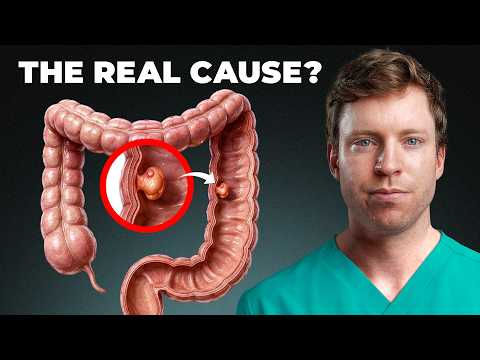
chatGPT:
I think this may have an element of mtDNA germline as a cause. That may be a unique view.
Below is a cleaned transcript, summary, and critique of the video “What’s Causing Colon Cancer to Rise So Fast?” by Dr Brad Stanfield, based on the supplied transcript. I have corrected obvious transcription errors, such as “Golon” → colon, “pllorum” → picloram, “colabactin” → colibactin, and “ultrarocessed” → ultra-processed.
Tidy transcript
1. Colon cancer rates are rising
Colon cancer rates in people under the age of 50 have roughly doubled in the last 20 years, and nobody quite knows why. Right now, three different research teams on three different continents are chasing different suspects.
One team in Barcelona thinks it may be linked to a herbicide first developed in 1964. One team in San Diego thinks it may involve a bacterium that many people acquire as toddlers. One team in Boston thinks the food on your plate may be involved.
Headlines tend to latch onto one suspect as “the cause” of the rise in early-onset colorectal cancer, but the real story is more complicated. Each research group has found something interesting, but none has solved the whole problem.
2. The Barcelona team: picloram and epigenetic fingerprints
At the Vall d’Hebron Institute of Oncology in Barcelona, Silvana Maas and José Seoane’s lab asked why colon cancer is appearing more often in people in their 30s and 40s.
They did not start with food diaries or questionnaires. Instead, they read the tumour itself.
Seoane explains the method with an analogy: if the genome is a book, epigenetic marks do not change the text, but act like Post-it notes or markers telling the cell which chapters to read and which chapters to skip. Your DNA sequence is broadly fixed, but methylation marks on top of that DNA can influence which genes are turned on or off, including genes involved in cell growth and division.
Environmental exposures over a person’s life may leave recognisable patterns in these methylation marks. The team therefore asked whether they could infer past exposures by reading methylation patterns in colon cancer tumours.
They analysed 31 colon cancers from people under 50 and 100 colon cancers from people over 70, using public US tumour databases from TCGA. They built methylation-based scores for 14 pesticides. These were not direct measurements of exposure, but proxies. One herbicide repeatedly appeared: picloram, originally developed by Dow Chemical and used on rangelands, roadsides, and utility corridors since the 1960s.
In the initial discovery cohort, the association looked striking, with an odds ratio of roughly three. This was the figure that attracted attention on the All-In podcast.
But the researchers then tested the result in nine independent cohorts: 83 young-onset cases and 272 older cases. In this replication analysis, the signal remained but shrank to an odds ratio of about 1.56.
That smaller number is probably the more reliable estimate. The first dataset was small, so the signal could have looked larger than it really was. The replication dataset was broader, and the authors themselves highlighted the smaller replicated estimate.
So is the picloram link real? The evidence is suggestive, but not definitive. It is almost certainly not evidence of a threefold risk. From this paper alone, the honest interpretation is closer to a 1.5-fold association, and even that comes with major caveats.
The biggest caveat is that the team did not directly measure anyone’s picloram exposure. They inferred exposure from methylation-based proxies, and the authors acknowledged that they could not validate the proxy against direct exposure data because such data did not exist.
Critics have argued that this indirect exposure measure introduces several uncertainties. German data complicate the picture further. Germany has published annual herbicide sales data going back decades. Picloram use appears to have been absent or extremely low in Germany for long periods, and EU residue monitoring has repeatedly found picloram below detection limits. Yet Germany has seen a rise in early-onset colorectal cancer similar to the US.
This does not disprove the picloram theory. Different countries can have different causes for similar trends. But it does mean picloram cannot currently explain the whole rise in early-onset colorectal cancer.
The Barcelona team has an interesting lead: a methylation signal linked to a specific pesticide. But it needs more direct exposure data and stronger validation.
3. The San Diego team: colibactin and early-life DNA damage
While the Barcelona team was reading methylation marks, Marcos Díaz-Gay in Ludmil Alexandrov’s lab at UC San Diego was studying mutational signatures.
Mutational signatures are patterns of DNA “typos” in cancer genomes. Different DNA-damaging exposures leave different fingerprints: UV light leaves one pattern; tobacco smoke leaves another. Some carcinogens therefore leave molecular evidence that can be read years later.
In 2025, Díaz-Gay and Alexandrov published one of the largest mutational-signature studies in colorectal cancer, analysing 981 colorectal cancer genomes from 11 countries.
They were not initially trying to solve the early-onset colorectal cancer puzzle. Their original goal was to examine global patterns. But they found that colibactin-related mutations appeared unusually often in early-onset cases.
Colibactin is a toxin made by certain strains of E. coli, specifically pks-positive strains. These bacteria can live in the gut. If they colonise the colon, they can produce colibactin, which directly damages DNA in intestinal lining cells.
The Díaz-Gay team found that two colibactin mutational fingerprints were 2.5 and 4 times more common in early-onset colorectal cancers than in later-onset cases. Across colorectal cancers overall, about 21% carried colibactin-associated signatures.
The most striking part is the timing. Work from the Wellcome Sanger Institute suggests that colibactin-associated mutations arise early in tumour evolution and may reflect exposure in early life, possibly within the first decade.
In other words, a bacterium may damage intestinal-cell DNA in childhood, while the resulting cancer does not appear until decades later.
This is biologically different from the picloram story. With picloram, the evidence is an inferred exposure and a methylation correlation. With colibactin, there is a known bacterial toxin, a direct DNA-damaging mechanism, and a specific mutational fingerprint visible in tumours decades later.
So is colibactin the answer? It may be a significant part of the answer, but it is not the whole explanation. The signature is present in a substantial minority of colorectal cancers, not all of them. Also, if the damage happened in childhood, that leaves a practical problem: what can a 45-year-old do about it now?
4. The Boston team: ultra-processed foods and adenomas
A third team, involving Andrew Chan at Massachusetts General Hospital and Yin Cao at Washington University in St Louis, took a different approach.
Instead of reading tumours after cancer had already occurred, they looked forward. They used the Nurses’ Health Study II, following about 29,000 women from 1991 to 2015. Food intake was recorded before participants became ill, and participants later underwent colonoscopies.
This study focused on early-onset colorectal adenomas. Adenomas are precursor lesions that can develop into colorectal cancer.
The researchers examined ultra-processed foods. These are not merely “junk foods” in a vague sense, but industrially formulated foods containing ingredients not typically used in home cooking: emulsifiers, stabilisers, modified starches, packaged snacks, soft drinks, processed meats, and instant meals.
They found that women consuming roughly 10 servings of ultra-processed foods per day had a 45% higher risk of higher-risk lesions than those consuming around three servings per day.
This sounds substantial, but it remains an association. Ultra-processed food is a broad category, not a single molecule. The risk could be driven by emulsifiers, low fibre intake, processed meat, higher energy intake, obesity, lower physical activity, or other lifestyle patterns.
The researchers adjusted for many confounders, but not all possible confounders can be eliminated in an observational study.
The senior author also did not claim that diet fully explains the early-onset colorectal cancer trend. Many patients with early-onset colorectal cancer report healthy diets. However, this study has an advantage over the Barcelona and San Diego studies: it measured exposure directly in people before disease developed. That makes it a strong observational design.
5. Comparing the three theories
The Barcelona team found a chemical-associated methylation fingerprint linked to picloram, with a replicated odds ratio of about 1.56, but without direct exposure measurement and with unresolved geographic questions.
The San Diego team found a bacterial toxin with a direct DNA-damaging mechanism, present in about 21% of colorectal cancers, with evidence suggesting some damage may occur in childhood.
The Boston team found a 45% higher adenoma rate at the high end of ultra-processed food intake in a prospective cohort of 29,000 women, while acknowledging that diet does not explain everything.
Each theory makes the others look incomplete. This is the part of science that headlines often miss. News stories want a single cause, but the evidence points to multiple partial contributors.
The most likely answer is not one paper, one podcast, or one culprit. It is probably a combination of early-life microbial exposures, diet, metabolic health, environmental chemicals, screening patterns, and other still-unidentified factors.
6. What can people do now?
While researchers continue to investigate, the practical recommendations are familiar.
If you are 45 and have not had colorectal cancer screening, that is one of the highest-impact actions available. A stool-based FIT test is a good starting point. The US Preventive Services Task Force lowered the recommended screening age from 50 to 45 because of the rise in early-onset disease.
The next step is dietary fibre. A high-fibre diet rich in fruits, vegetables, whole grains, and legumes is consistently associated with lower colorectal cancer risk. This may need adjustment for people with irritable bowel syndrome or inflammatory bowel disease.
Body weight and activity also matter. Obesity and sedentary behaviour increase colorectal cancer risk, while regular physical activity reduces risk.
Reducing ultra-processed food intake is also sensible. Even if the exact causal pathway is unclear, multiple cohorts point in the same direction: diets based more on whole foods and less on packaged industrial foods are likely beneficial.
Finally, symptoms should not be ignored: blood in the stool, persistent changes in bowel habits, unexplained weight loss, persistent abdominal pain, or other concerning symptoms should prompt medical assessment.
The overall message is to be proactive: reduce modifiable risks and catch problems early.
Summary
The video argues that the rise in early-onset colorectal cancer is unlikely to have a single cause. It compares three current hypotheses:
| Hypothesis | Evidence presented | Main strength | Main weakness |
|---|---|---|---|
| Picloram herbicide | Methylation patterns in tumours associated with inferred picloram exposure | Suggestive epigenetic signal; replicated in independent cohorts | Exposure was inferred, not directly measured; geographic data complicate the story |
| Colibactin-producing E. coli | Colibactin mutational signatures enriched in early-onset colorectal cancer | Strong biological mechanism: direct DNA damage with a readable mutational fingerprint | Does not explain all cases; unclear what adults can do if exposure occurred in childhood |
| Ultra-processed foods | Prospective cohort linking high UPF intake to higher risk of early-onset adenomas | Exposure measured before disease; strong observational design | Observational; UPFs are a broad category; residual confounding likely |
The video’s conclusion is cautious: all three lines of evidence may be real, but none is sufficient alone. The practical advice is screening from age 45, attention to symptoms, more fibre, more physical activity, lower obesity risk, and less ultra-processed food.
Critique
1. The video is good at resisting a “single-cause” narrative
This is the strongest feature of the video. It does not treat picloram, colibactin, or ultra-processed foods as the explanation. That is appropriate, because early-onset colorectal cancer is probably heterogeneous. Different causal pathways may operate in different people, countries, tumour subtypes, birth cohorts, and life stages.
The 2026 colorectal cancer statistics support the broad premise that colorectal cancer incidence has been rising in younger adults: incidence increased by about 3% annually in adults aged 20–49, while falling in older adults. (ACS Journals)
2. The picloram section is appropriately sceptical
The video correctly distinguishes between a striking discovery signal and a smaller replication signal. The Nature Medicine paper used methylation risk scores for environmental/lifestyle exposures, and compared early-onset colorectal cancer with late-onset colorectal cancer across TCGA and nine replication cohorts. (Nature)
The critique is also fair: methylation-based exposure inference is not the same as measuring a person’s actual pesticide exposure. The association may reflect picloram, some correlated exposure, a tissue/tumour confounder, or a methylation pattern associated with disease biology rather than cause. The video is right not to overstate this finding.
3. The colibactin section has the strongest mechanistic case
The colibactin evidence is mechanistically more compelling than the picloram evidence. The Nature study reports colibactin exposure signatures in about 21.1% of microsatellite-stable colorectal cancers and an association with earlier age of onset. (Nature)
That matters because mutational signatures are closer to a physical record of DNA damage than a general epidemiological association. The video is therefore justified in saying that colibactin has a more direct mechanism.
However, it should still be framed as a contributor, not a proven population-level explanation for the entire rise. Cancer Research UK’s coverage also notes that more work is needed to establish a direct causal link in the early-onset trend. (Cancer Research UK - Cancer News)
4. The ultra-processed food section is balanced but could go deeper
The video fairly states that ultra-processed food is a category, not a single causal agent. The JAMA Oncology cohort found that women in the highest quintile of UPF intake had a 45% higher odds of early-onset conventional adenomas, with no association observed for serrated lesions. (JAMA Network)
That lesion-specific result is important. It suggests that UPFs may relate more to the conventional adenoma–carcinoma pathway than to all colorectal neoplasia. The video mentions adenomas generally, but it could have made more of the distinction between conventional adenomas and serrated lesions.
5. The prevention advice is reasonable, but US-centred
The video’s screening advice relies mainly on US guidance. The USPSTF recommends colorectal cancer screening from age 45 to 75 for average-risk adults, which matches the video’s recommendation. (uspreventiveservicestaskforce.org)
For a UK audience, this needs translation. NHS bowel cancer screening policy differs from US guidance, and symptomatic people under routine screening age should not wait for a screening invitation. In the UK, the key practical point is: persistent bowel symptoms, rectal bleeding, unexplained iron-deficiency anaemia, unexplained weight loss, or persistent abdominal pain should be discussed with a GP, regardless of age.
6. The video underplays some other plausible contributors
The three theories are useful, but the rise in early-onset colorectal cancer may also involve birth cohort effects, childhood antibiotic exposure, C-section rates, obesity and insulin resistance, alcohol, sleep/circadian disruption, sedentary time, changes in gut microbiome development, and diagnostic/surveillance patterns. The video hints that the story is multifactorial, but its three-suspect structure may still make the causal landscape look narrower than it is.
7. Overall judgement
This is a strong explanatory video. Its main virtue is that it compares different evidence types:
methylation signal → suggestive but indirect
mutational signature → mechanistically stronger
prospective diet cohort → better exposure timing but still observational
The scientific framing is cautious and mostly accurate. The key limitation is that the video necessarily simplifies a complex, multi-causal epidemiological trend into three headline theories. The best takeaway is not “picloram vs colibactin vs ultra-processed foods”, but that early-onset colorectal cancer may arise from multiple interacting exposures across childhood, diet, microbiome, metabolism, and environment.