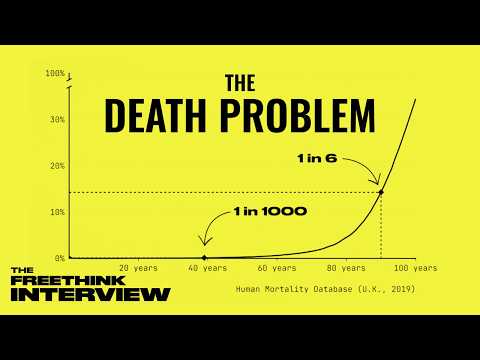
We may have doubled the life span of one or two standard deviations of the population, but we certainly haven’t doubled the longest lifespan or longest healthspan.
The Venetian painter, Titian, lived and worked to nearly 90 (and more by some accounts). Died 1576.
Plato lived to 80 before the c.e.
1 Like
Lifespan began to increase as the then recently developed scientific method was applied to public health, medicine, and eventually diet and personal health. Today, even though scientific research permeates these areas of human endeavor, lifespan increases have all but stopped. flattened. If you look at the specific contributions of science to human lifespan and their results, you see no scient-based reason to extrapolate the curve much further the present. Still, that view seems potentially shortsighted even though it is clear that a disruptive discovery would be required to extend mean lifespan further than can be projected by further reductions in the incidence and prevalence of the things that kill us.
Modal Lifespan, another way to look at what happened.
When we talk about “life expectancy,” we usually mean the average age at death — but that number is distorted by infant and early deaths.
A far more revealing measure is the modal lifespan — the most common age at death among adults. It tells us when most people actually die once they’ve survived childhood.
And here’s the surprising part:
- Around the year 1000, the modal age of death was about 65–70 years.
- By 1900, it had climbed to ~78 years.
- Today, in most developed countries, it’s 85–90 years.
So human longevity hasn’t suddenly exploded — we’ve mainly compressed mortality so that nearly everyone now lives close to the biological limits that once only a few reached.
1 Like
I think avoiding infant mortality, deaths from infection and accidents which is the main cause of increases in lifespan are not the same as reducing the effects of non-communical disease (aging) which have also increased lifespan, but not necessarily compressed morbidity from those diseases.
1 Like