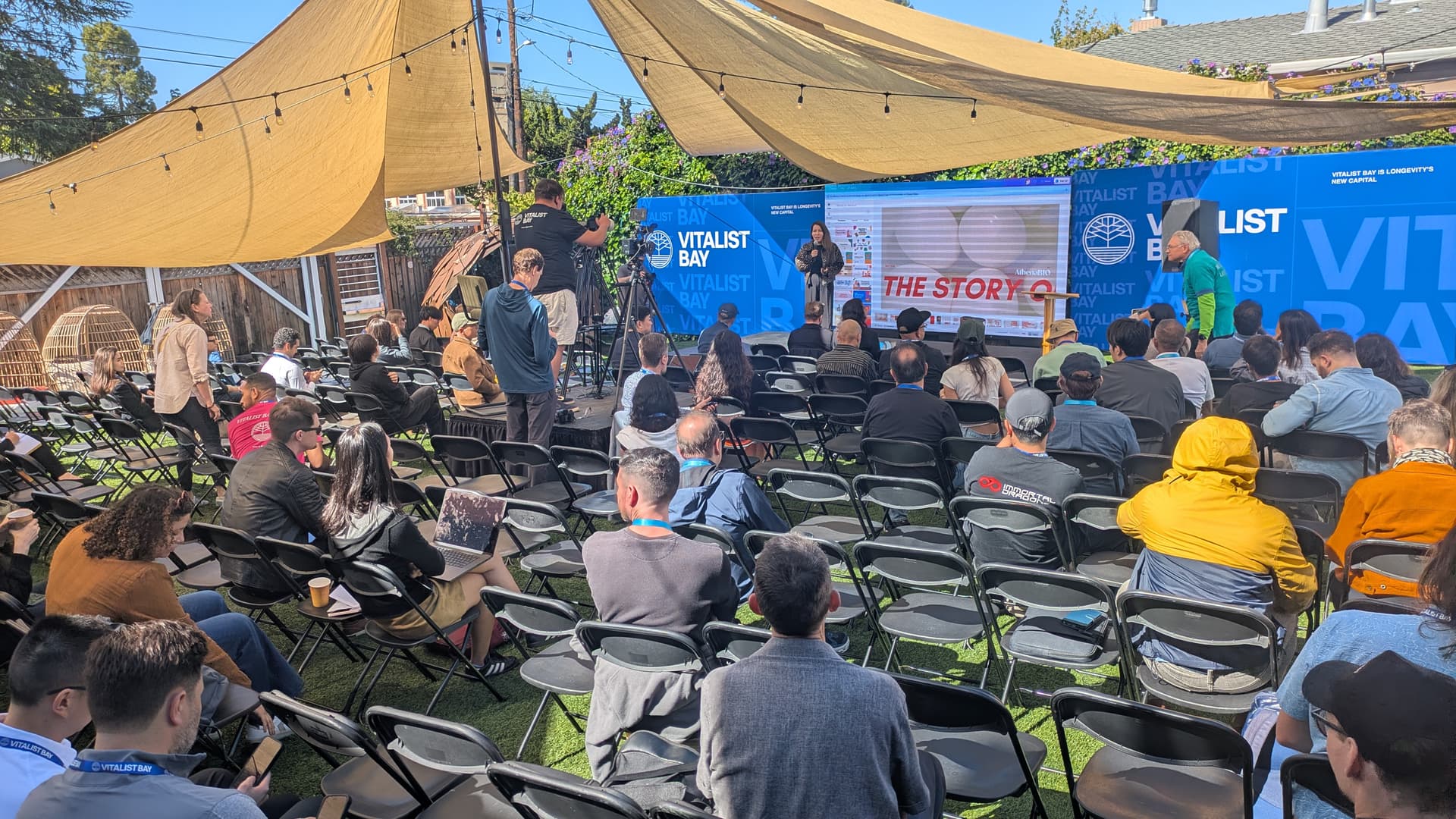
Vitalist Bay returns: four day longevity festival in the Bay Area, May 14 to 17

@Ulf @RapAdmin @Albina @robin_gustafsson @AmyK

Hello!!!

Do any of you know which days you’ll be attending, if not all? I definitely want to see the people I’ve met, and also meet the people I haven’t.

I’m still not firm on which days I’m going, but I’m going to shoot for two days. (I have a big commute!).

Hi Beth,

I am arriving in Berkeley on May 12, leaving on May 18. Would be great to meet up. Am staying in an airbnb on Telegraph Ave. / Ulf

1 Like

Perfect!! And wow that you are coming from out of town!

Yep a long journey, but meeting with longevity folks live for the first time on top of an impressive program made it an easy decision.

2 Likes

As of right now, I’ll come Thurs or Friday and then again on Sunday.

I’m leaning towards Thursday only because traffic coming home will be better than fighting all the tourists on a Friday :slight_smile:

I’m leaning on going only on Thursday also.

There is the BAAM meeting at the Buck Institute on Aging on Friday the 15th I’m thinking of going too also, and I’m traveling on the weekend so can’t make Sat/Sun.

1 Like

I’m arriving May 14 afternoon and leaving May 15 afternoon. My main stage talk is in the morning on Friday and I have a Q&A small group session to follow. I’m looking forward to all of it!

3 Likes

I sent the group who are going a joint PM.

I’ll hopefully get to meet you Thursday afternoon. I live pretty far, so I most likely won’t make it back for your talk :(, but I’ll catch it online.

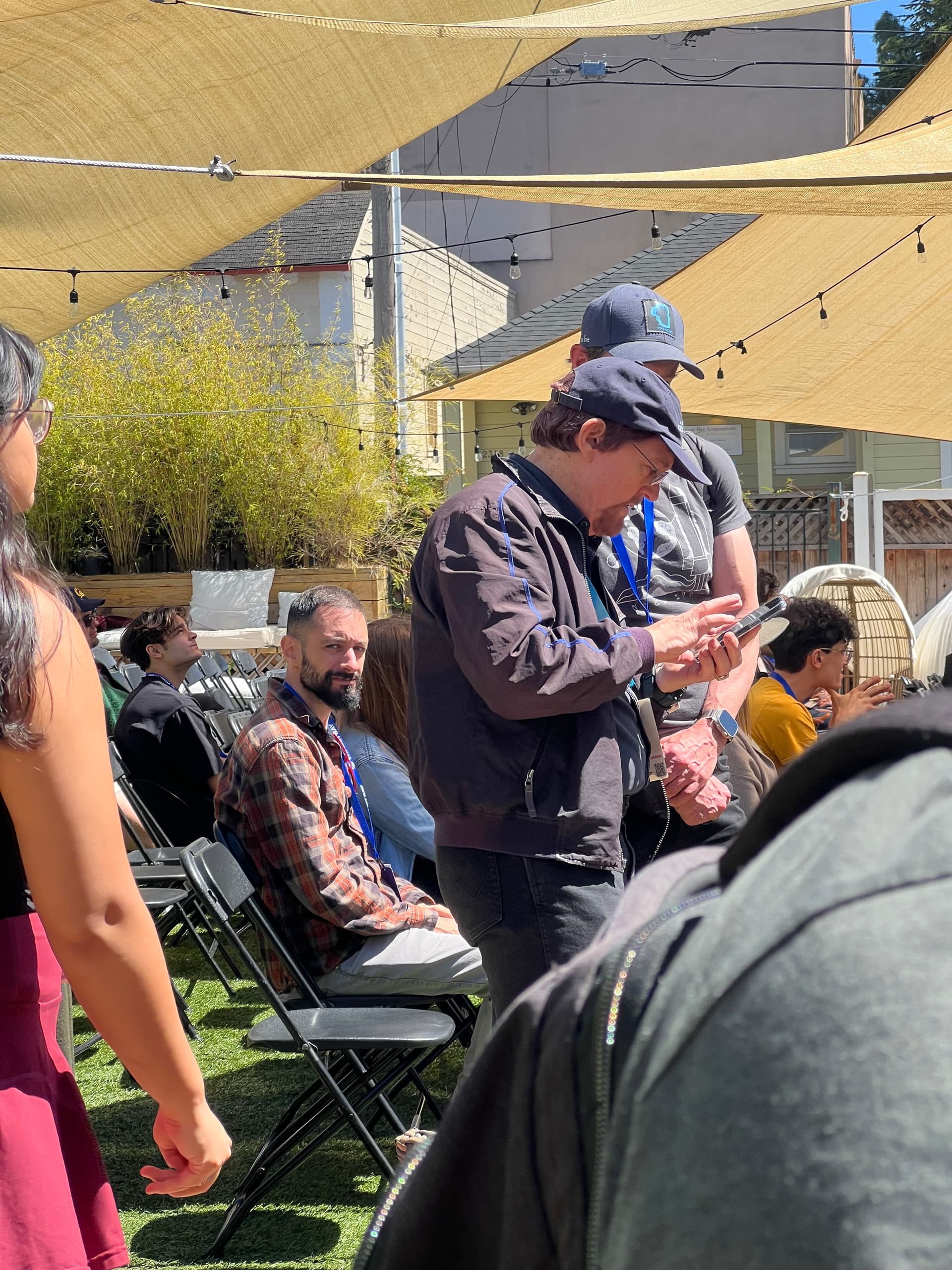
A Beautiful day in Berkeley today…

4 Likes

Tons of fun spending the day with you!

Fyi, I checked and you can cancel and restart Rthym Health for labs at any time… I’ll post about them in the labs thread.

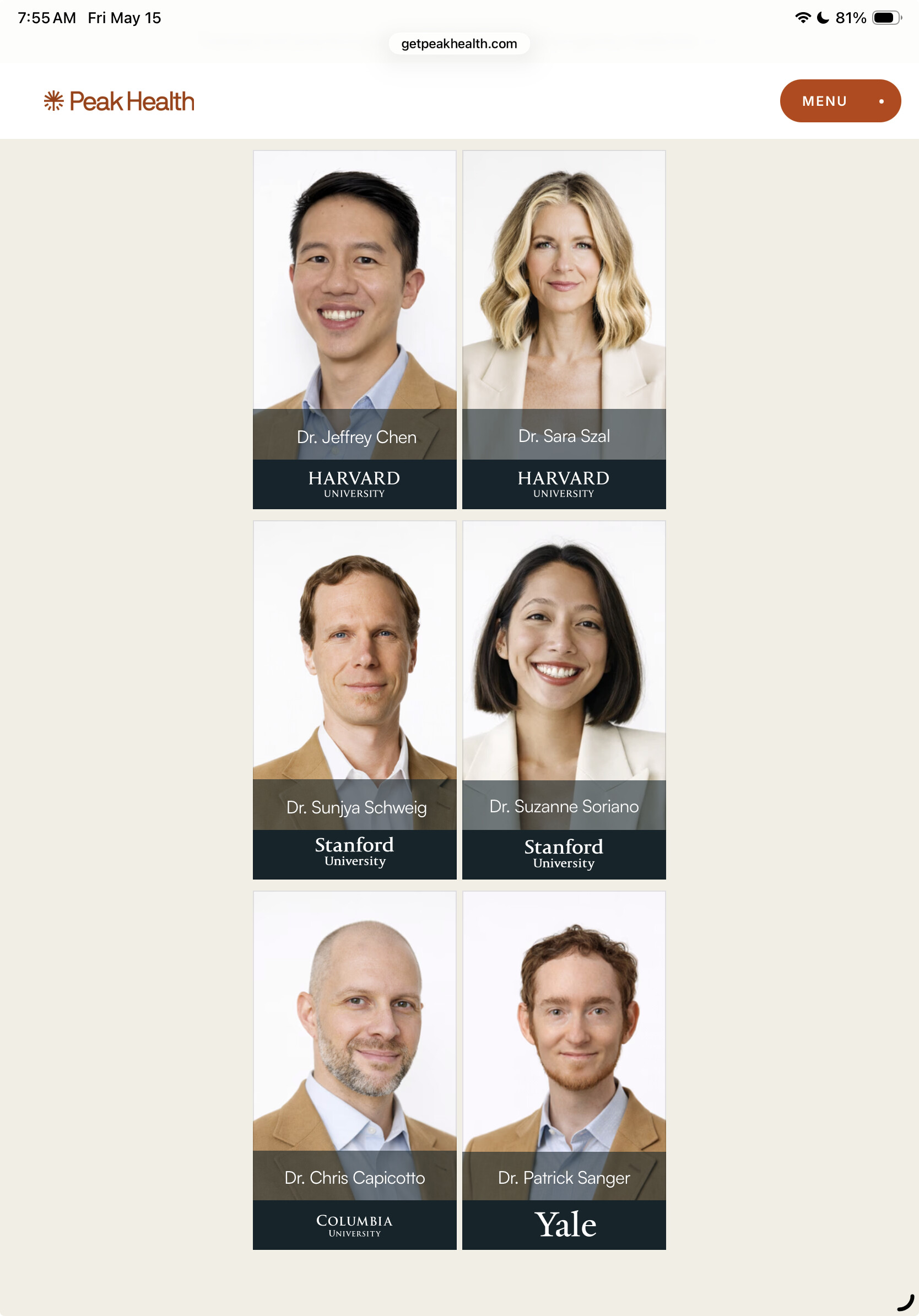
I’m also messaging with Dr Chen, the guy who did the Peakspan talk. I’m very impressed with him. Once I learn more about their service, I’ll post about that, too.

Here are the docs … not too shabby :slight_smile:

2 Likes

I have an extra ticket for Saturday (tomorrow), if anyone wants to attend, text me at 916-817-0582. It was so great to see @Beth and @RapAdmin yesterday! Thank you @RapAdmin for all the work you’re doing to maintain this beautiful community of people here​:pray::white_heart:

3 Likes

It was a thrill to get to see your glamorous self once again!!!

Also, @Ulf, Dr Chen texted me about what an inspiration you are to all of us… I think we have identified the Desertshores of Sweden!

1 Like

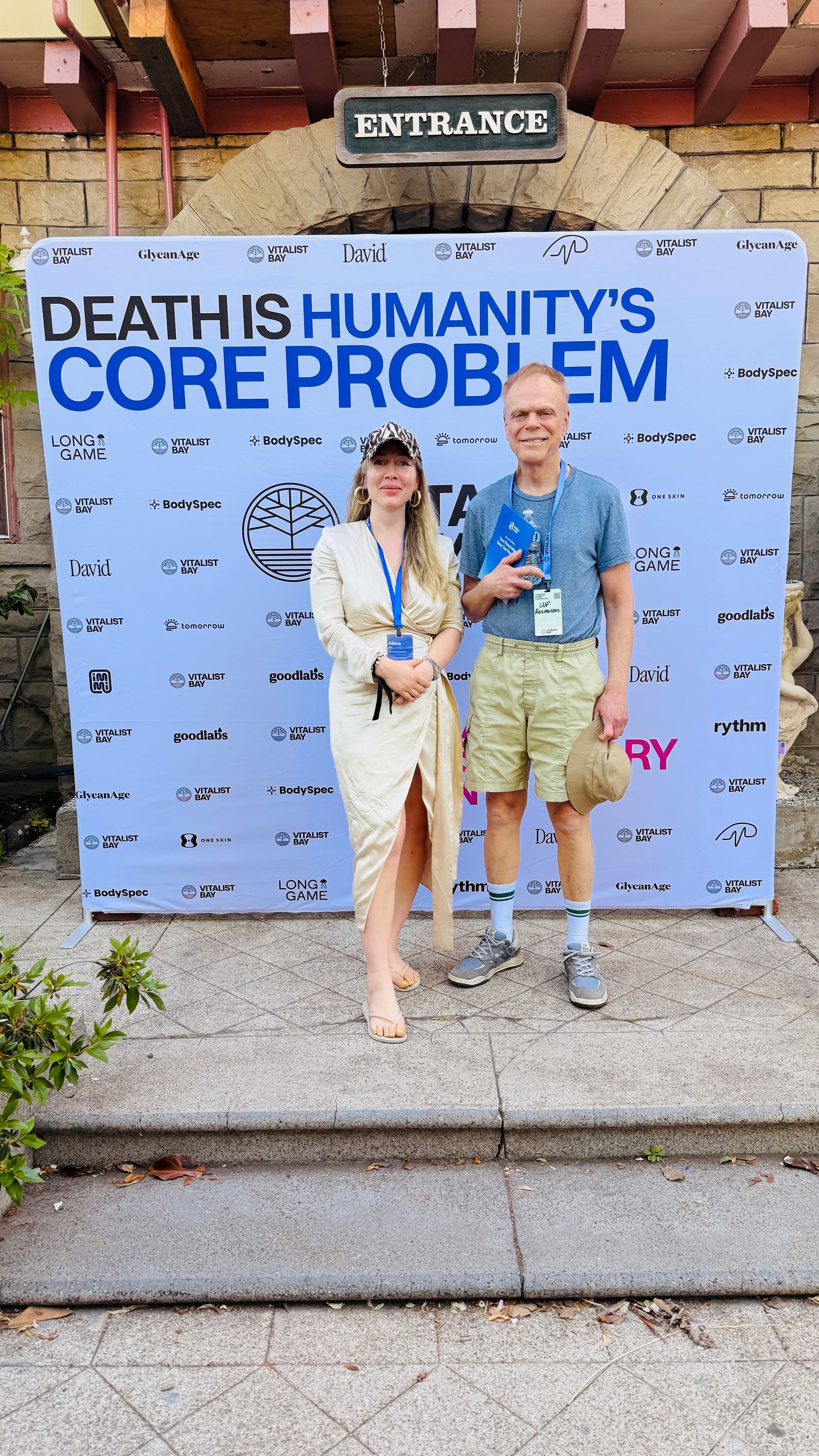
It was great to see a small group of our forum members yesterday. Fun to catch up. @ulf made his way to Berkeley from Sweden and impressed us all, he looks and functions about 20 years younger than his chronological age… definitely someone I’ll be working to emulate. Lots of fun conversations and shared stories. Hopefully more people will join us next year.

6 Likes

@Ulf and I had a great time at the conference today! Wish more of you were here, you guys are missing out🤪 I’ll post some notes later with the main takeaways.

5 Likes


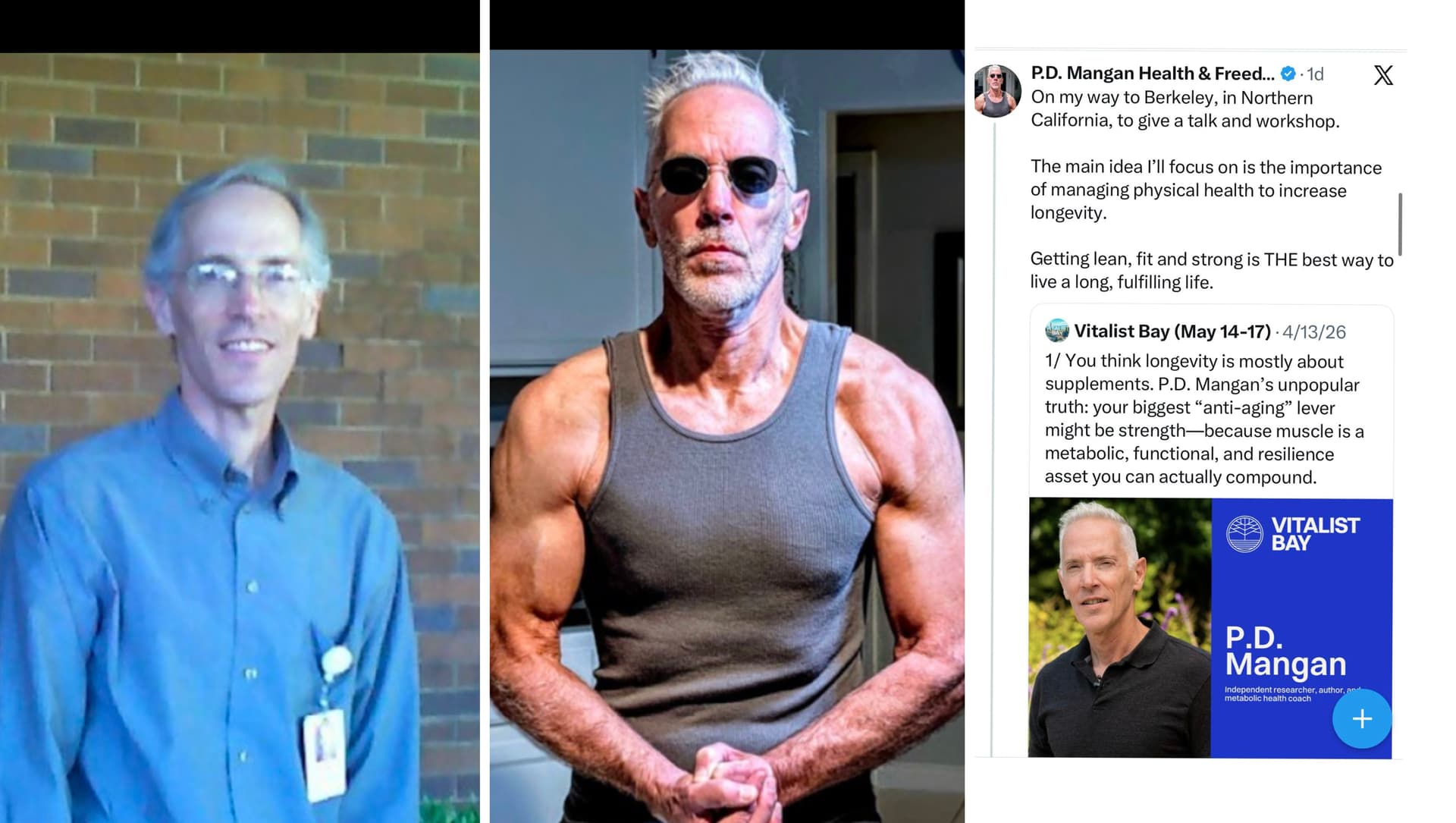
This was one of my favorite speakers from today: P.D. Mangan (independent researcher, author, and metabolic health coach). His whole thesis was basically: insulin resistance = aging, and insulin sensitivity predicts chronic disease.

His cardio-metabolic training protocol is very simple: two sessions per week, thirty minutes each. He trains every 4 days, and he can get through about a dozen exercises in about 30 minutes. His workout guide was: one set per exercise, taken to failure (the point you can’t do another rep in good form), and failure should happen within 1-2min max of time under tension. He emphasized a slow cadence (about 3-4 seconds up and 3-4 seconds down), no rest between exercises (your “rest” is basically the time it takes you to move from one machine to the next, or set up for the next exercise), and focusing on compound movements (push, pull, squat, overhead press). He said: you don’t need more time, you need more intensity.

Then he explained why intensity works at the tissue level: capillary density. He showed data that 12 weeks of resistance training can bring capillary density in 72-year-old men up to levels seen in 26-year-old men, and that high-intensity training increased capillary density ~54% vs ~21% with moderate intensity. The point wasn’t “work harder for pain,” it was that intensity is the lever that changes the tissue environment, and capillary density is directly linked to insulin sensitivity.

He also explained xenohormesis in a way that clicked for me: when plants get stressed (sun, drought, pests), they make protective compounds called polyphenols. When we consume them in things like coffee, tea, dark chocolate, we’re basically “borrowing” the plant’s stress signal, and our bodies respond by switching on internal repair and resilience pathways like sirtuins, antioxidant defenses, autophagy (cell cleanup), and DNA repair. It’s the same hormesis idea as training to failure: a small, controlled stress signal triggers a bigger adaptation, just through food instead of weights.

And then he went hard on iron, which I honestly wasn’t expecting. He said iron may be a hidden variable in aging. He kept coming back to ferritin as the marker people ignore because standard ranges normalize being too high. Main takeaways:

  • Get a ferritin test.
  • Optimal target: above anemia territory, but under 100 ng/mL (he mentioned >15–20 ng/mL as the “don’t be anemic” floor, and <100 ng/mL as the target).
  • If ferritin is high, one of the simplest tools is blood donation / therapeutic phlebotomy, and he suggested a practical cadence like donating every ~8 weeks — and that 2–4 donations per year can be enough to drive ferritin under 100 for many people.

He tied this into cardiovascular risk with the concept of blood viscosity as a unifying downstream biomarker: viscosity is associated with essentially all CVD risk factors, and both exercise training + blood donation decrease it.

Book he recommended to learn about blood viscosity: The Clot Thickens: The enduring mystery of heart disease: Kendrick, Dr Malcolm: 9781907797767: Amazon.com: Books

Lastly, body composition alone doesn’t fix everything. There are markers you can still be “normal” on while your body is struggling. That’s why he kept pushing fasting insulin as a lab worth tracking (not just fasting glucose or A1C), because insulin is the early warning system.

Also, I just found P.D. Mangan’s supplement stack link he shares publicly: PD Mangan’s 202 Supplement List | Routines

I’ll keep sharing some of the other conference highlights here.

9 Likes

I bet Bryan Johnson is totally lurking on this site. We should try inviting him to join.

If people want a rapa in person conference that sounds interesting, but at the moment i dont want to risk spending any time in trumpland.

3 Likes

I’m here and had an @AlexKChen sighting but I couldn’t catch up to say hello

Just spoke w Charles Brenner. He thinks rapa is a bunch of hooey. But he seems to think most things are if they are not NR, so there’s that.

1 Like

Yesterday was great and glad I made the trek again.

I got to finally meet @AlexKChen which was a treat.

I also had a Greg Fehy sighting and took a pic for @Agetron

@Albina and I went to a session on how to build a health coach with Claude. It gave me some great ideas. I have a health project and created a health tracking app with Claude, but what they did blew mine away, no surprise there!

You can have Claude, through API, fetch your info each day from Oura/Whoop etc and then include whatever else you want. Just ask Claude how to do it. What I learned is I needed to use Claude co work with live artifacts instead of my regular Claude… that was my failing.

A computer/math guy in the audience showed us his app called Gauva Health. If you don’t want to build your own app, that seems like it would do most of it… it will fetch your lab info from various sites, link with Oura/whoop/etc. It seems pretty incredible. You can also import csv if there is no current link. I’m going to tinker with it.

From Gauva

That’s a wrap!

EDIT: Claude says if I’m willing to hit refresh on my ipad, I can do it all without cowork on a computer.

He said:

Building your health dashboard on iPad, no Cowork needed
The platform: claude.ai in Safari on your iPad — exactly where we are now. The app is built as an artifact, which renders in a panel right inside the chat.
Oura data: You get a free Personal Access Token from Oura’s developer portal (one-time setup, takes 5 minutes). You paste it into your app once. After that, the app calls Oura’s API directly and fetches your sleep, HRV, readiness, and activity data automatically every time you open it or hit Refresh. No CSV exports, no manual entry.
Claude analysis: Because this is built using the Anthropic API inside the artifact, Claude itself reads your Oura data and analyzes it in the context of your specific protocol — not generic tips. This is the same “AI brain” capability you saw in Pasha’s dashboard.
Your lab data: You paste new values in when you have them. The app stores your historical values and shows trends over time.
Saving your data: Connects to Google Sheets via your existing setup for permanent backup outside the app.
Daily use: Open claude.ai on iPad, open this conversation or a pinned project, tap Refresh. Done.
Hosting: No Netlify needed. The artifact lives right here in Claude. If you want a standalone URL to bookmark separately, Netlify is an option but not required.

6 Likes

Yes - mentioned earlier here: New Health & Longevity Technology - #16 by RapAdmin

2 Likes