I have not delved into this, but I wonder if Type I Diabetes is not an entirely different physiological environment, and therefore any findings in this context translate on a cellular level to T2DM or non-diabetic settings. TGR5 receptors might act differently on cAMP-PKA signalling. Or some other factors impacting insulin production. I wish this was in more common T2DM as that would be more relevant to prediabetics. But not being Type I, I suspend judgement.
The long-term safety of TUDCA is honestly quite concerning. Keep in mind that UDCA is known to significantly reduce cancer incidence, whereas TUDCA has actually been associated with an increased risk of colorectal and intrahepatic cholangiocarcinoma. I acknowledge that short-term TUDCA use for specific conditions is very safe, but its long-term safety profile is questionable at best. In fact, gavage administration of TUDCA in mice without a history of cholecystectomy was shown to increase tumor burden.
https://pubmed.ncbi.nlm.nih.gov/40819131/
Fecal microbiota transplantation, single bacterial colonization and bile acid supplementation demonstrate that cholecystectomy-related gut microbiota perturbations promote the production of TUDCA and facilitate colorectal tumorigenesis.
https://pubmed.ncbi.nlm.nih.gov/31298745/
Plasma TUDCA was negatively correlated with the abundance of the genus Pseudoramibacter and the survival time of patients with ICC, but had no effect on tumor size
Granted, TUDCA has also been shown to reduce the incidence and progression of colon cancer in certain mouse models. I think the current evidence is still somewhat contradictory, and there’s no slam-dunk proof yet to verify its long-term safety.
3 Likes
I took my first dose of UDCA last night and I woke up three times in extreme pain from severe muscle cramps/charley horse mainly on my left leg. I do many other things, but this was the only change (new thing) I did for yesterday. I did however start taking 100mgs of Canagliflozin about 5 days ago also but had no cramps until last night. I haven’t woken up from muscle cramps in last three years or so. Do you guys think it is a common side effect of UDCA, or could it also be CANA?
I didn’t read the full paper but the abstract sounds like TUDCA increases but isn’t necessarily causative in regards to tumorigenesis. Perhaps it’s the cholecystectomy itself, the change in microbiota, or other changes in bile acids with TUDCA simply being associated? As you mentioned, TUDCA seems to have anti cancer properties as well
To verify whether GUDCA or TUDCA in the absence of cholecystectomy could reproduce the effect of cholecystectomy on CRC oncogenesis, we conducted a gavage experiment (Supplementary Fig. 16a). We measured the levels of GUDCA or TUDCA in feces after gavage of GUDCA or TUDCA in the absence of cholecystectomy. The data showed that the fecal levels of GUDCA or TUDCA increased significantly (Supplementary Fig. 16b, c), and were comparable to the fecal levels of TUDCA after cholecystectomy. Subsequently, we observed that TUDCA or GUDCA treatment in the absence of cholecystectomy could develop an increased number of tumors (Supplementary Fig. 16d), a higher histopathological grading (Supplementary Fig. 16e), and increased levels of CEA and CA19-9 (Supplementary Fig. 16f, g). These results suggest that gavage of either GUDCA or TUDCA in the absence of cholecystectomy can also promote the development of CRC.
https://www.nature.com/articles/s41467-025-62956-8
Plus, in patients with intrahepatic cholangiocarcinoma (ICC), those with high plasma TUDCA levels have a significantly shorter overall survival compared to the low-level group, and TUDCA is positively correlated with tumor count. This casts serious doubt on its supposed ‘anti-cancer’ properties.
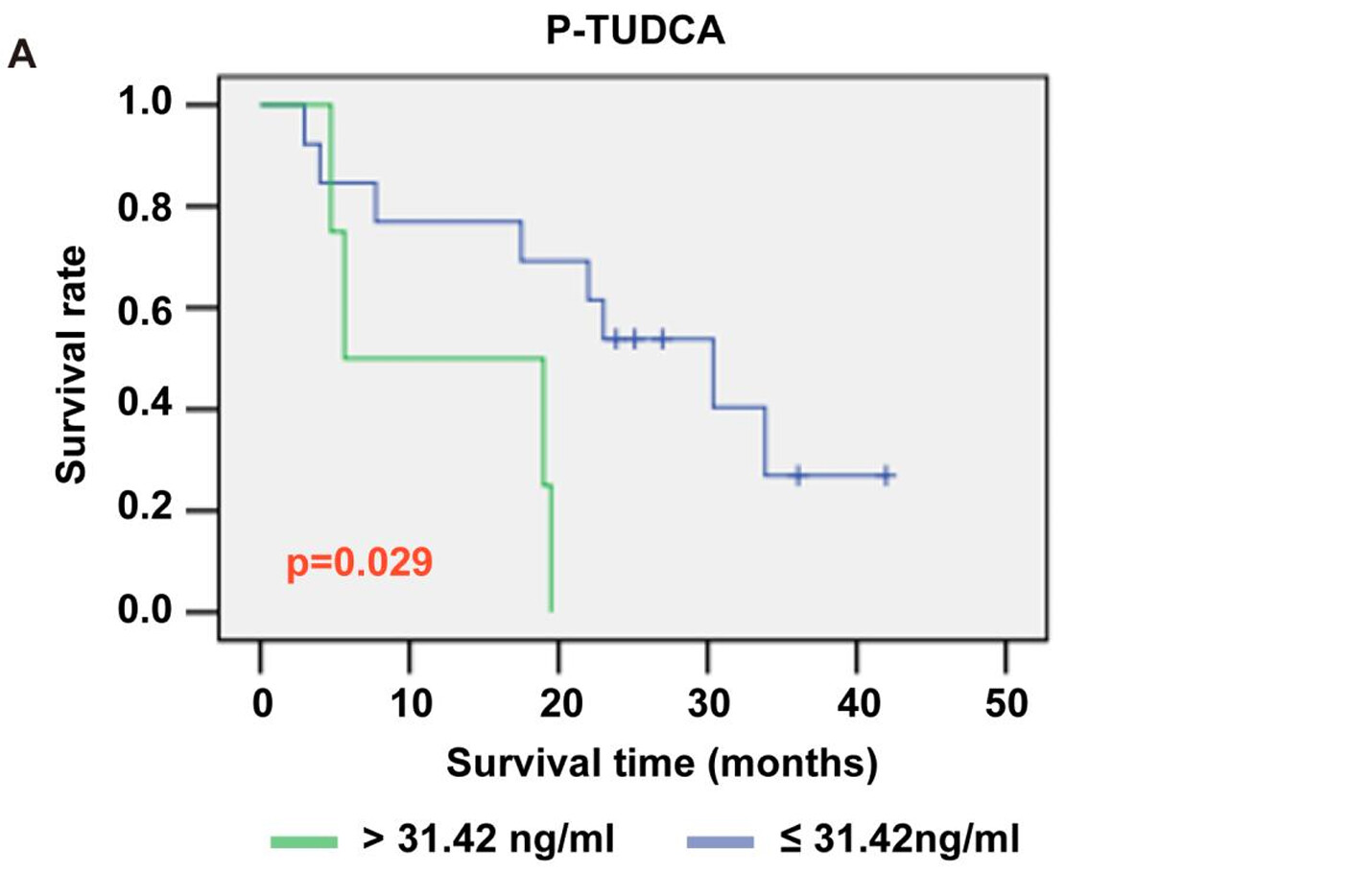
To be fair, my current skepticism is based on pretty preliminary and rough evidence, so I was really just throwing out a hook to see if anyone else has better insights. For now, existing clinical trials do suggest that TUDCA is safe over a span of several years.
1 Like
I ran the question through OpenEvidence, which seems to give a pretty balanced answer with references:
“The preclinical signal that TUDCA might promote cancer is limited, largely restricted to specific contexts (biliary carcinogenesis and pancreatic chemoresistance), and is outweighed by a much larger body of preclinical work showing neutral-to-protective effects across most tumor types. Overall, the concern is real but narrow, and there is no robust human evidence that supplemental TUDCA promotes cancer.”
4 Likes