It is an injection. Oral or patch hgh doesn’t exist.
2 Likes
Yes - quite the range it seems.
- A computed tomography (CT) scan is a painless, noninvasive diagnostic test used to create views of structures inside the body.
- The average price of a CT scan can be anywhere from $300 to $6,750. However, your cost will depend on many factors, including the place of service and body area scanned.
- Some health plans may cover authorized CT scans. However, you may still have out-of-pocket costs such as copays, coinsurance, or deductibles.
2 Likes
Exactly. You get the HGH powder in a vaccumed sealed vial - reconstitute (can be 10 or 24 units) it with bacteriostatic water and inject your dose with a diabetic - small needle.
2 Likes
Amazing results and you look amazing too! thank you for sharing your journey and results.
1 Like
Transdermal application is possibly.
One paper below there are more.
Article
“Sustained transdermal delivery of human growth hormone from niosomal gel: in vitro and in vivo studies”
https://www.tandfonline.com/doi/full/10.1080/09205063.2022.2045667
My thinking is applying on top / around the thyroid.
2 Likes
Also FWIW…
AI-generated answer. Please verify critical facts.
Research into microneedle patches for human growth hormone (HGH) has demonstrated that transdermal delivery via dissolving or coated microneedles can achieve pharmacokinetics and bioavailability similar to traditional subcutaneous injections, offering a painless, needle-free alternative for self-administration. Silk-based and titanium microneedle systems have shown the ability to maintain HGH stability and release the hormone over sustained periods (up to 7 days or more) without requiring cold chain storage, while eliminating the risk of sharps waste.
However, commercially available patches fall into two distinct categories with different mechanisms and levels of clinical validation:
- Clinical-Grade Microneedle Patches : Scientific studies (e.g., Acta Pharmaceutica Sinica B , 2023; Nature Materials , 2025) describe patches using actively separated or dissolving microneedles to deliver recombinant human growth hormone (rhGH) or somatropin directly into the bloodstream, showing efficacy in animal models for treating growth hormone deficiency.
- Supplement/Homeopathic Patches : Products like ISOTROPIN-HGH or HGH Power Patch often contain homeopathic dilutions (e.g., 2C/30C), amino acid secretagogues (arginine, lysine), or claim to deliver high doses of somatropin (e.g., 75mg) that lack the rigorous clinical trial data supporting the efficacy of medical-grade microneedle systems.
Key distinctions between these approaches include:
| Feature | Microneedle Research Patches | Commercial Supplement Patches |
|---|---|---|
| Delivery Mechanism | Physical penetration (microneedles) | Passive diffusion or secretagogue stimulation |
| Active Ingredient | Recombinant Human Growth Hormone (rhGH) | Homeopathic dilutions, amino acids, or claimed synthetic HGH |
| Clinical Evidence | Validated in preclinical animal studies (rats, guinea pigs) | Limited to manufacturer claims; no major clinical trials cited |
| Regulatory Status | Investigational / Medical Device | Sold as dietary supplements |
While bioinspired patches mimicking natural HGH secretion rhythms have shown promise in promoting bone growth in mice and rats, the widespread medical adoption of HGH patches is currently limited to research settings, whereas consumer products often rely on unverified claims regarding dosage and absorption efficiency.
AI-generated answer. Please verify critical facts.
1 Like
A low-dose amino acid supplement (SeroVital®, Sanmedica International, LLC, Salt Lake City, UT) containing 2.9 g of supplemented L-lysine, L-arginine, oxo-proline, N-acetyl-l-cysteine, L-glutamine, and schizonepeta was developed based on the stimulatory effects of some amino acids on hGH release.
Shizonepeta is Jing jie in Chinese medicine.
The increase in hGH 120 minutes following administration of the amino acid supplement represented a 682% or 8-fold increase from baseline (Table 1, Figure 1). The area under the curve for hGH from time 0 to 120 minutes (AUC0-120 min) was also significantly greater following treatment with the amino acid supplement compared to placebo (Table 1).
3 Likes
I was a volunteer subject in the TRIIM-XA trial, in the very first cohort, continuing for 18 months. I just want to point out that the protocol Agetron has followed is pretty different from the protocol that Dr. Fahy and Intervene Immune have followed in their work with volunteers. First, we never took HGH daily - the doses were less frequent than this, and the dose amounts were adjusted frequently, based on blood test results. Second, we took Metformin and DHEA throughout the study, aiming to counteract some of the ill effects of HGH, notably raising Insulin and possibly Insulin resistance. See for example https://diabetesjournals.org/care/article/35/4/768/38342/The-Association-Between-IGF-I-and-Insulin. It does look to me like Agetron has seen thymus regrowth as well as muscle growth, much as seen in the TRIIM-X studies. But IMO there are some risks to be aware of for anyone taking growth hormone, especially for a lengthy period. I would definitely be getting blood tests fairly often, looking for IGF-1 and Insulin changes, as well as CBC and CMP information.
11 Likes
Did you target a certain igf1 level/z-score ? How often did you test your levels?
1 Like
I can only discuss my personal results, but over time my blood tests have shown IGF-1 in the middle of the reference range (100-110 in the range 34-245 ng/mL), and a Z score also in the middle (-0.1 to +0.3 in the range -2.0 to +2.0 SD). My insulin level has stayed well below the high end of the reference range (8 to 9 in the range <= 18.4 uIU/mL). During TRIIM-XA, we were getting blood tests almost once a month; presently I think every 3 months to 6 months for most tests is sufficient.
6 Likes
You look amazing at 68. Way to set an example and thanks for sharing your results 
2 Likes
Can you share a little more about the dosing protocols you personally used as well as others in that study
1 Like
Thanks Daniel,
Actually, I wrote Dr. Fahy in May of 2022 to be in a trial, did the survey and was a strong candidate to enroll.
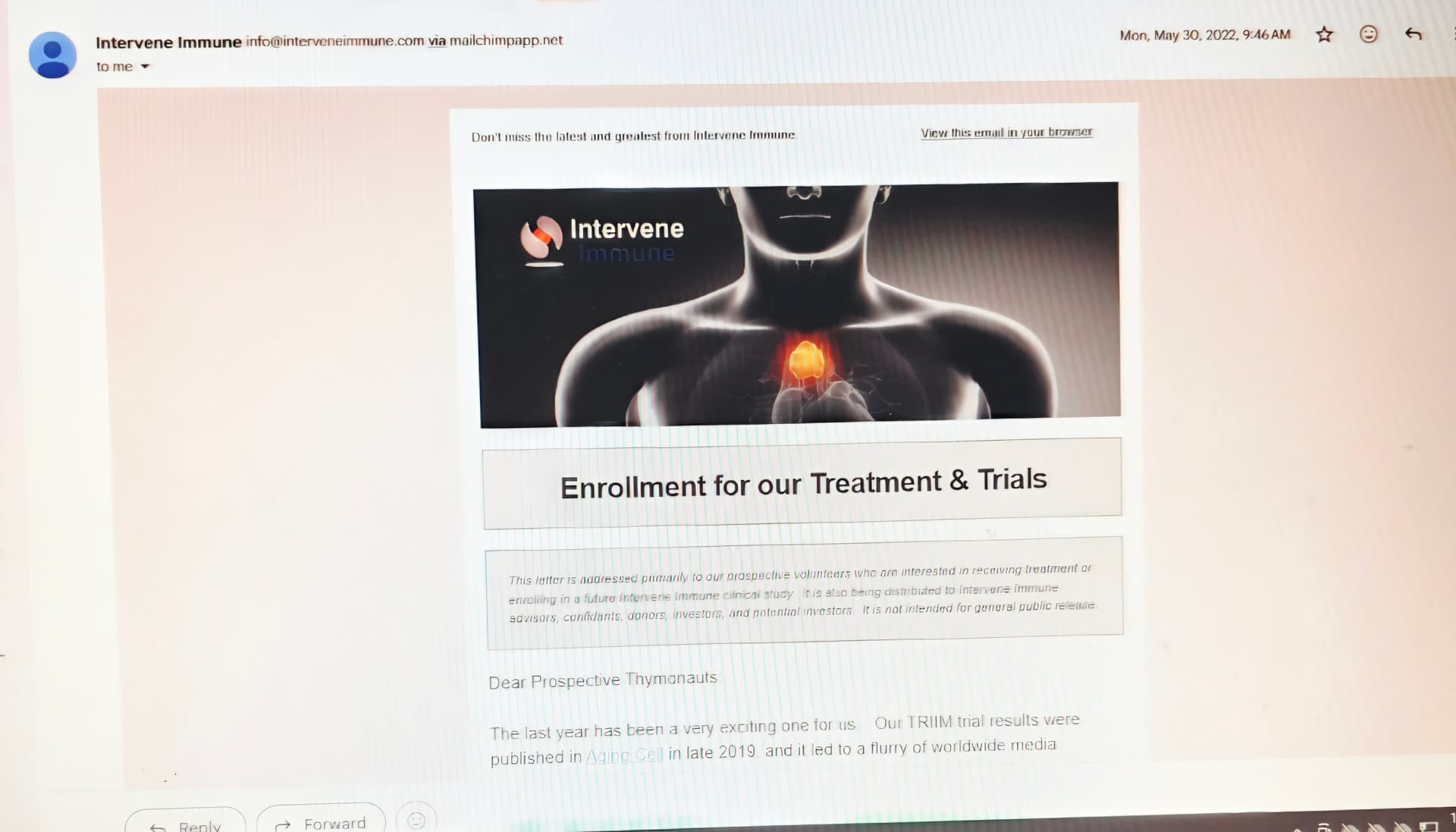
And, followed up in emails through end of January 2024. The personal cost many $1000’s (I think about $6,000) seemed high and coordinating the required frequent meetings from Missouri to Southern California was an additional expense and logisitically impossible. So I gave up. Then, after getting a good idea from the Kaeberlein interview… I enlisted my physician to create a program for me with key elements and lots of monitoring.
Would be great to learn details… pros… cons… benefits from your experience. If you can, definitely share your protocol and results. Would like a second perspective.
You bring up a couple good things… having a physician involved to monitor Complete Blood Count (CBC) and Comprehensive Metabolic Panel (CMP) for me it is covered by insurance. In my year of HGH dosing i had 4 meetings-- each with full CBC and CMP.
I had a full CBC and CMP for my HGH physician planning meeting; then, tested every 4 months. Particularly looking at insulin, creatinine, GFR and IGF-1.
My last test was just before CT Scan. Overall extremly high normal in all aspects … no too low or too high markers.
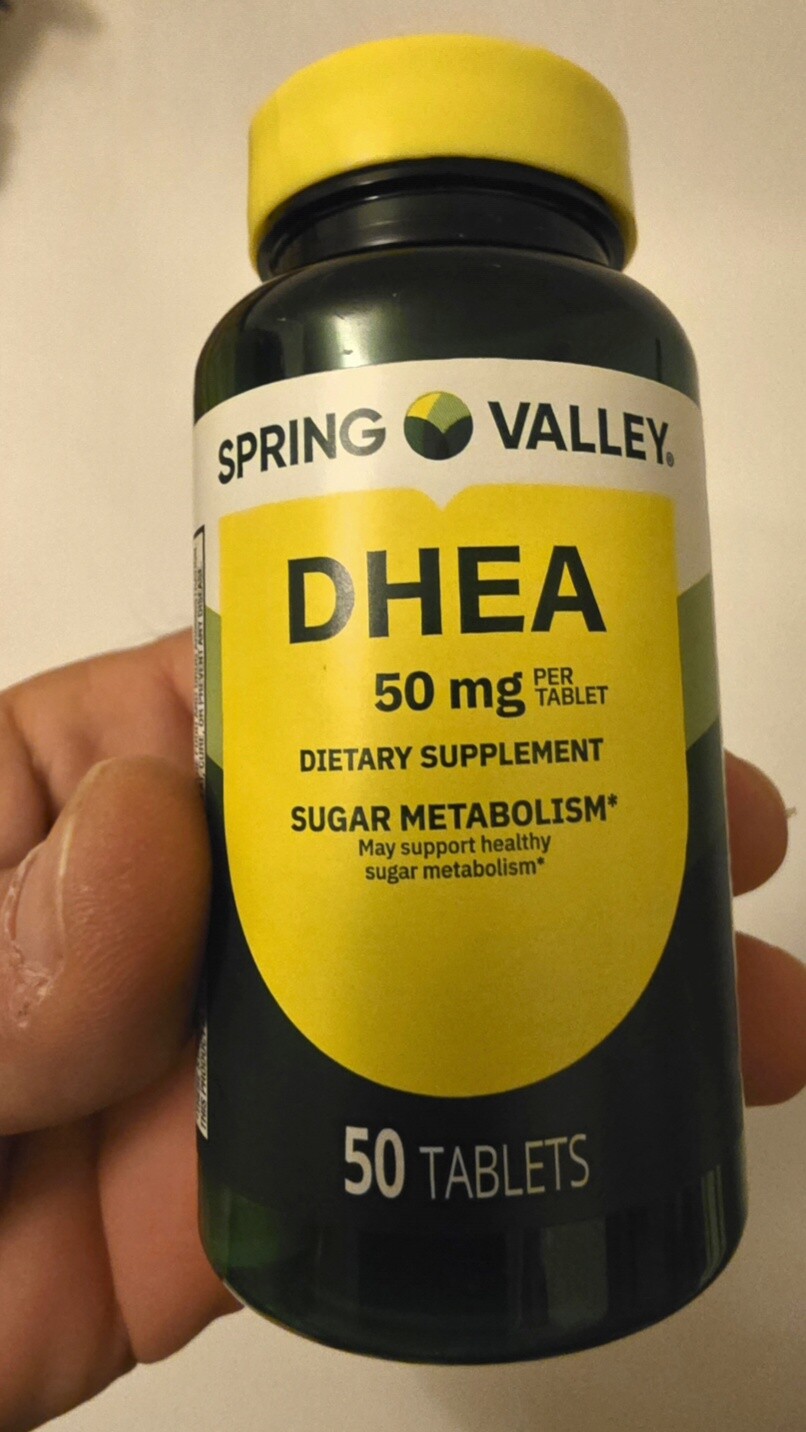
From the Kaeberline/Fahy podcast, I knew to take DHEA… available at Walmart. I took 3 tablets of DHEA at night… 150 mg…every day.
I did not take Metformin, my body responds poorly to it with diarrhea and weakness. Tried it several times when I started Rapamycin 4.5 years ago.
My insulin numbers from get go… always fantastic, so never worried about the need for Metformin.
My Physician and I settled on 3 - 4 iu daily based on information about getting a max benefit… too little … nothing, too much poison. The middle 3 - 4 iu seemed a sweet spot based on my blood panels. A maintenence dose for 60 years up, is 1.5 to 2 iu.
Overall, my physician and I considered my trial a complete success no negative effects.
5 Likes
I looked back at my personal data from 2020-2021 in TRIIM-XA. Dr. Fahy was (and I think he still is) doing a lot of work with each individual volunteer’s blood test and other health data over time, to determine dose levels of HGH, Metformin and DHEA, adjusted about every two weeks. I couldn’t tell you what methods or algorithms he used to determine those doses. My dose levels were very individual to me (so no one should take them as “recommended” for anyone else) – but they varied from about 1.2 to 2.0 IU of HGH (again not every day, though I can’t recall the exact frequency), 75 to 150 mg of DHEA, and 500 to 1500 mg of Metformin. As I recall from off-the-cuff discussions, other volunteers did have higher and lower doses. They also wanted to ensure we were getting some other supplements such as Vitamin D and Zinc. You are correct that the cost added up to $5,000 - $6,000 for both treatments and evaluation (blood tests, CT scans, DXA and muscle tests, etc.), though Intervene Immune was basically just covering their per-patient costs. I did experience some degree of thymus regrowth, significant muscle strength improvement, reduced fat especially visceral fat, and a couple of years reversal on several epigenetic age clocks. BTW I do think that one certainly should not take Rapamycin and HGH at the same time, for many reasons. I was also a volunteer participant in the PEARL clinical trial of Rapamycin, and we agreed in advance on a six-month “washout period” after the end of TRIIM-XA before I began the PEARL trial.
8 Likes
Thanks for fleshing out a few more details.
You wrote: BTW I do think that one certainly should not take Rapamycin and HGH at the same time, for many reasons.
This came up in the Kaeberlein and Fahy interview. Rapamycin might also rebuild the Thymus. Fahy’s concern was Rapamycin might inhibit the Thymus from producing the finishing stage of the T-cell. So, I am starting to think 3 months on Rapamycin…one month off for Thymus T-cell production. Just a guess.
Really appreciate your perspective and shared experience with the TRIIM XA trial.
3 Likes
I’d suggest that anyone reading this thread should also take a look at Growth hormone supplementation can restore the thymus, but what is its effect on lifespan? - General - Rapamycin Longevity News. That thread discusses evidence from mouse studies that reduced GH and IGF-1 (throughout life) extends average and maximum lifespan, while overexpression of GH shortens lifespan. There’s more of course, including possible benefits of taking GH at advanced age vs. younger age, and the “cancer risk” issue: Anyone with active cancer or a history of cancer shouldn’t be taking growth hormone.
7 Likes
I have also benefited from online HGH sources, thanks to @Agetron and, indirectly, @AgentSmith. The price was low and the quality high.
I take a low dose of 2 iu per week and, at 78, I’m happy with the results. I get monthly blood panels, which show that nothing is amiss. HGH and TRT have combined to improve my quality of life. And things will be even better on Monday when I will receive a much-needed iron infusion.
5 Likes
Just 2iu once per week? Or did you mean per day?
1 Like
Hahaha exactly Bacteriostatic water. 
Exactly. Kaeberlein brings this up. And, Fahy says no evidence of increased cancer risks in humans on HGH. The thymus rejuvenation actually builds immunity response to cancer. In the Optispan interview. Link: https://www.youtube.com/watch?v=Xj45rcfzrbM 2
3 Likes