chatGPT
Here’s a cleaned, publication-style transcript (based on the transcript text you provided), plus a summary and a critique of the claims/logic.
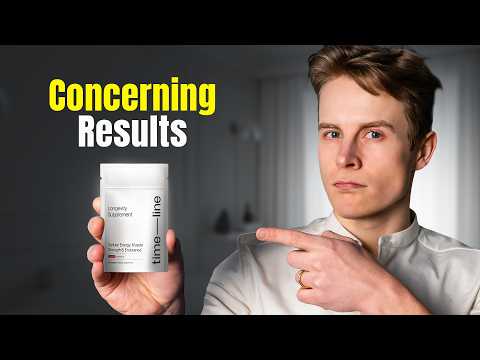
Video: “This Longevity Supplement Is Everywhere… But Here’s the …” (YouTube ID: aFjno1-wYfU). (YouTube)
Tidy transcript (cleaned)
Intro
[00:00] Last year I made a video about Mitopure, a ~$112/month supplement that’s marketed to eliminate old mitochondria and increase exercise performance for anti-aging. They cite clinical trials claiming Mitopure increased muscle strength by ~12% and endurance by ~17% without exercise.
[00:18] In that earlier video, I argued those studies didn’t show endurance benefits, and strength gains were mainly in lower body, not upper body. But there’s more to the story.
[00:28] A newer study on Mitopure looks suspicious, and additional flaws in earlier studies raise a bigger question: is Mitopure even a mitophagy activator?
Does Mitopure counteract immune system aging?
[00:41] A study took 50 healthy middle-aged adults and gave 1,000 mg urolithin A or placebo for 4 weeks.
[00:51] In the abstract, they describe primary outcomes as phenotypic changes in peripheral CD3+ T-cell subsets and immune metabolic remodeling.
[01:04] But in the pre-registered trial record, the initial primary endpoint was a change in percentages of CD3+ T-cell populations—especially CD8+ T memory stem cells and naive-like T cells.
[01:21] In the published abstract they report only an increase in naive-like CD8 T cells and increased CD8 fatty-acid oxidation. They don’t highlight that the original primary endpoints (e.g., CD8 T memory stem cells and CD3 T cells) didn’t change.
[01:42] In the full text, the null result is mentioned briefly: the percentage of T-memory stem cells remained unaltered, contrary to their earlier in vitro observations.
[02:14] More than half of the “primary outcomes” showed no change; but the paper emphasizes the ones that did. This creates a more optimistic impression—an example of reporting bias and focus-shifting after seeing results.
[03:10] Pre-registration exists to prevent cherry-picking: you should report all prespecified outcomes, including null results.
[04:00] The authors conclude urolithin A may help counteract age-related immune decline, but the data don’t strongly support that.
[04:11] The argument: T memory stem cells are more critical than naive CD8 T cells, and decline in these cells is a hallmark of immune aging—yet they didn’t change.
[04:50] The reported increases also seem small: ~0.5% shift in phenotype plus a ~14.7% increase in fatty-acid oxidation capacity. The claim is that these changes likely wouldn’t meaningfully improve immune function, especially with no T-memory stem cell change.
[05:18] Also: they didn’t study very old people; subjects were in their ~50s, not 70s/80s, so framing this as “counteracting immune aging” is misleading.
[05:39] This is one study, so it doesn’t fully invalidate urolithin A. But earlier trials have similar issues around transparency and interpretation. Marketing implies Mitopure is a top-tier longevity supplement; the evidence looks mixed.
Is urolithin A a mitophagy activator?
[06:05] A prior study claimed 4 months of Mitopure upregulated mitophagy markers in humans. A well-published mitochondria researcher flagged flaws.
[06:26] The trial started with ~29–30 people per group, but reported mitophagy-marker outcomes in only six individuals—~80% fewer than treated. That’s too small to justify strong conclusions.
[07:04] A charitable explanation is biopsy drop-out (muscle biopsy is painful), but the paper doesn’t explain the missing data.
[07:43] Despite this, the newer immune paper frames urolithin A as a “mitophagy inducer” in the title—treating it like established fact based on shaky evidence.
Effects of Mitopure on fitness markers
[08:01] The study also measured functional fitness: grip strength, VO₂ peak, peak power output, 6-minute walk test, hamstring strength.
[08:08] Hamstring strength increased ~10–12%, but oddly the 500 mg group had bigger improvement than 1,000 mg.
[08:21] Two graphs (hamstring strength and leg flexion) look identical except p-values/labels—suggesting potential copy-paste issues.
[08:43] No significant change in hand grip strength (no upper-body effect).
[08:52] VO₂ peak: small increase in 500 mg group, larger increase in 1,000 mg group—but results appear driven by a few big outliers in both placebo and treatment groups.
[09:24] Peak power output was the primary endpoint and wasn’t met; the paper emphasizes secondary endpoints more.
[09:48] 6-minute walk: no difference at 500 mg; the 1,000 mg group walked ~33 m farther.
[10:05] Overall: mixed results, inconsistent dose-response, and some outcomes seem outlier-dependent.
Why Mitopure doesn’t improve endurance (per the evidence discussed)
[11:18] A JAMA (2022) study gave 1,000 mg urolithin A to older adults (65–90) for 4 months. Authors concluded endurance improved.
[11:32] But at 4 months, there was no significant difference in the 6-minute walk test vs placebo.
[11:42] They used another endurance measure (repeated contractions at 70% max). At 2 months, urolithin A looked better; by 4 months, placebo caught up—so end-of-study difference wasn’t significant.
[12:18] Despite that, marketing highlights “17% endurance increase,” which is based on a mid-study timepoint, not the final comparison.
The biggest irony (marketing / incentives)
[12:30] Mitopure marketing is very strong; the underlying data look less impressive.
[12:46] It’s promoted by influencers who criticize big food/pharma, but Timeline Nutrition received investment from Nestlé.
[13:14] The charitable explanation: promoters didn’t read/understand the studies and relied on abstracts. Less charitable: they understand but promote for money.
[13:40] Mitopure is expensive partly because it’s patented and has limited competition.
[13:45] The speaker says they received an affiliate offer email but ignored it.
Bottom line
[14:00] The speaker isn’t claiming Mitopure is harmful—just that effects are overstated.
[14:14] Claims: it doesn’t increase upper-body strength; doesn’t meaningfully increase endurance; immune effects are small; mitophagy activation is questionable; strongest consistent effect is ~10% hamstring torque increase.
[14:30] Compared to exercise, those effects are small; resistance training can produce far larger gains.
[14:55] The speaker points to another video ranking ~100 supplements.
Summary (what the video argues)
- The video challenges Mitopure/urolithin A marketing claims about mitophagy, endurance, and “immune rejuvenation.”
- It claims the new immune trial emphasizes a positive CD8+ signal while downplaying null results for CD3+ totals and CD8+ T memory stem cells, calling this “reporting bias.”
- It argues the immune effects are small and the population is midlife, so “counteracting immune aging” is overstated.
- It questions whether Mitopure is truly a mitophagy activator in humans, noting a prior mitophagy-marker analysis used only six biopsies without transparent explanation for missing data.
- It highlights inconsistent dose-response, possible graph duplication, and outlier-driven performance outcomes.
- It argues that even when trials show something, marketing often amplifies mid-study or secondary results.
- It concludes Mitopure likely has some effect, but not “god-tier,” and the opportunity cost vs exercise is large.
Critique (what holds up, what’s overstated, what’s missing)
What the video gets right (strong points)
- Pre-registration / endpoint drift is a valid thing to scrutinize. The linked ClinicalTrials.gov entry indeed prespecifies CD3+ populations and specifically CD8+ T memory stem vs naïve-like phenotypes as endpoints. (ClinicalTrials)
- The immune paper really does report “no change” in total CD3+, CD8+, and CD4+ (as proportions of PBMCs), and says CD8+ T_SCM remained unaltered, while naive CD8 changes. So the core factual claim (“key endpoints were null”) is fair. (PMC)
- Multiple-comparisons risk is real here: the paper explicitly notes no adjustments for multiple comparisons in several analyses, which increases false-positive risk when many markers are tested. (PMC)
- Calling out “primary endpoint not met” in the muscle-performance trial is reasonable (peak power output not improving while secondary endpoints move is a classic interpretive trap).
Where the video likely overreaches
- “T memory stem cells decline is a key hallmark of immune aging” is not a settled simplification. In fact, the Nature Aging immune trial itself remarks that circulating T_SCM may be “strikingly stable throughout age,” which directly weakens the video’s “this totally collapses the premise” framing. (PMC)
- Dismissing the CD8 shift as “wouldn’t do much of anything” is too confident. A ~0.50 percentage-point treatment difference is small, but small immunophenotype shifts can still matter (or not)—you’d want functional endpoints (infection rates, vaccine responses, tumor surveillance proxies) or longer follow-up before concluding “pipe dream.” The paper’s own discussion is cautious about mechanism and scope. (PMC)
- “Copy-pasted graphs → usually retraction” is rhetorically punchy but not a sound inference without checking the original figure context, raw data, and whether those panels are supposed to mirror each other (e.g., same underlying measurement displayed two ways). This needs verification against the actual paper figures and any posted correction history.
- Age framing: the immune trial recruits “immune-aged” adults (>45), not strictly “people in their 50s,” and sources summarize it as roughly 45–70. The critique still stands (it’s not 80+), but the transcript’s phrasing is a bit imprecise. (ClinicalTrials)
What’s missing (how to make the critique more decisive)
- A stronger critique would quantitatively reanalyze sensitivity to outliers (robust stats, winsorization, or nonparametric comparisons) rather than asserting “without outliers it wouldn’t be significant.”
- For the “mitophagy activator” claim, the most important missing piece is: what exactly was measured in the 6 biopsies, how were they selected, and is there a documented missingness reason? Without that, the criticism is plausible but not proven.
- The immune trial authors also explicitly note they did not formally investigate classical mitophagy/autophagy programs in vivo (e.g., Pink1/Parkin increases), which is a meaningful nuance for how confidently anyone should label UA a mitophagy inducer in humans. (PMC)
My overall take
- The video’s direction (be skeptical of marketing; check preregistration; don’t over-interpret secondary endpoints; beware multiple comparisons) is solid.
- Some of its tone is stronger than the evidence warrants—especially where it turns “mixed/limited evidence” into “basically meaningless” or “wouldn’t do anything,” and where it asserts immunology “consensus” without showing it.
If you want, I can also do a claim-by-claim fact-check table (video claim → what the cited trial/paper actually says → verdict), using the open-access immune trial and the JAMA Open 2022 trial as anchors.