I think we already have this problem in a sense with family dynasties (think North Korea), so longevity just makes the issue potentially a little more common. Though there is still a risk (of disruption) with any transition between family members…
1 Like
Would you want eternal life as a slave of some tyrant?
I would not. But I’m the child of a Bronze Age culture, an honor society, and was raised with the notion that slavery is worse than death. I think that has become a quaint and antiquated notion in most of the Western world in the 21st century.
I share your view. Hence an extended life is perhaps a stronger argument for resisting tyranny.
1 Like
In the US, the uber rich and powerful have achieved a form of mortality via US tax code that allows them to retain and transfer their wealth through loopholes they have – directly or indirectly – paid their congressional representatives to create. We are only one IPO away from creating our first trillionaire even as we cut health research funding, and food and health support for the poor and medically unfortunate. Imagine the influence wielded by someone whose net worth is greater than the entire military budget which, itself, is three times larger than the next largest national military budget.
5 Likes
The way personal valor has historically worked is through an awareness of one’s mortality. If I must die at some point anyway, it might as well be today, sword in hand if need be, rather than suffer a thousand humiliations for the next 60 years max — thought the hypothetical 20 year old. But immortality or near immortality greatly increases the opportunity cost of life-risking stands. You no longer stand to lose a few-decades-long allotment at most. You stand to lose out on forever. You’ll start to see a lot more playing it safe. We already are. Putting up with indignities that our ancestors would have started revolutions over just two hundred years ago.
So I think the most insidious plot twist is that if the few on top crack the code on exponential life extension, they won’t even gate keep it to themselves as a status symbol. They will make it available to the serfs and dole it out via a state controlled apparatus in exchange for demonstrated fealty and compliance. It’s better for them too to have the same serfs they know than a crop of new ones every 20-30 years. Birth rates will plummet to near zero for virtually everyone to stave off Malthusian circumstances and perhaps only the elite will be allowed to reproduce. And life will be one long dreary night in the shadow of tyranny. We’re already seeing military robots close to prime time so the opportunity cost of aggression is going to plummet for those with means to outsource it to machines, while the opportunity cost of resistance increases for those made of flesh and bone. It’s not going to be pretty.
3 Likes
There is little doubt that we will be unprepared for indefinite life, should it become a possibility. I’m tied to the empirics which lean strongly toward that day being many years in the future, if that and possibly facing constraints of which we are currently unaware. I recall a science fiction story I read more than 60 years ago in which the surprise constraint turned out to be the effects of lost meaning. History tells us that we generally march into the future unprepared – atomic energy, climate – but in this case, I can’t find fault with that. How could we be otherwise?
3 Likes
Meanwhile, today in my social feed. Note: Given the state of Russian science and biotech I view this with great skepticism, but the target seems to have a little support for it to improve healthspan.
Google Gemini Fact Check;
As a Scientific Auditor and Fact-Checker, I have deconstructed the claims made in the Express article regarding President Vladimir Putin’s directive for anti-aging research. My verification process involved cross-referencing these claims against official Russian state media (TASS), investigative reporting from independent outlets (Meduza, The Moscow Times), and budgetary records from the Russian Federation’s “National Project” framework.
The following table evaluates the factual claims based on sources available as of April 2026.
Fact-Check Report: Russian “Anti-Aging” Initiative
| Original Claim | Verification Status | Evidence / Source | Correction / Nuance |
|---|---|---|---|
| Vladimir Putin has ordered the development of “anti-aging” drugs. |
 Verified Verified |
The Moscow Times (2026-04-24): “The work is being carried out under the New Technologies for Health Preservation National Project launched at the instruction of President Vladimir Putin.” | The order is formalized as a “National Project” targeting 175,000 lives saved by 2030. |
| Mikhail Kovalchuk is the architect of this longevity research. |
Verified |
Meduza/Kyiv Post: “Mikhail Kovalchuk… who is himself 77, is said to have been pushing Russian scientists… to learn how to stop the aging process.” | Kovalchuk’s role is confirmed; he is head of the Kurchatov Institute and a long-time Putin advisor. |
| The Health Ministry sent letters to research institutes demanding proposals. |
Verified |
Kyiv Post (2024-09-07): “Research institutes have been ordered to report on efforts to combat cellular ageing… [including] the National Medical Research Centre for Endocrinology.” | Letters were reportedly sent in June 2024, demanding “urgent” proposals with minimal prior consultation. |
| The project focuses on sarcopenia, osteoporosis, and cognitive decline. |
Verified |
Novaya Gazeta Europe: The project “would focus on technological development, disease prevention… neurotechnology, biological age assessment and organ bioprinting.” | These are standard geriatric focus areas within the broader “New Health Preservation Technologies” framework. |
| A “vaccine against aging” targeting the RAGE receptor is in development. |
Verified |
TASS via Moscow Times (2026-04-24): “Denis Sekirinsky… said the experimental treatment would target the RAGE receptor… to block cellular aging.” | This is a specific gene therapy approach recently announced at a longevity conference in Saransk. |
| Scientists view the project as a “whimsical” attempt at immortality. |
 Imprecise Imprecise |
Kyiv Post: “Meduza.io cited a source… who said the initiative was based on ‘the whims of an aging Politburo’.” | While some researchers expressed “bewilderment,” the official goal is “active longevity” (lifespan of 78–81 years), not literal immortality. |
| The program has a budget of more than 2 trillion rubles ($26B). |
Verified |
PharmCompass (2025-11-28): “Federal budget of the State program… 2026 - 1.53 trl. RUB… 2028 - 1.74 trl. RUB.” | The multi-year budget exceeds 2 trillion rubles, though this covers the entire “Health Development” and “New Technologies” projects combined. |
Auditor’s Summary & Collaborative Truth-Seeking
The core narrative of the Express article—that the Kremlin is aggressively funding longevity research to satisfy the interests of an aging leadership—is supported by leaked documents and official announcements of the National Project: New Technologies for Health Preservation.
Identified Knowledge Gaps:
- Efficacy vs. Propaganda: While the “RAGE receptor vaccine” is scientifically plausible in a lab setting (Advanced Glycation End-product receptors are indeed linked to inflammation), there is no peer-reviewed human clinical data supporting its efficacy as a “vaccine against aging.”
- Infrastructure Sustainability: It is unclear if the current Russian biotech infrastructure can sustain 3D bioprinting or gene therapy development at scale given existing international sanctions and brain drain.
Conclusion: The reporting is largely accurate regarding the existence and urgency of the project, though the tabloid framing of “living forever” should be distinguished from the state’s formal targets of incremental life expectancy increases (to 78 years by 2030).
Sources referenced in this audit:
- The Moscow Times: Russia Develops ‘Anti-Aging Vaccine’
- Kyiv Post: Putin’s Search for Immortality
- Novaya Gazeta Europe: Stopping the Clock
- PharmCompass: Russian Healthcare National Projects Budget
Receptor for Advanced Glycation End-products (RAGE)
The Receptor for Advanced Glycation End-products (RAGE) is a multi-ligand pattern recognition receptor of the immunoglobulin superfamily. It is increasingly recognized in geroscience as a central “damage sensor” that mediates chronic inflammation (inflammaging) and cellular senescence.
Scientific and clinical evidence for RAGE as an anti-aging target can be categorized into molecular pathways, preclinical animal data, and human clinical trials.
1. Molecular Mechanism: The “Feed-Forward” Loop
The primary scientific basis for targeting RAGE lies in its ability to sustain a self-perpetuating inflammatory response. Unlike many receptors that desensitize after activation, RAGE expression is upregulated by its own ligands.
-
Ligand Diversity: RAGE binds diverse “damage-associated molecular patterns” (DAMPs) that accumulate with age, including:
- AGEs: Proteins or lipids that become non-enzymatically glycated.
- S100/Calgranulins: Calcium-binding proteins associated with stress.
- HMGB1: A nuclear protein released during cell death or stress.
- Amyloid-β (Aβ): Linked to neurodegeneration.
- Signaling Cascade: Engagement of RAGE activates the NF-κB pathway, which triggers the production of pro-inflammatory cytokines (IL-1β, IL-6, TNF-α). This cascade also induces the expression of more RAGE receptors, creating a “vicious cycle” of inflammation.
- Cellular Senescence: Recent studies have demonstrated that RAGE signaling drives the expression of cyclin-dependent kinase inhibitors p16 and p21, hallmarks of the senescent phenotype. RAGE-deficient mice show significantly lower levels of these markers in adipose and muscle tissues compared to wild-type mice during aging.
2. Preclinical Evidence (Animal Models)
Research in rodent models provides the most direct evidence that modulating RAGE can mitigate physical decline:
- Longevity and Diet: Mice fed a “Low-AGE” diet show reduced RAGE expression and significantly extended lifespans compared to those on a standard diet. This suggests that reducing the “AGE-RAGE axis” is a viable strategy for systemic life extension.
-
Organ-Specific Protection:
- Renal Health: RAGE knockout (RAGE-/-) mice are protected from age-related nephrosclerosis and renal amyloidosis.
- Skeletal Muscle: Pharmacological inhibition of RAGE has been shown to prevent sarcopenia (muscle wasting) in middle-aged mice and accelerate muscle repair after injury.
- Neuroprotection: RAGE acts as a transporter for Aβ across the blood-brain barrier. In Alzheimer’s mouse models, blocking RAGE reduces brain Aβ accumulation and preserves cognitive function.
- Conflict/Nuance: Some evidence (e.g., PMC9569842) suggests that RAGE deletion may actually accelerate cardiac fibrosis in female mice, indicating that its role may be tissue-dependent and that total systemic elimination could have side effects.
3. Clinical Evidence and Human Studies
Evidence in humans is largely based on the correlation of soluble RAGE (sRAGE) with health outcomes and the results of clinical drug trials.
-
sRAGE as a Longevity Biomarker: * Soluble RAGE (sRAGE) is a decoy form of the receptor that circulates in the blood, sequestering ligands before they can bind to cell-surface RAGE.
- Centenarians have been found to have significantly higher levels of circulating sRAGE than younger individuals or unhealthy elderly people, leading some researchers to label sRAGE a “longevity molecule.”
-
Clinical Trials (Azeliragon/TTP488):
- Azeliragon is the most advanced small-molecule RAGE inhibitor tested in humans.
- In Phase 3 clinical trials (STEADFAST) for mild Alzheimer’s disease, the drug unfortunately failed to meet its primary endpoints of slowing cognitive decline.
- Despite this, development continues in other areas; it is currently being investigated for its anti-tumor effects in pancreatic cancer and glioblastoma due to its role in the tumor microenvironment.
4. Emerging Strategies (2024–2026)
As of early 2026, the field has moved toward more targeted interventions:
- RAGE Vaccines and Gene Therapy: Recent reports from Russia indicate the development of an “anti-aging vaccine” (gene therapy) specifically designed to block the RAGE gene. The goal is to inhibit the “aging program” at the cellular level by preventing RAGE-mediated senescence.
- High-Affinity Inhibitors: Newer compounds like FPS-ZM1 are being studied for their ability to cross the blood-brain barrier more effectively than previous generations of RAGE antagonists, with a focus on neuro-inflammaging.
Summary Table of Evidence
| Evidence Type | Key Finding | Significance |
|---|---|---|
| Mechanistic | RAGE activates NF-κB and p16/p21. | Identifies RAGE as a driver of cellular senescence. |
| Animal (Diet) | Low-AGE diet reduces RAGE and extends lifespan. | Connects RAGE modulation to systemic longevity. |
| Animal (Genetics) | RAGE-/- protects against kidney and muscle aging. | Suggests RAGE as a target for healthspan extension. |
| Human (Biomarker) | High sRAGE levels in centenarians. | Correlates RAGE suppression with exceptional aging. |
| Clinical (Trials) | Azeliragon failed in AD Phase 3. | Highlights the difficulty of reversing late-stage disease. |
Knowledge Gaps: While the link between RAGE and disease is strong, it remains unclear whether RAGE inhibition can extend the maximum lifespan of humans (as opposed to just preventing disease). Furthermore, because RAGE plays a role in innate immunity (e.g., surviving sepsis), long-term pharmacological blockade may carry risks of immunosuppression or impaired wound healing.
4 Likes
What science fiction story was that? I think we’re on the edge of the wedge of that constraint already. I feel like I belong to an earlier era and already alienated by the present and future. Used to think no one would crack the code of immortality but I’m starting to come around to the possibility, at least radical life extension. Very much doubt I’ll get to experience it but it’s still too close to comfort. In the end it’s illusory — we’ll all die, even those of us born to the most privileged castes with access to this magical fountain. But the drastically increased lifespans will not be good to our humanity I’m afraid. Yet we can’t help trying to get there faster.
1 Like
> What science fiction story was that?
I don’t recall the name. It could even have been a short story in an anthology. It was a brief period in my youth during which I read every science fiction book I could get my hands on.
2 Likes
1 Like
I too read Ray Bradbury in the 1970’s… read it all. One thing in Martian Chronicals talked about a Martian library was like one silver disc… thin book… an external drive?
I remember thinking at the time… craziest idea… now is a reality.
4 Likes
I might be misremembering, but I swear they developed a cancer vaccine recently, and ages ago they even came up with ‘orbital life reversal technology’—just kidding, haha. Seriously though, Soviet tech used to be next-level. They had the best scientists in the world. But ever since the collapse and the transition to modern Russia, for whatever reason, I just can’t help but look at Russian tech with a deep sense of skepticism.
2 Likes
Money talks bullshit walks
Over 6x the amount of Altos
3 Likes
Kara Swisher has a CNN short series out called Kara Swisher Wants to Live Forever.
She poo poohs most of the longevity interventions in addition to skewering the tech bros and their narcissistic quest for immortality.
The one theme she repeats over and over as the best intervention, aside from the move your body, eat well, and have connections advice, is don’t be poor.
PS. I don’t know how much of this she repeats during the special, but I watch The Pivot podcast where she and Galloway discuss the topic.
Amazon Jeff Besos is into it. healthy lifestyle, exercise. Anti-aging funding.
Facebook mark Zuckerberg also has healthy lifestyle.
Sure they can pay a gym trainer, a dietitian, a food chef for super healthy food, calories nutrition.
Best healthcare from leading health institutions,. Mayo, John hopkins, Harvard.
For sure GLP2.
But there’s Elon Musk.The richest beyond imagination.
Have you seen his pot belly in the swimsuit photos.
Like a 50 pound pot belly
of 6 inches of pure lard.
He drove tesla to the ground. Half of USA don’t want them, anymore.
Tesla FSD will arrive next year a joke of a promise for years. Tesla M2, Roadster, semi.
Cybertruck a lemon.
Lets not get political about Trump republican DODGE fiasco, continual lies.
I’m sure allegations his IQ is 100
Are 100% true.
Theire rich. Great at making money, maybe lucky at entrepreneur.
1 Like
Actually, it looks like indefinite life might be just around the corner:
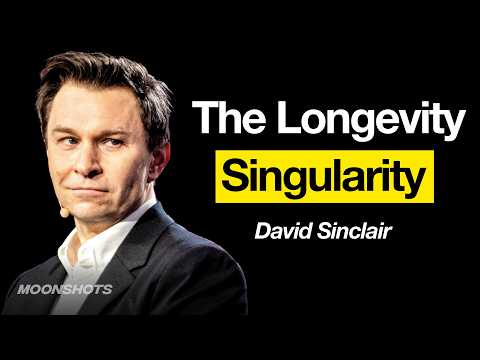
1 Like
Executive Summary
The discourse presented by Dr. David Sinclair and Peter Diamandis marks a pivot from geroprotection (delaying damage) to rejuvenative medicine (reversing biological age). The core thesis centers on the “Information Theory of Aging,” which posits that aging is a loss of epigenetic information—a “scratched CD”—that can be restored using partial cellular reprogramming.
Technically, the most significant disclosure is the transition of ER-100 (OSK gene therapy) into Phase 1/2a human clinical trials for optic nerve disorders, following FDA IND clearance in January 2026. This represents the first-ever human application of Yamanaka-factor-derived rejuvenation. The secondary thesis is the industrialization of “longevity singularity” through AI-driven drug discovery, moving away from expensive viral vectors (AAV) toward low-cost, small-molecule “reprogramming cocktails.”
However, a critical translational gap persists: the leap from transcriptomic age reversal in in vitro skin cells (92-year-old cells reset to 20-year-old profiles) to systemic human efficacy remains speculative. While the “Friends of Sinclair Lab” (FOSL) funding model bypasses traditional NIH-style grant friction, it also circumvents the standard adversarial peer-review process for early-stage pilot data. Investors and clinicians must distinguish between the high-confidence cardiovascular data (e.g., Nattokinase) and the high-risk, high-reward epigenetic reprogramming which currently lacks longitudinal safety data regarding oncogenic potential (teratoma formation) in non-ocular tissues.
II. Insight Bullets
- FDA Status: Life Biosciences received IND clearance (Jan 15, 2026) for OSK gene therapy targeting glaucoma and NAION.
- OSK Mechanism: Uses a subset of Yamanaka factors (Oct4, Sox2, Klf4) to reset the epigenetic clock without erasing cell identity (avoiding pluripotency).
- Vector Evolution: Viral-like particles (VLPs) and lipid nanoparticles (LNPs) are being prioritized over AAV for systemic delivery to reduce cost and immunogenicity.
- Chemical Cocktails: Six specific small-molecule cocktails identified in vitro can mimic OSK effects; Sinclair aims for a clinical trial within months (via X-Prize platform).
- Nattokinase Efficacy: High-dose (10,000+ FU/day) Nattokinase is cited as having robust clinical data for plaque reduction (1,000+ participant trial).
- Glucose Primacy: HbA1c and glycemic variability are identified as the primary correlates for cardiovascular disease, superseding standard lipid panels (LDL/HDL).
- Resveratrol Stability: Claims 15-year consistency but emphasizes the necessity of fat-solubility (oil/yogurt) for absorption; “Nature” submission pending.
- Alcohol Neurotoxicity: Cites 2022/2023 large-scale data showing brain volume reduction starting at just one unit/day.
- AI Screening: Sinclair’s lab uses AI to screen billions of molecules for “rejuvenation signals” using high-throughput visualization.
- Funding Paradigm: FOSL provides ~$6M/year in direct private funding, enabling “judo moves” in research that bypass government grant lag (12–18 months).
- Tissue Specificity: The eye is the “beachhead” tissue due to its closed system; the liver is the secondary target for systemic metabolic reprogramming.
- Safety Boundary: The exclusion of the c-Myc gene (the “M” in OSKM) is the primary safeguard against rapid oncogenesis.
- Biological Limits: Rejection of the “122-year hard limit,” citing no physical law preventing multi-century lifespans.
- Psychological Impact: Identifies chronic stress and cortisol as primary accelerators of the epigenetic clock.
- The “Singularity”: Claims 2026 is the year age reversal moves from “possibility” to “clinical observation” in humans.
III. Adversarial Claims & Evidence Table
| Claim from Video | Speaker’s Evidence | Scientific Reality (Current Data) | Evidence Grade | Verdict |
|---|---|---|---|---|
| Nattokinase reverses arterial plaque | 1,000+ person trial cited | Chen et al. (2022) confirmed 10,800 FU/day reduced carotid IMT and plaque size by 66-95% over 12 months. | B | Strong Support |
| OSK safely reverses age in humans | Mice/Monkey data; IND cleared | FDA clearance Jan 2026 for ER-100. Human efficacy data is currently non-existent. | D | Speculative(Trial In-Progress) |
| One drink/day reduces brain size | Recent large datasets | Daviet et al. (2022) 36k adults: volume loss begins at ~1 unit/day, exponential increase. | C | Plausible |
| Resveratrol activates Sirtuins | Sinclair’s 20-year history | Inconsistent results in humans; direct SIRT1 activation remains a point of heavy scholarly debate. | C | Unsupported(Inconsistent) |
| Berberine is “Nature’s Metformin” | Metabolic signaling data | Ubie Research (2026) Metformin remains gold standard; Berberine shows promise but lacks long-term CV safety data. | B | Plausible(Secondary) |
| Small molecule OSK cocktail | In vitrotranscriptomic age | Aging-US (2023) Six cocktails identified; human systemic safety data absent. | D | Translational Gap |
IV. Actionable Protocol (Prioritized)
High Confidence Tier (Level A/B Evidence)
- Cardiovascular Plaque Management: Nattokinase supplementation at 10,000 FU/day for a minimum of 12 months (consistent with 2022 Frontiers data).
- Glycemic Monitoring: Prioritize HbA1c and continuous glucose monitoring (CGM) over isolated LDL tests to assess real-time longevity risk.
- Neuroprotection: Elimination of daily alcohol consumption. Even 1–2 units/day correlates with accelerated brain aging (equiv. to 2 years aging).
Experimental Tier (Level C/D Evidence)
- NAD+ Precursors: NMN (Nicotinamide Mononucleotide) to maintain mitochondrial flux, though human longevity outcomes remain unverified.
- Sirtuin Activation: Resveratrol (trans-resveratrol) consumed strictly with high-fat substrate (yogurt/olive oil) to solve the bioavailability deficit.
- AMPK Modulation: Metformin (1g/day) or Berberine for those with dysregulated glucose, pending medical supervision.
Red Flag Zone (Safety Data Absent)
- Systemic Reprogramming: Do NOT attempt off-label use of hypothetical OSK chemical cocktails. Oncogenic risk is high until Phase 1 safety data is released (est. 2027).
- Self-Experimentation with AAV: Viral vectors for longevity are currently restricted to localized (ocular) delivery; systemic AAV carries risks of hepatotoxicity and cytokine storms.
V. Technical Mechanism Breakdown
The underlying biological architecture of this video rests on three pillars:
- Epigenetic Landscape Management (OSK): The OSK factors act on the Horvath Clock (DNA methylation patterns). By resetting the methylation of specific CpG sites, cells regain the transcriptional profile of a younger state. The mechanism involves the recruitment of DNA demethylases (TET enzymes) to restore the “original” developmental programming.
- Metabolic Master Switches (AMPK/mTOR): Metformin and Berberine activate AMPK (AMP-activated protein kinase), which inhibits mTOR (mammalian target of rapamycin). This simulates a fasting state, inducing autophagy and mitophagy, clearing cellular debris that contributes to the “scratched CD” of epigenetic noise.
- Fibrinolysis (Nattokinase): Nattokinase is a serine protease that directly degrades fibrin, the primary scaffolding for arterial plaque. Unlike statins, which primarily lower LDL production, Nattokinase exhibits direct thrombolytic activity and increases tissue plasminogen activator (t-PA) levels.
Additional Data Needed: Peer-reviewed human results from the Life Biosciences ER-100 trial (Phase 1) are required to validate the safety of partial reprogramming in terminally differentiated human tissues.
2 Likes
This NYT article seems willfully ignorant of the way technology development works. It always works first only for the rich first… and THEN for the masses. This is true of every technology - cars in the early 1900s, refridgeration, cell phones, etc. Life extension will be no different. And the pace of adoption by the masses with each new technology keeps increasing despite any perceived wealth disparity.
The other problem I have with this article is the envious, distopian, glass-half-full look at extending lifespan. A future where we get to keep our Gallilao, da Vinci, Newton, Beethoven, etc, etc. is the future I want to be a part of!
I agree with so much to lose to fight for freedom… Although on the other side of the coin there is also a lot to lose from trying to be the tyrant. It’s not just pitchforks and torches anymore, it’s 3D printed ghost guns, snipers football fields away, and drones with bombs that can take out the most ardent of tyrants. Putin has survived 7+ assasination attemps (+ depending on how you count them). He has been lucky.