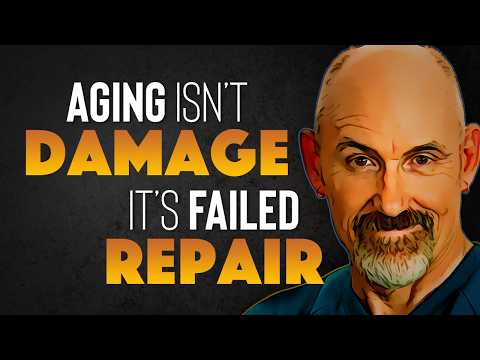
The speaker argues that peptides are often marketed as “anti-aging,” but they don’t slow aging by preventing damage. Instead, they mainly act by signaling for repair.
They frame aging as not simply the buildup of wear-and-tear (oxidative stress, inflammation, mitochondrial decline), because damage happens at all ages. What changes with age is what happens after damage: when you’re young, repair systems identify the problem, coordinate a response, rebuild tissue, resolve inflammation, and return the system to baseline (resilience). With aging, repair signaling weakens—timing becomes less precise, resolution slows, cleanup becomes incomplete—so damage lingers and accumulates. In this view, aging is largely a loss of coordination in the signaling that drives repair, not just “more damage.”
They then connect this to common interventions:
- Exercise works by sending stress signals that activate repair.
- Fasting triggers cellular cleanup signals.
-
Sleep enables coordinated repair pulses (e.g., growth hormone, tissue rebuilding, brain waste clearance).
Lifestyle “hacks” help insofar as they keep repair signaling sharp.
Peptides are introduced as short amino-acid chains that function as signaling molecules in the body’s communication network—telling cells when to repair, adapt, regulate metabolism, and resolve inflammation. The speaker emphasizes peptides don’t replace basics (sleep, training, healthy lifestyle); they operate at the signaling level and could matter if aging involves degraded signaling.
Finally, they stress that “repair” isn’t one pathway: different peptides influence different targets (recovery, metabolism, inflammation, regeneration), so you should start with a specific goal. Because peptides amplify signals, they can help or destabilize depending on context; therefore sequence/structure matters and they promote their paid/free community program (“Primer on Peptides” in the Longevity Lab) as a way to learn correct use and integration into a longevity plan.