Fauna Bio
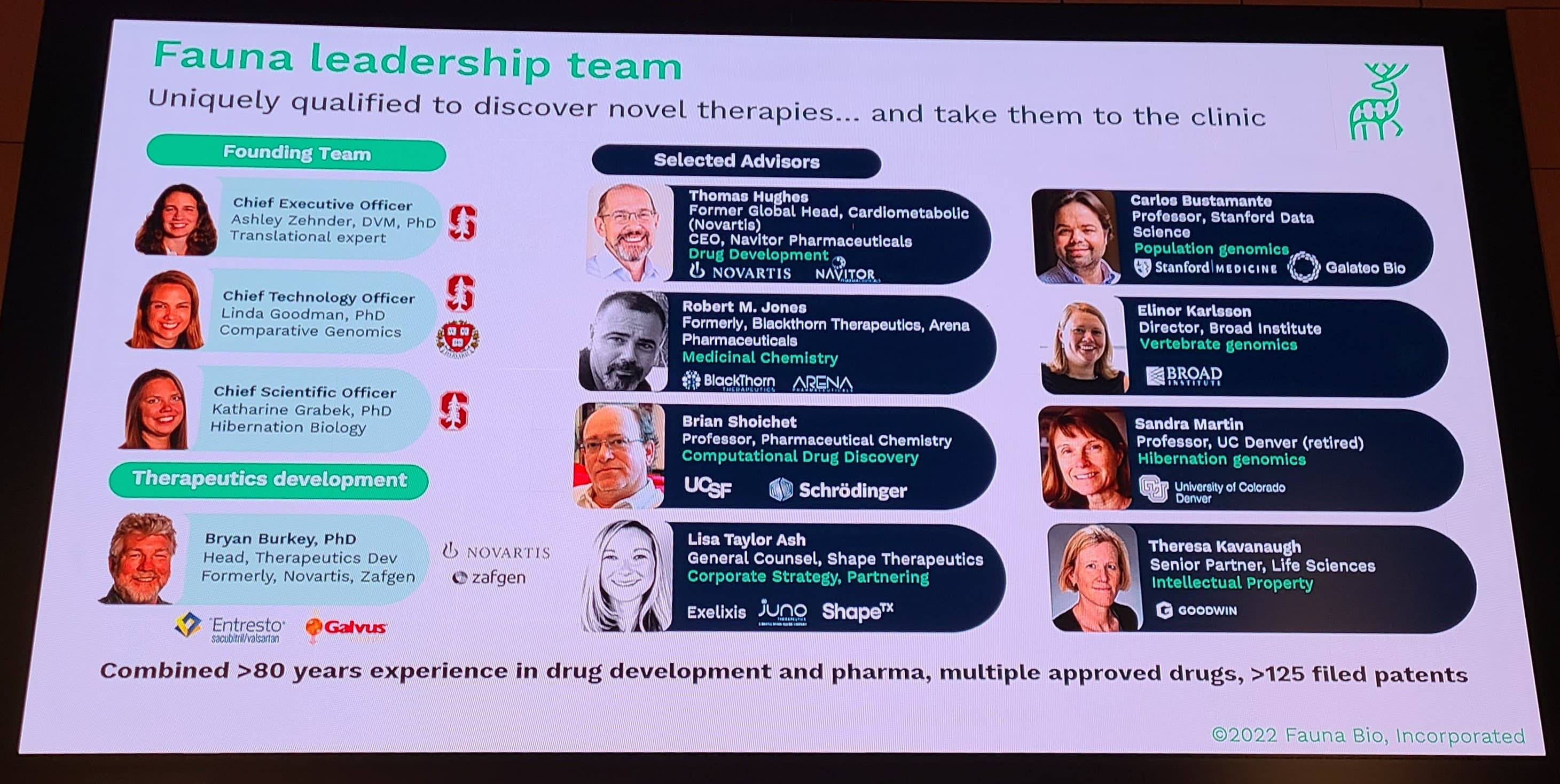
Probably the coolest (no pun intended) company to present is Fauna Bio. This is a company started by a group of women (and led by Ashley Zehnder) who are veterinary researchers who are looking to learn from the physiological adaptations that other mammals have made (think hibernating squirrels that can slow their metabolism by 90%, and body temperature by 90%, and then come fully alive again after several months and repair all the harm that has been caused during that hibernation period).
What the company is learning by deeply studying the 13-lined ground squirrel is truly amazing.
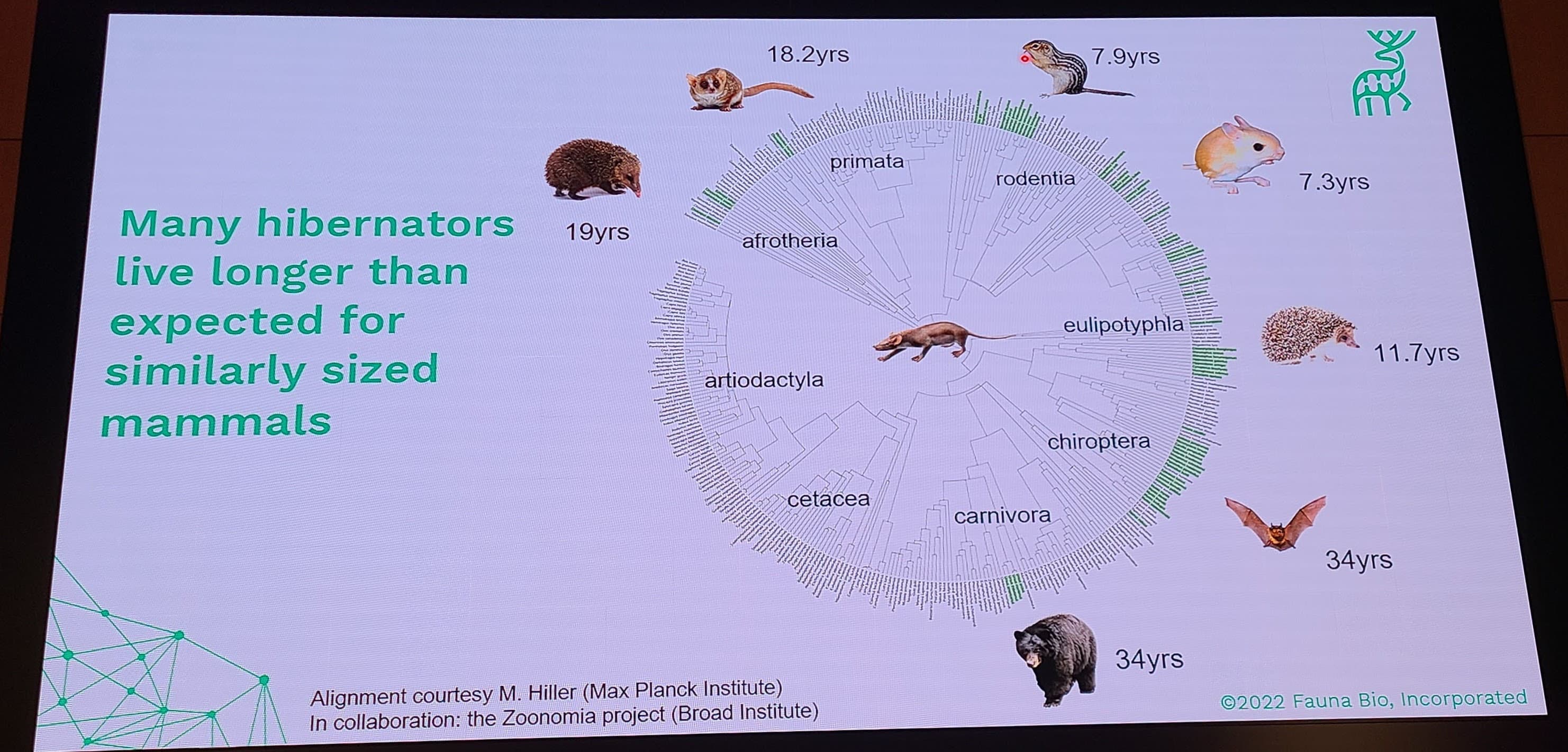
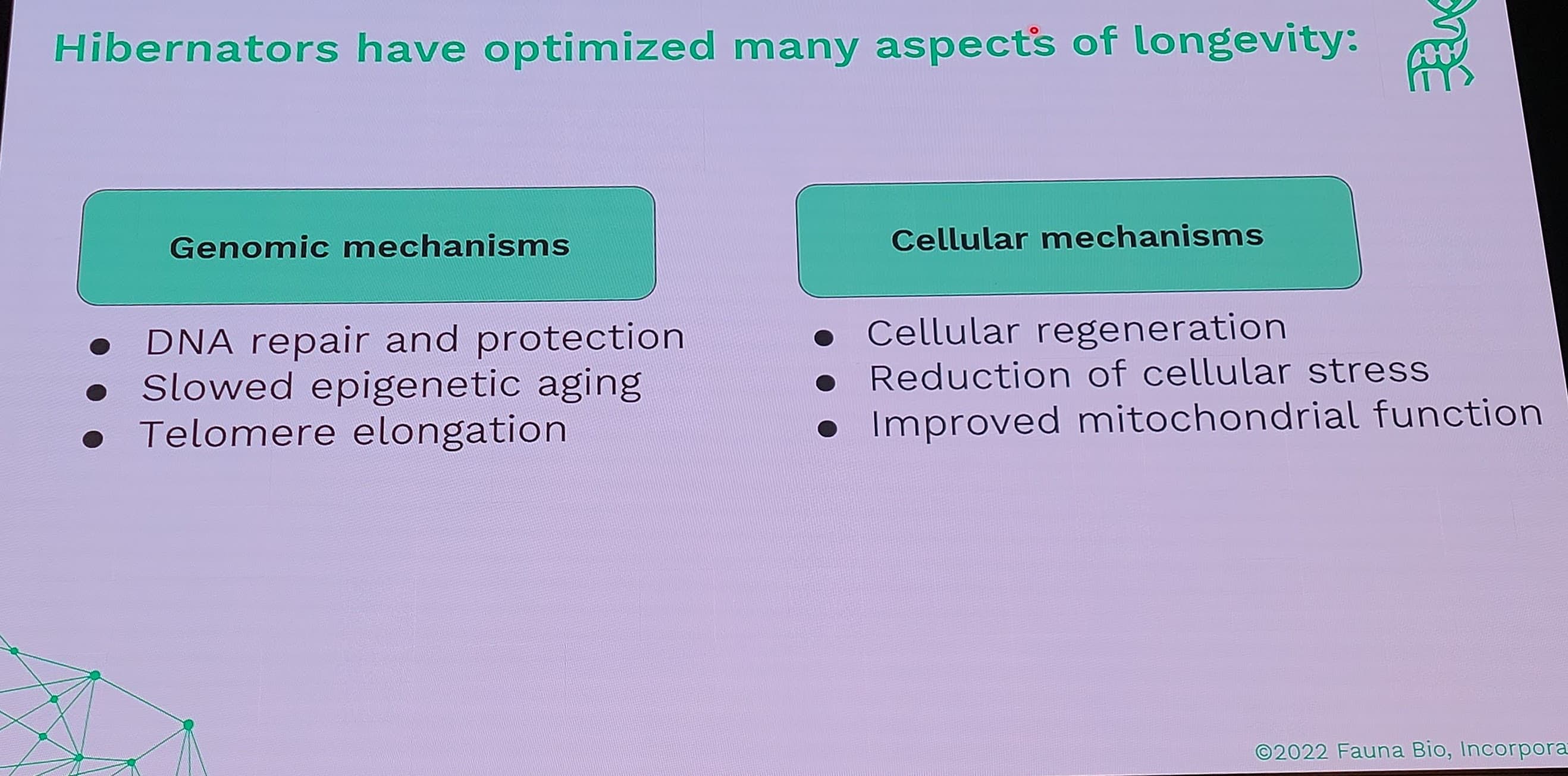
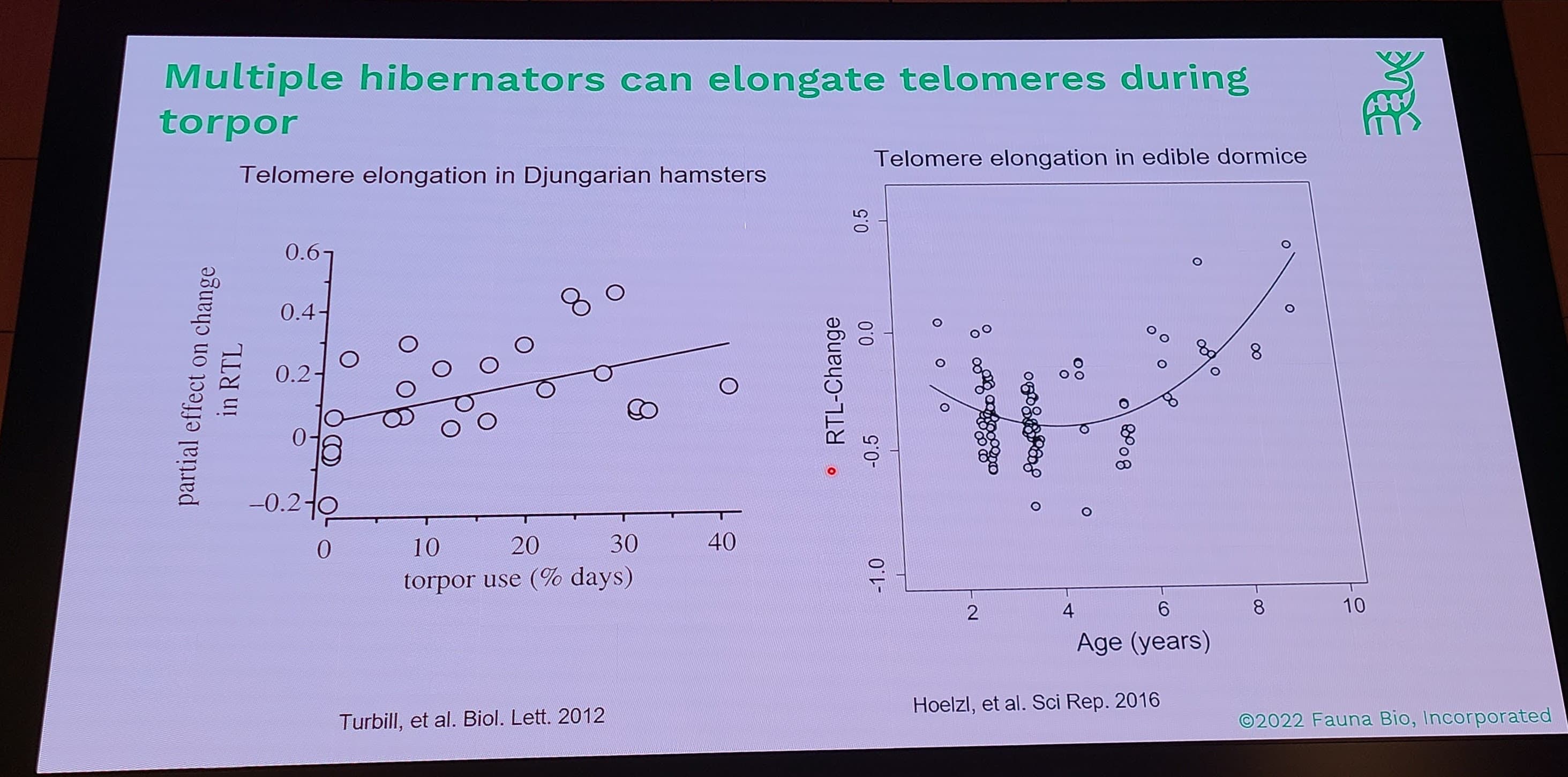
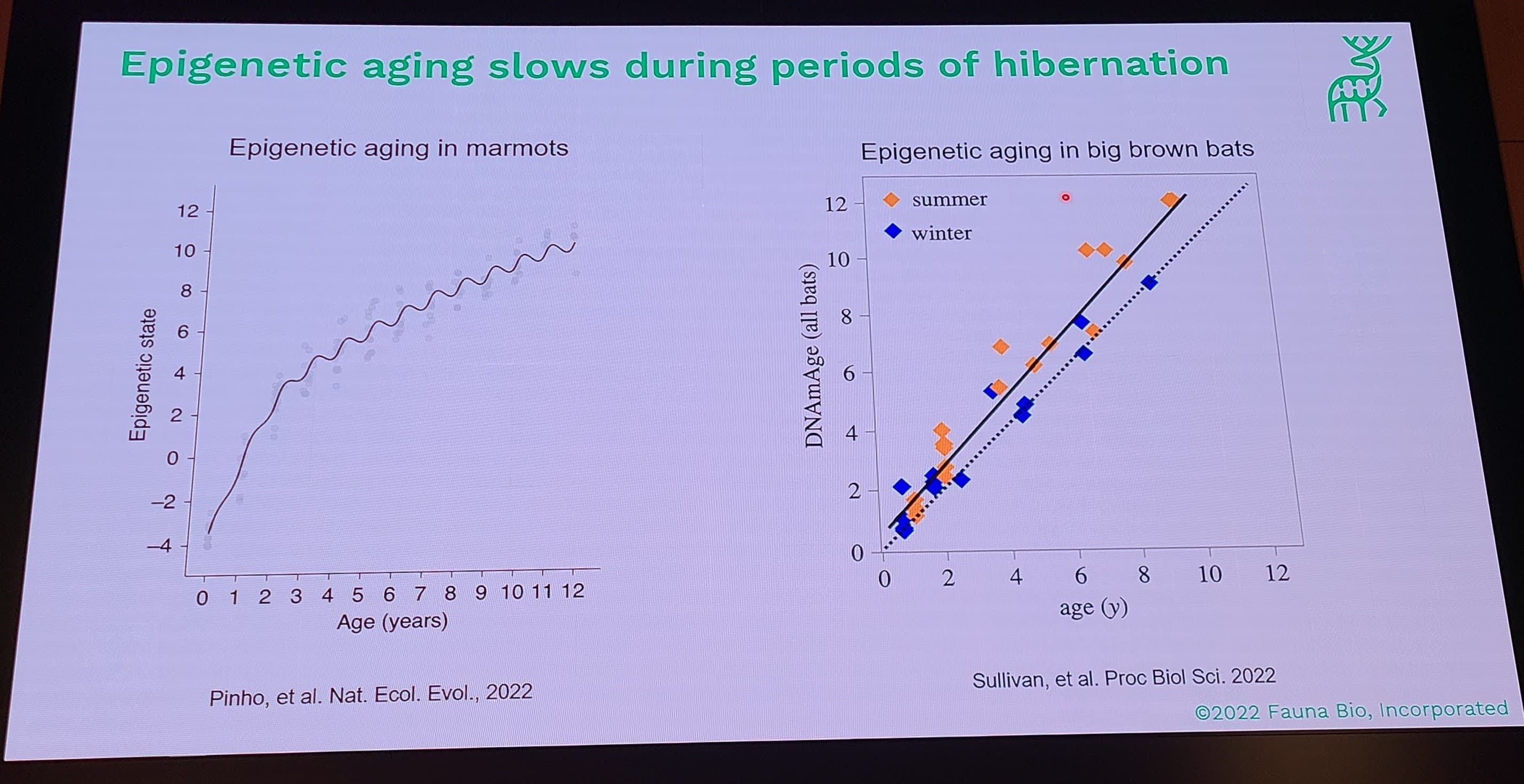
And of course, this all ties into Longevity: there is typically a 30% to 50% lifespan improvement over same sized species - for hibernating mammals.
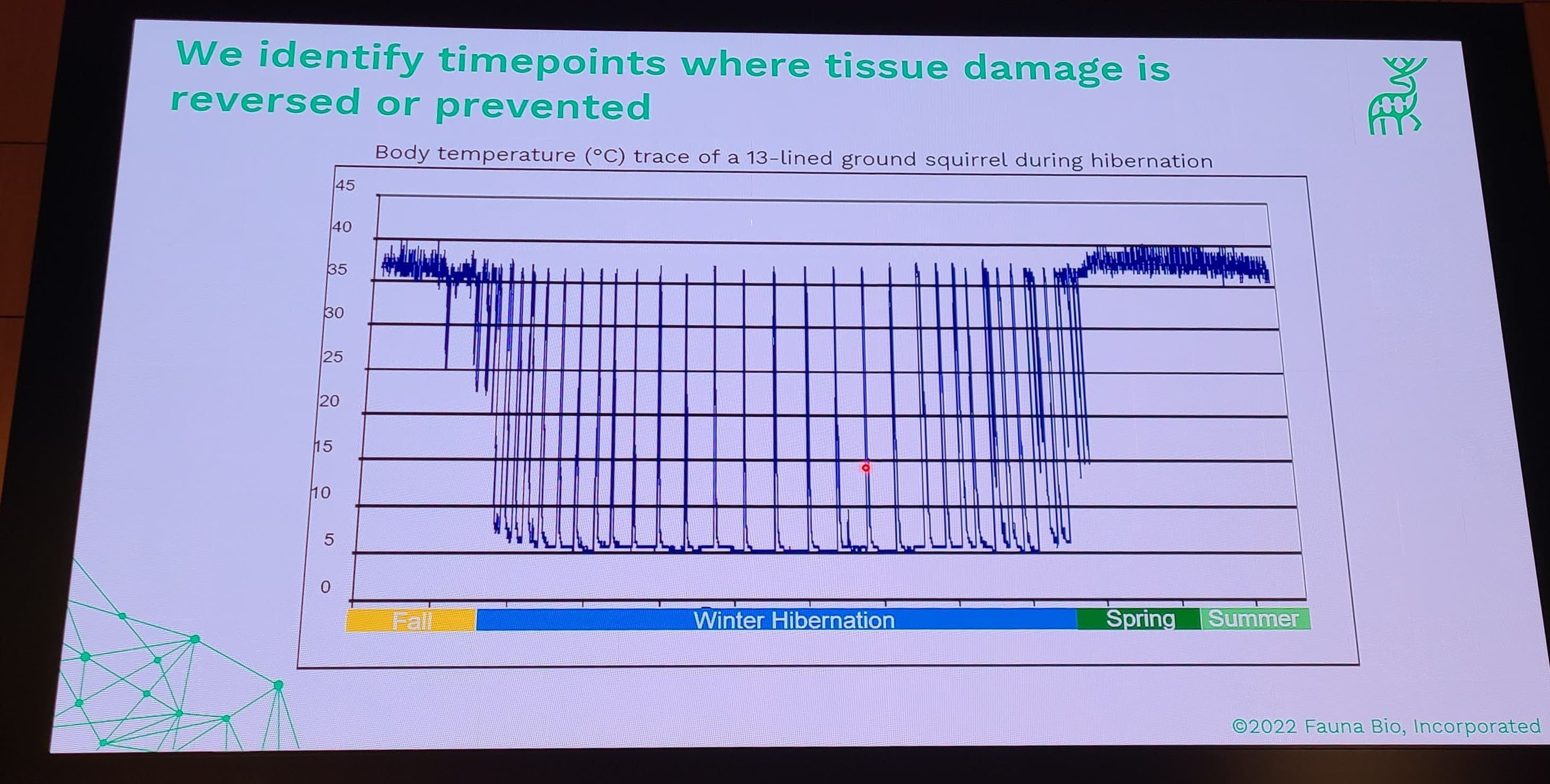
In the short-to-moderate term the company is focused on cardiac and pulmonary diseases. During hibernation, for example, the squirrel lowers their body temperature from its normal 35 degrees C, to about 5 degrees C, and dramatically lowers the flow of blood, and heart beats are a fraction of normal. And most parts of the animal’s brain is shut down / inactive.
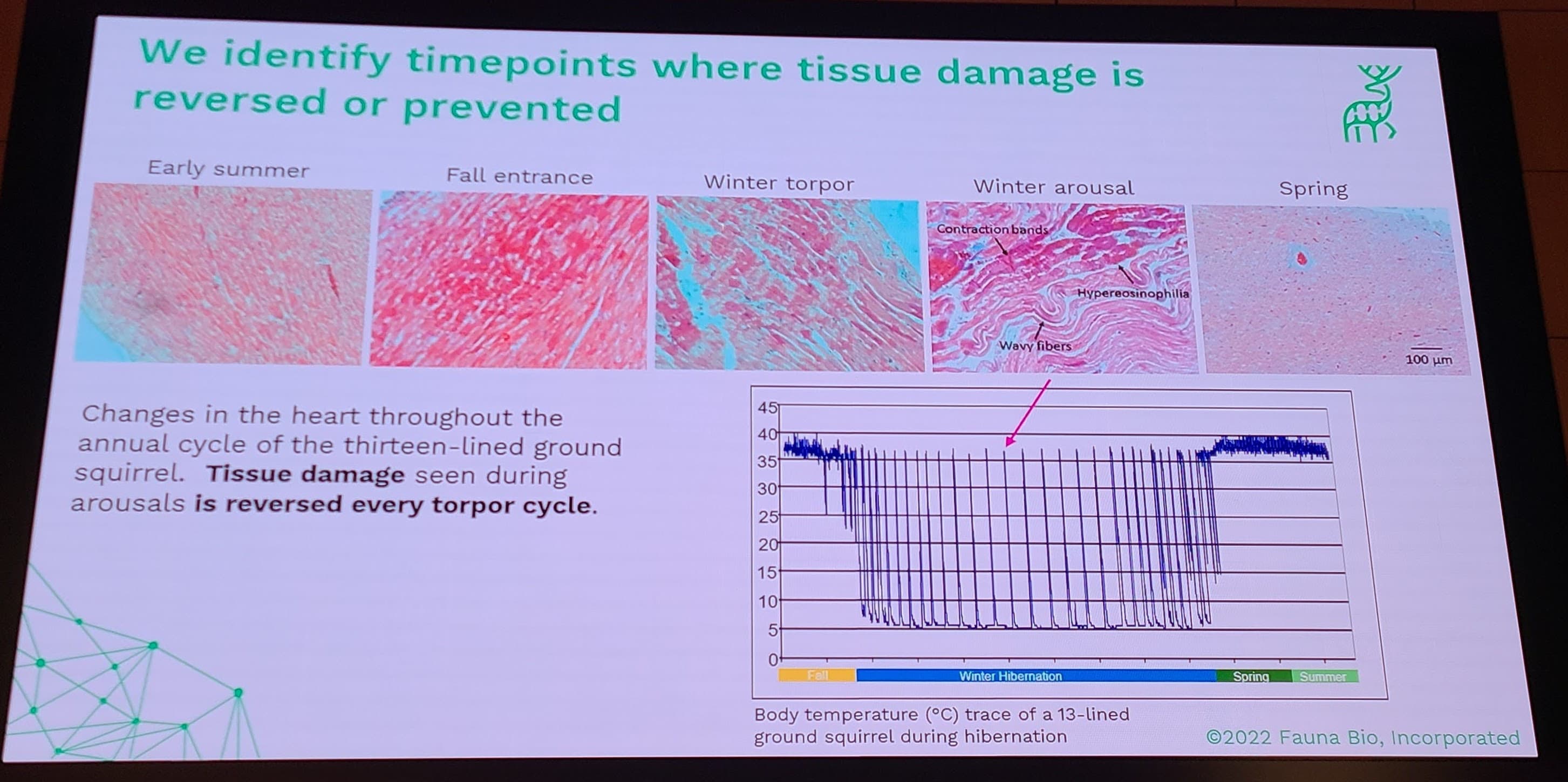
And then periodically, (ever week or two) the animal (like a computer in “sleep mode” briefly awakens with a 240 fold increase in metabolism over a few hours, bring its body temperature back up to 35 degrees, heart beat back up to normal, blood flow back up to normal levels, and full brain activity resuming, and then a short time later the sleep button is pushed again and it returns to hibernation.
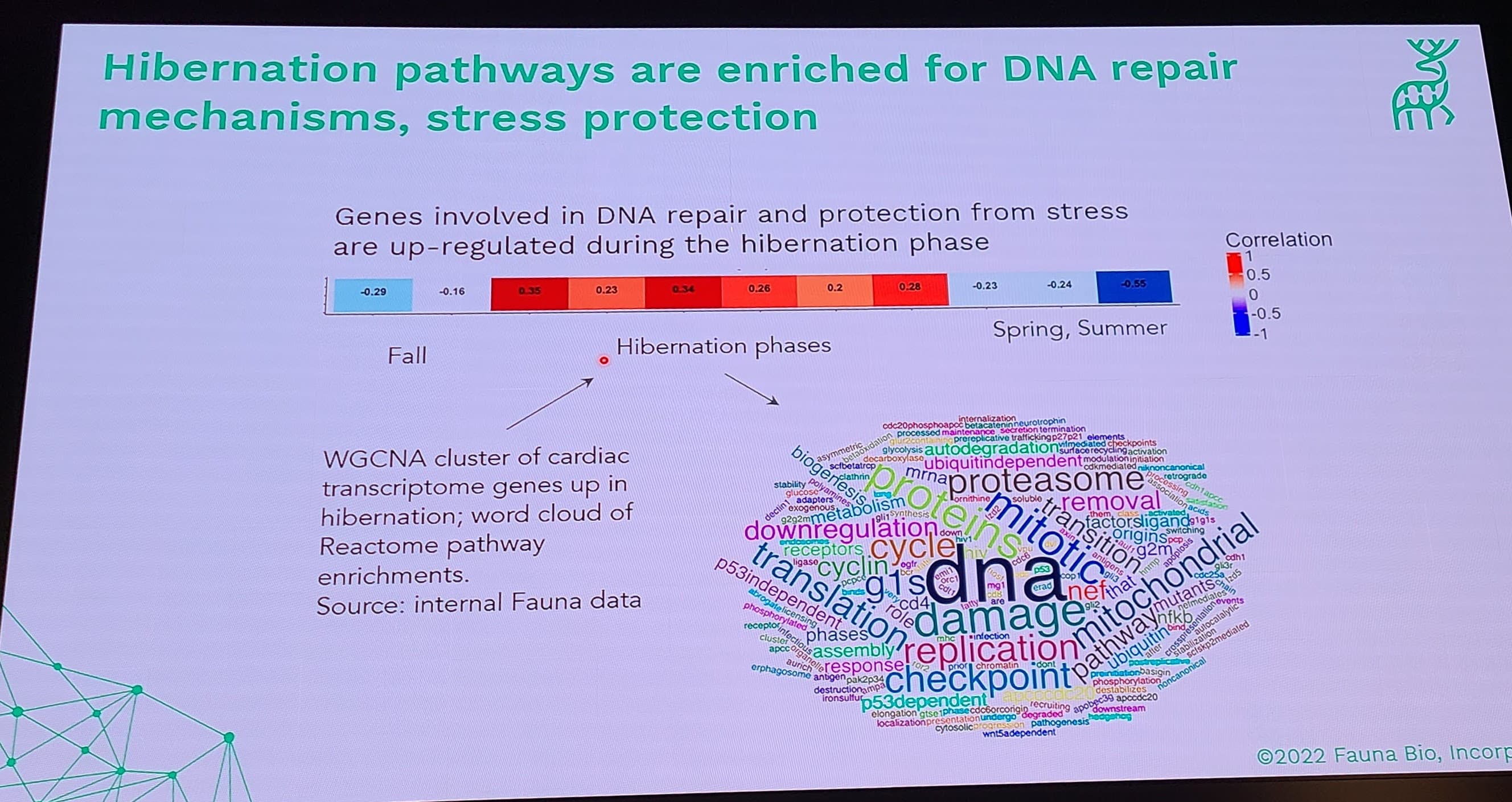
Dr. Zahnder compared the sudden rush of blood that takes place in these animals to the reperfusion that happens in heart attack patients when blood flow is restored. Typically in humans this is an extremely damaging event that can result in death if not extreme damage. But these squirrels do this dozens of times each hibernation period with few negative long term side effects. The research that Fauna Bio has done suggests that these squirrels do suffer significant damage, but they are also able to repair the damage. Dr. Zahnder says that humans have the similar genes and pathways in our bodies and that we just need to figure out a way to turn them on.