I do make a point of picking organic produce, just like I choose sardines over tuna. As a biohacker, my longevity protocol is pretty set in stone, so avoiding heavily contaminated foods is a priority for me. Of course, if your diet changes every day, you don’t really need to sweat it—the government’s safety standards have already done the heavy lifting for you.
1 Like
Thank you for uploading the full study. It is a good thought piece in that it raises many of the right questions. In contexts like this one, healthy user bias is a significant independent variable in all but experimental designs, although some quasi experiment designs can get at it to a degree: QE designs that compare naturally occurring low and high pesticide areas could begin poking at the underlying truth. Perhaps the EU standards are different but I found it jarring to see no mention of this major confounder in the Limitations section.
I don’t think we can crowdsource truth here; the concept of ‘organic’ is too culturally laden and replete with virtue signaling. If we follow the best science as of 2026, we must start by acknowledging that pesticide exposure introduces risks that remain difficult to quantify. We face gaps in our knowledge regarding specific health outcomes, precise dosages, and long-term bioaccumulation. Furthermore, while pesticides appear in both organic and non-organic produce, they are consistently found in higher frequencies and quantities in the latter. Consequently, when the practicalities of daily life are introduced, the choice isn’t a simple binary; it is an act of adjudicating risk and benefit under conditions of uncertainty. It is a calculated gamble, but one where the data clearly favors one side over the other.
FWIW, my choice of organic is driven more by the precautionary principle and benefits speculation. Many pesticides are novel compounds we may not be optimally equipped to deal with. I figure if organics have fewer, then my risks and unknowns are lower. Veggies/fruits have their own pest/herbicides evolutionarily and we seem to have co-evolved to deal with them with hormetic benefits. Organics need them more as they are more stressed and as a result produce more (lacking man made protection) when under attack. Those are beneficial to us hormetically - I seem to recall studies saying organics and conventional have roughly the same vitamin and mineral content, but organics contain more polyphenols. That may also have some impact with different varietals chosen for organics in some cases, they need to be more hardy and have more polyphenols as a response. That aspect is also a big reason for my choice of organics - I wrote a long post in another thread about the benefits of picking stressed produce (attacked by viruses and less “attractive” looking), plus seasonality, variety, rotation etc.
In short, like so often in life it’s decisions in an incomplete information multivariable environment - game theory application. Lower pesticide burden is only one factor in making a choice wrt. organics. Of course, in the end it may only transpire to be fiddling at the margins, as is routine in the longevity space.
2 Likes
There are a few supplements that may help deal with the pesticide problem (from google):
“Calcium D-Glucarate helps the body remove various toxins, including environmental pollutants and potentially pesticides, by supporting the liver’s detoxification process. It works by inhibiting the enzyme
beta-glucuronidase which prevents the body from reabsorbing toxins and ensures they are excreted through feces and urine.
The liver packages toxins with glucuronic acid (a process called glucuronidation) for elimination. However, certain bacteria in the gut produce glucuronidase, which can break this bond, allowing toxins—such as environmental pollutants, xenoestrogens, and pesticides—to be reabsorbed back into the bloodstream. Calcium D-Glucarate is converted into D-glucaro-1,4-lactone, a potent inhibitor of glucuronidase. By inhibiting this enzyme, it ensures the “biological trash bag” stays sealed, allowing toxins to be removed from the body.”
“Chlorophyllin is known to form tight molecular complexes with certain cancer-causing chemicals (carcinogens), such as aflatoxins (toxic molds found on crops). By binding to these toxins in the digestive tract, it limits their ability to be absorbed into the bloodstream.”
“Sulforaphane helps the body remove pesticides and other environmental toxins by activating the Nrf2 pathway, a “master switch” for your body’s natural defense systems. While it doesn’t “flush” them out directly like a filter, it acts as a biochemical signal that ramps up the production of Phase II detoxification enzymes. These enzymes bind to harmful chemicals—including pesticide residues, heavy metals, and air pollutants—making them more water-soluble so they can be excreted through urine or bile.”
In addition, anti-oxidants “may help mitigate the oxidative stress caused by pesticide exposure.”
2 Likes
Isn’t washing them with baking soda enough to get rid of the pesticides?
I only buy organic fruit and veg, also wild caught salmon etc, I wash my produce in clean bottled water, then I spray every peice of fruit and veg with Clean Boss all natural fruit-veggie wash , then wash again, let it dry and put it in glass dishes in the fridge , sometimes I run a blue light over it too.
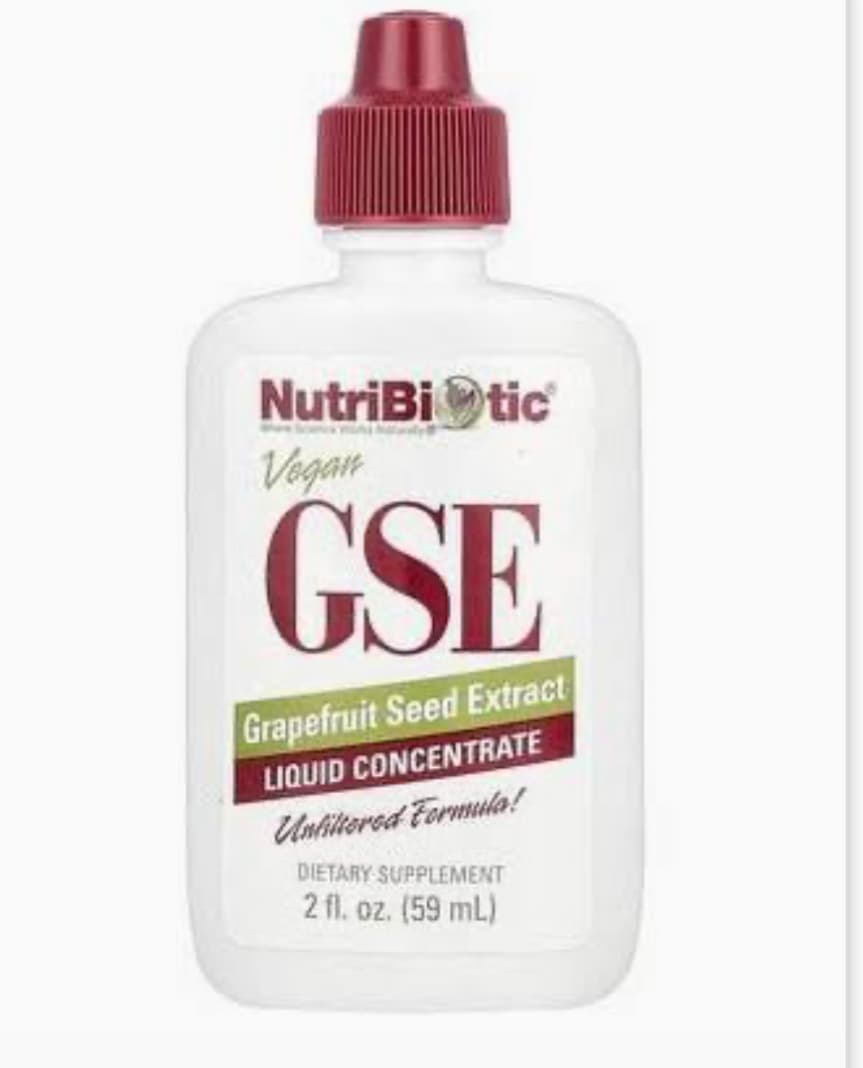
I have not personally researched this but I was told years ago to use GSE as a wash for veggies. I do as I’m told
One bottle lasts forever. I personally only bother when soaking lettuces or broccoli to get the bugs out …ewwww. Things that are harder to simply rinse off.
According to Bill Gates and Mark Cuban the only protein we should consume is in fact bugs LOL (had to say it)
I’m vegan… but I think YOU should 
Whenever I discover bugs in my broccoli, I get so ick’d out I eat highly processed foods for the rest of the day. I tell my husband, no one ever found a bug in a Twinkie!
When I discovered live afids in my lettuce, it was waaaay longer than a day
2 Likes
Fruits and vegetables are porous. While grapefruit seed extract may be effective against certain surface bacteria, it has almost no specific effect on degrading the pesticide residues commonly found on produce; rinsing with plain water is sufficient.
I suggest you just dilute the extract in water and drink it instead; at least that way it won’t go to waste. Any of those fruit and vegetable washes are just marketing ploys used to deceive the public.
1 Like
Thanks. I do just rinse with water for most things, but @Cole, here’s something I’ve always wondered about…
We know we shouldn’t just use water to wash our hands, so it has always been a disconnect they say using only water is fine for our food… (I should AI this, but if I AI everything, I’ll never talk to another human again!)
I buy mostly organic, and even though I realize there are some chemicals on organic as well, my main worry in relation to rinsing has never been the chemicals… it’s the stuff all the veggies touch between the farm and my house… including the grocery store floor. Even so, I only use the GSE on occasion… and eureka, good idea to actually consume it! Ha, it never occurred to me this is the same stuff people buy in pill form!
1 Like
You’re so sweet. Actually, the FDA has a detailed explanation on why you don’t need to use fruit and vegetable washes.
https://www.fda.gov/food/buy-store-serve-safe-food/selecting-and-serving-produce-safely
- Wash all produce thoroughly under running water before preparing and/or eating, including produce grown at home or bought from a grocery store or farmers’ market. Washing fruits and vegetables with soap, detergent, or commercial produce wash is not recommended. Produce is porous. Soap and household detergents can be absorbed by fruits and vegetables, despite thorough rinsing, and can make you sick. Also, the safety of the residues of commercial produce washes is not known and their effectiveness has not been tested.
1 Like