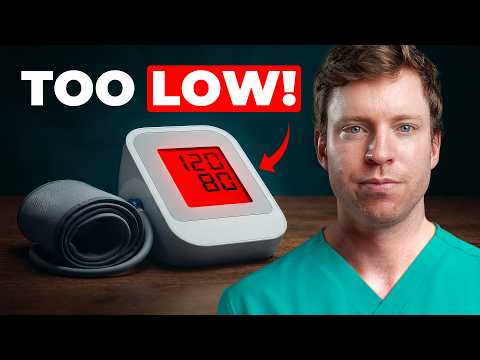
chatGPT(5.5paid):
Summary
Dr Brad Stanfield argues that 120/80 mmHg is not a universally appropriate blood-pressure target. The appropriate target depends on cardiovascular risk, measurement method, medication tolerance, postural symptoms, medical history and—his principal emphasis—frailty.
His main argument is:
- Intensive systolic blood-pressure lowering can reduce cardiovascular events in selected higher-risk patients.
- SPRINT supported a target below 120 mmHg in non-diabetic, relatively robust adults at elevated cardiovascular risk.
- ESPRIT extended the evidence to a broader high-risk population that included people with diabetes or previous stroke.
- However, aggressive treatment may be harmful in frail people, particularly where it produces postural hypotension, dizziness or falls.
- Blood pressure should be measured properly, preferably through repeated home readings.
- Exercise, weight loss, reduced alcohol intake and a potassium-rich diet can lower blood pressure.
- Resistant or unusual hypertension warrants investigation for secondary causes.
The transcript supplied with the request contains the complete spoken content and chapter structure.
Critique
Overall assessment
This is a useful, accessible and broadly evidence-informed video, particularly in its emphasis on accurate measurement, absolute rather than merely relative risk, postural symptoms and individualisation. Its central weakness is that it replaces one oversimplification—“everyone should be 120/80”—with another: “frailty is the crucial determinant.”
Frailty is important, but it is only one part of the decision. Appropriate treatment also depends on baseline cardiovascular risk, standing blood pressure, kidney function, diabetes, previous cardiovascular disease, medication burden, adverse effects, life expectancy and patient preferences.
What the video does well
1. It distinguishes relative from absolute risk.
The explanation of SPRINT’s approximately 25% relative reduction alongside the much smaller annual absolute difference is valuable. SPRINT enrolled 9,361 higher-risk adults without diabetes and found fewer major cardiovascular events and deaths with a systolic target below 120 rather than below 140 mmHg, although some adverse events were more frequent. (New England Journal of Medicine)
2. It warns against indiscriminate extrapolation.
The video correctly notes that the original SPRINT population excluded diabetes and previous stroke. It is also right that trial targets cannot automatically be transferred to every patient or every method of measurement.
3. It gives sensible blood-pressure measurement advice.
Resting, using the correct cuff, supporting the arm, avoiding caffeine and exercise beforehand, and averaging repeated home measurements are all good principles. Current NICE guidance also supports home or ambulatory monitoring where appropriate and specifically recommends sitting and standing measurements for people aged 80 or over, those with type 2 diabetes, or those with postural symptoms. (NICE)
4. It emphasises treatment tolerance rather than pursuing a number at all costs.
Dizziness, syncope, postural hypotension and falls are clinically important. Orthostatic hypotension is associated with increased fall risk in older populations, although the association does not prove that antihypertensive treatment is always the cause. (PubMed)
5. Its exercise section is reasonably well grounded.
The cited network meta-analysis included 270 randomised trials and found that all major exercise categories lowered resting blood pressure; isometric training, including wall squats, produced particularly large average reductions. This supports including isometric exercise, but not necessarily replacing aerobic and resistance exercise with wall sits alone. (British Journal of Sports Medicine)
Important weaknesses
1. The opening claim is overstated.
“The gold-standard blood pressure of 120/80 is probably completely wrong for you. In fact, I’d almost guarantee it.”
This is an attention-grabbing opening rather than a scientifically precise conclusion. A reading near 120/80 may be perfectly satisfactory for many people. More importantly, 120/80 as a measured blood pressure is not the same thing as a treatment target below 120 systolic.
The video repeatedly moves between:
- an observed blood pressure,
- a diagnostic threshold,
- a treatment target, and
- the value achieved during a clinical trial.
These are related but not interchangeable.
2. The claim that the main distinction is “not age, but frailty” is too categorical.
Frailty is undoubtedly relevant, but age still matters through:
- altered vascular stiffness;
- drug metabolism and clearance;
- prevalence of isolated systolic hypertension;
- frequency of postural hypotension;
- competing mortality risks;
- representation in clinical trials.
UK NICE guidance continues to distinguish targets by age. For most adults under 80, NICE recommends clinic blood pressure below 140/90 mmHg; for adults aged 80 and over it recommends below 150/90 mmHg, while advising clinical judgement for frailty and multimorbidity. Home targets are generally 5 mmHg lower. (NICE)
Thus, the best formulation would be:
Age alone should not determine the target; frailty, standing blood pressure, comorbidity and treatment tolerance should modify age-based guidance.
3. PARTAGE cannot show that intensive treatment caused excess mortality.
The video presents the nursing-home study as though low blood pressure produced by multiple medications increased mortality by 78%. PARTAGE was an observational cohort, not a randomised deprescribing trial. It found that the combination of systolic pressure below 130 mmHg and treatment with at least two antihypertensive drugs was associated with increased mortality. (PubMed)
Possible explanations include:
- treatment-related hypotension;
- reverse causation, where illness, weight loss or declining health lowers blood pressure;
- residual confounding;
- clinicians prescribing more medicines to people with more serious vascular disease.
It supports caution and medication review, but it does not prove that raising blood pressure would improve survival.
4. ESPRIT is described too broadly.
ESPRIT enrolled more than 11,000 Chinese adults with hypertension and high cardiovascular risk, including people with diabetes or previous stroke. Intensive treatment reduced major vascular events by approximately 12% relative to standard treatment. (ScienceDirect)
However, saying it demonstrates benefit in “frailish people” overreaches. Trial participants are generally selected, monitored and supported more closely than typical frail nursing-home residents. ESPRIT therefore strengthens the case for intensive control in high-risk patients who tolerate it, but it does not eliminate uncertainty in severe frailty.
5. The recommendation that exceptionally fit people might target below 115 mmHg is inadequately supported.
The video cites observational evidence showing progressively increasing vascular mortality from approximately 115/75 mmHg upward. Such observational associations do not establish that using medication to push a healthy person below 115 will improve outcomes.
This is a critical distinction:
- A naturally low blood pressure may indicate low vascular risk.
- A drug-induced pressure of the same value may produce dizziness, electrolyte abnormalities, kidney injury or other adverse effects.
A treatment target below 115 should not be inferred from an observational risk curve without direct randomised evidence.
6. The SPRINT measurement discussion is too definite.
The video says SPRINT readings were obtained while patients sat alone and that they typically run 5–10 mmHg below ordinary clinic readings. SPRINT used automated measurements after a rest period, but subsequent investigation found variation between sites in whether staff were present. The difference between automated and routine clinic measurements is also not a fixed conversion that can reliably be applied to an individual. (AHA Journals)
It would be safer to say:
SPRINT used a highly standardised automated protocol, so its target should not be equated uncritically with a hurried single clinic reading.
7. The proposed frailty screen is not validated.
Questions such as whether someone can jump, balance or rise unaided may be clinically informative, but they do not constitute a validated frailty assessment. More established approaches include:
- gait speed;
- timed up-and-go;
- chair-rise testing;
- grip strength;
- the Clinical Frailty Scale;
- Rockwood’s frailty index.
Jumping may also be inappropriate for people with arthritis, osteoporosis, neuropathy or balance disorders who are not otherwise systemically frail.
8. The dietary section underplays sodium.
Increasing dietary potassium can help lower blood pressure, provided kidney function and medication use make it safe. However, reducing excess sodium is at least as central to standard dietary blood-pressure management. The video barely discusses salt.
The warning about kidney function is important because potassium may be hazardous in chronic kidney disease or in people taking drugs such as ACE inhibitors, ARBs, mineralocorticoid-receptor antagonists or potassium-sparing diuretics.
9. The secondary-hypertension section contains imprecisions.
- The condition is Cushing syndrome; Cushing disease specifically refers to an ACTH-secreting pituitary cause.
- Hypothyroidism can raise predominantly diastolic pressure, but it is not among the most common explanations for ordinary obesity-associated hypertension.
- Primary aldosteronism deserves greater emphasis because it is relatively common among people with resistant hypertension.
- Renal-artery stenosis should not be investigated simply because hypertension occurs under age 40. In younger patients, fibromuscular dysplasia may be considered, but testing is normally guided by the wider clinical picture.
- Obstructive sleep apnoea, kidney disease and medication or substance effects should have been mentioned.
10. The closing reference to GLP-1 medicines is too abrupt.
GLP-1 receptor agonists can produce substantial weight loss and may lower blood pressure, but they are not simply blood-pressure drugs. Suitability depends on indication, contraindications, adverse effects, cost and the need to preserve lean mass—particularly in someone already frail.
Balanced conclusion
The most defensible message from the video is:
Lower systolic blood pressure generally reduces cardiovascular risk, but treatment targets must be based on reliable measurement and individualised according to cardiovascular risk, standing blood pressure, frailty, comorbidities and adverse effects.
The least defensible messages are:
- that 120/80 is “almost guaranteed” to be wrong;
- that frailty rather than age is the decisive variable;
- that exceptionally fit people should consider a treated target below 115;
- and that observational nursing-home findings demonstrate harm caused by medication-induced blood-pressure lowering.
Tidied transcript
This version removes repetitions, false starts, promotional filler and obvious transcription errors while preserving the speaker’s substantive argument. It is an editorial clean-up, not an endorsement of every medical claim.
Your Ideal Blood Pressure May Not Be 120/80
0:00 — Why blood-pressure targets differ
The supposedly “gold-standard” blood pressure of 120/80 may not be the right target for everyone.
Consider two people. The first is a man in his mid-40s whose blood pressure is 118/76. He is worried because heart disease runs in his family. The second is a woman in her late 80s who uses a walking stick. Her blood pressure is 124/68 while taking two blood-pressure medicines.
What is the crucial difference between the targets that may be appropriate for these two people?
Most people would say age. However, frailty and medical history may be more important.
Understanding this distinction can help reduce the risk of heart attack and stroke while minimising adverse effects.
Blood pressure targets have traditionally focused on approximately 120/80 because higher pressure places greater strain on blood vessels. Over time, this contributes to heart attacks and strokes. Hypertension is often called a silent killer because people commonly experience no symptoms before a serious event occurs.
I am Brad Stanfield, a family-medicine doctor. Although I am a physician, I am not your physician, so discuss any change in your treatment with your own doctor.
1:28 — Why targets have fallen
Over the years, recommended blood-pressure targets have generally fallen. This reflects evidence from clinical trials rather than an attempt to sell more medication.
One important example is the 2015 SPRINT trial, which enrolled 9,361 people aged over 50. It compared the then-standard systolic target of below 140 mmHg with an intensive target below 120 mmHg.
The study was intended to continue for approximately six years but was stopped after just over three years because the intensive-treatment group had a 25% lower relative risk of the combined cardiovascular outcome.
Relative and absolute risk need to be distinguished. Major cardiovascular events occurred at an annual rate of approximately 1.65% in the intensive group and 2.19% in the standard group. The absolute difference was therefore around half a percentage point per year.
That may sound modest, but when accumulated over many years it can become clinically important—provided blood pressure can be lowered without unacceptable adverse effects.
2:45 — Who was included in SPRINT?
The SPRINT results should not automatically be applied to everyone.
SPRINT did not include people with diabetes or a previous stroke, and its participants were not representative of severely frail nursing-home residents.
Blood pressure was also measured using a standardised automated system after a period of rest. Such readings may differ from a hurried measurement taken during an ordinary medical appointment.
We therefore need to consider both the trial population and the measurement method before applying its target to an individual patient.
3:52 — The ESPRIT trial
A large trial reported in 2024, ESPRIT, examined intensive blood-pressure treatment in a wider high-risk population. It included more than 10,000 participants and permitted people with diabetes or a previous stroke.
Compared with a systolic target below 140 mmHg, a target below 120 mmHg produced an approximately 12% relative reduction in the combined risk of major cardiovascular events.
The reduction was smaller than in SPRINT, but still clinically meaningful.
If lower targets can help many fit older people, people with diabetes and some stroke survivors, why would anyone need a higher target?
Because blood-pressure treatment involves balancing benefits against harms.
4:39 — The risk of lowering pressure too far
Lowering blood pressure reduces the risk of heart attack and stroke, but excessive lowering can cause dizziness when standing and, in severe cases, falls or other adverse events.
This issue was highlighted by a 2015 observational study of frail nursing-home residents aged over 80. Among residents taking two or more blood-pressure medicines, those with systolic pressure below 130 mmHg had a substantially higher mortality rate over two years than those with higher readings.
One possible problem is postural, or orthostatic, hypotension. When a person stands, the cardiovascular system must maintain sufficient blood flow to the brain. If pressure falls excessively, the person may feel faint or lose balance.
A meta-analysis involving approximately 50,000 people found that orthostatic hypotension was associated with a substantially increased risk of falling.
Falls are particularly serious in older people. A hip fracture can be followed by loss of independence, complications and a high risk of death during the following year.
The challenge is therefore to lower cardiovascular risk without producing disabling hypotension or falls.
6:01 — Frailty rather than age alone
This should not be viewed simply as an age issue.
In SPRINT, relatively fit participants aged over 75 continued to benefit from intensive treatment, without a clear increase in falls. The relevant distinction may therefore be physiological resilience rather than chronological age alone.
A person in their 80s who requires a walking stick, becomes dizzy on standing and has poor balance may not tolerate a systolic target below 120 mmHg.
Frailty can also occur in people in their 50s or 60s. Some have lost substantial muscle mass, walk slowly and become unsteady when rising from a chair.
Conversely, some people remain strong and active into their 80s or 90s and may tolerate lower blood pressure.
There is no single threshold below which cardiovascular risk suddenly disappears. Large observational studies have shown that vascular mortality rises progressively with increasing blood pressure, beginning from approximately 115/75 mmHg.
However, any decision to pursue a very low target must take account of symptoms, medical history and treatment tolerance.
7:52 — Measure blood pressure correctly
Before debating whether the target should be 140, 130, 120 or lower, make sure the measurement itself is reliable.
A single clinic reading may be misleading. Anxiety, rushing, talking, poor positioning or incorrect cuff size can distort the result.
Home monitoring often provides a better estimate.
For an accurate home measurement:
- avoid exercise and caffeine for at least 30 minutes;
- empty your bladder;
- sit quietly for approximately five minutes;
- support your back;
- keep both feet flat on the floor;
- do not cross your legs;
- support your arm at heart level;
- use the correct cuff size;
- and remain silent during the measurement.
Do not rely on one reading.
A practical approach is to take readings in the morning and evening for seven days. Take two readings each time if advised to do so. Discarding the first day and averaging the remaining readings can provide a more representative estimate.
Only after obtaining a reliable average should you discuss the appropriate target.
9:20 — Assessing tolerance and function
When assessing a patient, I consider questions such as:
- Do they become dizzy when they stand?
- Can they rise without assistance?
- Can they maintain their balance?
- Do they have heart disease or other relevant medical conditions?
- Are they experiencing adverse effects from treatment?
For a robust person who has no postural symptoms and is at elevated cardiovascular risk, a systolic target below 120 mmHg may be appropriate after discussion with their doctor.
For someone with dizziness, postural hypotension or significant frailty, a higher target—perhaps around 130 or 140 mmHg—may be more appropriate.
People who are becoming frail should not assume that decline is inevitable. Strength and function can often be improved, and exercise can also help lower blood pressure.
10:02 — Exercise
Exercise is one of the most effective non-drug interventions.
A large analysis combining 270 randomised controlled trials found that aerobic exercise reduced systolic pressure by approximately 4–5 mmHg on average.
Isometric exercise produced particularly large average reductions, approaching 8 mmHg in some analyses. A wall sit is one example.
Someone with limited time may be able to incorporate wall sits at home or at work, provided they can do them safely.
For people losing lower-body strength, repeated sit-to-stand exercise can be useful. Rise from a chair without using the arms if able, then lower yourself slowly and under control. This strengthens the quadriceps and gluteal muscles.
Exercise selection should reflect the person’s balance, joint health and cardiovascular condition.
10:57 — Diet and potassium
Diet is another important lever.
Increasing dietary potassium can lower blood pressure, provided kidney function is adequate and there is no medication-related risk of high potassium.
Potassium-rich foods include vegetables, beans, chickpeas, lentils and fruit. A varied diet containing non-starchy vegetables and adequate protein can support both blood-pressure control and muscle maintenance.
Studies of increased fruit and vegetable consumption have found average systolic reductions of several millimetres of mercury in people with elevated blood pressure.
11:28 — Alcohol and weight loss
Reducing alcohol can also help.
In people consuming six or more alcoholic drinks or units per day, substantially reducing consumption has produced average systolic reductions of approximately 5 mmHg.
Weight loss is another effective intervention. Across randomised trials, every kilogram of weight lost has been associated with approximately a 1 mmHg reduction in systolic pressure, although individual responses vary.
A five-kilogram reduction might therefore lower systolic pressure by roughly 5 mmHg.
Simply telling people to eat less and move more is often inadequate. Some people need structured dietary, behavioural or medical support.
12:14 — Secondary causes of hypertension
High blood pressure sometimes has an identifiable secondary cause.
Conditions that may need consideration include:
- excess cortisol, including Cushing syndrome;
- thyroid disease;
- primary aldosteronism;
- phaeochromocytoma;
- kidney disease;
- and narrowing of a renal artery.
Possible investigations include late-night salivary cortisol, thyroid-function tests, an aldosterone-to-renin ratio, plasma free metanephrines and appropriate renal investigations.
The choice of tests should be based on the clinical history rather than ordering every test for every patient.
Once relevant secondary causes have been considered, excess body weight is often an important contributor to hypertension.
Some patients may benefit from newer weight-management treatments, including GLP-1 receptor agonists, when these are clinically indicated and appropriately supervised.
13:19 — Main conclusions
There are four main messages.
First, do not determine a blood-pressure target solely from a person’s age. Consider frailty, medical history and treatment tolerance.
Second, measure blood pressure properly, preferably using repeated home measurements where appropriate.
Third, address modifiable factors including exercise, diet, alcohol consumption, sleep and excess weight.
Fourth, investigate secondary causes when the clinical history suggests them.
The appropriate target is not simply a universal number. It is the lowest pressure that meaningfully reduces cardiovascular risk while remaining safe and well tolerated for the individual patient.
The cleaned transcript would be stronger still if revised to distinguish clearly between natural blood pressure, diagnostic thresholds, treatment targets and achieved trial pressures.
