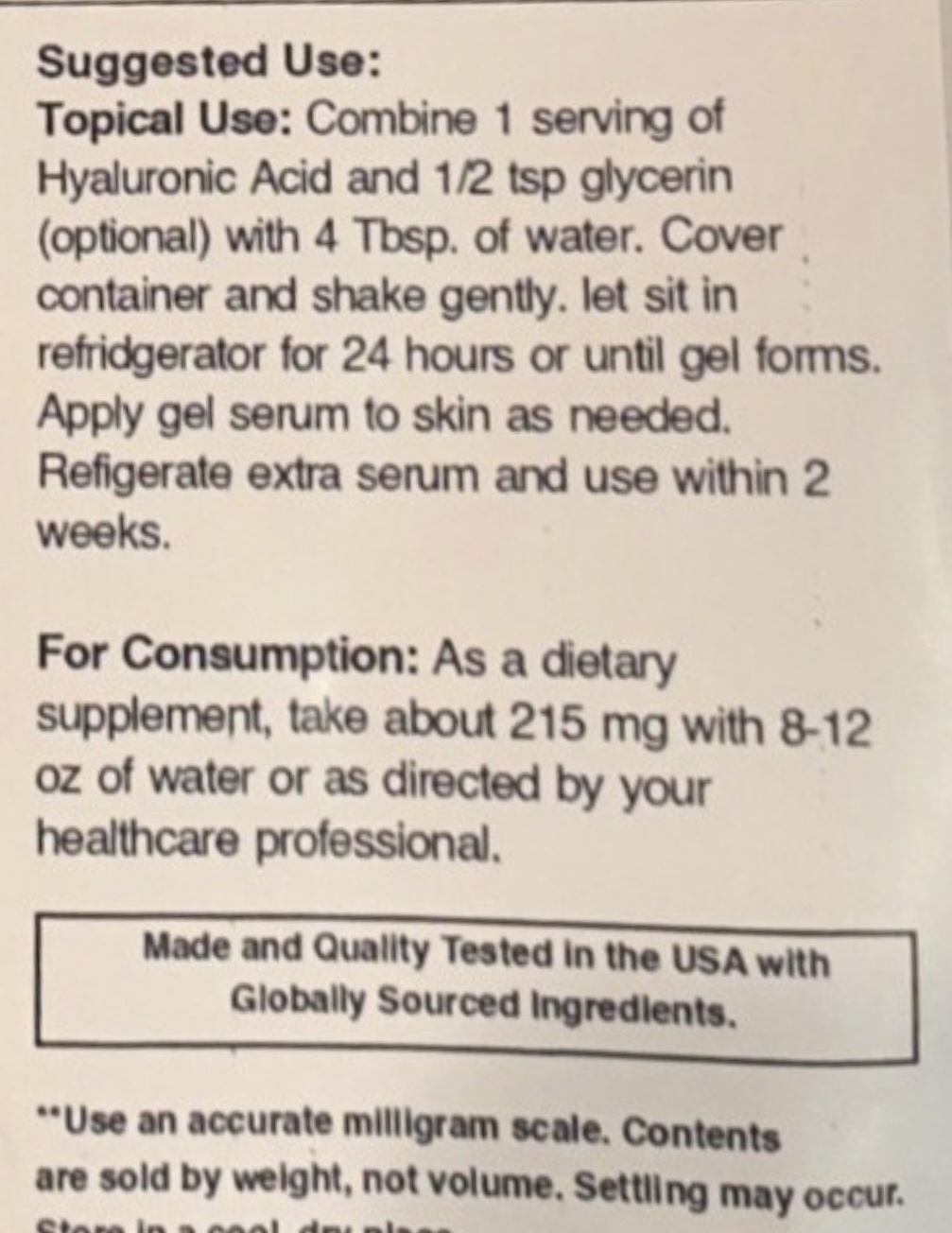
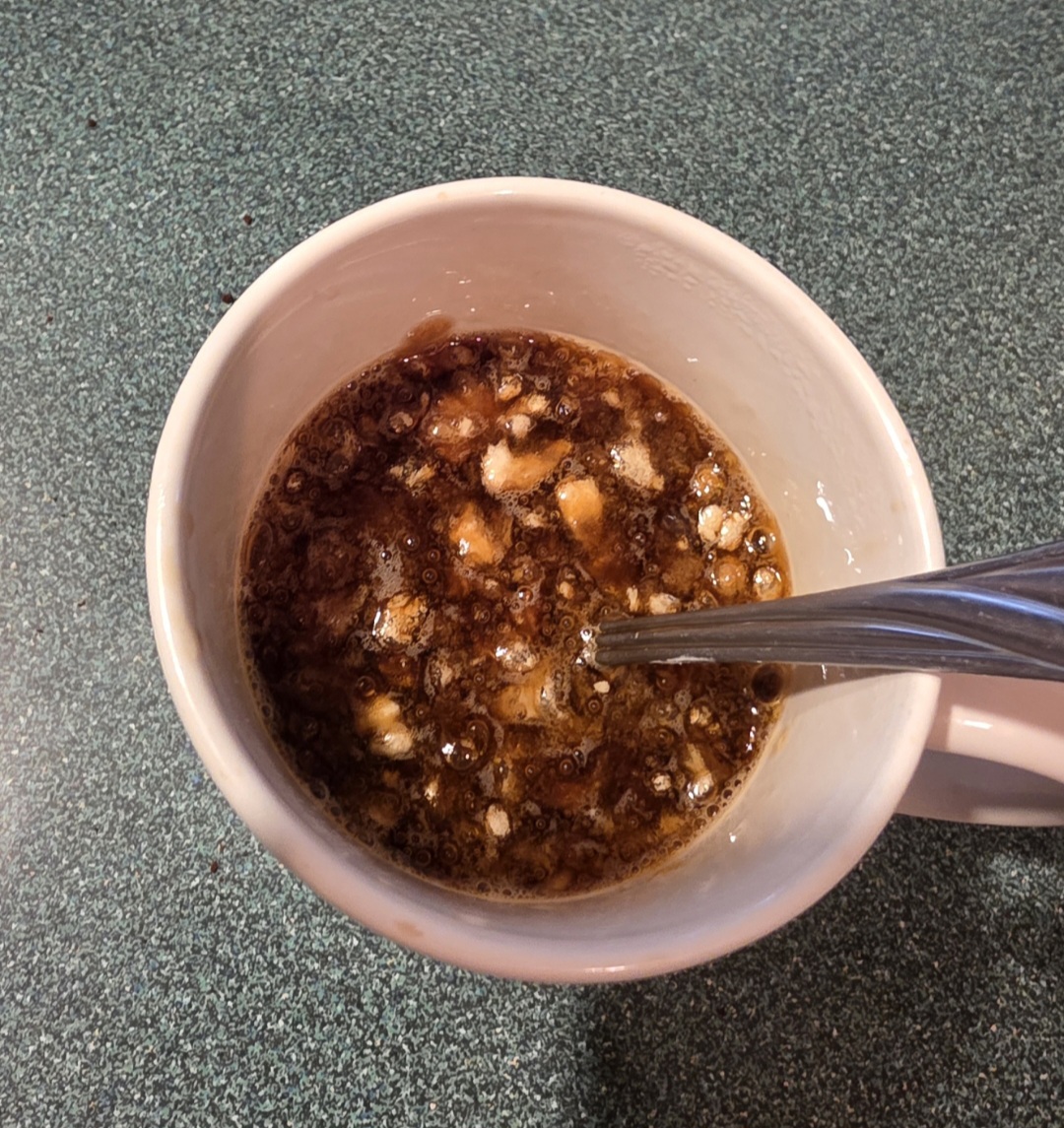
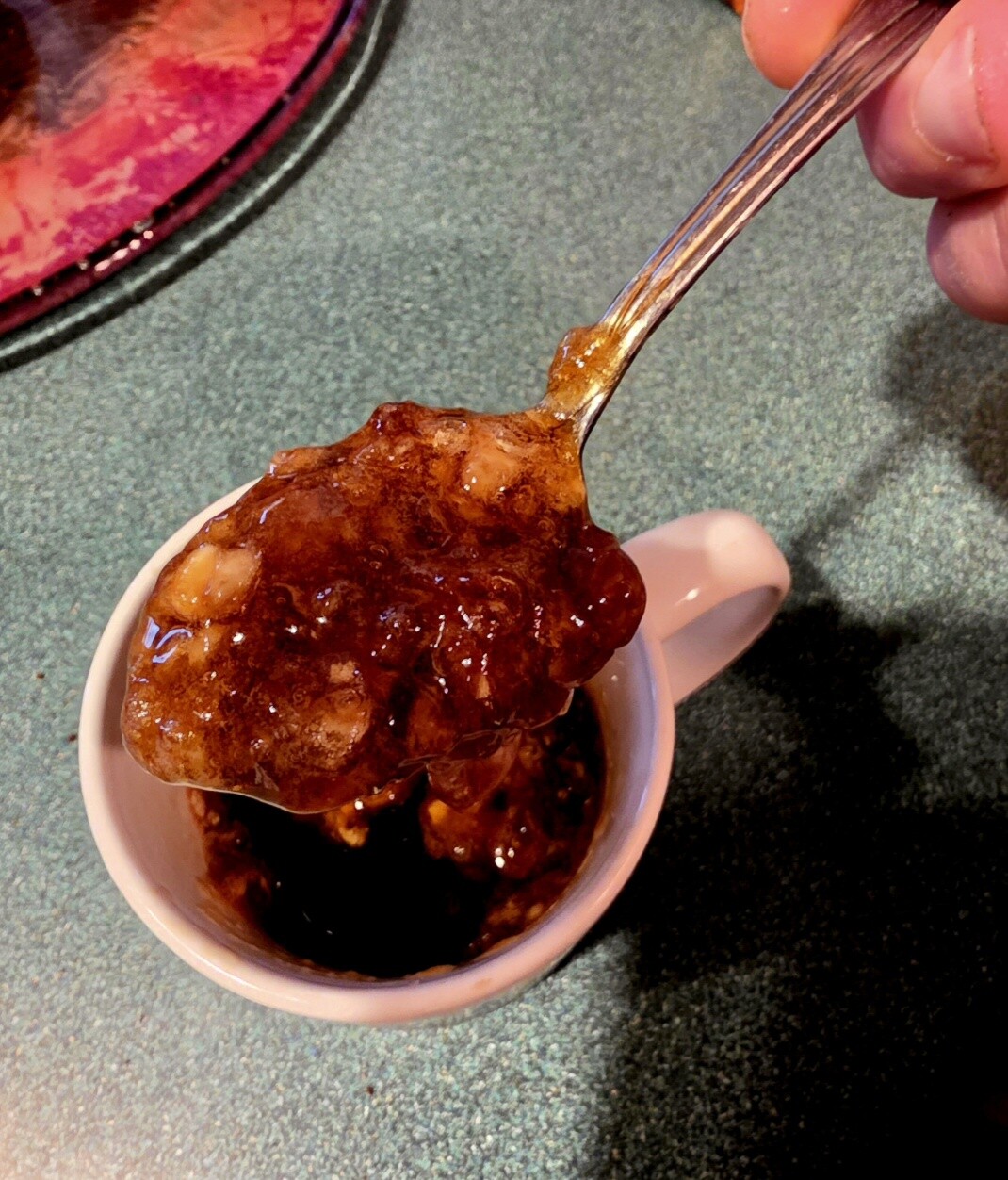
High molecular weight HA does not dissolve in water - it forms gel in 24 hours when refrigerated. It is a low molecular weight HA that instantly dissolves - that’s why it’s used in skin toners.
Yes, High-Molecular-Weight Hyaluronic Acid (HMW-HA) dissolves in water, but not in the traditional sense of a solute like salt or sugar rapidly forming a thin liquid. Due to its massive polymer chain length and extreme hydrophilicity, HMW-HA hydrates to form a highly viscous, non-Newtonian, viscoelastic hydrogel. It can bind and retain up to 1,000 times its own weight in water.
Practical Handling and Laboratory Preparation
To successfully dissolve HMW-HA in an aqueous solvent without compromising the polymer, precise mechanical action is required:
Gradual Dispersion: The powder must be sifted very slowly into a vigorously swirling vortex of water.
Time: Even with proper dispersion, HMW-HA often requires several hours (or overnight storage at 4°C) of continuous, gentle agitation for the polymer chains to fully uncoil and achieve a homogenous, clump-free solution.
Shear Sensitivity: High-shear mixing (such as blending or aggressive sonication) can physically shear and degrade the long polymer chains, effectively reducing the molecular weight and altering its biological properties.
The molecular weight of HA dictates its biological signaling. While Low-Molecular-Weight HA (LMW-HA) is often associated with tissue injury, inflammation, and angiogenesis, HMW-HA is a potent signaling molecule for tissue homeostasis, cytoprotection, and longevity
Knowledge Gaps & Scholarly Debates
Oral Bioavailability of HMW-HA: A persistent debate in clinical longevity circles is whether oral supplementation of HMW-HA is pharmacokinetically viable. Because of its massive size, intact HMW-HA cannot readily cross the intestinal epithelium.
Current Hypothesis: Pharmacokinetic data suggests that orally ingested HMW-HA is partially degraded by the gut microbiome into smaller fragments that are absorbed systemically (often via the lymphatic system). These fragments may still exert systemic anti-inflammatory effects and promote endogenous HA synthesis. However, whether the profound cytoprotective benefits of intact >6 MDa vHMM-HA can be achieved via oral routing remains highly speculative and requires further in vivo human trials to verify tissue uptake.
OK, I wanted to dig more into the issue of bioavailability of HMW HA. So…
New Prompt:
Role: molecular biologist and compounding pharmacy expert Task: Now, perform a rigorous analysis of the evidence for the bioavailability of High-Molecular-Weight Hyaluronic Acid (HMW-HA) orally consumed by humans, vs the evidence against the bioavailability of High-Molecular-Weight Hyaluronic Acid (HMW-HA) when consumed by humans. Do an external verification of the claims identified both on the evidence for, and the evidence against bioavailability of High-Molecular-Weight Hyaluronic Acid (HMW-HA). You must perform live searches for each claim.
Part 3: Claims & Verification
Extract Claims: Identify every specific biological, medical, or protocol claim made in the study.
Do not use LaTeX, python code, or special characters that break simple text parsers or reveal formatting codes, etc…
Tone: Objective, critical, “Tell it like it is.” No hype.
Output: Provide a bulleted list of claims with their associated Evidence Level (A-E) and supporting external citations.
Gemini Pro response:
Here is a rigorous, unvarnished analysis of the evidence for and against the oral bioavailability of High-Molecular-Weight Hyaluronic Acid (HMW-HA), evaluated strictly according to the requested hierarchy of evidence.
The core debate centers on a pharmacokinetic paradox: HMW-HA molecules are structurally too massive to pass through the intestinal epithelium intact, yet human clinical trials consistently demonstrate peripheral efficacy (skin and joints). The resolution to this paradox lies largely in the gut microbiome and lymphatic transport, not standard systemic absorption.
Analysis of Claims: Evidence Against Direct Bioavailability
Claim: HMW-HA is too large to cross the intestinal epithelium intact and is primarily excreted as waste, resulting in exceptionally poor absolute bioavailability of the intact molecule (~0.2%).
Evidence Level: Level D (Pre-clinical / Animal).
Translational Gap: Heavily flagged. This conclusion relies on radio-isotope tracking in rodent and canine models. While physics dictates the molecule is too large for standard paracellular or transcellular transport in humans, precise human pharmacokinetic excretion rates of intact HMW-HA remain largely unmapped.
Claim: The clinical benefits of oral HMW-HA observed in distant tissues (skin/joints) are not caused by the intact HA molecule physically reaching and embedding into the extracellular matrix, but rather by the systemic regulatory functions of its fermented metabolites (the gut-skin/gut-joint axis).
Evidence Level: Level D (Pre-clinical / Animal).
Translational Gap: Flagged. This mechanistic explanation is derived from germ-free versus wild-type mouse models, showing that without specific gut microbiota, absorption and subsequent peripheral tissue benefits fail to occur.
Analysis of Claims: Evidence For Bioavailability (Mechanistic & Proxy)
Claim: Oral HMW-HA is degraded and fermented by gut microbiota (specifically Bacteroides spp. ) into absorbable low-molecular-weight oligosaccharides and short-chain fatty acids (SCFAs) that enter systemic circulation.
Evidence Level: Level D (In vitro / Pre-clinical).
Translational Gap: Flagged. While human gut microbiota were used in the in vitro fermentation models, the exact in vivo yield and distribution of these specific human metabolites remain extrapolated.
Claim: A minor fraction of ingested HMW-HA bypasses standard intestinal blood absorption, is taken up by the gut-associated lymphoid tissue (GALT), and is distributed to peripheral connective tissues (skin, joints, vertebrae) via the lymphatic system.
Evidence Level: Level D (Pre-clinical / Animal).
Translational Gap: Heavily flagged. Scintigraphic imaging proves this pathway exists in rats and dogs, but verifying lymphatic uptake of intact macromolecules in live human subjects presents severe methodological barriers.
Claim: Oral HA supplementation acts as a highly effective clinical proxy for bioavailability, significantly improving skin hydration, reducing transepidermal water loss (TEWL), and decreasing wrinkle depth.
Evidence Level: Level A (Human Meta-analyses / Systematic Reviews) and Level B (Human RCTs).
Assessment: The clinical phenotype is undeniably altered by oral ingestion. Regardless of whether the intact molecule or its downstream metabolites are responsible, the systemic biological effect in humans is robust and verified.
Claim: Oral HA yields measurable therapeutic efficacy in rheumatology, specifically reducing joint pain and improving physical function (WOMAC scores) in patients with osteoarthritis.
Evidence Level: Level A (Human Meta-analyses / Systematic Reviews).
Assessment: Similar to dermatological findings, the clinical outcomes in human joint spaces indicate successful systemic influence, bypassing the traditional prerequisite of injecting the compound directly into the synovial fluid.
If you are evaluating HMW-HA for longevity or clinical compounding protocols, the traditional pharmacokinetic model (which demands that a molecule enter the bloodstream intact to be deemed “bioavailable”) is the wrong framework to use. The evidence indicates that oral HMW-HA is highly functionally “bioavailable”—yielding Level A evidence for skin and joint improvements—but it achieves this predominantly through microbial degradation and secondary metabolite signaling rather than direct, intact structural integration.
Procuring retail capsules explicitly verified at exactly 1.8 MDa (1800 kDa) presents a significant challenge. In the longevity and biotechnology literature—particularly research derived from the naked mole-rat’s cancer resistance and extended lifespan—1.8 MDa high-molecular-weight (HMW) hyaluronic acid is essential because lower molecular weights can trigger pro-inflammatory pathways.
However, the consumer supplement market operates with less clinical exactitude. Most vendors label their products broadly as “High Molecular Weight” (typically meaning anything >1.0 MDa). The data below captures the most cost-effective HMW capsule options currently on the market, including specialized longevity brands (e.g., DoNotAge, Renue By Science) that formulate specifically for cytoprotective aging pathways.
Top 10 Lowest-Cost Sources for HMW Hyaluronic Acid Capsules (USA)
Rank
Product/Brand Name (Exact title)
Vendor
Total Weight (Original Unit & Grams)
Total Price (USD)
Cost Per 500mg of high-molecular-weight SH (1.8 MDa) Hyaluronic Acid capsules (Calculation: Price / (Total grams * 2))
Walmart Sellers (Double Wood, DoNotAge): Free standard shipping.
Vitacost (ProHealth): Free standard shipping on orders over $49; otherwise, a flat rate of $9.99 applies.
eBay (Renue By Science, sports-naturals): Free standard shipping for these specific listings.
General Google Shopping Merchants (Toniiq, SuperSmart, Nutricost, Bronson, NeoCell): Shipping rates vary dynamically based on the specific retail sub-vendor chosen at checkout, though free shipping is generally triggered by a $35–$50 cart minimum.
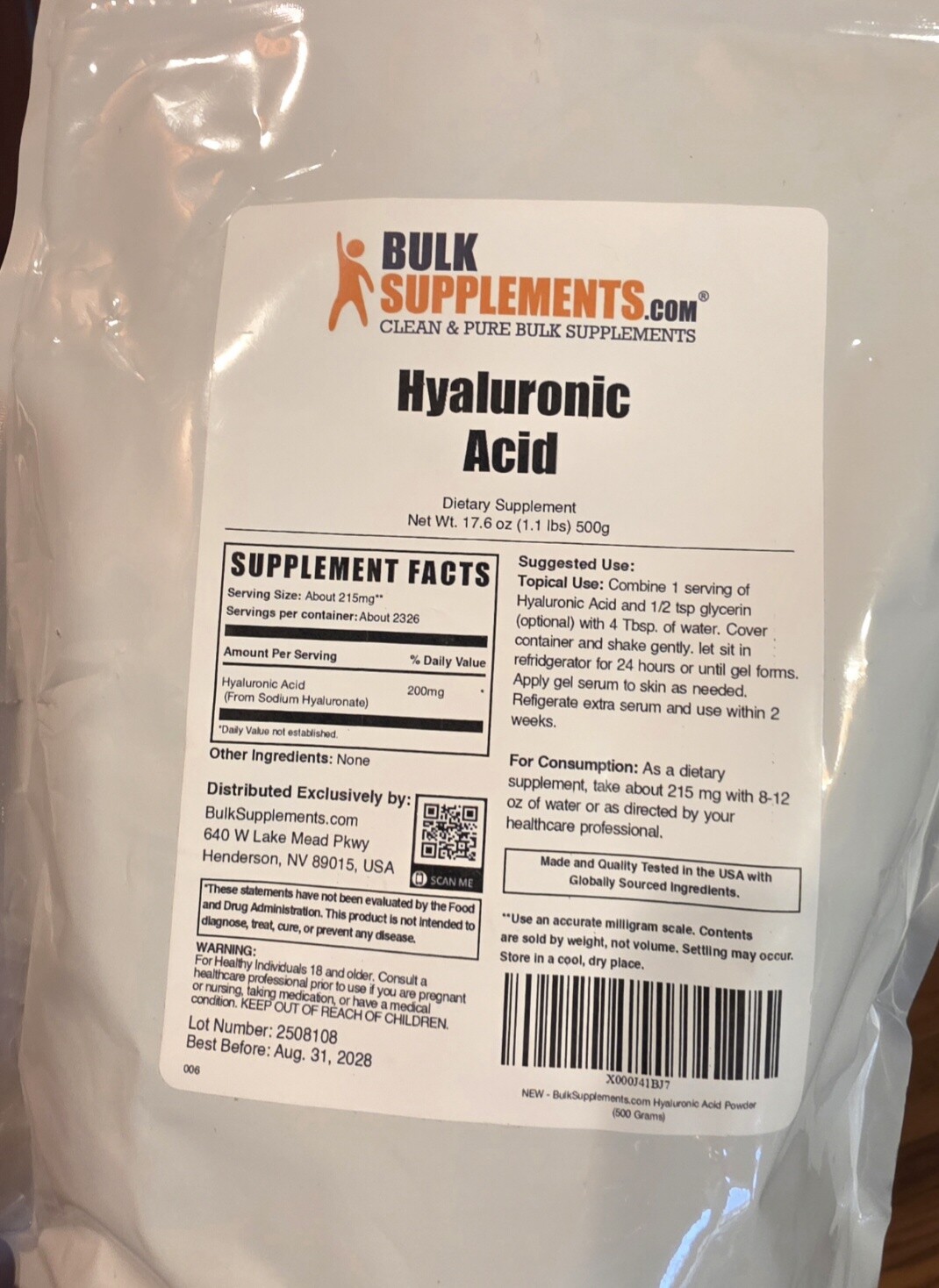
On BulkSupplements, you just need to bring up hyaluronic acid powdr and then scroll down to Questions
where you’ll find “The Molecular weight for the most recent material received is 1.07 Million Daltons.”
In 2022 it was 1.39 million. I take 400 mg a day, which I put into 000 capsules, at a cost of $2 per month.
On BulkSupplements, you just need to bring up hyaluronic acid powder and then scroll down to Questions
where you’ll find “The Molecular weight for the most recent material received is 1.07 Million Daltons.”
In 2022 it was 1.39 million. I take 400 mg a day, which I put into 000 capsules, at a cost of $2 per month. PureBulk also has it, said to be 1.1 million daltons on their COA
Our Hyaluronic Acid is considered to be food grade and has no extra fillers of any kind and has a super high molecular weight (1.0 - 1.5 Million Daltons).
It’s fine in an EVOO shot. It doesn’t turn into a gel and stays the same consistency as the EVOO. I also add my NMN, black pepper and turmeric to it as these are all positively affected by being taken with a fat source such as EVOO.