Our columnist took part in a longevity fitness challenge to find out how well he’s aging and learn how people are turning back the clock
I’d signed up for a longevity fitness competition to find out how well I was aging. And all signs—general tiredness, a sore forearm, crow’s feet—were pointing old.
A few steps into the first event, an obstacle course, I whacked my knee on a large wooden box we were supposed to climb over. Later, I wobbled across a balance beam while holding a large tube of water, as poised as a town drunk. Nearby, a shirtless jock dashed across a net made of ropes and grannies dangled from high bars. It was like being on one of those Japanese game shows where bizarre stunts are played for laughs—only at the end you’re told how close you are to death.
This was a trial run of the Super Age Games, a contest that gamifies our culture’s growing obsession with extending well-being deep into our silver years. Its challenges measure cognitive and physical fitness to deliver a score in the form of an age. Everyone wants to score younger than they really are.
It’s a friendly competition—think CrossFit with mind puzzles and group hugs. Or, as founder David Stewart put it, a “joyous celebration” as opposed to “tech bros getting weird in their basement.”A “superager” is someone over 80 with the mental and physical abilities of a much younger person. Scientists can’t say with certainty why this happens to some people and not others. Thriving in old age has long been associated with the world’s so-called Blue Zones, where Italian and Greek grandmas laugh into their 100s thanks to rich social lives, balanced Mediterranean diets and lots of sun and red wine. By contrast, in America today, billionaires treat longevity like a full-time job, locking themselves in cryotherapy chambers, getting regular peptide jabs and making the pursuit of living forever look thoroughly joyless. Even those of us with just a passing interest in wellness wear devices that track sleep, exercise and cardiovascular age.
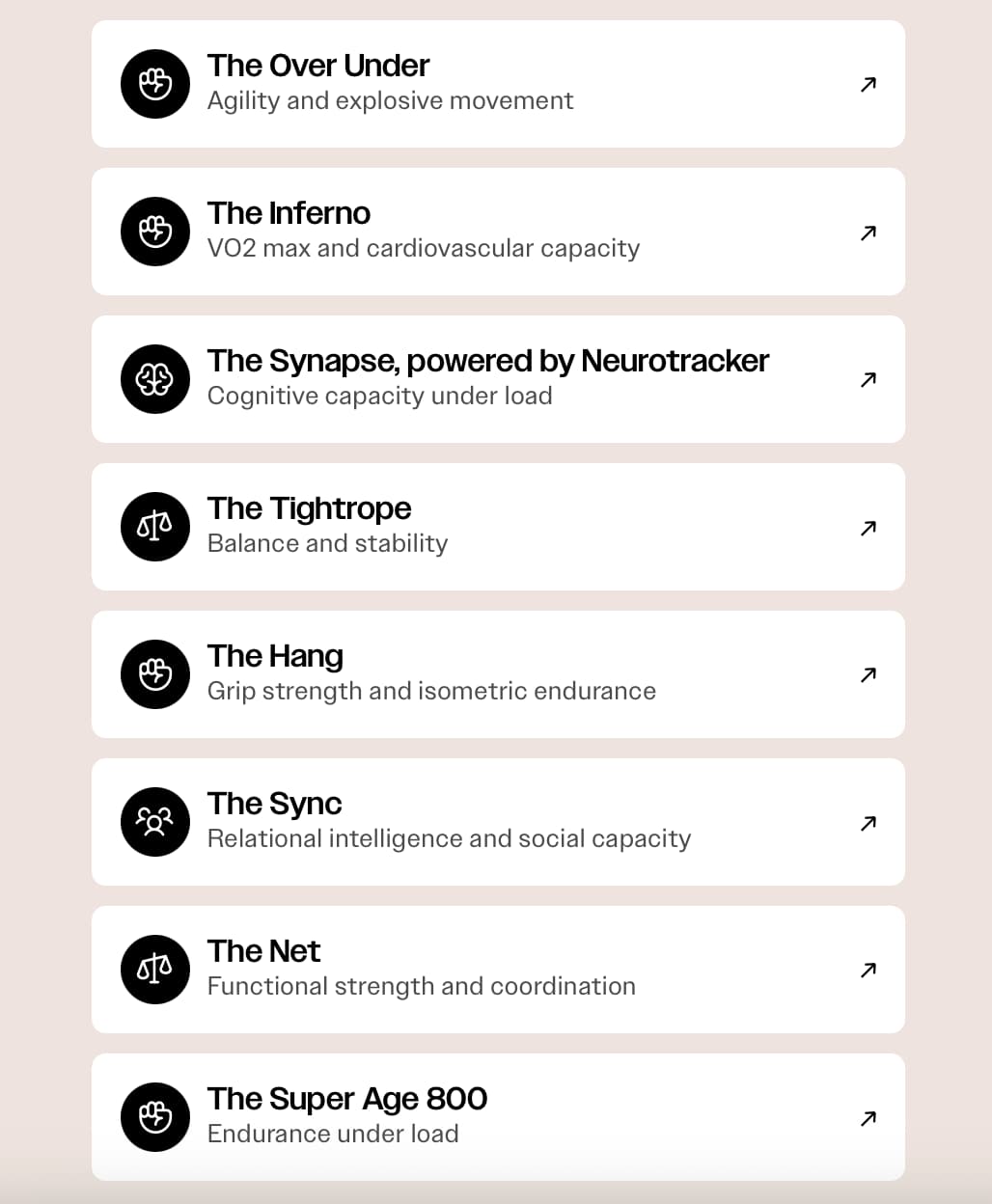
The Super Age Games, created by the New York media and longevity brand Super Age in partnership with the Buck Institute for Research on Aging, features eight activities. They test key healthy-aging markers including aerobic fitness, agility, relational skills and grip strength. Afterward, each participant receives a “Super Age,” a number based on their performance that day and their self-reported lifestyle habits. Those data points are scored against other competitors of the same gender and age group, and against the fitness and lifestyle habits of the average American man and woman.
“We’re offering an evidence-based approximation, not a number to plan an estate around,” said Stewart, who’s 67 but could easily pass for early 50s, and has the poise of a motivational speaker. “So many people feel that aging is some grim reality, we have to just suck it up,” he said, “but you can have an enormous impact on these things.”
From what we know currently, the most important trait shared by superagers is a strong sense of social connectivity and family, said Dr. Douglas E. Vaughan, professor of medicine and director of the Potocsnak Longevity Institute at Northwestern University. The Games’ festive, in-person format is designed to tap in to that sociability, Stewart said.
Read the full story: ‘Superagers’ Are Living—and Thriving—Long Past 80. Could I Be One of Them? (WSJ)