Executive Summary
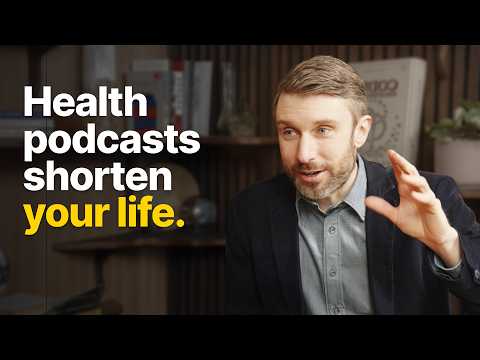
This is a conversation between Andrew Steele (physicist-turned-aging-biologist, author of Ageless) and the Free Radicals podcast hosts, and it’s fundamentally different from most longevity content — it’s not about interventions at all. It’s about theory of change: how does the longevity field actually get funded, taken seriously by policymakers, and moved from niche interest to mainstream medical practice. Steele argues the field’s biggest problem isn’t scientific, it’s a communications and political-economy problem.
Steele’s core framing is the geroscience hypothesis: aging is a single underlying process driving most major diseases, and treating it directly would be more efficient than treating each disease separately. He explicitly argues against the supplement/protocol-optimization framing that dominates longevity media, calling it a distraction — he thinks time spent on personal biohacking minutiae has a worse return on lifespan than political advocacy (writing to elected representatives, donating to policy organizations). He’s now running a nonprofit, the Longevity Initiative, focused on two things: producing authoritative policy reports and data (e.g., a rigorously sourced number for “how many people die of aging-related causes”), and building a “longevity library” — a trustworthy reference site analogous to Our World in Data or the Mayo Clinic, but for longevity claims.
Much of the conversation is about the mechanics of influence: how tiny numbers of letters to politicians can shift perceived public opinion, why pharma and AI labs are structurally underinvested in aging-specific data and research despite having incentives to care, and why metrics for this kind of advocacy work (media mentions, “Overton window” shifts) are inherently fuzzier than research metrics. Steele is optimistic but not fatalistic — his argument for hope rests on an iterative model (each incremental treatment buys time for the next one) rather than a single breakthrough cure.
Nothing in this transcript recommends a supplement, drug, device, or protocol for personal use — Steele explicitly critiques that genre of content, including implicitly critiquing outlets like this one. Given that, several of the standard sections below (built for intervention-focused content) don’t apply and I’ve noted that rather than forcing content into them.
Actionable Insights
None. The video contains no supplement, drug, dosing, fasting, or device recommendations — this is by design; Steele’s central argument is that protocol-optimization content (the kind that would populate this section) is often a lower-leverage use of time than political/financial advocacy. The closest thing to an “action” in the transcript is non-medical: writing to elected representatives about aging research funding, or donating to longevity-focused policy organizations. I’m not rating that with the risk/evidence framework below since it isn’t a health intervention.
Safety Concerns
Not applicable — no interventions, compounds, or protocols are discussed.
Signals Worth Watching
Data infrastructure for aging as an AI-training bottleneck. Steele draws an analogy to AlphaFold and the Protein Data Bank: AlphaFold only worked because of decades of publicly funded structural biology data sitting in a shared database. He argues aging biology lacks an equivalent, and that assembling one (he ballparks needing “tens to low hundreds of billions of dollars” of data collection, though he’s explicit this is a rough, undefended estimate, not a costed plan) is a prerequisite for AI to meaningfully accelerate the field. Compared to existing efforts: this is analogous to what UK Biobank or All of Us are doing at a national level, but Steele is describing something broader and cross-institutional that doesn’t fully exist yet for aging specifically. What would need to happen: coordinated funding commitment (public, philanthropic, or pooled-pharma) plus agreement on data standards — none of which he describes as underway, just as a gap he’s flagging.
Longitudinal human aging data as a genuinely rate-limited resource. Steele’s point that you “cannot parallelize” collecting one person’s aging trajectory over time (you can’t buy more GPUs to make a longitudinal cohort study finish faster) is a real methodological constraint, not just rhetoric — it’s the standard argument for why cohort studies like UK Biobank, the Framingham Heart Study, or NHANES take decades to mature regardless of funding levels. This isn’t a new finding from the video, but it’s a correct piece of research-methodology reasoning worth flagging as a real bottleneck independent of the AI-timeline question.
Deep Dive
There isn’t much mechanistic content to go deep on here — the transcript is a policy/communications discussion, not a science-heavy one. Two points worth engaging at a technical level:
Steele’s comment that GLP-1 agonists might be “acting on fundamental aging mechanisms” is left deliberately vague in the transcript, and he acknowledges the ambiguity himself (aging as a “broad massive web,” partly metabolic, partly inflammatory). Not stated in the transcript, but worth noting as context: GLP-1 drugs (semaglutide, tirzepatide) act via incretin-receptor agonism, primarily affecting appetite regulation, insulin secretion, and gastric emptying; downstream effects on inflammation and metabolic dysfunction are plausible secondary consequences of weight loss and improved glycemic control rather than a demonstrated direct action on canonical hallmarks-of-aging pathways (senescence, mitochondrial dysfunction, epigenetic drift, etc.). Steele’s framing of them as a possible “first-generation anti-aging intervention” is speculative and he flags it as such himself — there’s no cited trial data here showing GLP-1 agonists modulate biological age markers independent of weight/glycemic effects.
On the “epigenetic reprogramming” reference: Steele name-checks it as a potential “home run” candidate without elaborating on mechanism. Not stated in the transcript — for context, this typically refers to partial cellular reprogramming (e.g., Yamanaka-factor-based approaches, OSK/OSKM) aimed at reversing epigenetic age markers without fully de-differentiating cells into pluripotent stem cells, which would be tumorigenic. This is an active area (Altos Labs, Retro Biosciences, and academic labs including Sinclair’s) but remains preclinical/early-clinical in terms of human safety and efficacy data; Steele’s own hedge (“I think that’s actually quite unlikely” to be a full solution) is consistent with the field’s current epistemic status.
Claims Requiring Scrutiny
“100,000 people (or 110,000) die of aging-related causes per day.” Steele is unusually transparent about this one: he states outright there is no peer-reviewed published source for this number, that he calculated it himself years ago in R (posted on his GitHub, not peer-reviewed), and that no one has publicly disputed it in five years. I did not independently locate a peer-reviewed paper establishing this figure — this matches his own account that it’s an uncited, self-generated estimate rather than an established statistic. Treat it as a plausible order-of-magnitude figure with a known, disclosed provenance gap, not a validated scientific consensus number.
US spending “~$1 per person per year” on aging biology vs. “$15–20 per person per year” on cancer research. Steele presents these as approximate, and he explicitly says the US is “the only country in the world” he can cite comparable numbers for, via the National Institute on Aging. I did not verify the exact current NIA aging-specific research budget against US population to confirm the per-capita figure — this is presented by Steele as an informal calculation, not a cited government statistic, so treat it as directionally indicative rather than a precise, sourced number.
UK cancer research spend of “£280 per person per year.” Steele flags this himself as data that’s “a bit out of date” but claims it “doesn’t change very much.” I did not locate the original source in this transcript (no citation given), so this remains unverified from what’s provided — worth checking against Cancer Research UK’s published figures if it matters for your own use.
EU aging research funding as “a few million euros” out of a multi-billion-euro Horizon program. This is relayed secondhand from a journalist’s anecdote (an EU staffer allegedly did a keyword search through Horizon grants), not from a systematic audit. It’s a plausible directional claim (EU has no NIA-equivalent dedicated aging institute) but the specific figure is hearsay-of-hearsay in the transcript and unverifiable from what’s given.
Protein Data Bank replacement cost (“$20–25 billion”). Steele cites “a paper that came out a few years ago” without naming it. I did not verify this figure against a specific paper — it’s presented as a real citable claim but the source isn’t named in the transcript, so it’s unverified from this conversation alone.
Discussion Prompts
If political advocacy for aging research is genuinely higher-leverage than personal protocol optimization, as Steele argues, what would it actually look like for a longevity media outlet to measure and optimize for that instead of watch-time or subscriber growth — and would that ever be commercially sustainable as a business model rather than a nonprofit?
Steele frames pharma, AI labs, life insurers, and government as separate stakeholders each with partial incentives to fund aging research, but notes none of them are currently doing the “obvious” thing. Is the missing piece here actually information (nobody’s run the numbers) or is it a coordination/first-mover problem where each actor is individually rational to wait for someone else to pay?
What would it take for a media brand built on primary literature and epistemic rigor to also become a credible policy-advocacy voice — are those two credibility games (scientific-audience trust vs. political-audience trust) actually compatible, or does optimizing for one erode the other?