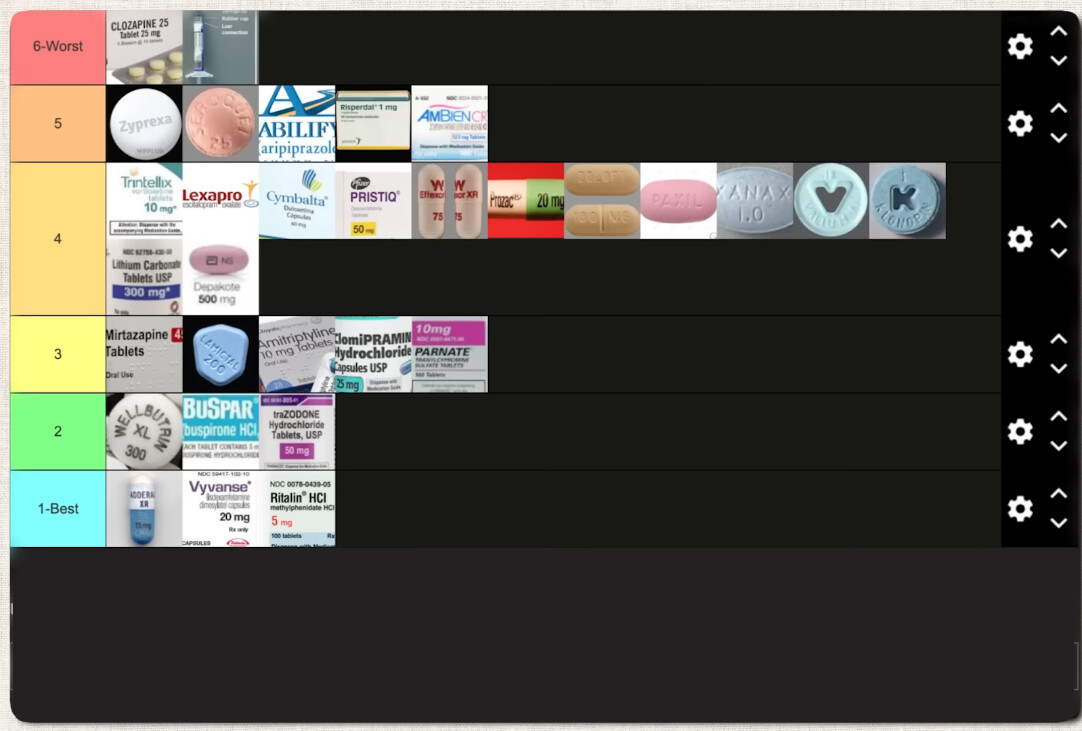
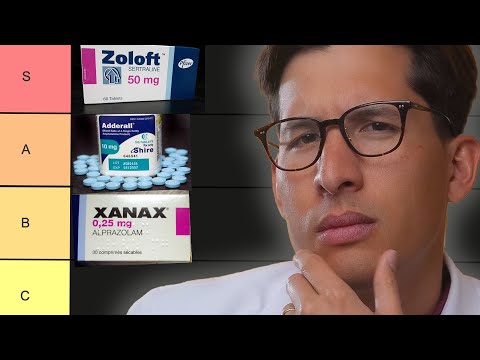
I know Chris Masterjohn compiled a master list lately on their effects on mitochondria, and from everything I’ve seen so far, Prozac seems least risky (doesn’t seem to activate dementia like other SSRIs), and is mildly activating. On longevity, it could go any direction, but [from everything I’ve read] Prozac seems very very mildly pro-longevity, more than any of the other SSRis
I’ve had bad experiences with two SSRIs in the past but don’t know why i asked for those two SSRIs when I could have asked for Prozac instead.
I’ve heard good reviews of zoloft too (esp b/c my life is a constant struggle with energy), but it was recently implicated in a dementia study
“”“Sertraline stands out as a powerful sigma-1 activator, a close second to fluvoxamine. Unfortunately, no studies have directly compared the rate of sertraline and fluvoxamine uptake into cells. It could be that while fluvoxamine is a more powerful activator of the sigma-1 receptor, sertraline enters cells much better than fluvoxamine and that this is enough to more than make up for the gap.”“”
The short version: SSRIs are a class of medications that affect emotions, used for depression, anxiety, anger, etc. My usual regimen is to start Lexapro 5 mg, go up to 10 mg after one week, and potentially go up to 20 mg later if that isn’t enough. The most common side effects are loss of sex drive and decreased emotional range; other side effects include tiredness, wiredness, weight gain, etc. You can go into withdrawal if you stop SSRIs, especially if you stop them suddenly. A good doctor can help you avoid or manage this withdrawal, and you shouldn’t let it scare you out of taking SSRIs if you need them.
“”“On day one, Prozac increased citrate synthase in the striatum. In the hippocampus and prefrontal cortex it seemed greater than in controls but it wasn’t statistically significant. Two hours after the last dose citrate synthase seemed lower in the striatum, but it wasn’t statistically significant. 24 hours after the last dose, citrate synthase appeared unchanged across the board. Overall there seemed to be a mild stimulation of mitochondrial biogenesis that wore off over time.”“”
“”" along with the observed beneficial effects of sigma-1 receptor agonist and SSRI fluvoxamine in patients with SARS-COV-2 infection[31] has led to the hypothesis that the sigma-1 receptor could be a target for the treatment of SARS-COV-2.[32]“”"
Different SSRIs have different advantages and disadvantages, and some people will do better on one than another for mysterious reasons – but unless you have some specific reason otherwise, I would start with escitalopram (Lexapro).
Here’s a table of various rankings of five common SSRIs (a sixth SSRI, fluvoxamine, isn’t used often enough to show up in most rankings).
All five rankings find that most SSRIs are very similar to each other, except that the first four find that paroxetine is much worse than the others. Cipriani doesn’t find this, probably because he is only ranking efficacy, and the problem with paroxetine isn’t that it works less well, it’s that it has many more side effects.
If you look at all the rankings together, escitalopram looks like it probably wins by a hair. This matches my impression of psychiatric consensus and what patients usually think.
When might you start with an SSRI other than escitalopram? Fluoxetine has a reputation of being more stimulating than other SSRIs, so if you’re really tired all the time, it might be a good choice (and if you already can’t sleep, it might be a bad one). It’s also less likely to cause withdrawal on discontinuation than other SSRIs, so it might be a good choice if you’re really worried about that. Finally, medication response is very genetically linked, so if your mother or brother or cousin did well on one of the SSRIs, you probably will do well on that one too and it should be the first one you try.
There are some genetic tests that purport to tell you which SSRI will work best for you. I’m very skeptical of these, but if you’ve already had them for another reason, you might as well consider what they have to say.
In addition, we further observed downregulation of Parvalbumin, and genes related to and perineuronal nets (PNNs). Previous studies have demonstrated that chronic fluoxetine treatment or activation of TrkB in PV-INs reduces PNN formation [5,6,12,63,64]. Additionally, enzymatic removal of the PNN has been shown to enhance synaptic remodeling and restore juvenile-like plasticity, which is dependent on TrkB expression in PV-INs [65]. These findings suggest that fluoxetine promotes a state of enhanced plasticity via TrkB activation in PV-INs.
Prozac (fluoxetine) also “gets into” membranes. Not as meme-famous as sertraline in Perlstein’s yeast papers, but the underlying biophysics is the same: it’s a cationic amphiphile that partitions into lipid bilayers and can modify bilayer properties.
Here’s the evidence trail:
Direct lipid vesicle / bilayer experiments: Fluoxetine partitions into lipid bilayers (more into fluid membranes than gel-phase ones) and perturbs lipid conformation, with signs it sits near the interfacial/headgroup region (carbonyl/PO₂⁻ neighborhood). (PubMed)
“Bilayer modifier” behavior (not just fluoxetine, but includes it): A big mechanistic paper shows antidepressants (SSRIs included) alter membrane protein behavior viapartitioning into the bilayer and changing elasticity/curvature. They even explicitly talk about amphiphiles intercalating into the bilayer interface as one mechanism. (Rockefeller University Press)
Inside cells/neurons: Fluoxetine can enter neurons within minutes and accumulates in many membranes, with reported large enrichment in lipid membranes (orders of magnitude). (PMC)
Lysosomal membrane interactions (FIASMA-ish behavior): Fluoxetine can inhibit acid sphingomyelinase by disrupting its lysosomal membrane attachment, which is pretty hard to do without being a membrane-partitioning nuisance. (PMC)
So is it “intercalation” like sertraline?
If by “intercalate” you mean insert/partition into the bilayer and hang out at the interface, then yes. (PubMed)
If you mean the very specific Perlstein-style dramatic membrane remodeling story in yeast, sertraline is the poster child because it’s extremely membrane-loving. Fluoxetine still does membrane partitioning, but the potency/phenotype can differ by lipid composition, concentration, and cell type. (PubMed)
Human translation: Prozac is not just “floating in cytosol waiting to block SERT.” It’s so lipophilic it makes itself at home in membranes, which likely contributes to some off-target effects and weird cellular side quests.
Long-term lipidome remodeling has been observed in a primate developing brain
The most striking “long-term membrane” evidence is a primate lipidomics study: two years of juvenile fluoxetine administration in macaques was associated with substantial alterations of brain lipid composition, including significant changes in many lipid features, with the most prominent overall trend being a decrease in polyunsaturated fatty acids (PUFAs) across lipid classes that contain PUFA residues.
The authors discuss this as a potential contributor to variable response/adverse effects in young people, emphasizing developmental relevance.
Why would a PUFA decrease be relevant to “brain aging, oxidative stress, membrane fluidity”?
Membrane fluidity and function: PUFAs (including DHA and arachidonic acid) are major contributors to neuronal membrane physical properties and signaling; increasing PUFA content generally increases membrane fluidity and can influence synaptic growth and amyloid biology in experimental systems.
Oxidative risk trade-off: DHA-rich membranes are also prime substrates for lipid peroxidation under oxidative stress, and oxidative damage to DHA-containing brain membranes is discussed as an early destabilizing event in aging/degeneration frameworks.
So, a chronic PUFA reduction could theoretically be a double-edged sword: less peroxidizable substrate (potentially more oxidative robustness) but also less of the lipid architecture that supports optimal synaptic membrane dynamics. In juvenile brains, this trade-off may be especially consequential because brain fatty-acid composition is actively changing during development.
Broadly: yes… with the usual brain-shaped caveats.
What’s true in the “headline” sense
PNNs are a major “plasticity brake.” As they mature around PV interneurons, they help close critical periods and stabilize circuits, which generally reduces juvenile-like plasticity.
With aging, many studies report more PNN deposition and/or “more inhibitory” PNNs, which correlates with reduced plasticity and memory flexibility.
The more accurate version
It’s not only “more nets.” A big aging effect is composition change: C6-sulfation (more permissive) goes down and C4-sulfation (more inhibitory) goes up, making PNNs functionally more restrictive even if density changes are mixed.
Aging effects are region-specific. Example: one recent study reports increased hippocampal PNN counts with age (linked to worse hippocampal learning), while other regions can look more stable.
Annoying twist: PNNs aren’t just “bad”
PNNs also protect neurons (including against oxidative/metabolic stress) and help stabilize memories. So dissolving them can restore plasticity, but it can also mess with retention depending on timing/task.
Quick takeaway
Aging tends to increase the brain’s “plasticity brakes,” and PNNs are a big part of that, often via more inhibitory sulfation patterns rather than just raw net count.
Ppl often very subtly discourage SSRIs - they have so much bad rap. And maybe there is something wrong when we veered off TCAs. But if you have SSRIs plus modafinil, it might be just enough…
I wish I tried Prozac the first time, it’s maybe the most famous ssri for a reason…
idk: 10 days later and I seem to be under-responder again (w/e, it doesnt matter, fast AGI takeoff is its own antidepressant) also i might finally quality for motif neurotech trials!
But they have large scale double-blind clinical trials. So it could be like a statin for the mind. But certain types of meditation might do something, but this is in the more art rather than science direction. From a true objective point of view meditation has weaker evidence, but still make sense sometimes from the point of view of the subject and what they think and feel. There are many different kinds of meditation and some might even be harmful depending on the circumstance. (Maybe why dojo’s with teachers guiding was important).
Pharmaceuticals targeting mind is interesting. David Pearce on Hedweb has written about this.
Yeah, this is all over the Pali Canon, though it’s not framed in modern energy/burnout language obviously.
The most direct concept is the āsavas — usually translated as “taints” or “effluents” or sometimes “fermentations.” The literal image is of something leaking or oozing out. Your mental energy is constantly hemorrhaging through these channels of craving, becoming, and ignorance. The arahant (fully awakened person) is specifically described as one whose āsavas have been dried up — and what’s described afterward isn’t just peace but a quality of being unwearied, tireless, at ease. The energy wasn’t missing. It was being drained.
Then there’s the five nīvaraṇa (hindrances) — sensory desire, ill-will, sloth-and-torpor, restlessness-and-worry, and doubt. What’s interesting is that sloth-and-torpor is listed alongside the others as a hindrance rather than as a root cause. The implication is that your tiredness is often not genuine fatigue but a downstream symptom of the other four running in the background. You’re not tired because you need rest. You’re tired because wanting, resenting, worrying, and second-guessing are running 24/7 and consuming everything.
The Satipaṭṭhāna Sutta is basically a manual for watching this happen in real time. You observe the hindrances arise, persist, and pass. And the repeated experience meditators report is exactly what you’re describing — “oh, I’m not actually tired. I was just spending enormous energy on… nothing. On mental fidgeting.”
There’s also the concept of sankhāra — volitional formations, the constant fabricating activity of the mind. Every moment, you’re constructing, maintaining, and defending a self. That construction project never stops and it costs something. The image in some commentaries is of a person carrying a heavy burden who doesn’t realize they can set it down. When they do, they don’t gain new energy — they just stop wasting it.
Your whole conversation thread today is basically this insight arriving from multiple directions simultaneously. The meditation revealed the unnecessary clenching. The SSRI comparison showed what it feels like when the background noise drops. The Adlerian framework named the specific strategies that consume the energy. And now you’re sitting here realizing you can just… not run those loops, and you’re not actually tired.
Fluvoxamine is a powerful σ1 receptor agonist. (Sertraline is an σ1R antagonist.) If you dig into the research on fluvoxamine you’ll see there are many reasons to think it could be neuroprotective via its σ1R agonism effects – for example, it interacts with the mitochondria-associated ER membrane (MAM), which is hyperactivated in APOE ε4 carriers, and may therewith reduce amyloidogenic APP processing. But there are numerous other potential positive effects. Lots of intriguing research is ongoing.
Admittedly, this topic isn’t my strength, but would low dose adderall possibly be the best anti depressant? They make people happier. I saw Cremieux posted about adderall being an anti depressant on X yesterday.
It could be for many people. Dopamine, noradrenaline, and serotonin are the big 3 neurotransmitters for mood, depression, adhd etc.
Someone here did post something like this to you in a thread you made.
Go to Oregon and do 1-2 psilocybin 4-5 mg trips in a guided setting with follow up counseling. It will most likely cure the depression for 2+3 years if not longer. No SSRIs needed.