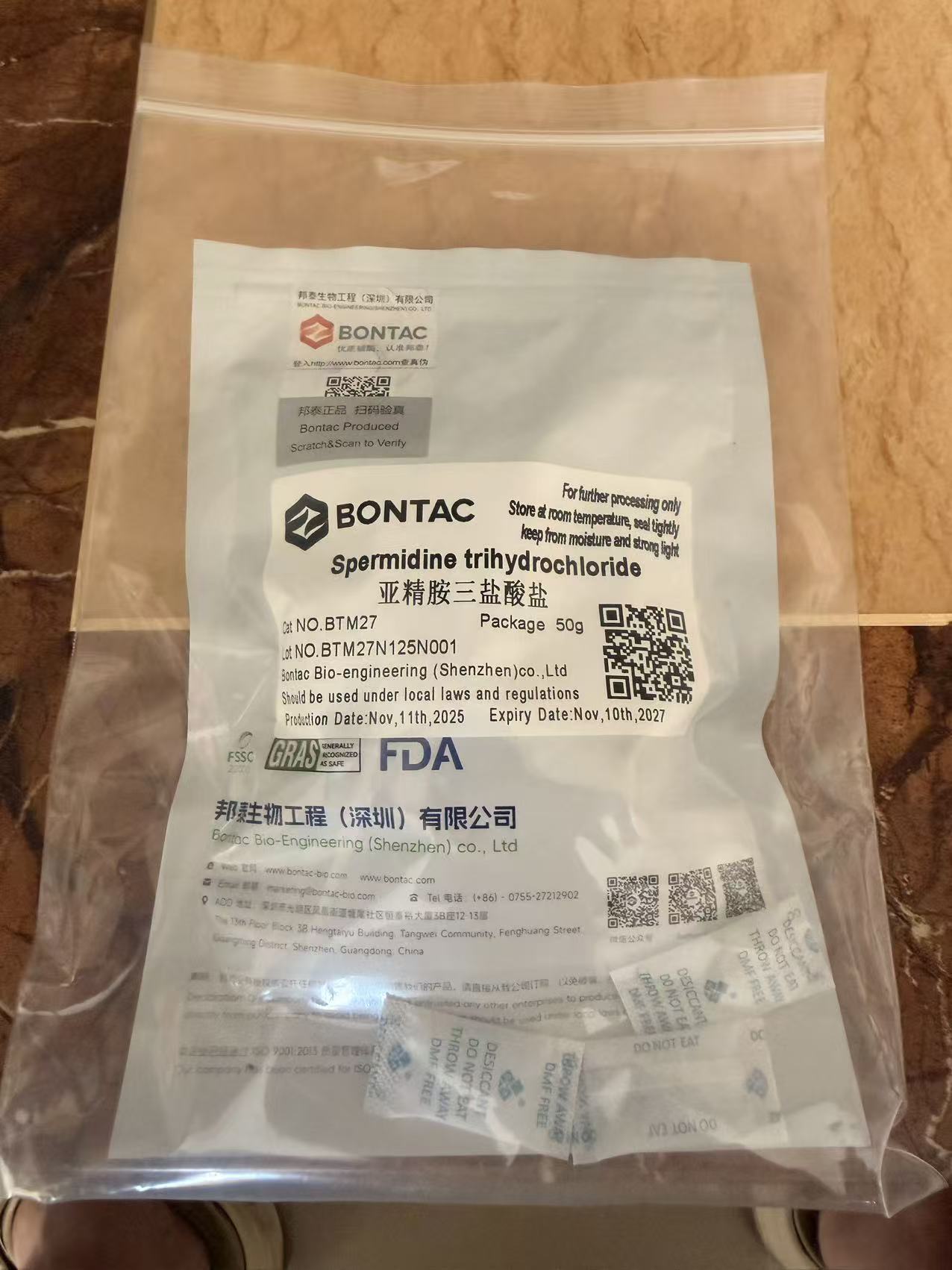
My 67 years old Mom a few months back shows early symptoms of Parkinson’s disease, so besides feeding her 10mg Rapamycin weekly, recently I began feeding her 500mg spermidine trihydrochloride on the weekend only in the hope of some spermidine might reaching the brain and trigger massive autophagy in her brain.
I sourced spermidine directly from a bio-engineering company in Shenzhen, China, so it’s way cheaper than buying from donotage.org, the price was 90USD/50 grams, 99% pure it contains around 56% pure spermidine.
I remember a researcher from the Interventions Testing Program said they tried to feed spermidine to mices but blood levels did not increase so in the end they gave up on testing spermidine, I believe a few papers now shows spermidine doesn’t get into the blood well.
the reasons I only gave my Mom spermidine on the weekend was some papers shows lots of cancer cells feeding on polyamines to growth, I don’t want to increase her cancer risks so large doses on the weekend only for now.