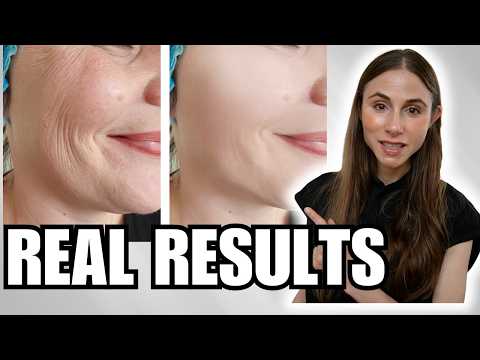
Analysis: Sculptra, CO2 Laser, & Red Light Therapy Combination
I. Executive Summary
The transcript outlines a “Layered Anti-Aging” strategy that combines Poly-L-Lactic Acid (PLLA/Sculptra), CO2 Laser Resurfacing, and Red Light Therapy (RLT). The core thesis is that aging is multifactorial—affecting bone, fat pads, collagen, and surface texture—requiring a multi-modal approach rather than a single “silver bullet.”
The analyst assessment verifies this logical framework but flags significant safety constraints. While the individual efficacies of PLLA (structural volume) and CO2 (surface remodeling) are supported by high-level evidence, the “synergy” claim is primarily clinical theoretical consensus rather than established by a specific triple-modality RCT. A critical safety warning exists for CO2 lasers in darker skin tones (Fitzpatrick IV-VI) due to high risks of post-inflammatory hyperpigmentation (PIH). The effectiveness of home RLT devices is strictly dose-dependent, often failing due to user inconsistency rather than mechanism failure.
II. Insight Bullets
- The “Spot Fill” Fallacy: Sculptra (PLLA) is chemically incapable of immediate “spot filling” (like HA fillers). It functions solely as a “seed” for the host’s immune system to build Type I collagen over 6–24 months.
- Controlled Injury vs. Stimulation: The protocol distinguishes between ablative injury (CO2 laser vaporizing tissue to force healing) and biostimulation (PLLA triggering a subclinical inflammatory response).
- The Fitzpatrick Risk: CO2 lasers carry a non-trivial risk of permanent dyschromia (pigment damage) in non-white skin. Pre-treatment with tyrosinase inhibitors (e.g., hydroquinone) is often clinically required but omitted in general “influencer” advice.
- Fractional Safety: Fractional CO2 allows for faster healing by leaving “bridges” of intact skin, making it the preferred standard over fully ablative lasers, which are now largely obsolete for cosmetic use due to infection/scarring risks.
- Mitochondrial Maintenance: RLT is positioned not as a corrective tool for deep damage but as a metabolic support system (increasing ATP via cytochrome c oxidase) to accelerate healing from the other two aggressive trauma-based treatments.
- Consistency Gate: Home RLT efficacy data is often diluted by poor adherence. The biological threshold for photobiomodulation requires consistent frequency that most consumers fail to maintain.
- Sequence Matters: The biological logic dictates addressing surface texture (Laser) before or staggered from deep volume (Sculptra) to prevent inflammatory overload, though specific sequencing depends on provider preference.
III. Adversarial Claims & Evidence Table
| Claim from Video | Speaker’s Evidence | Scientific Reality (Current Data) | Evidence Grade | Verdict |
|---|---|---|---|---|
| Sculptra builds collagen; is not a filler. | Expert Opinion (Mechanism desc.) | Verified. PLLA particles elicit a foreign body reaction that recruits macrophages/fibroblasts, yielding Type I collagen encapsulation. | Level A (Meta-Analysis) | Strong Support |
| CO2 Laser fixes texture/wrinkles. | Clinical Observation | Verified. Gold standard for photodamage. Vaporization of water in tissue causes collagen contraction and remodeling. | Level A (Systematic Review) | Strong Support |
| Home RLT maintains results. | “Omnilux” brand citation | Plausible but Variable. Efficacy depends heavily on fluence (J/cm2) and wavelength (633/830nm). Home devices are often under-powered compared to clinical units. | Level C (Observational/RCTs) | Plausible / Dose-Dependent |
| Synergy (Doing all 3 yields better results). | Expert Opinion | Theoretical. While individual efficacies are proven, no single RCT exists testing this specific trio concurrently. Clinical logic supports the “layered” approach. | Level E (Expert Consensus) | Plausible |
| CO2 Safety Profile. | “Safe when used appropriately” | Conditional. High risk of Post-Inflammatory Hyperpigmentation (PIH) in Fitzpatrick IV-VI. Requires expert parameter adjustment. | Level B (Safety Data) | Safety Warning |
- Sculptra Mechanism: Fitzgerald et al., 2018
- CO2 Laser Efficacy: Omi & Sato, 2014
- RLT Photobiomodulation: Glass, 2021
IV. Actionable Protocol (Prioritized)
Phase 1: The Foundation (High Confidence Tier)
- Baseline Defense: Strict photoprotection (SPF 50+ w/ Iron Oxide for visible light protection).
- Topical Prep: Retinoid therapy (Tretinoin 0.025-0.05%) for 6+ weeks prior to procedures to prime fibroblast activity and accelerate re-epithelialization.
Phase 2: The Structural Reset (Clinical Tier)
-
Step A: Texture (CO2 Fractional):
-
Target: Epidermal/Dermal junction.
-
Frequency: 1–2 sessions (annual).
-
Constraint: DO NOT perform on tanned skin or active inflammatory conditions. Fitzpatrick IV-VI requires specialized “low density/high pass” settings or non-ablative alternatives (e.g., Erbium).
-
Step B: Volume (Sculptra/PLLA):
-
Target: Deep Dermis/Subcutaneous plane.
-
Timing: Can be performed 4–6 weeks post-laser (once inflammation subsides) or concurrently if targeting different facial zones.
-
Commitment: Series of 3 sessions spaced 6 weeks apart. Rule of thumb: “One vial per decade of life.”
Phase 3: Maintenance (Experimental/Home Tier)
- Red Light Therapy (RLT):
- Specs: Must emit ~633nm (Red) and ~830nm (Near-Infrared).
- Dosage: 10–20 minutes, 3–5x per week.
- Goal: Reduce post-procedure downtime (acute) and maintain mitochondrial efficiency (chronic).
- Red Flag: Discard cheap devices lacking irradiance specs (>40mW/cm2 recommended).
V. Technical Mechanism Breakdown
1. Poly-L-Lactic Acid (Sculptra) → Foreign Body Response
PLLA does not “stimulate” in a vacuum; it irritates. Upon injection, the microparticles trigger a subclinical inflammatory response.
- Cascade: Monocytes differentiate into macrophages → Macrophages attempt to phagocytose PLLA particles but fail due to size → They secrete cytokines (TGF-beta, PDGF) → Recruitment of fibroblasts → Fibroblasts deposit a collagen capsule (initially Type III, remodeling to Type I) around the particles.
- Result: Controlled fibrosis that provides structural lift.
2. CO2 Fractional Photothermolysis
- Chromophore: Water (H2O).
- Mechanism: The 10,600nm wavelength is absorbed by intracellular water, causing rapid heating and vaporization.
- Fractional Aspect: Creates Microscopic Treatment Zones (MTZs)—columns of thermal damage—surrounded by healthy tissue. This triggers a Heat Shock Protein (HSP) response, initiating the wound healing cascade (hemostasis → inflammation → proliferation → remodeling) which tightens the skin matrix.
3. Photobiomodulation (Red Light Therapy)
- Chromophore: Cytochrome c Oxidase (in the mitochondria).
- Mechanism: Photons dissociate Nitric Oxide (NO) from Cytochrome c Oxidase, allowing oxygen to bind more efficiently.
- Result: Increased ATP production and reduced oxidative stress (ROS). This provides the metabolic energy required for the high-demand collagen synthesis triggered by the CO2 and PLLA treatments.