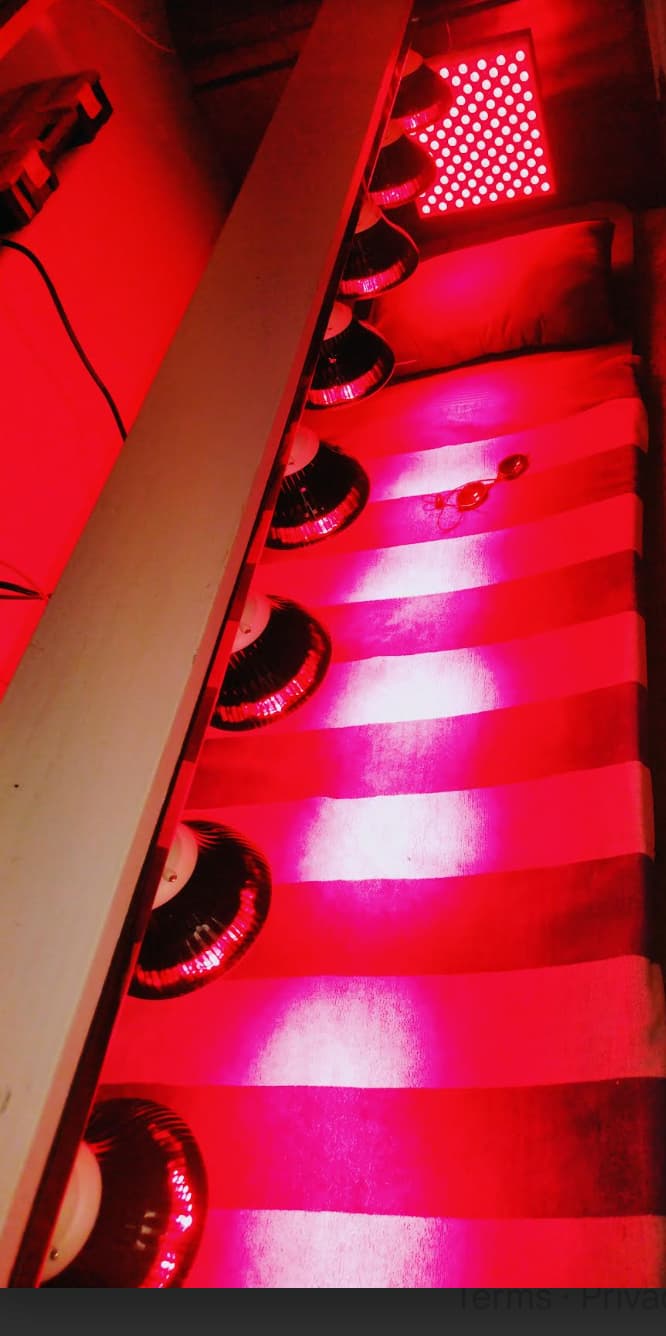
My Red Light came ytd.
I am going to do an experiment over the next 2 months on the above to see if it can help reduce white hair and improve facial skin (fine lines and collagen).
99% chance of failure IMO but will keep everyone posted haha

My Red Light came ytd.
I am going to do an experiment over the next 2 months on the above to see if it can help reduce white hair and improve facial skin (fine lines and collagen).
99% chance of failure IMO but will keep everyone posted haha
First use:
Rotated around my face for 4mins each side, 8 mins in total. Ended on my legs for 3 mins.
While red light therapy has benefits, I use it myself; IMO, it possibly might stimulate some hair growth but is unlikely to reduce white hair.
Please do what @John_Hemming did and take a good photo of your scalp, controlling the lighting, etc. so that you can repeat the photo. Because you are half my age, maybe it will work for you. Good luck.
From looking at the mice in the studies, I would say that rapamycin is more to delay growing gray.
From my experience it helps with skin. Nothing dramatic but it helps. For hair, it’s more likely to get more hairs sprouting than to restore their pigment.
Alas ----------------------- 
could it be that red light is indeed making my brain more active?
so i am doing alternate days now.
but it does seem to make my thoughts race and my head spin faster
… 10 chars
Back on and off on red light. Interesting stuff about red light below.
I now am a believer that the science is solid. So we are looking at maybe 25% boost in mitochondria atp.
It seems to be really good for the brain also.
Red light therapy (specifically 670 nm and near-infrared) has been shown to significantly improve mitochondrial function, particularly by increasing adenosine triphosphate (ATP) production by 10–30% or more in aged or compromised cells.
Key findings regarding percentage improvements in mitochondrial function and related metrics include:
Mitochondrial & Cellular Performance Improvements
Mitochondrial Efficiency: Indicators of mitochondrial efficiency improved by 10–20%, with markers for mitochondrial reserve capacity increasing by 15–30%.
ATP Production: Studies on aged mice (7-12 months) revealed significant improvements in retinal function of approximately 20–30%. Another study noted ATP concentrations were ~80% greater in 670 nm exposed animals compared with controls.
Mitochondrial Mass: Photobiomodulation can increase mitochondrial mass by up to 87% in certain models, specifically in studies regarding biogenesis.
Metabolic Efficiency: Studies showed a 10–20% reduction in markers of mitochondrial energy waste.
Glucose Regulation: A 15-minute exposure to 670 nm red light reduced post-consumption blood glucose spikes by 27.7%.
Vision & Age-Related Improvements (670 nm)
Color Contrast Sensitivity: In humans over 35, a single 3-minute exposure to 670 nm light in the morning improved color contrast vision (Tritan axis) by an average of 17%, with some improvements sustained at 10% one week later.
Retinal Function: Age-related decline in retinal function showed a significant improvement of roughly 25% after 670 nm treatment.
I never tried using it for hair/skin but I can say that it really helped my complex meniscus tear of my knee. I went to two different ortho’s (one who did an outstanding job on my R. shoulder tears a few yrs ago) and both said they would be happy to do surgery but that I didn’t need it. They said that due to my age (67) and that the tears were in the “white” area, that it couldn’t be repaired; only 'trimmed up." I bought a dual wavelength red light bulb (660&850nm) (that’s looks like a floodlight) and used it every day for about 15-20 mins. My knee felt much better after a few days. Now I can do pretty much everything I used to except I gave up running. But still skip rope, power walk, elliptical, rowing machine and swim laps. and I also weight lift (nautalis). One of them said they didn’t like their pt’s using the leg ext. machine as it put’s too much force on the knee during the initial ext. but if I wanted to use it; to limit the knee to only 30 degrees max angle. so I use both legs to lift the weight, then only go down 30 degrees max.
Mine is a panel about the size of a laptop
It definitely has effects on me, i feel jittery after using it.
I think the key is to rotate the light more, and shine it only at the same spot for 1 min max.
I am doing like max 3 minutes on my head and another 3 minutes partial head partial body now.
Ideally 2 to 3 mins on head, ditto for body and 2 or 3x a week i guess
So far i didnt notice anything with my skin or white hair
And now the NYT weighs in, noting that the color red blends well with the color green, making the world incarnadine.
Celebrities are obsessed. People swear it gives them thicker hair and perfect skin. But what if the biggest effect of red light is stranger than that?

Credit…Joe Lingeman for The New York Times

By Amy X. Wang
March 31, 2026Updated 11:30 a.m. ET
On the third day that I hauled out my dazzling new machine to douse myself in red light, my partner implored me to please, please at least close the door. You know that scene in the horror movie when the murderer guts someone and a tsunami of blood washes across the walls? That’s what it looked like in our little New York City apartment.
I can’t say for certain when red-light therapy entered my awareness, but it must’ve been sometime after the pandemic made domestic fetishists and self-improvement junkies of us all. Instagram’s hype machinists were first to bathe in the bright tomato glow. This practice, they informed everyone, yielded all sorts of nifty benefits — muscle relaxation, wound healing, hair growth, a passport to the land of perfect skin — thanks to the research-proven ability of scarlet wavelengths to jump-start cellular energy production. Doctors recommend red light for pain and inflammation; NASA has used red-light-emitting diodes (a.k.a. LEDs) to speed up photosynthesis in plants and tissue repair in astronauts.
Now, red light is a $444 million market, projected to swell to $658 million by 2032. Consumer contraptions come in various shapes — one of the most popular being a plug-in headpiece seemingly inspired by the hockey mask of Jason Voorhees in “Friday the 13th.” A friend of mine swears that waving a red-light wand on her cheeks has reversed jowl sagging to the point that she’s getting carded at bars again. Another says his red-light veil “obliterated” his lifelong cystic acne and psoriasis. Julianne Moore, Jennifer Aniston, Joe Rogan, Andrew Huberman and LeBron James — they’ve all been known to saturate themselves.
So when the luxury wellness company HigherDOSE released a six-and-a-half-foot red-light mat souped up with 1,000 LEDs a few months ago, I took the opportunity to carpe diode on this maximal measure of crimson. How much could it Benjamin Button me? Would the paper cut on my palm close up, Wolverine-like, before my eyes?
These, it turns out, were not the questions to ask.
The mat retails for $1,119. This comes out to $1.12 per LED. Sprawling on the plastic coating, I spent my first light session trying to prophesy my electricity bill, then thrashing to and fro the way any internet-addled person asked to lie still is wont to do, then finally giving up and pulling my laptop over to catch up on emails, which is the activity I’d normally be doing at that time of day. Because red-light therapy requires repetition for results, I committed to an hour every day of this: reading and writing, brushing my teeth, stretching, whatever, bathed in a ruby halo.
At some point, my partner put his foot down, forcing me to drag the mat to another, much smaller room — where the redness was made ever more intense by silence and white walls. Sitting there in solitary confinement, I had to admit: This was nice. This was what I’d even go so far as to call a very enjoyable experience. The ritualized shine; the swift, theatrical flush from darkness to light; the silent and slightly campy ceremony of sitting down to do dull, ordinary tasks, only now doing them while swaddled in hues between cranberry juice and pan-seared salmon. I started looking forward to the daily burst of pigment with all the anticipatory giddiness of going on a beach vacation.
Except for one thing: I never felt any sort of beachy calm. Rather the opposite. Each morning’s burst of vivid light energized me — made me feel exuberant and bubbly and impulsive and even, at times, a little angry.
It’s not random that stop signs and alarm buttons everywhere are slathered in red, that so many athletic teams don the color or that the term “seeing red” means getting so upset you could behave totally irrationally, maybe even criminally. The color provokes a physiological response. It signals to the brain that there is some sort of EMERGENCY GOING ON!!! — that you should breathe harder and get all worked up and make snap judgments based less on logic than on gut feeling.
TikTok videos tagged “red-light therapy” claim some 70 million views and counting, and the maker of the hockey-mask headgear brags that it has sold 600,000 of those things. Had I become one of hundreds of thousands of people microdosing not beauty but, instead, rage? This was a little worrying. For society, I mean. An increasingly angsty, preternaturally on-edge population — soaking up something that subliminally makes it more prone to violence — is probably the last thing the world needs. And yet, I thought, glancing guiltily in the mirror, this cherry spotlight somehow made my face look so good.
The more time I spent basking in carmine luminescence, the more a kind of demented, solipsistic euphoria washed over me. Who cares about thicker hair or smoother skin? What “wellness”? There is another type of light source that is known to flatter your appearance while altering your mood: It’s called the sun. But red-light therapy doesn’t come with the UV damage — nor is it beholden to the spin of the Earth. At the touch of a button, I was all-powerful. I could summon my own private star for my bidding. And that’s to say nothing of the equally wondrous couple of minutes afterward, each time, when I unplugged the mat and strode out into a world rendered newly lush — suffused, thanks to the afterimage seared into my eyes, with the color green.
“Each morning’s burst of vivid light energized me — made me feel exuberant and bubbly and impulsive and even, at times, a little angry.”
I am now using ~600 watts of 660 nm and 850 nm LEDS. I have never felt anything at any time interval. Maybe my lights aren’t strong enough, but at the distances I use (~ 6" whole body), I would think I would feel something. I believe in red-light therapy because of studies that I have read. But I do attribute most of the hype to the placebo effect. I lay under it like a tanning bed. Sometimes I also listen to the annoying MIT pulses or the less annoying 40 Hz binaural entrainment audio.
Yeah, I feel good after a session, but no more so than I would get from a 20-minute deep relaxation session.
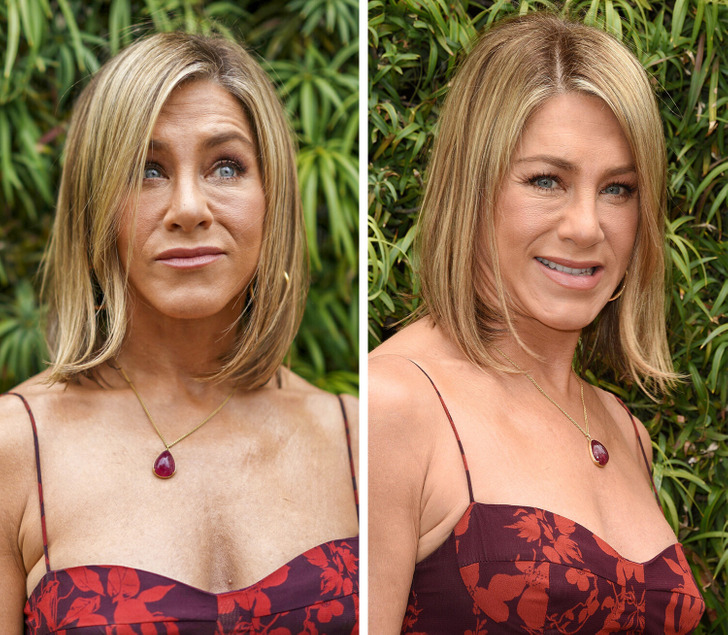
Jennifer anniston, lebron, joe rogan all using red light hehe
Does it work for jenny? Jeeps we are all getting old…i recall her on tv in Friends…
She looks good for 57.
How long can lebron james keep playing in the nba though
Well i mean if shining a red light for like 2 minutes x 3 days a week, or 6 minutes in total weekly can improve ur health so much why not right? Basically the mitochondria is the engine of our cells and anything that keeps the engine running smoothly is good for our health.
850nm at 2 minutes 5 times a week significantly attenuated the age-associated deterioration in heart, vessels, brain, gait and frailty; reduced the prevalence of stroke and heart failure; and improved health span in rats.
PBM was implemented for 2 min, 3 times per week for 16 months in 2-month-old transgenic AD rats.
Results: PBM treatment significantly improved the typical AD pathologies of memory loss, amyloid plaques, tau hyperphosphorylation, neuronal degeneration, spine damage, and synaptic loss. PBM treatment had several mechanistic effects which may explain these beneficial effects, including 1) regulation of glial cell polarization and inhibition of neuroinflammation, 2) preservation of mitochondrial dynamics by regulating fission and fusion proteins, and 3) suppression of oxidative damage to DNA, proteins, and lipids. Furthermore, PBM enhanced recruitment of microglia surrounding amyloid plaques by improving the expression of microglial IL-3Rα and astrocytic IL-3, which implies a potential role of PBM in improving Aβ clearance. Finally, our results implicate neuronal hemoglobin in mediating the neuroprotective effect of PBM, as Hbα knockdown abolished the neuroprotective effect of PBM treatment.
I can’t find it but I saw evidence that a specific frequency of red light therapy can actually make gray hair worse. I think it was the light that you cannot see?
probably sunlight, UV light damages cells
the red light is safe.
so far i dont see any white hair turning black but i will keep an eye out. the hope is the increase in mitochondria density and atp production helps to unstuck the stuck melanocyte stem cells and repigment my white hair in 1 or 2 months later.
but it really does energise my brain or whatever i shine it on though. i feel like i just had a coffee whenever i shine the light on my head for a few minutes. so the increase atp by 30% part is real from what i feel.
also, it seems like my eyes seem sharper, and i have less floaters.
personally i am sticking to shorter durations of 1-2 minute per body part max…i prefer to take things slow and try it out slowly. when i did 10 minutes on my face/head it made me really jittery
A frequency of red light common in red light devices I mean.
I still use my red light panel but I haven’t used the face mask or cap in a while, purely because I find the panel easier to use.
I injured my toe recently and I put the bottom of my foot up against the red light panel and I think it helped speed up recovery a bit.
!!!
I thought I’d share something I think I discovered last night.
I’ve been using my panel several days a week for months now. I’m usually on my stomach or back, but every once in a while I’ll be on my side, and then flip…
For the second time, my cgm shut down and said error. It’s not supposed to happen, but each time it happened it was in the middle of a RLT session…
I didn’t know RTL had such a large effect… or any effect.
It’s only a guess, but I’ve never had any shut down before, and both of these times were when I was on my side during RLT (which the cgm only a few inches away). I assumed it was due to heating the cgm up, but I really don’t know.
I will call them and ask about it.