“Not taking rapa”
Mind blown
I’m now questioning everything in my life.
EDIT: I now see your age and that explains why no rapa 
“Not taking rapa”
Mind blown
I’m now questioning everything in my life.
EDIT: I now see your age and that explains why no rapa
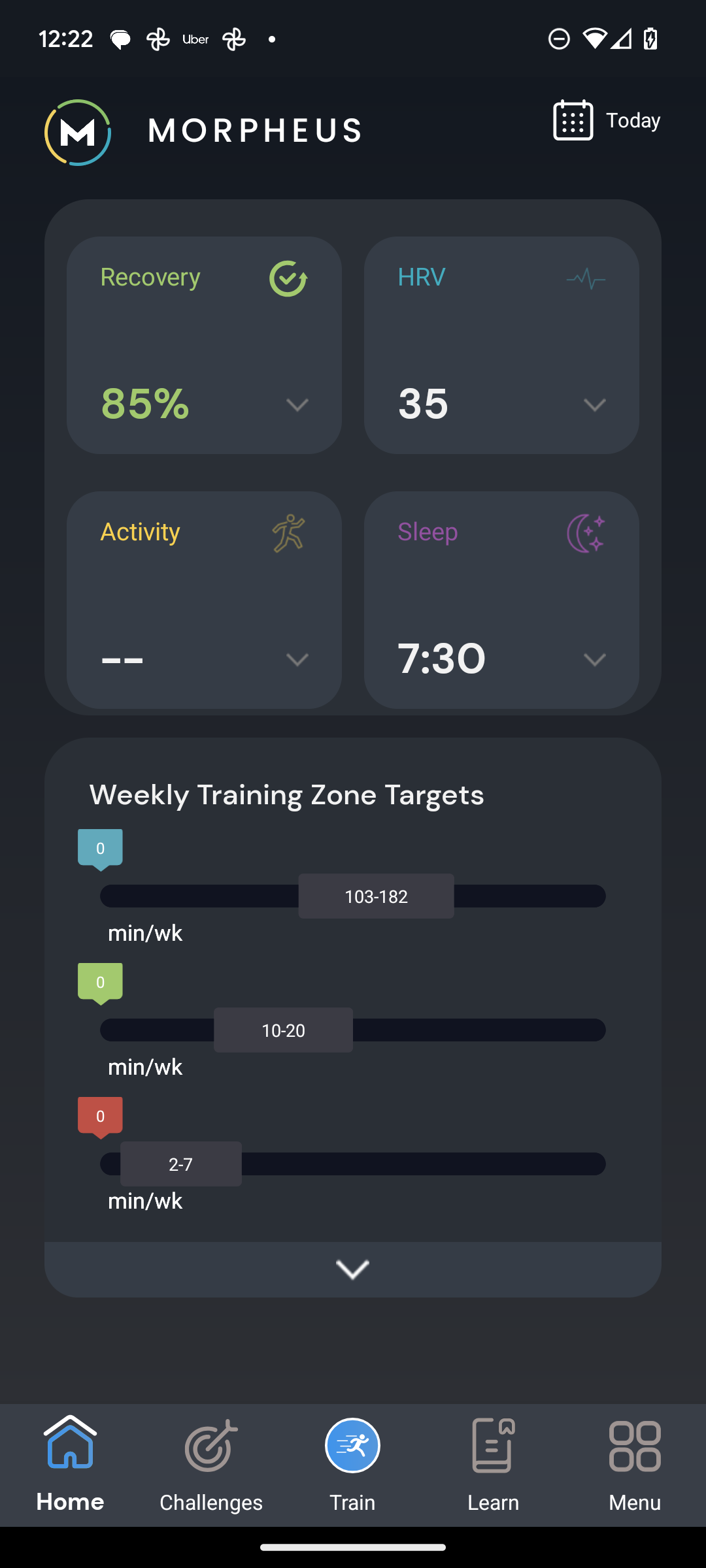
My typical HRV as measured by my Morpheus chest heart rate monitor is between 55 and 60 (measured early in the morning when I first wake up, and I’m still lying in bed resting).
This morning I took 10mg of rapamycin with olive oil shot at 7:30am. I then tested my HRV as I was laying down at 9:30am, so timed to be a test at the peak blood levels of rapamycin.
Interestingly, my HRV was 35 (by far the lowest I’ve ever measured). It will be interesting to see how my HRV recovers over the coming days. I’ll post.
I find trying to measure HRV as a one time measurement is not helpful. With my garmin venu 3 watch I can do a health snapshot and change it from 30’s to over 100 depending on my state of mind and breathing rate.
Average overnight snapshot is only measurement that seems meaningful. My Oura ring and garmin watch both show dramatic changes in HRV during the night.
If you read this book Buy Heart Breath Mind Book Online | Train Your Heart to Conquer Stress and Achieve Success
you can see how much resonant breathing changes it
There are specific tests that I don’t lend much credence to on a day-to-day basis, such as CRP and HRV.
Why? They are known to have a high rate of variability from one test to the next and require many measurements to get meaningful results. You don’t see your PHP or insurance companies asking for these tests.
Having said that, my own HRV measurements over an extended period of time give me a reasonable indication of where I stand.
"Measurement conditions also play a crucial role. HRV reliability tends to improve under controlled conditions such as paced breathing, as opposed to spontaneous breathing. Additionally, factors such as posture, physical activity, stress levels, and time of day can influence HRV readings, leading to variability.[1-3]
The error range for HRV measurements can be substantial. For example, the intraclass correlation coefficient (ICC) for HRV parameters can range from 0.65 to 0.88, indicating moderate to high reliability, but still allowing for considerable variability. Another study highlighted that the coefficient of variation for HRV measures can range from less than 1% to over 100%, depending on the conditions and populations studied.[1-2]
In summary, the variability in HRV measurements is influenced by random day-to-day variations, measurement conditions, and individual physiological factors. The error range can be significant, with ICC values indicating moderate to high reliability but still allowing for notable variability."
"How meaningful is the heart rate variability number in terms of general health?
Expanded question: How meaningful is the heart rate variability number in relation to general health?
Heart rate variability (HRV) is a significant marker of autonomic nervous system function and has been extensively studied in relation to general health. Lower HRV is associated with increased mortality and morbidity across various populations, including healthy individuals and those with specific health conditions. [1-3]
HRV reflects the balance between the sympathetic and parasympathetic branches of the autonomic nervous system. A higher HRV generally indicates a healthy autonomic response and better cardiovascular health, while a lower HRV is linked to higher risks of cardiovascular events, sudden cardiac death, and overall mortality.[1-2] For instance, a study from the Atherosclerosis Risk in Communities (ARIC) cohort found that low HRV was independently associated with an increased risk of sudden cardiac death.[2]
Moreover, HRV has been shown to correlate with functional status in older adults, with lower HRV being associated with a higher risk of functional decline, independent of cardiovascular disease.[4] This suggests that HRV can be a useful marker for predicting not only cardiovascular outcomes but also general health and functional capacity.
In summary, HRV is a meaningful indicator of general health, with lower HRV values being associated with higher risks of mortality, cardiovascular events, and functional decline. This makes HRV a valuable tool in both clinical and preventive health settings."
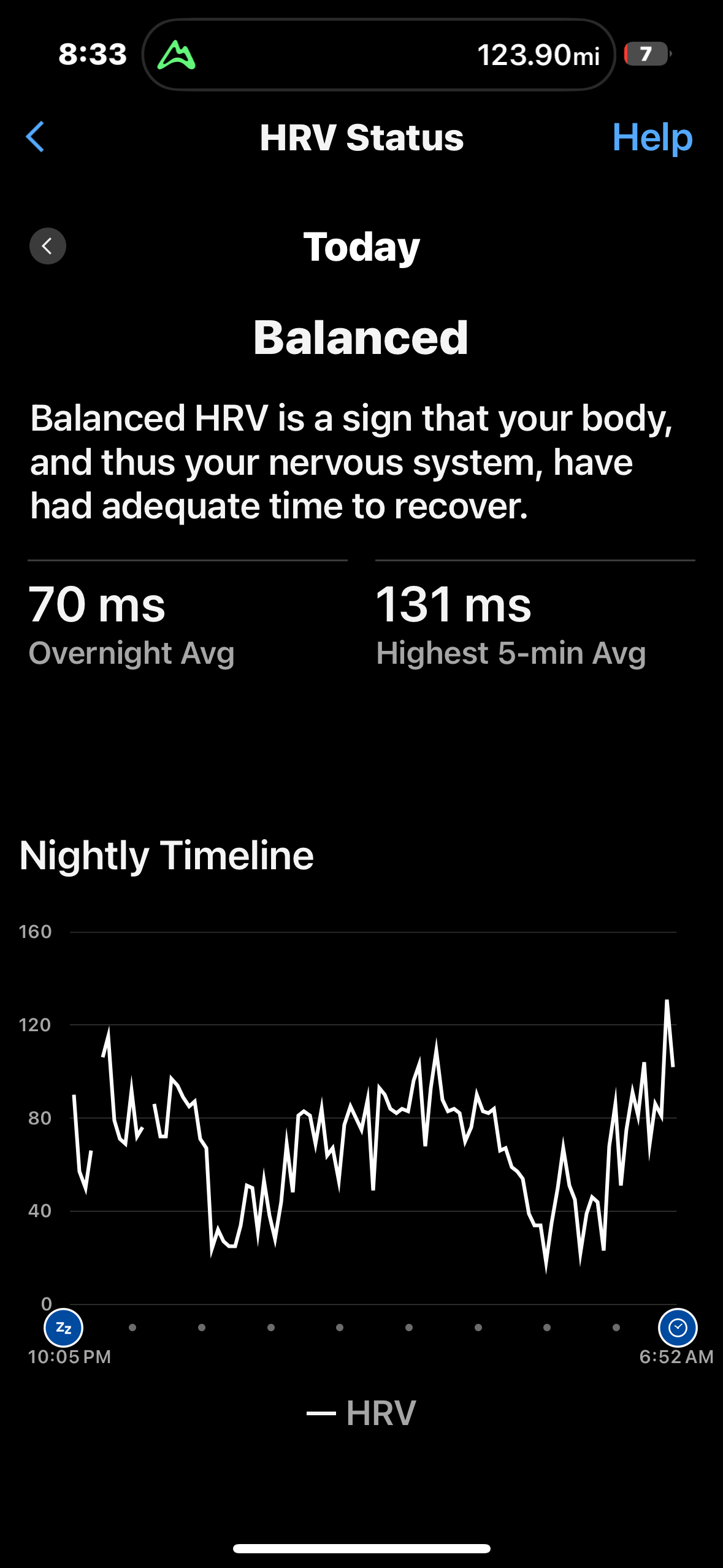
This is a typical overnight HRV graph for me. Not sure how anyone elses looks, but there is way too much variablity in it to see if a change occurs two hours after taking rapamycin. I can only look at long term trends. Four years ago average was ~ 8 ms
You went from 8 to 70? What are the main couple things that you attribute this change to? Amazing!
Inflammation was probably the main culprit - my cRP was 10 at that time and now under 0.5
I purchased the Corhealth ESR tester and have tried many things to reduce it https://corhealth.com/
some things that helped me:
Started doing some resonant breathing per https://drleahlagos.com/ and learned to breath with me belly instead of my chest
I just started back and my HRV and HR are declining. I noticed it when I started my increase in mg. I am going to time my dosing time around what my HR and HRV stats. Bryan Johnson noticed this pattern and dropped the supplement.
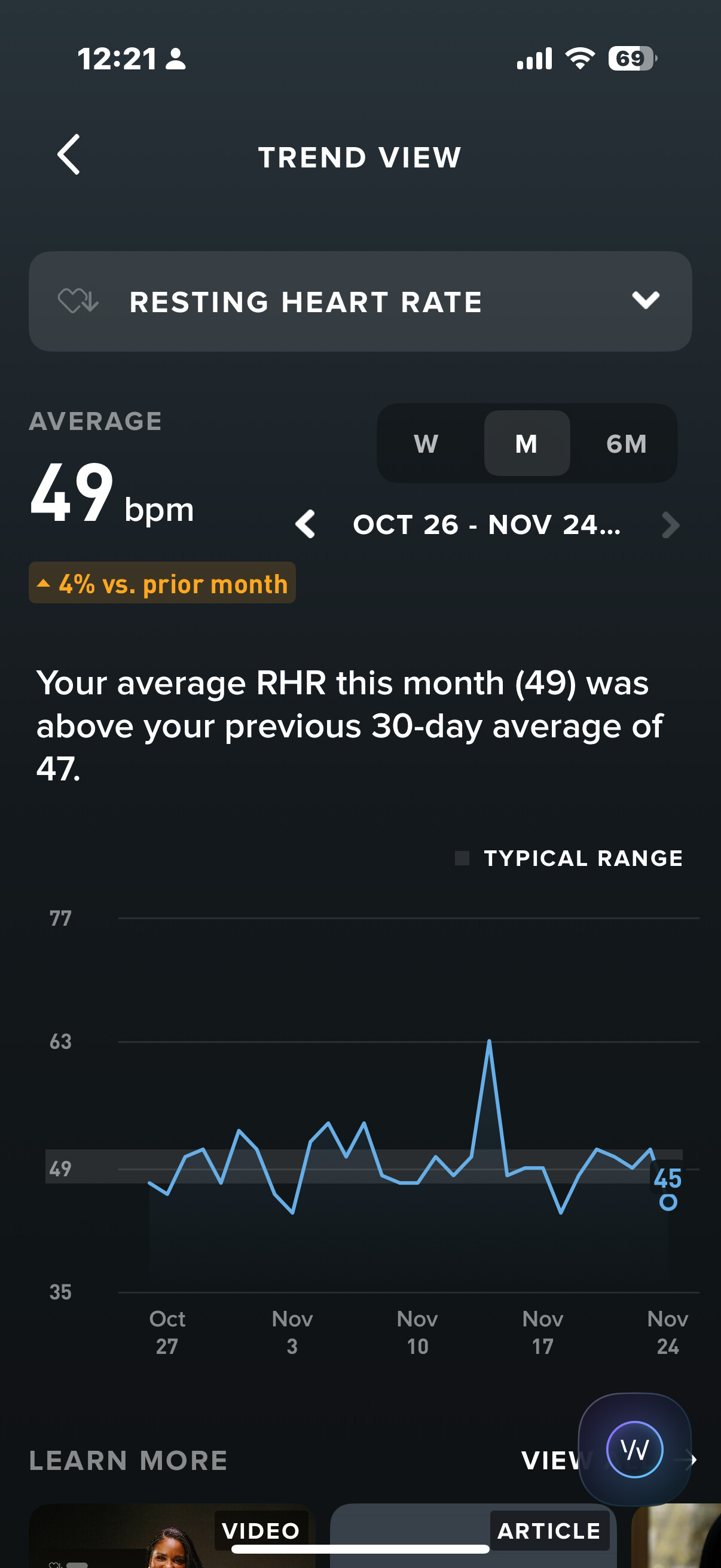
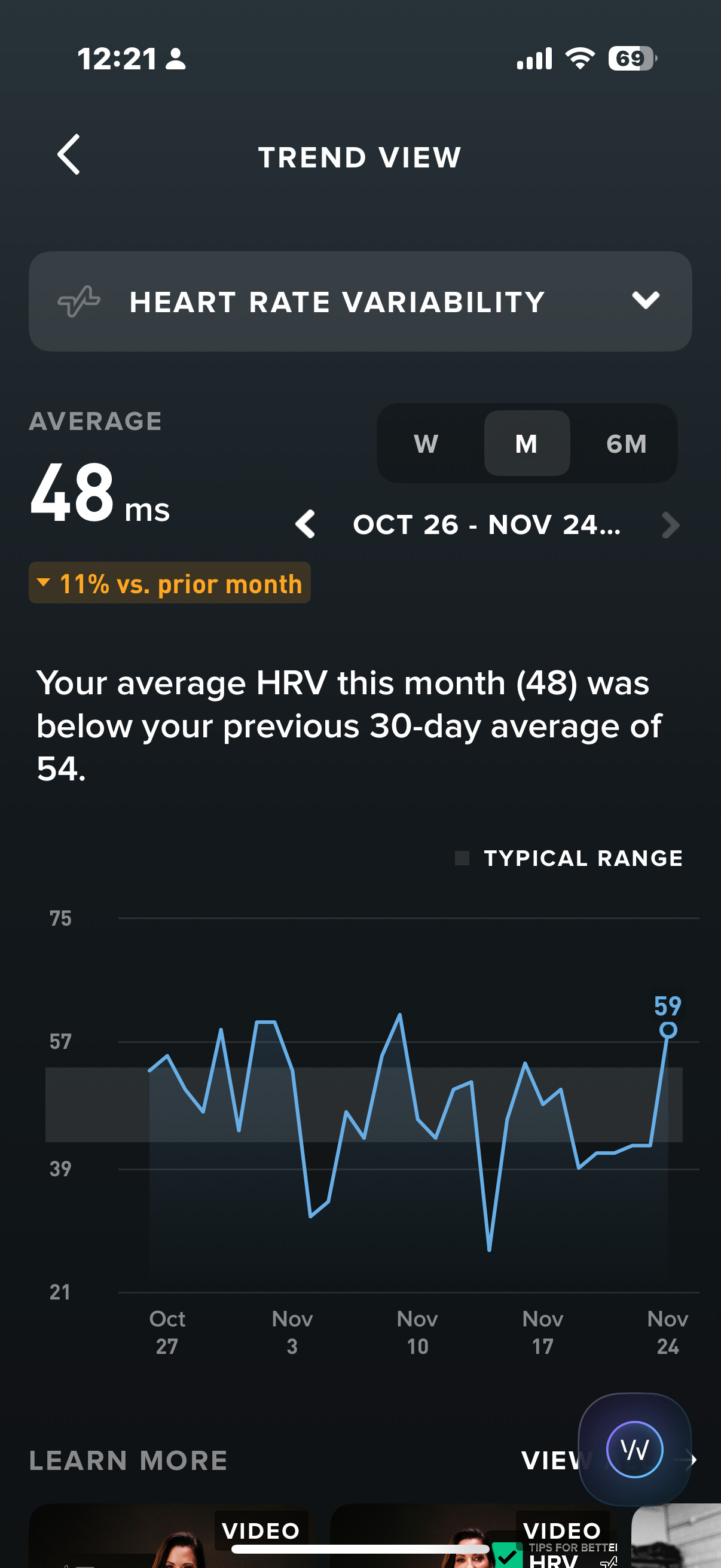
I use the Whoop, which I really like. It does a good job of tracking and highlighting differences in lifestyle, exercise, food and supplements. They recently added a bloodwork process. My HRV was recently stuck low for a few days and my RHR high. Last night I took my 4mg of Rapamycin with grapefruit. The result is pretty amazing. Now keep in mind HRV and RHR pop around a bit but this is a stark improvement. Conversely the super low scores were nights I had a couple of drinks.
I can’t find any specific studies that show that taking rapamycin reduces HRV.
There are so many variables affecting HRV: age, time of day, activity, etc.
Single HRV measurements, even if taken at the same time daily, have little meaning.
24-hour monitoring is required, and even then more than one day is required to really establish a baseline. Single one-minute measurements from smart watches, phones, etc. are meaningless.
Practical rule of thumb
"For most people using a wearable:
If your nightly RMSSD is stable or slowly rising over months and sits above the median for your age band, that’s a “good” sign.
A sustained drop (e.g., 20–30% below your usual baseline for weeks) – especially if combined with worse sleep, fatigue, or other biomarkers – is a flag to look for stressors (illness, overtraining, meds, etc.) and possibly discuss with your clinician.
“Circadian rhythms, core body temperature, metabolism, the sleep cycle, and the renin–angiotensin system contribute to 24 h HRV recordings, which represent the “gold standard” for clinical HRV assessment.”
Most consumer wearables (Oura, WHOOP, Elite HRV, Kubios, etc.) use RMSSD, often averaged across the night.
Key points from large datasets and reviews:Global Heart+3Kubios+3BodySpec+3
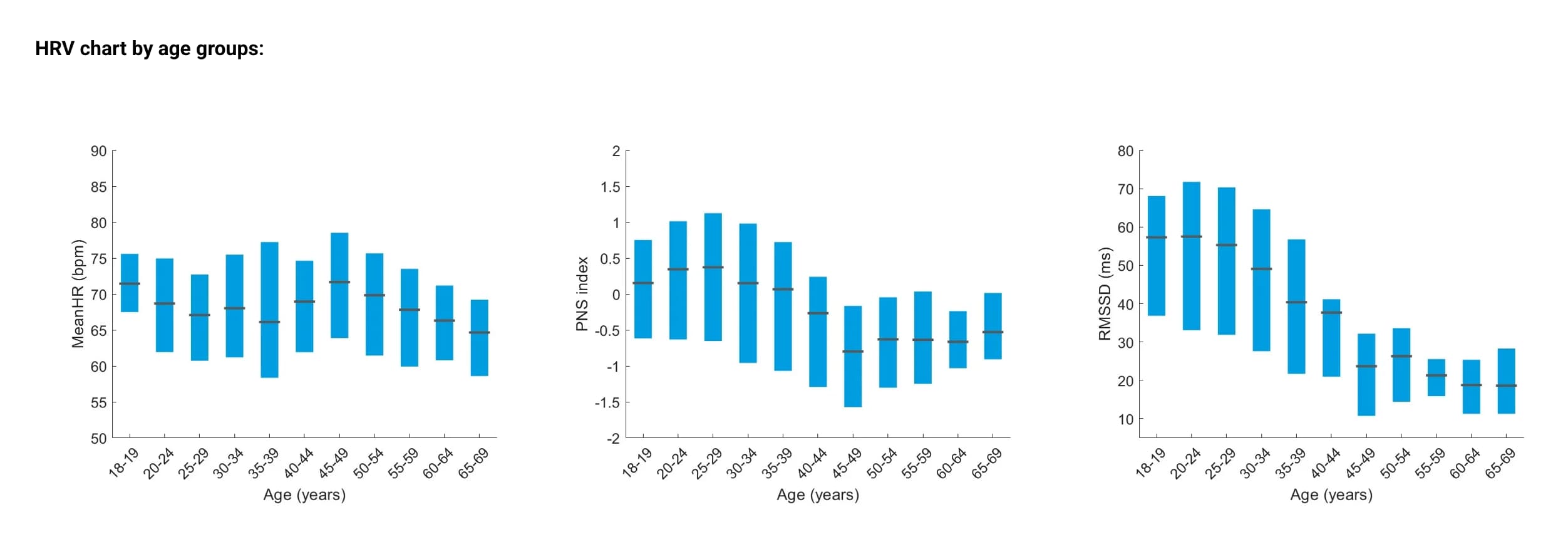
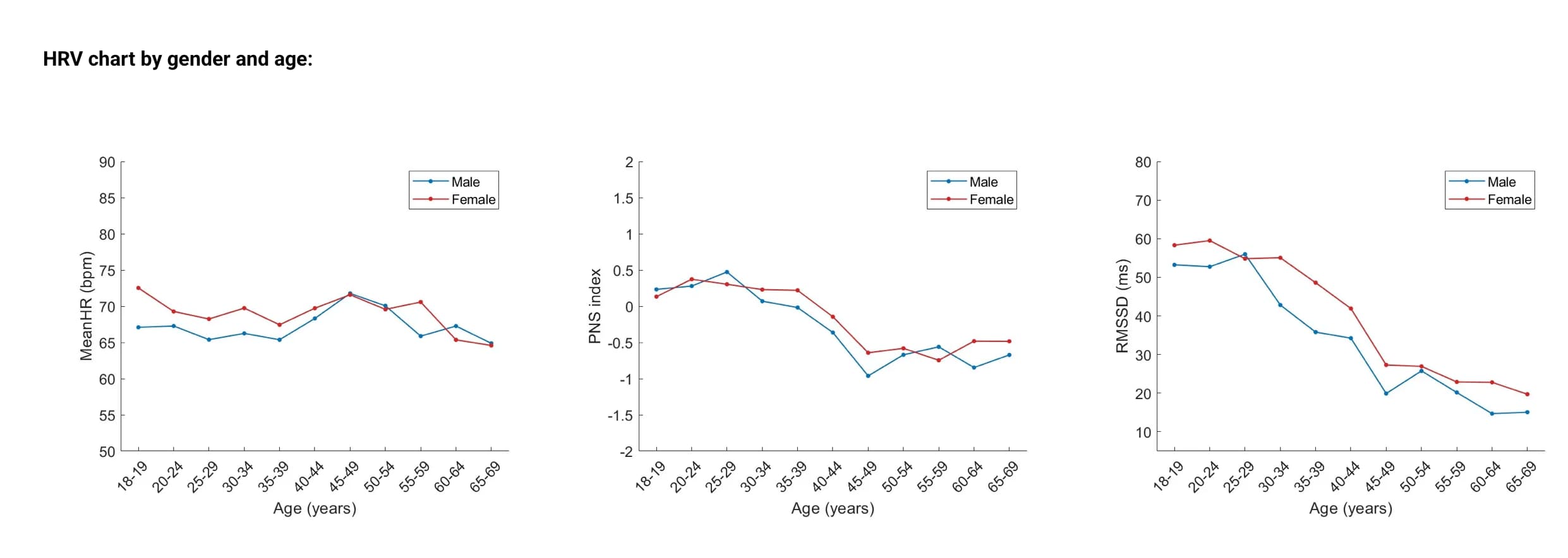
In healthy adults, RMSSD typically sits somewhere between ~20–70 ms, but the spread is wide.
HRV declines with age; a “good” value for a 25-year-old is not the same as for a 75-year-old.
In large modern datasets (tens of thousands of users), median nightly RMSSD for men looks roughly like this:
Median nightly RMSSD by age (men, approximate)
(10th percentile for each band is around low-20s in the young and low-teens in older age; 90th percentile can reach ~80+ ms in the young and ~40 ms in the very old.)BodySpec+1
Another synthesis aimed at health apps says: for healthy adults, “normal” RMSSD is often ~27–72 ms, with elite athletes often having higher values."
“This article briefly reviews current perspectives on the mechanisms that generate 24 h, short-term (~5 min), and ultra-short-term (<5 min) HRV.”
Just to be clear you want your HR lower and your HRV higher…for health and longevity
Really interesting data point. I ALWAYS see an HRV spike when I do my normal 4MG and GF and olive oil. I was in a hurry and didn’t have 30 mins before my Rapa dose to do GF so I did 6 mg with water. My HRV was low the next day. Only time that has happened post rapa. My take away is the 4MG and GF puts me into a high enough rapa blood level it effects my HRV positively and 6mg with water doesn’t. Had to share!
I found this helpful, but of course “normal” is not optimal.
For comparison sake:
In his multi-year dataset tracking autonomic nervous system (ANS) metrics, Dr. Lustgarten reported a 53% net increasein heart rate variability above his 2018 baseline:
from: