Predicting Alzheimers & Dementia (and minimizing risk)

Association between vaccinations and risk of dementia: a systematic review and meta-analysis

Conclusions and relevance

Adult vaccinations, particularly against herpes zoster, influenza, pneumococcus and Tdap, are associated with a lower risk of dementia. Vaccination strategies should be incorporated into public health initiatives for dementia prevention.

Paper: https://academic.oup.com/ageing/article/54/11/afaf331/8339764?login=false

2 Likes

There’s nothing in what you copied that suggests that. At most, we can conclude that we add about 1% per year, so in 10 years we could be ~55%. But that’s highly speculative. If you read the Lancet report, they also list some areas that might be modifiable independent risk factors but are not yet confirmed (I think sleep is one of them, for instance). Even if you add those, I’m not sure we’ll go above 60%. And in any case, those interventions are already done by many people so at the population level we might not see more benefits.

Yes: look at the chart: Predicting Alzheimers & Dementia (and minimizing risk) - #1008 by RapAdmin

The progress in the 20y from 1984 to 2004 is more than from 2004 to 2024. So most likely 2024 to 2044 will be even less. This is a general rule that the last mile is the hardest to achieve.

Scary. Goose is already cooked.

A conceptual problem in classifying risk factors goes to derivation of cause. If, for example (only an illustration) a genetic variant determines or increases the probability of decreased folate assimilation, classifying it as a genetic cause with the implication or assertion that it is not modifiable is incorrect. In this example the intervention is simple and effective and the contribution to a causal chain is eliminated. Some genetic variants present as currently unmodifiable effects but many do not. Lp(a) was in that category until recently.

Intestinal interoceptive dysfunction drives age-associated cognitive decline

https://www.nature.com/articles/s41586-026-10191-6

Risk factors for early-onset and late-onset dementia: a prospective cohort study

https://www.thelancet.com/journals/lanhl/article/PIIS2666-7568(26)00015-2/fulltext

1 Like

The brain’s cleaning system can be boosted to rid Alzheimer’s proteins

A duo of drugs that boosts our glymphatic system, which clears waste from our brain, also improves the removal of proteins associated with the onset of Alzheimer’s disease

Our brain removes metabolic waste via the glymphatic system, a network of channels surrounding the blood vessels that pump waste fluid to the lymphatic system, where it is carried to the blood for disposal.

The glymphatic system is most active during deeper phases of sleep, when slow brain waves help push along waste fluid after it has been released from brain cells. But it becomes impaired with age, and especially during Alzheimer’s disease.

Researchers have previously found that dexmedetomidine, a drug commonly used as a sedative during medical procedures, boosts these brain waves in mice. It also improved the brain’s ability to clear waste fluid and slowed cognitive decline in mouse models of Alzheimer’s disease.

To explore dexmedetomidine’s effects in people, Paul Dagum at pharmaceutical company Applied Cognition in Redwood City, California, and his colleagues recruited 19 adults – aged 60, on average – who were deprived of sleep for one night in a lab. The morning after, the participants – who had no chronic medical conditions or brain-specific issues – provided blood samples to act as baseline measurements.

They were then given 4 hours while they received an infusion of dexmedetomidine. They also took a drug called midodrine, which treats low blood pressure, a common side effect of dexmedetomidine. When they woke, the participants provided another blood sample.

A few weeks later, the researchers repeated the experiment, but this time, the participants had a placebo pill and saline infusions. The researchers then compared the two post-nap blood samples, accounting for variations in the two baseline samples.

This revealed that taking dexmedetomidine and midodrine, which the company collectively calls ACX-02, cleared two amyloid and tau proteins that are particularly prone to misfolding and forming clumps more effectively than the placebo/saline intervention.

The team estimates that if ACX-02’s effect were sustained over several years, it could delay the onset or worsening of Alzheimer’s disease by about seven years, based on levels of misfolded amyloid that are typically seen in people who go on to develop the condition, says Dagum. “That would be a significant, meaningful effect for those at risk,” adds team member Jeff Iliff at the University of Washington in Seattle.

Gu accepts that previous efforts to clear misfolded amyloid-beta and tau from the brains of people with Alzheimer’s disease have had limited benefits. Nevertheless, he adds that if the new approach is safe and effective, it could have a wide use. “It could benefit people with other brain conditions caused by a build-up of misfolded proteins, such as Parkinson’s,” he says. It might even be possible to develop a pill form of dexmedetomidine to treat attention lapses following sleep deprivation, says Iliff.

Read the full story: The brain’s cleaning system can be boosted to rid Alzheimer’s proteins (New Scientist)

I didn’t interpret the chart’s trend as having much predictive power, because it only has three temporal data points. And the trendlines are so different depending on which age you look at
But i can see that extrapolation is tempting…

Estimating at the raw data, and looking at say , “% with dementia aged 90to94” - this falls from 45% in 1984 to 25% in 2004 and 15% in 2024. Extrapolating could suggest 10% in 2044, 7.5% in 2064 etc ultimately plateauing to only 5%.

But that’s relying quite a bit on a very limited trendline. And the historic deceleration may have a lot more to do with public health issues (accelerating processed food consumption, or inactivity or social isolation or inequality etc) than anything that should be applied to the modifiability of an individual’s risk

I would argue that accelerating progress in medicine and healthcare from AGI amd also the the increasing capital for research and development and the fact that we have so many “clues” as to where to investigate next will mean that we wont see this deceleration in practice…

As an example, ive just put my genome into claude.ai and it has generated reams of advice on bespoke preventative measures for preserving cognitive health. Most i was doing anyway, but several are novel and with decent logic behind them. For example my PEMT allele status means i dont effectively produce
phosphatidylcholine (along with a third if the population) - taking citicholine more regularly should have a marked impact on my dementia risk. Yet this would not be in the radar of either the general population or a typical doctor.

Besides the mechanical reasoning, is there clinical evidence in favor of that?

1 Like

Decoding the Fifteen-Year Countdown to Brain Decay

The Pre-Diagnostic Map: How Your Medical History Predicts the Velocity of Neurodegeneration

Neurodegenerative diseases like Alzheimer’s and Parkinson’s are traditionally viewed through a categorical lens—binary states of “healthy” or “diagnosed.” A landmark study by Lian and colleagues, analyzed here by Nedelec and Corvol, shatters this simplistic model. By applying transformer-based AI to the electronic health records (EHR) of over 100,000 patients, researchers have mapped a complex, 15-year “prodromal” period where the seeds of brain decay are visible long before the first tremor or memory lapse appears.

The investigation identifies five distinct subtypes for both Alzheimer’s and Parkinson’s, characterized by unique clinical trajectories and comorbidity burdens. The “Big Idea” is a fundamental shift in perspective: neurodegeneration does not happen in isolation. Instead, it is the culmination of a decade-plus of systemic failures in metabolic, vascular, and psychiatric health.

Perhaps most striking is the discovery of “convergent phenotypes”. Patients with metabolic-inflammatory profiles—marked by obesity, diabetes, and renal disease—follow nearly identical, aggressive paths toward disability regardless of whether their primary diagnosis is Alzheimer’s or Parkinson’s. This suggests that while genetics might load the gun by determining disease susceptibility, systemic factors like insulin resistance and neuroinflammation pull the trigger on the rate of progression.

The study also reveals a counterintuitive “dissociation” between genetic risk and clinical severity. Some individuals with high polygenic risk scores follow a “classic” slow-burn trajectory, while those with lower genetic risk but high metabolic dysfunction suffer rapid, high-mortality outcomes. This underscores a critical reality for the longevity community: your “genetic destiny” is a poor predictor of how fast you will decline if your metabolic health is compromised.

Actionable Insights

  • Aggressive Metabolic Management: The “Metabolic-inflammatory” subtype (Cluster 4) across both diseases exhibits the most aggressive clinical decline and highest mortality. Managing biomarkers associated with diabetes, obesity, and renal health is not just for heart health; it is the primary lever for slowing neurodegenerative velocity. [Confidence: High]

  • The 15-Year Window: Prodromal signals—including depression, hearing loss, sleep disturbances, and constipation—precede motor and cognitive symptoms by up to 15 years. Treating these “unrelated” comorbidities early may alter the eventual disease trajectory. [Confidence: Medium]

  • Modifiable Risk Supremacy: Up to 45% of dementia cases may be attributable to modifiable risk factors. Interventions targeting insulin signaling and systemic inflammation (e.g., GLP-1 agonists, SGLT2 inhibitors, or senolytics) could potentially benefit patients across different diagnostic categories by stabilizing the “progression environment” of the brain. [Confidence: Medium]


Context & Impact Evaluation

  • Paywalled Paper: Mining the prodrome of neurodegeneration
  • Institution: Sorbonne University, Paris Brain Institute (ICM).
  • Country: France.
  • Journal: Nature Aging.
  • Impact Evaluation: The impact score of this journal is 16.6 (JIF 2023/2024), evaluated against a typical high-end range of 0–60+ for top general science, therefore this is a High impact journal.

The Silent Signal: Mapping 20 Years of the Hearing-Dementia Connection

For decades, the medical community treated hearing loss (HL) and Alzheimer’s disease (AD) as distinct consequences of the aging process—one a matter of sensory degradation, the other a catastrophic cognitive collapse. However, a comprehensive 20-year retrospective analysis published in Ageing Research Reviews (2025) confirms that these two conditions are biologically and mechanistically entwined. Analyzing 349 core studies from 2004 to 2024, researchers have mapped a “closed-loop” relationship where auditory decline not only signals early neurodegeneration but actively accelerates it.

The study identifies a critical distinction between peripheral hearing loss (PHL) —stemming from the ear’s hardware—and central hearing loss (CHL) , which involves the brain’s processing centers. PHL acts as a “gateway” to cognitive decline primarily through sensory deprivation; when the brain is starved of auditory input, it undergoes structural atrophy due to disuse and increased social isolation. Conversely, CHL shares a direct molecular “handshake” with Alzheimer’s, characterized by synaptic degeneration and neuroinflammation in the same regions responsible for memory, such as the hippocampus.

Bioinformatic mapping revealed 2,747 shared genes between the two conditions. These genes cluster around three primary axes: the PI3K-Akt signaling pathway (critical for neuronal survival), the AGE-RAGE axis (a driver of inflammation), and canonical Alzheimer’s pathways. The research suggests that hearing impairment, particularly central auditory dysfunction, may serve as one of the earliest detectable biomarkers for AD, often appearing before clinical memory loss. As global populations age, this meta-analysis underscores that hearing health is not a secondary quality-of-life issue but a frontline defense in the fight against dementia.

Actionable Insights

  • Prioritize Subtype Diagnosis: Distinguish between ear-level (peripheral) and brain-level (central) hearing issues. Central auditory processing deficits are more indicative of direct neurodegenerative risk.

  • Hearing as a Modifiable Risk Factor: Treat hearing loss as a primary, modifiable risk factor for dementia. Early intervention with hearing aids or cochlear implants may mitigate the “sensory deprivation” pathway that leads to cortical atrophy.

  • Targeted Screening: Integrate auditory assessments into standard neurological exams for adults over 65, as hearing thresholds are strong prognostic indicators of future cognitive decline.

  • Molecular Synergy: Consider that compounds supporting the PI3K-Akt pathway (e.g., certain neuroprotectives) may simultaneously benefit both auditory longevity and cognitive resilience.


Source:

  • Paywalled Paper: Trends and mechanisms of Alzheimer’s disease and hearing impairment: A 20-year perspective
  • Institution: Department of Otolaryngology, Head and Neck Surgery, The First Affiliated Hospital of Anhui Medical University.
  • Country: China.
  • Journal Name: Ageing Research Reviews.
  • Impact Evaluation: The impact score (CiteScore 2023) of this journal is 25.7, evaluated against a typical high-end range of 0–60+ for top general science, therefore this is an Elite impact journal.

Yes, i was mainly highlighting it as an example of where we have “clues” as to other factors we can fix. But there is some evidence beyond the mechanics:

https://share.google/aimode/vkC1kxCzzLeQC6PCU

A note on using claude.ai with your genome. About half the recommendations were overstated and didn’t stand up to scrutiny. Getting claude to check its own work is a quick fix

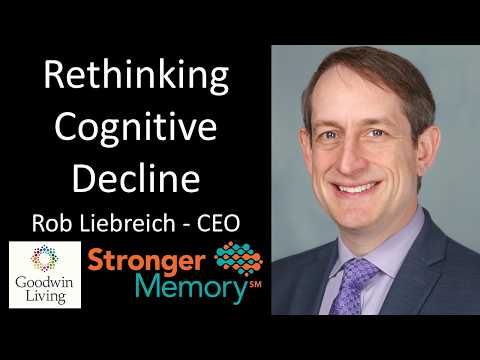
Website: https://strongermemory.org

This report provides a clinical and critical distillation of the StrongerMemory program, a non-pharmacological cognitive intervention developed by Rob Liebreich (CEO, Goodwin Living). The summary integrates the provided transcript with evidence from George Mason University and Tohoku University research.

I. Executive Summary

The core thesis of the StrongerMemory program is that daily, low-anxiety engagement in three specific neuro-stimulatory tasks—reading aloud, handwriting, and rapid simple math—can stabilize or improve cognitive function in individuals experiencing Mild Cognitive Impairment (MCI) or subjective cognitive decline. Mechanistically, these tasks are designed to maximize blood flow and activation in the prefrontal cortex and hippocampus, regions primary to memory encoding and retrieval that often show reduced activation in aging populations Kawashima et al., 2012.

The program transitions cognitive health from a passive, pharmaceutical-dependent model to an active, habit-based “brain exercise” regimen. Recent quasi-experimental data from George Mason University indicates significant statistical improvements in cognitive scoring for participants following a 12-week protocol Ihara et al., 2025. Critically, the intervention demonstrates a “transfer effect,” where training in simple arithmetic and literacy improves non-targeted executive functions and processing speeds.

Furthermore, Phase II research suggests that while solitary practice is effective, the integration of social engagement(group reading/sessions) creates a synergistic effect, enhancing emotional well-being and longitudinal durability of the cognitive gains Kang et al., 2025. Field data from a three-year CMS-funded pilot involving 91 nursing homes reported that 76% of participants experienced perceived or actual cognitive stabilization, challenging the standard narrative of inevitable decline in institutional settings.


II. Insight Bullets

  • Prefrontal Cortex Target: The protocol specifically targets the prefrontal cortex (directly behind the forehead), which governs memory retrieval and executive function.
  • Reading Aloud vs. Silent: fMRI data confirms that reading aloud engages language factories and auditory circuits, providing significantly higher brain activation than silent reading.
  • Handwriting vs. Digital: Handwriting requires complex fine motor integration and spatial processing that typing lacks, aiding in more robust memory encoding.
  • The “Speed Over Accuracy” Rule: In the numeracy component, the objective is rapid processing (working memory) rather than mathematical complexity; high-anxiety math creates counterproductive stress chemicals.
  • 23-Minute Threshold: Data suggests an average of 23 minutes of daily engagement is the “minimum effective dose” for measurable cognitive benefit.
  • Longitudinal Durability: Research indicates that cognitive gains can persist for up to six months even after the 12-week intensive period ends, though daily habituation is recommended.
  • Transfer Effects: Stimulation of the prefrontal cortex through these tasks “spills over” into unrelated tasks, such as general intelligence and creativity.
  • Social Synergy: Group participation (social engagement) yields higher cognitive and emotional outcomes than solitary practice.
  • Institutional Efficacy: 76% of nursing home residents in a CMS pilot showed improvement, suggesting the brain remains plastic even in late-stage care settings.
  • Language Versatility: The program is currently validated in English, Korean, and Japanese, suggesting the biological response is language-agnostic.
  • Early Intervention Window: The program is most effective for Mild Cognitive Impairment (MCI) and “subjective decline” rather than late-stage Alzheimer’s.
  • Intergenerational Benefits: Use of the program in “reading circles” with youth addresses both cognitive decline and senior isolation (loneliness).
  • Non-Pharmacological Safety: Zero side effects are reported, making it a high-safety adjunct to standard care.
  • Cost-Free Scalability: The program is offered for free via the StrongerMemory foundation to bypass the financial barriers of memory care.

III. Actionable Protocol

High Confidence Tier (Level A/B Evidence)

  • Reading Aloud: Engage in 10–15 minutes of vocalized reading daily. This can include books, newspapers, or religious texts. The key is the auditory-vocal loop Kawashima et al., 2005.
  • Handwriting Practice: Spend 5–10 minutes writing by hand. Transcription of text or journaling is sufficient; the mechanical movement is the primary driver of the benefit.
  • Simple Numeracy: Perform 5–10 minutes of rapid, simple math (e.g., single-digit addition). Focus on “speed of processing.” Do not use a calculator.
  • Frequency: Minimum 4–5 days per week. The “Gold Standard” for maximum neuroplasticity is 7 days per week.

Experimental Tier (Level C Evidence)

  • Social Integration: Perform the reading aloud or math components within a “reading circle” or group setting. Preliminary evidence suggests this increases adherence and emotional resilience Kang et al., 2025.
  • Combination with Movement: Integrate physical exercise (e.g., walking) as a primer for the cognitive exercises to increase cerebral blood flow.

Red Flag Zone

  • Replacement Fallacy: Do not use this program as a replacement for prescribed Alzheimer’s medications or clinical oversight. It is an adjunct.
  • Complexity Trap: Avoid “hard” math or complex puzzles that cause frustration. If the task induces high stress, the cortisol response may negate the metabolic benefits to the prefrontal cortex.
  • Digital Translation: Current evidence is specific to handwriting and vocal reading; digital brain games have not shown the same degree of “transfer effect” to real-world memory in all populations.
2 Likes

Brain-swooshing exercise could ward off dementia | Prof. Patrick Drew & Francesco Costanzo (via Penn State News and Research)

1 Like

Gemini: Here is a summary of the video:

TL;DR: How Movement Protects the Brain

  • The Mechanism: Physical activity—even just simple movements that involve contracting your abdominal muscles—acts like a hydraulic system that causes your brain to move slightly within your skull [00:00:44].
  • Clearing Waste: This subtle “brain-swooshing” motion helps circulate cerebrospinal fluid through the brain’s sponge-like tissue, which flushes out waste buildup [00:01:03].
  • Preventing Disease: Clearing this waste is crucial, as its buildup is a primary cause of neurodegenerative conditions like Alzheimer’s and dementia [00:01:10].
  • The Big Picture: Ultimately, this research provides a clear biological explanation for why getting up, moving around, and exercising helps maintain brain health and wards off cognitive decline [00:03:52].
2 Likes

More data pointing to omega 3 supplementation being detrimental: Omega-3 Supplements May Increase Risk of Cognitive Decline, Scientists Warn