Summary: Some probiotics help cancer grow. Dietary fiber helps retard cancer.

Summary: Some probiotics help cancer grow. Dietary fiber helps retard cancer.
do people want an o3 summary?
You can provide an o3 summary in this resources section.
| Time | Speaker | Tidied wording |
|---|---|---|
| 0:00 – 0:38 | Narrator | Imagine someone spoon-feeding themself yogurt and lecturing everyone that the probiotics it contains are essential for a healthy diet. The rest of the table tuned out long ago and is now talking about the weather, but the yogurt evangelist keeps preaching the gut-health gospel. You finally snap and blurt out, “Probiotics aren’t that great—they can actually be harmful!” The table falls silent. |
| 0:38 – 0:55 | Narrator & “Yogurt evangelist” | The evangelist fires back: “That’s crazy—my yoga-podcast nutritionist says probiotic yogurt is incredible for you.” You answer, “Then watch this video, yogurt-fiend.” |
| 0:55 – 1:13 | Narrator | What if probiotics were linked to worse cancer outcomes, and another gut-health product were linked to better ones? Let’s look at the study instead of a random podcast. |
| 1:13 – 2:00 | Narrator | Researchers recruited late-stage cancer patients, most receiving anti-PD-1 immunotherapy (an antibody that keeps immune cells attacking tumours). Patients were classified as responders (no progression) or non-responders (disease progressed). |
| 2:00 – 2:35 | Narrator | Faecal analysis focused on two bacterial taxa (one family, one genus) previously linked to immunotherapy response and lower inflammation. Responders had significantly higher levels of both. |
| 3:03 – 3:41 | Narrator | Next the team asked about probiotic use in the preceding month. Kaplan-Meier curves hinted that probiotic users fared worse (higher progression risk), although this crude association did not reach statistical significance. |
| 3:41 – 4:53 | Narrator | To probe causality they transplanted stool from human responders into germ-free mice, then gavaged the mice with water (control) or one of two commercial probiotics before injecting melanoma cells. Both probiotic groups developed tumours almost ten-times larger than controls. |
| 5:05 – 5:59 | Narrator | The second gut-health habit was dietary fibre. When patients were split into low- vs high-fibre intake, the high-fibre group showed significantly less cancer progression. |
| 6:30 – 7:10 | Narrator | A parallel mouse experiment fed ordinary mice a low- or high-fibre diet alongside anti-PD-1 therapy. Only the high-fibre + therapy group halted tumour growth; low-fibre mice did as badly as untreated controls. |
| 7:16 – 8:36 | Narrator | Caveats: the human data are observational; bacterial families, fibre cut-offs and probiotic brands were researcher-defined; the probiotic- and fibre-mouse studies differed slightly in design. The findings are compelling but exploratory—more work is needed before condemning all probiotics or canonising fibre. |
| 8:41 – 9:12 | Narrator | Bottom line for melanoma patients on anti-PD-1: this study suggests probiotics may hinder, while dietary fibre may boost, treatment efficacy. So tell “yoga-podcast Mark” that probiotics aren’t always wonderful—then watch the next video. |
| Aspect | Strengths | Limitations / counter-points |
|---|---|---|
| Study design | Combines human observational data with mechanistic mouse models—more persuasive than correlation alone. | Small human sample (≈128), single centre; self-reported diet and supplement use prone to error. Fibre cut-off and probiotic definitions were arbitrary. |
| Causality | Germ-free-mouse FMT experiment elegantly tests cause-and-effect for probiotics. | The probiotic cocktails given to mice may not mirror what patients took. Germ-free mice differ immunologically from humans. |
| Generalisability | Highlights a plausible microbiome–immunotherapy interaction; echoes other work linking Faecalibacterium to checkpoint-blockade success. (nature.com) | Findings are melanoma- and PD-1-specific; other cancers, drugs, probiotic strains or doses could behave differently. Numerous clinical trials report benefits of certain probiotics as adjuncts to chemo- or radiotherapy. (nature.com) |
| Interpretation in the video | Presenter openly lists caveats and stresses nuance (“not all good things are universally good”). The satire makes the science engaging. | The title (“Healthy gut habits are making cancer worse”) is click-bait and overstates certainty. The video downplays the non-significant probiotic association in humans and omits positive probiotic trials, which could mislead casual viewers. |
| Clinical relevance | Encourages oncologists and patients to discuss diet and supplement use—an important, often-ignored variable in immunotherapy. | No clinical guidelines recommend abandoning probiotics solely on this evidence. Patients should not modify therapy without medical advice; randomised trials are needed. |
Bottom line:
The Spencer et al. Science paper suggests that, in advanced melanoma treated with PD-1 blockade, high dietary fibre may enhance—and broad-spectrum probiotic supplements may blunt—antitumour immunity. The Physionic video captures the essence but oversimplifies; probiotics remain context-dependent tools, and fibre is only one piece of a complex dietary puzzle. Use the findings as a conversation starter with qualified clinicians, not a standalone prescription.
Omega 3s change arterial plaque composition.
A 12-minute video which is just an intro to another video.
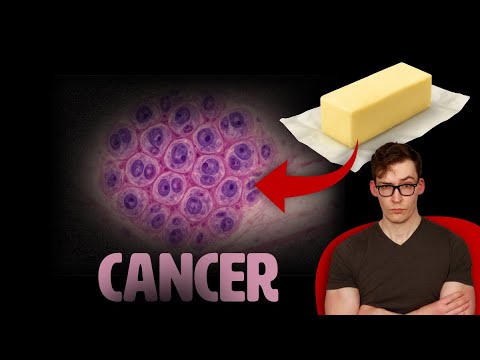
He mentions how stearic acid can paralyze the immune system. It isn’t just in butter, though. One overlooked source is that it is in a fair number of nutritional supplements as an one listed in “other ingredients” (read the fine print). So, if you take a lot of them at once, you could be loading up your body with hundreds of milligrams or more of stearic acid. That would still be a low amount, overall probably; but I’d be careful and check how much is in supplements.
According to a Google search:
Nutritional supplements contain stearic acid primarily as a manufacturing lubricant and binder, most commonly in the form of magnesium stearate, to prevent ingredients from sticking to machinery and each other during production. It acts as a “flow agent” to ensure consistent and high-quality capsules and can also delay the breakdown of supplements in the stomach so they are absorbed in the correct part of the bowel.
Oh, one more thing about stearic acid (and magnesium stearate): have you ever bought supplement pills and tried to dissolve them in water, and found it doesn’t work, even though you know the supplement is supposed to be water soluble??
Often, it’s due to magnesium stearate that they add to the mix. And you can’t easily remove it! You’re better off buying the powder form, which usually doesn’t contain as many additives like that.
New video where he discusses the benefits of berberine against colon cancer and how it improves the gut microbiome:
I had said before that I take it, myself, because of its gut health effects (not for the blood sugar-lowering effects).
In which amounts do you take it for that purpose? I tried it out to lower FBG but at 1000 mg it lowered my appetite so much that I had to discontinue it. I may try and resume at 500 mg/d.
By the way, FBG lowered by simply eating by instinct (neurological demand), lowering protein and increasing carbs. But with an overall decrease in calories.
I take 500 mg in the morning and 500 mg in the early evening. Oops, it was 750 mg in the morning, and 750 mg in the early evening, not 500 mg like I wrote before. I don’t notice any change in appetite. The only obvious thing I notice is that it seems to sharpen my perception of red light – “colorfulness”, saturation, whatever you want to call it:
The Physionic guy now takes 40 grams per day of resistant starch, following mention of its effects on visceral fat by Carvalho (Nutrition Made Simple) and then also his own further research on its health-promoting effects.
Perhaps inulin and resistant starch synergize, with inulin maybe increasing butyrate-producing bacteria and then resistant starch supplying the fuel.
The provided transcript is a layman’s synthesis of recent high-impact clinical trials regarding Resistant Starch (RS) supplementation, specifically targeting Metabolic Dysfunction-Associated Steatotic Liver Disease (MASLD/NAFLD). The core data rests heavily on a landmark 2023 study published in Cell Metabolism (Ni et al.), which demonstrated that 40g/day of Type 2 Resistant Starch (High-Amylose Maize) significantly reduced intrahepatic triglyceride (IHTG) content and visceral adiposity over a 4-month period compared to placebo.
The biological mechanism is validated as microbiome-dependent. RS resists digestion in the small intestine, fermenting in the colon to produce Short-Chain Fatty Acids (SCFAs), specifically butyrate and acetate. This fermentation alters the gut microbiota composition—specifically reducing branched-chain amino acid (BCAA) producing bacteria (like Bacteroides stercoris)—which in turn downregulates hepatic lipogenesis and systemic inflammation.
While the speaker’s enthusiasm is supported by Level B (RCT) evidence, the translation to the general population requires nuance. The “300% improvement” metric is a relative risk reduction in a diseased cohort, not necessarily applicable to healthy phenotypes. Furthermore, the 40g/day dose is clinically significant and likely to induce substantial gastrointestinal distress (bloating, flatulence) without careful titration. The intervention is highly promising for liver fat reduction, but its efficacy as a standalone weight-loss tool for non-steatotic individuals remains less established.
Search Query: Resistant starch NAFLD randomized controlled trial meta-analysis 2023 2024 / Ni et al Cell Metabolism resistant starch
| Claim from Video | Speaker’s Evidence | Scientific Reality (Current Data) | Evidence Grade | Verdict |
|---|---|---|---|---|
| “Slashes liver fat… confirmed across several RCTs.” | Cites Cell Metabolism & Nature Metabolism. | Verified. A 2023 RCT (Ni et al.) showed ~5.89% absolute reduction in liver fat vs 1.0% in placebo. Meta-analyses confirm RS improves liver enzymes and steatosis. | Level A/B (RCT & Meta-analyses) | Strong Support |
| “300% increased elimination of visceral fat.” | Graph comparison (Blue vs Red line). | Contextual. In Ni et al., the RS group lost significantly more visceral fat than controls. The “300%” is relative math (e.g., -25cm² vs -5cm²). Absolute reduction is significant but “300%” is marketing language. | Level B (Specific RCT) | Plausible (In context) |
| “40g is the target dose.” | References consistent use across studies. | Accurate. The landmark trial used 40g/day. Lower doses (10-20g) show prebiotic benefit but may lack the “liver slashing” potency observed in the primary study. | Level B | Strong Support |
| “Resistant starches are never absorbed.” | “Kick and scream… against being absorbed.” | Mostly True. By definition, RS escapes small intestine digestion. However, fermentation products (SCFAs) are absorbed in the colon and provide ~2 kcal/g. | Level A (Physiology) | Strong Support |
| “Heating it is a no-go.” | General advice on consumption. | Nuanced. Heating Type 2 RS (raw potato/maize) destroys resistance (gelatinization). However, cooling it retrogrades it into Type 3 RS. The speaker is practically correct for powder supplements. | Level A (Food Chemistry) | Strong Support |
| “Microbes bully beneficial microbes out.” | Explanation for “Low Responders.” | Plausible mechanism. Dysbiosis (e.g., B. stercoris dominance) can prevent RS fermentation or favor methanogenesis over acetogenesis, blunting efficacy. | Level C (Mechanistic) | Plausible |
Target: Individuals with elevated Liver Enzymes (ALT/AST), NAFLD/MASLD, or High Visceral Adiposity.
Compound: High-Amylose Maize Starch (Type 2 RS) or Green Banana Flour.
Dosage: Titrate to 40g/day.
Week 1: 5g daily (morning).
Week 2: 10g daily.
Week 3: 20g daily (split dose: 10g AM / 10g PM).
Week 4: 40g daily (split dose: 20g AM / 20g PM).
Administration: Mix into cold water, almond milk, or yogurt. DO NOT HEAT. Heating above 60°C (140°F) gelatinizes the starch, converting it into a rapid-absorbing glucose spike.
Duration: Minimum 4 months for liver fat mobilization.
Target: Metabolic optimization, satiety, glycemic control.
1. The Gut-Liver Axis & SCFA Production:
The primary mechanism is fermentation, not caloric restriction. RS reaches the cecum/colon intact, where specific phyla (Bacteroidetes, Firmicutes) ferment it into Short-Chain Fatty Acids (SCFAs): Acetate, Propionate, and Butyrate.
2. BCAA-Mitochondrial Interaction:
The Ni et al. (2023) study identified a specific correlation with Branched-Chain Amino Acids (BCAAs). Dysbiotic microbiomes (high Bacteroides stercoris) produce excess BCAAs.
3. Incretin Hormone Secretion (The “Natural Ozempic” Pathway):
Fermentation byproducts stimulate colonic L-cells to secrete:
Executive Summary:
Pure “High-Amylose Maize” (HAM-RS2) is a specialized industrial ingredient (specifically Ingredion’s Hi-Maize® 260). It is rarely sold under its own name in retail stores. The market is dominated by bulk repackagers (Honeyville, MyWorldHut) or branded specialized fiber supplements (Sukrin).
The lowest cost option by a significant margin is the Honeyville 50 lb bulk bag ($0.64 per 40g dose). For consumers not wanting 50 lbs, MyWorldHut (via eBay) is the most cost-effective manageable quantity ($0.98 per 40g dose).
| Rank | Product/Brand Name | Vendor | Total Weight | Total Price (USD) | Cost Per 40g Dose |
|---|---|---|---|---|---|
| 1 | Hi-Maize Resistant Starch (Bulk) | Honeyville | 50 lbs (22,680 g) | $363.99 | $0.64 |
| 2 | Hi-Maize 260 Corn Starch | MyWorldHut (eBay) | 2.2 lbs (1,000 g) | $24.55 | $0.98 |
| 3 | Sukrin FiberFin | Netrition | 14.1 oz (400 g) | $12.99 | $1.30 |
| 4 | Sukrin FiberFin | Amazon | 14.1 oz (400 g) | $17.99 | $1.80 |
| 5 | *Supergut Fiber Mix (Blend) | Target | 5.7 oz (161 g) | $29.99 | $7.45 |
*Note: Supergut is a blend containing High-Amylose Maize, Green Banana, and Potato Starch. It is listed for reference but is significantly more expensive than pure sources.
Gemini clearly hallucinate here. That’s a starch (i.e. poison from a longevity POV!) not a resistant starch.
I bought some resistant starch at Vitamin Shoppe, and it was potato starch + some banana powder.
And according to this:
Participants consumed their habitual diet throughout the study period. During the intervention phase, raw unmodified potato starch (Bob’s Red Mill, Milwaukie, OR) was gradually added to their diet (day 1—12 g, day 2—24 g, day 3—48 g; Fig. 1). This potato starch contains approximately 50 % resistant starch (type 2) by weight.
Authors are from University of Michigan, University of Minnesota, and Wayne State University.
ChatGPT seems to agree…
Bob’s Red Mill Potato Starch (unmodified potato starch) can be a source of type-2 resistant starch (RS2) — but the manufacturer does not label or guarantee it as RS2.