I’ve been asking people I know for their lab results just to see what their results would be on phenoage, which you can find here:
I asked 17 people for their results. Some were missing CRP, so I just used “1” at first, but then tested it at “3” which is pretty high. But even with the ones who were missing CRP and I put down 3.0, their biological age was still supposedly lower than their actual age. All 17 of them just so happened to be biologically younger than their chronological age, many significantly so. And these are just regular everyday people, not biohackers. Many had very unhealthy lifestyles. These are all Americans too.
So I’m to believe that these 17 people (mostly unrelated to each other) all just so happened to have amazing aging genetics? 17 may sound like a low sample size, and it is, but when 100 percent of a sample size of 17 has the same outcome, when the outcome is supposed to be 50/50 it is statistically significant. This would be like winning 17 coin tosses in a row. Statistically implausible. If this were a formal scientific study, the p-value would be 0.0000153, and that’s two-tailed.
If this calculator were accurate, with a large enough sample size, only 50 percent would be biologically younger than their chronological age as the premise of the test is how old your biological age is relative to the average person your age.
It just seems like those online IQ tests where everyone scores well above 100.
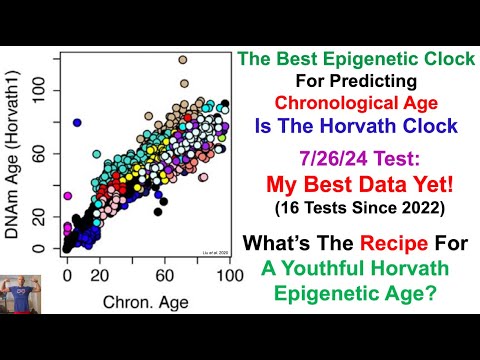
Another anecdotal example is Mike Lustgarten “Conquer Aging Or Die Trying!”. He’s done many blood tests just for the purpose of testing phenoage, and the result is always that he’s around 20 years younger than his chronological age. But he’s done a bunch of Horvath tests and in most of them he was OLDER than his chronological age. His best result was 6 years younger than his chronological age, which is very far off from his average phenoage result of being ~20 years younger.