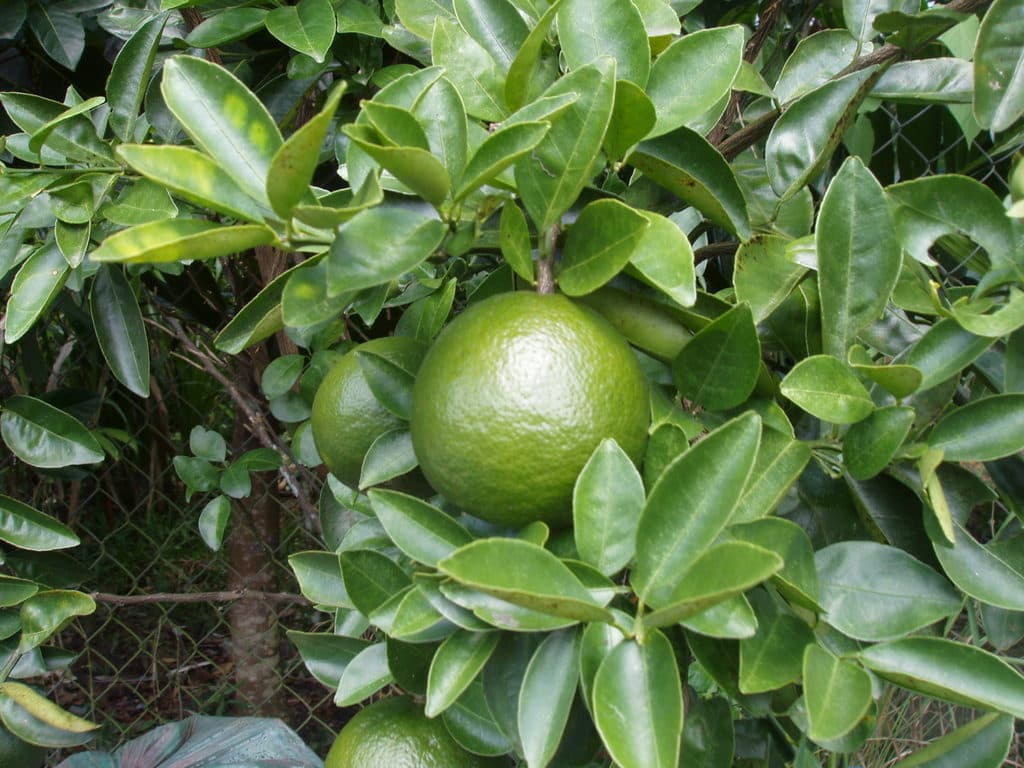
Researchers at National Yang Ming Chiao Tung University in Taiwan fed hesperetin, a flavonoid from citrus peel, to 21-month-old male mice (roughly equivalent to a human in their early sixties) for five months. The treated animals ended up with livers that looked measurably younger: less fat, less scarring, less inflammation, lower liver enzymes in blood, and restored mitochondrial structure. The team traced the effect to a specific molecular chain of events. Hesperetin binds an enzyme called Hmgcs2, which partners with the nuclear receptor PPARα, and the pair switches on a longevity gene called Cisd2 by docking onto a control sequence in its promoter. When Cisd2 was deleted from liver cells, roughly 70 percent of hesperetin’s effects vanished. In human liver samples from 80 surgical patients, both PPARα and CISD2 levels fell with age, hinting that the same axis operates in people.
The liver is the body’s chemical plant, and it ages badly. With time it accumulates fat, scars, and damaged mitochondria, which is why fatty liver disease climbs steeply after middle age. The big idea in this paper is that a single dietary molecule, given late in life, can partially reverse that trajectory, and that it does so through a definable molecular switch rather than a vague antioxidant effect.
The switch is a gene called Cisd2. Previous work from the same group established Cisd2 as a genuine pro-longevity gene in mice: delete it and animals age prematurely, keep its levels high and they live longer. The problem has always been that Cisd2 declines with age and there was no practical way to push it back up. Hesperetin, found in citrus peel, turns out to be such a way.
Mice started on hesperetin at 21 months, already elderly, showed liver Cisd2 protein restored to the levels seen in three-month-old animals. Blood markers of liver injury dropped by roughly a third to a half. Liver fat fell by about half. Markers of oxidative damage fell by around 40 percent. Under the electron microscope, the swollen endoplasmic reticulum and degenerating mitochondria typical of old hepatocytes were substantially preserved.
The mechanistic core is the novel part. Using a biotin-tagged hesperetin as bait, the team pulled out Hmgcs2, the rate-limiting enzyme of ketone body production, which has a known second job as a transcriptional co-activator for PPARα. Hesperetin promotes that partnership; the complex lands on a PPAR response element about 5,000 bases upstream of Cisd2; mutating the site with CRISPR abolishes the response, as does a PPARα blocker. Fenofibrate, an approved cholesterol drug that activates PPARα, raises Cisd2 on its own.
Roughly 70 percent of that effect disappeared in mice engineered to lack Cisd2 in liver cells, and the compound no longer improved their liver damage markers at all. That is unusually clean evidence for a natural product working through one identified gene rather than generic antioxidant chemistry. In 80 human liver specimens, both PPARα and CISD2 fell steadily with age in men and women alike and tracked each other closely, suggesting the axis is conserved.
The caveats are substantial. This is not a lifespan study; the survival data come from the same laboratory’s 2022 paper, where control mice lived a median of about 790 days, short of the roughly 900 days that a healthy colony should reach. Only male mice were used. More than half the control animals in the present study died before the endpoint and were dropped from the analysis, which means the final comparison is between the sturdiest survivors of each group. And the leap from a mouse liver to a human one remains unmade.
Actionable Insights
This is a mouse study with no human trial behind it, so more data is needed. The magnitudes are large by biological standards. Against untreated old mice, liver fat fell about 48 percent, ALT about 55 percent, and oxidative damage markers 40 to 44 percent. As standardized effect sizes these are Hedges g values of roughly 3 to 6, where 0.8 is conventionally called large. Numbers that extreme almost always shrink on replication, especially with six animals per group, but even a fraction would matter. Put differently, hesperetin closed 60 to 80 percent of the gap between an old liver and a young one on every marker measured.
The dose is the main practical caution. The mouse dose converts to about 491 mg of hesperetin per day for a 60 kg adult, far above what citrus fruit delivers. A whole orange provides roughly 40 to 60 mg of hesperidin, the poorly absorbed glycoside form, not the aglycone used here. “Eat more oranges” is not the finding, and there is no human safety or pharmacokinetic package for chronic dosing at that level.
One adjacent point is more actionable. The same PPARα node is engaged by exercise and by fenofibrate, an approved drug that the paper shows raises Cisd2 in hepatocytes. A hypothesis worth tracking.
Context and Source
- Open Access Paper: Hesperetin activates the Hmgcs2-Pparα-Cisd2 signaling axis and delays liver aging
- Authors: Zhao-Qing Shen, Tsai-Wen Teng, Yi-Long Huang, Jinq-Chyi Lee, Cheng-Heng Kao, Tsai-Yu Tzeng, Chien-Yi Tung, Wei-Cheng Huang, Chun-Wei Tung, Shiu-Feng Huang, Ting-Fen Tsai (corresponding)
- Institutions: National Yang Ming Chiao Tung University (Taipei), National Health Research Institutes (Miaoli), Chang Gung University (Taoyuan)
- Country: Taiwan
- Journal: npj Aging (Nature Portfolio), 5 August 2026.
-
Funding: National Science and Technology Council and National Health Research Institutes, Taiwan. Authors declare no competing interests.
Impact evaluation: The publisher’s own metrics page lists a 2025 Journal Impact Factor of 13.0 and a five-year JIF of 12.2 for npj Aging. The impact score of this journal is 13.0, evaluated against a typical high-end range of 0 to 60+ for top general science, therefore this is a High impact journal.