Mechanistic Deep Dive
- Target Pharmacology: Orforglipron is a small-molecule, non-peptide partial GLP-1 receptor agonist.
- Pathway Bias: It is biased toward G-protein activation over β-arrestin recruitment. This bias may alter receptor internalization dynamics compared to endogenous GLP-1 or peptide mimetics, potentially driving sustained signaling [Confidence: Medium].
- Longevity Pathway Implications: By driving significant weight loss (up to 8.2%) and lowering fasting serum glucose, orforglipron effectively acts as a potent caloric restriction mimetic. The resulting metabolic state indirectly downregulates the nutrient-sensing mTOR pathway and upregulates AMPK, promoting autophagy and improving mitochondrial dynamics [Confidence: Medium].
- Organ-Specific Priorities: The primary therapeutic impact is systemic metabolic normalization, targeting hepatic lipid accumulation, pancreatic β-cell preservation, and visceral adiposity reduction. The observed reductions in non-HDL cholesterol, triglycerides, and VLDL cholesterol indicate an optimized cardiovascular and hepatic profile
Novelty
-
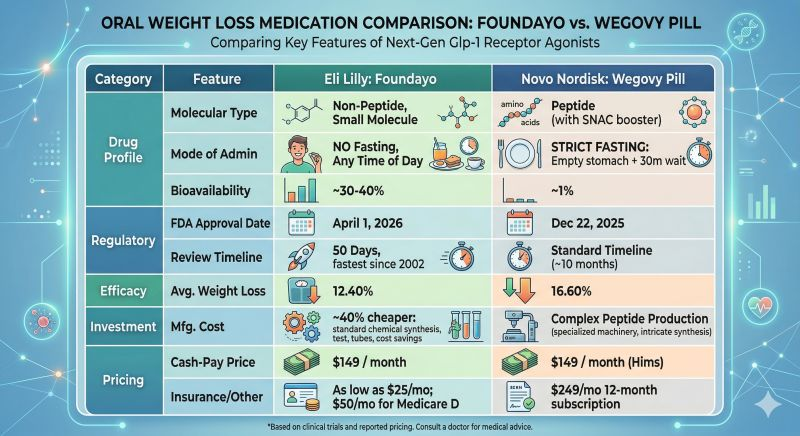
Administration Practicality: Unlike oral semaglutide, which requires fasting administration with ≤120 mL of water at least 30 minutes prior to food or other medications due to ~1% bioavailability, orforglipron has no dietary or fluid restrictions. This practical advantage significantly lowers the barrier to adherence [Confidence: High].
-
Efficacy Ceiling: This paper proves that a non-peptide oral agonist can safely surpass the efficacy of current approved oral peptide mimetics in both glycemic control and weight reduction.
Critical Limitations
- Methodological Weaknesses: The trial utilized an open-label design. While laboratory values (HbA1c) are objective, patient-reported outcomes, adverse event reporting, and study dropouts are highly susceptible to placebo/nocebo effects when treatment assignments are known [Confidence: High].
- Tolerability and Dropout Bias: The discontinuation rate due to adverse events was approximately double in the orforglipron arms (9-10%) compared to the semaglutide arms (4-5%). This high attrition rate indicates that the superior efficacy observed in the intention-to-treat analysis may be limited in real-world settings by gastrointestinal intolerance [Confidence: High].
- Cardiovascular Uncertainty: Orforglipron elevated the mean resting pulse rate by up to 4.7 bpm, compared to 1.5 bpm for semaglutide. While a known GLP-1RA class effect, this exaggerated chronotropic response requires rigorous, long-term cardiovascular outcome data to confirm it does not offset the metabolic benefits [Confidence: High]. Long-term cardiovascular safety data remains missing from this 52-week trial