Obesity doesn’t just affect the waistline—it reshapes the brain. Emerging evidence suggests chronic metabolic overload disrupts neurovascular coupling, blood–brain barrier integrity, cerebrospinal fluid dynamics, and myelination, creating conditions that may accelerate neurodegeneration. As obesity and neurological disorders rise in parallel, understanding these interconnected pathways could reveal new strategies to protect brain health across the lifespan.
Abstract
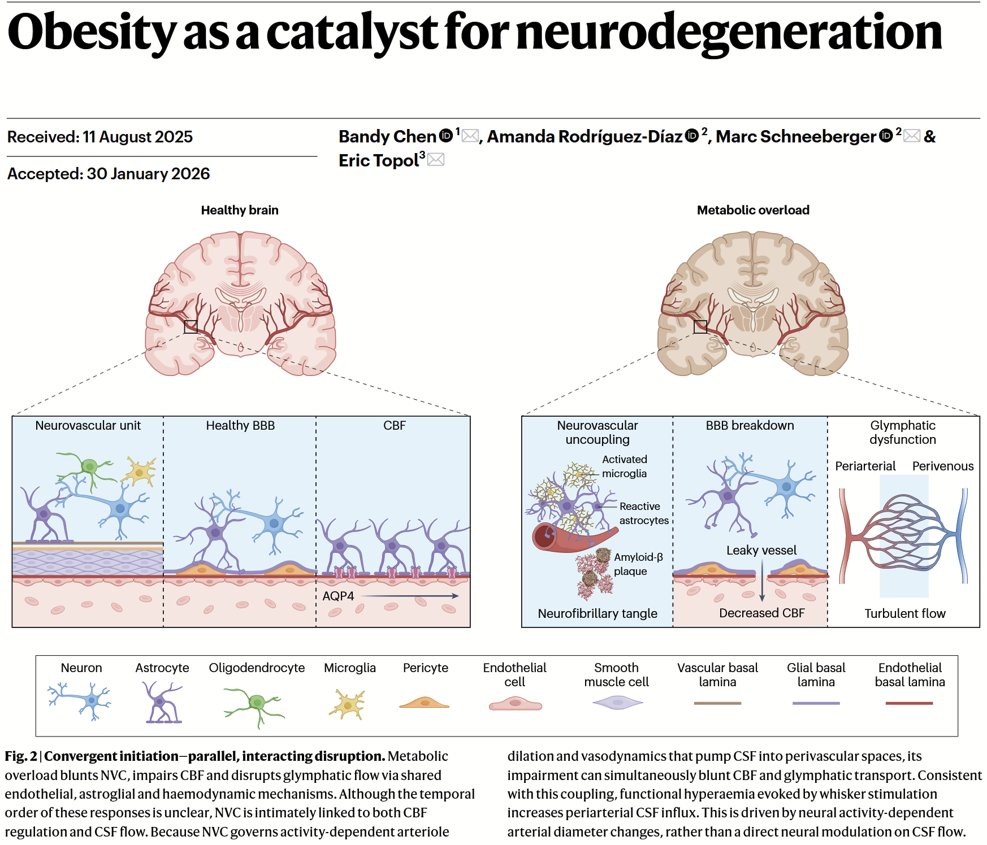
The parallel rise in obesity and neurological disorders suggests a potential mechanistic link between these two conditions. Midlife obesity is a well-established risk factor for cognitive decline and neurological disorders; however, the underlying mechanisms and cause-and-effect relationship remain poorly defined, in part owing to limited spatiotemporal resolution in existing studies and the absence of a unifying framework. Recent studies have begun to uncover pathways linking obesity to neurodegenerative vulnerability. First, we discuss how obesity induces brain-wide reprogramming across neural, metabolic and vascular systems including neurovascular coupling, blood–brain barrier integrity, cerebrospinal fluid dynamics and myelination. By systematically examining the disparate mechanisms for each condition, a more cohesive picture emerges, revealing progressive neurodegeneration driven by chronic metabolic overload. Lastly, we propose a framework that integrates these different mechanisms with both spatial and temporal specificity.
Paywalled Paper: