What it really is…
Xenophobia
Adjust for the Country
Sinophobia
Russophobia
What it really is…
Xenophobia
Adjust for the Country
Sinophobia
Russophobia
Joseph,
Many of us here have worked in jobs where we have to deal with suppliers in these countries and have many years experience with quality problems. These problems are very different from the type you encounter when dealing with US or European or Japanese countries, where there are legal recourse to extreme problems.
With Russia and China - if the product does not meet the quality specifications generally you have lost all your money and have no legal recourse (even worse if you’re taking these substances yourself and suffer health consequences).
Ignore these warnings and experiences at your own risk.
Joseph, I’m originally from Russia and I suffer from Russophobia.
@LaraPo and all,
I’m very cautious to try Chinese peptides.
Like my forray into rapa 3+ yr ago, some how my view that I was late to the DIY peptide dosing some 2 yr ago. I now find my self modestly in the middle of direct buying peptides direct from a Chinese retailer. One such Chinese is selling via a telegram channel and paying via crypto via the soft wallet Exodus.
LOL at 72yo it was definately in line with the assertion that you keep your brain young mainly by still doing difficult things that “are of consequence” vs cross word puzzels…
This is JMHO: today 90% of ALL peptides have some portion mfgered in some Chinese location, maybe hong kong etc. Then either wholey put into viles or raw materials shipped to other facilities US or not being put into viles. Even compounders 90% (my extrapolations) are using some form of Chinese ingredients.
We hear US made!!! What I hear, maybe US bottled (viled) but not many true bioreactor mfgers in the US… Its impossible to know the truth IMHO.
At each price point vendors are testing in quality.
Today: JMHO: the issue is no longer toxics, LPS, molds, IMHO its isomers that still pass the chromatology spike location verificatons the std COAs test for.
There’s not many COA labs. Alot of shared COAs if the raw material is traced back the same mfger, batch. One such lab is https://janoshik.com. A coa: Janoshik Analytical This coa is of a peptide from the direct to China vendor on telegram. 99.7%!!
I agree that its prudent to be careful. Given the range of places I’ve bought tirzepitide, SS-31 (20+) I can say I don’t know how to assure better quality, higher efficacy, lower risk. Given today my biggest question is as cost goes down, what happens to isomers in the batch that chromotoligically (??) test with the same spike locations? Efficacy of the isomers?
I have paid 100x (one hundred) price range for peptide XYZ. The latest tirzepitide I’ve bought might have been around $1 per 1 mg. IE a 40mg vile is $40. And list price for zep??? is what $1000/mo at 6mg/week. So $1000/24mg = $41 per mg or 40x. Reaching 100x is not hard.
Worse is peptides are like Chinese medicin, TCM, small nudges daily over time add up to modest improvements. Thus its difficult to gauge efficacy at the injection level!!!
= Summary
In the same way we take 6mg of rapa every Monday, with little effects to show for it, I’m taking a range of peptides and bioregulators (like peptides only shorter chains) on faith.
Yet I can see more muscle, less fat, more energy and whos to verify its my diet, my excersize or peptides / bioregulators.
There’s tiers of peptides that have long term thus subtle effects; SS-31, motsc, tb500, TA-1, even BPC-157 etc
Some medium term and you might tell the difference: Higher bolice dosed BPC-157, maybe ghk-cu, maybe others.
Short term very noticable: all of the GLP-1s, the sexual peptide PT-141 especially if combineed with cialis has definate noticable benefits but like alot of peptides efficacy is per person and per dose. Thus one dose is not correct for everyone and some may not see any benefit of any of these peptides. Thus $1000’s / mo at a clinic getting compounding pharm BPC-157 may have spotty $$ value.
I should stop my rambling… Like having an interest in taking Rapa on faith AND the willingness to deeply invest in self education and willingness to be N=1 experimentor with dosing, peptides and bioregulators can have good results. A bottom line here is: the $$/result value has a wide $$ range depending on alot of variables which like in rapa includes your specific body’s receptivity, disease state, co-activities you do in parallel (excersize, diet, sleep…).
Good luck, curt
Ha, I have said learning to use crypto for this has been the ultimate brain exercise for me… that which does not kill me and all
I was very leery of peptides made in china (and even buying things from India… I thought you all were NUTS), until I learned that most of the API’s for our US pharmacy supplied medicines are made in China, and even many of our generics are made in India… eureka!
Having said that, I buy peptides from a source who has them tested and then there are second rounds of random testing.
Core memory podcast
Biohacking has gone through a lot of different phases. Implanting an NFC chip in your hand is old school and having a blood boy is passé. Among Silicon Valley’s 20-somethings, all the cool kids have a peptide stack.
Jasmine Sun joins us this week to chat about all things peptides. She was previously a product manager at Substack, but now she writes about San Francisco culture on her own Substack. Jasmine recently published a deep dive in The New York Times about the trendy injectable and deets on the Chinese peptide rave (which you first read about from our new writer, Kylie Robison, last month).
One interesting thing mentioned in this podcast is that some people in San Francisco are getting their peptides tested for purity and quality by the free drug checking services (targeted primarily to prevent overdose, etc. in the illegal drug user population). See here: Drug Checking (SCOPE) - San Francisco AIDS Foundation

Related Substack post by Jasmine:
The search for the contents of my mystery “GLP-3” vial leads further into the wellness wild west.
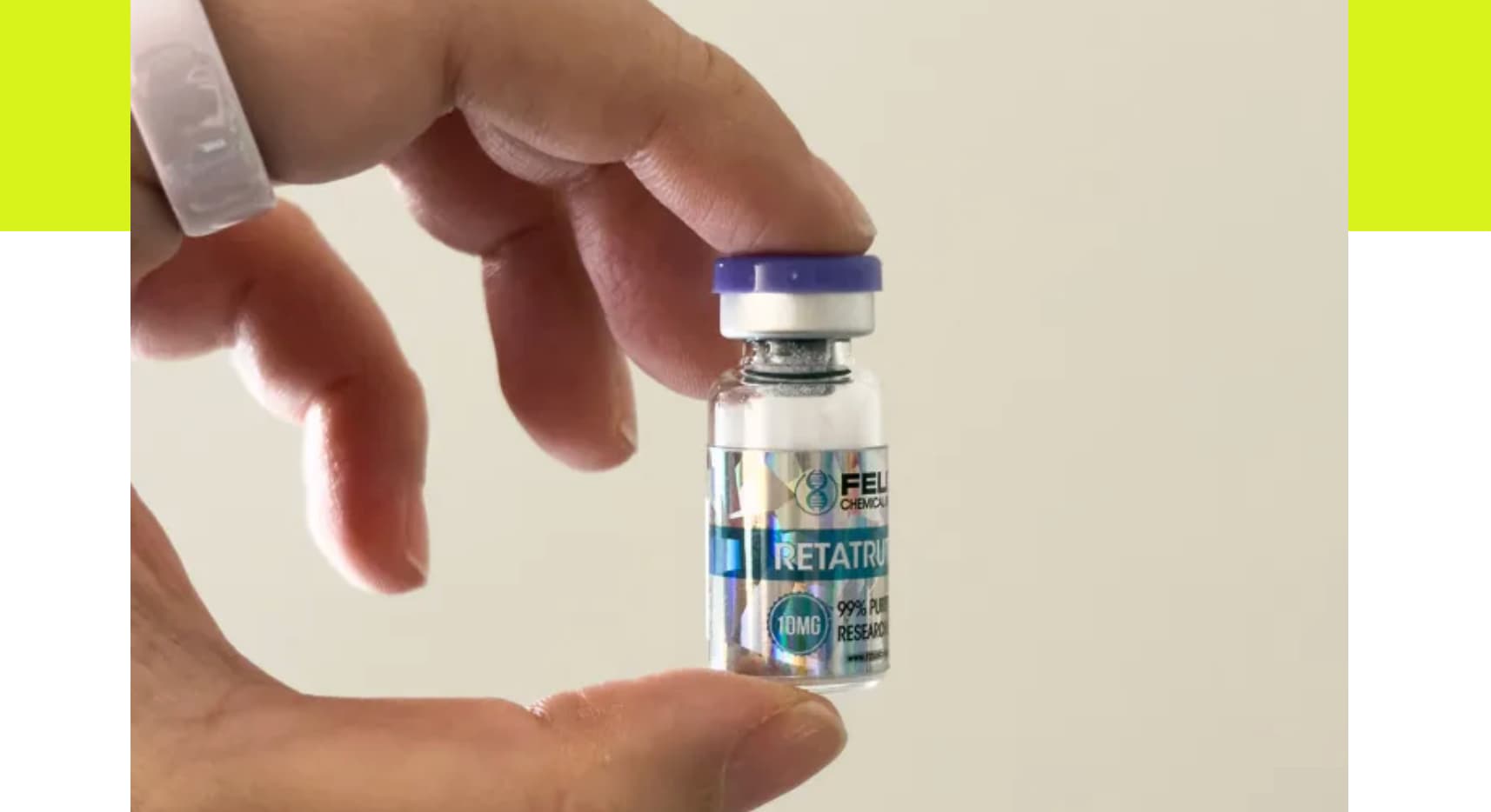
On TikTok, it’s disturbingly easy to find videos of influencers reconstituting vials of powdered peptides. In most, influencers hold up a vial of gray-market retatrutide, an unapproved weight loss drug colloquially known variously as GLP-3 (because it adds two extra agonists, glucagon and GIP), reta, and ratatouille. The other supplies on hand are alcohol swabs, syringes, and bacteriostatic water. These kitchen-counter chemists say how easy it is to turn a powdery substance in a bottle into a peptide that can be injected into the body. To figure out dosages, just use an online peptide calculator. The storage instructions are all over the place, but generally boil down to “keep it in your fridge for 30 to 90 days.”
Most tutorials don’t include simple, crucial instructions like “wash your hands” or “disinfect all surfaces.” The vast majority of influencers don’t wear latex gloves. The most anyone does is swipe an alcohol swab over the lids of the retatrutide and bacteriostatic water vials.
When I show these clips to a bona fide pharmacist and compounding specialist, her face falls.
Read the full story: Influencers are pushing suspicious peptides. How much are you willing to risk?
I am originally form Russia, Moscow, and have a healthy skepticism as well … but that is my motto for most countries in general.
Russia has some incredible Research “Institutes” - peptides including - and some production facilities associated with them… probably best in the world. But you have to be in the know to be able to identify them…
Is there a source that most biohackers trust though?
Peptide Sciences comes up a lot…
Did anyone try them?
If I were to try peptides (which I haven’t yet) - I would just get quotes from the top providers of the specific peptide you are interested in, as identified by https://www.finnrick.com , then choose the lowest priced, high quality vendor.
I just stumbled upon this… seems like it will likely impact this industry, though it seems primarily focused on the US compounding pharmacy market (though I’m not sure how they define “compounding” pharmacies…
Full act here: https://www.congress.gov/bill/119th-congress/house-bill/6509/text
H.R. 6509 , formally titled the Safeguarding Americans from Fraudulent and Experimental (SAFE) Drugs Act of 2025 , is a piece of bipartisan legislation introduced to amend the Federal Food, Drug, and Cosmetic Act (FD&C Act). Its primary objective is to curb the unregulated mass production of compounded medications—specifically targeting “knock-off” versions of FDA-approved drugs (such as GLP-1 agonists used for weight loss)—by tightening definitions and inspection protocols for compounding pharmacies.
The bill establishes stricter regulatory guardrails to distinguish between legitimate, individualized compounding and de facto drug manufacturing.
As of January 2026, the bill has been referred to committee but has not yet undergone markup or a floor vote. It remains active for the duration of the 119th Congress (2025–2026).
Legislative Consensus: There appears to be moderate-to-strong bipartisan consensus regarding the core issue: the safety risks posed by unapproved, mass-produced compounded drugs.
Projected Timeline:
Peptides seem to be almost as big of a bubble as AI these days… from The New York magazine:
Rachel, a 34-year-old, was turned on to peptides after visiting L.A. and seeing a group of her friends who all looked amazing. “I was like, ‘What’s going on? Why do you guys all look so jacked and your skin is really tight and nice? You guys party constantly.’ ” Their response: “Oh, we’re all on peptides.”
The global peptide-therapeutics market has swelled to over $50 billion in annual sales and is projected to nearly double again in roughly the next decade. The boom can largely be traced to the popularization of weight-loss drugs such as Ozempic and Wegovy; the ‘P’ in GLP-1 stands for ‘peptide.’ Their success helped normalize the idea of regular self-injection at home while opening the door for a wave of other compounds promising miraculous benefits.
There are peptides marketed for just about every wellness and cosmetic outcome you might imagine. BPC-157, used for reducing inflammation and healing injuries, is popular (Joe Rogan is a fan); so is GHK-Cu for anti-aging skin care. There are dozens more, for everything from quicker tanning (melanotan-II) to increased libido (PT-141).
Discord chat rooms buzz with users asking for advice on stacking and dosing protocols. On Reddit, where r/peptides has almost 140,000 members, people post pictures of their transformations. At New York’s elite prep schools, peptide use is rampant among students.
But the safety of what users inject comes down to individual suppliers with little to no oversight. Nearly 30 percent of the peptides tested by Finnrick, a peptide-testing start-up, are either mislabeled, under- or overdosed, or contaminated with toxins or foreign bacteria.
Life on peptides feels amazing. But are they actually safe? Ezra Marcus reports on the surge in popularity of the injectable compounds — and tries them himself:
Full story here: Life on Peptides Feels Amazing (New York magazine)
Hmm… There are a lot of things I can do that make me feel amazing, yet they may not all be good for me. I’m still waiting for hard evidence from other peptides outside of GLP-1s. Correct me if I’m wrong and there are others that have RCTs or significant proven benefits outside of feeling good.
Afaik Thymosin Alpha 1 has been used to treat hepatitis in some countries.
Yes, I read ta-1 has been used for many things and has some good safety data.
Ditto for SS-31
DSIP small RCTs
I see there are RCTs for GHK CHU (but I think that is for topical?)… I am very curious about this one because people rave, but I’m also more risk averse if something is purely cosmetic vs helping my long term health. Anyone here try it and/or know of anything downsides? (I hear it stings, but I’m more interested in negative health side effects).
Nothing is as big a bubble as the AI bubble.
Partial list of peptides with phase 3, rct data :
There’s a few more if one keeps looking. And even more if you look beyond what’s available in gray markets.
Yes. But do any of them really move the needle? Before I start injecting myself with grey market peptides based on influencer opinions, I want cold hard data as to why it will help me. I think we have that for prescription meds like Rapamycin, SGLT2I, ARBs, etc… And we have data for HGH and GLP-1s. I’m just not comfortable with the data for any of the other peptides. Hopefully we’ll get more soon. However, I am not aware of anything else that really moves the needle.
Then again, I am a peptide neophyte so if someone can really make a case for a peptide, I am open to changing my opinion. Convince me. 
All of the peptides I mentioned have rct data behind them, and have been approved by the FDA for the ailments they claim to treat. Not sure what else I could provide you.