[From RapAdmin: This video is from a guy who is promoting it as an mTOR1 inhibitor - seems like he’s just a guy who wants to make money off it. Lets not promote him, lets look at the data on niclosamide)
I agree I don’t want to promote him but science is always asking questions could this supplement be a complementary to Rapa? Or is this just a guy trying to make money?
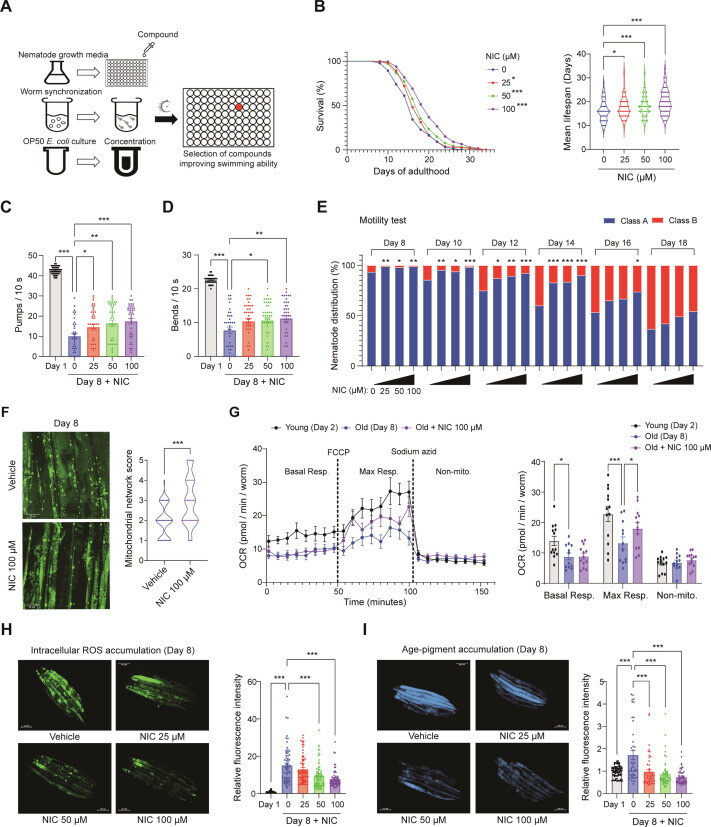
In conclusion, we demonstrated that NIC ameliorates frailty and age-associated metabolic and physical decline in nematodes and mice. These beneficial effects are mediated through the suppression of age-associated mTORC1 hyperactivation and the subsequent improvement of autophagic flux. However, further studies are necessary to elucidate how mTORC1 hyperactivation occurs in skeletal muscle during aging and how NIC inhibits mTORC1 hyperactivation. Additionally, the evaluation of the efficacy of NIC in tissues other than skeletal muscle remains insufficient. Notably, the inverse correlation between body weight and behavioral performance indicates that suppression of age-related fat accumulation may play a contributing role in maintaining physical performance (Supplementary Fig. 14). Therefore, further studies are required to explore the effects of NIC on hepatic and adipose tissue aging. Despite these limitations, we advocate that NIC is a promising anti-aging agent, similar to rapamycin.
I am not myself persuaded that it improves on rapamycin.
According to existing research, both niclosamide and rapamycin can extend the lifespan of Caenorhabditis elegans (C. elegans), but the extent of lifespan extension differs between the two. The specific details are as follows:
Niclosamide: Experiments conducted by researchers from the Korea Advanced Institute of Science and Technology (KAIST) showed that niclosamide extends the lifespan of C. elegans in a dose-dependent manner. Interventions with 25μM, 50μM, and 100μM of niclosamide increased the average lifespan of C. elegans by 8.11%, 12.19%, and 21.67% respectively.
Rapamycin: Studies have indicated that the lifespan-extending effect of rapamycin on C. elegans is generally relatively weaker, with reported average lifespan extension ranging from 8% to 50%. Additionally, other research has shown that when C. elegans is treated with rapamycin mediated by liposomes, the maximum extension of its average lifespan can reach 21.9%. However, high doses of rapamycin may lead to shortened lifespan due to drug toxicity.
In summary, niclosamide can significantly extend the lifespan of C. elegans at specific concentrations. Although rapamycin also exhibits a lifespan-extending effect, its lifespan extension data fluctuates greatly due to factors such as experimental conditions and dosage. Both substances play a certain role in extending the lifespan of C. elegans, but their specific effects vary across different studies.