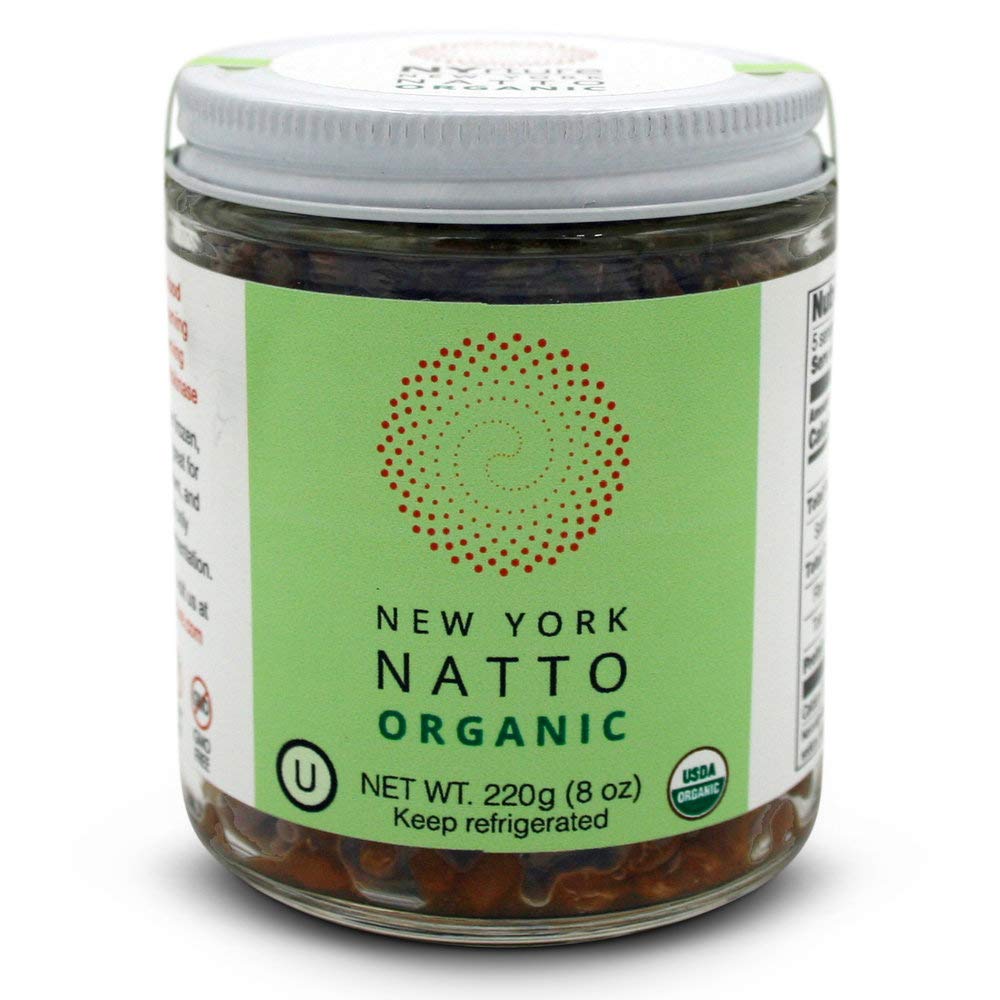
A single review argues that natto — fermented soybeans — concentrates four longevity-linked compounds (vitamin K2/MK-7, spermidine, the probiotic Bacillus subtilis, and soy isoflavones) at levels that meet or wildly exceed clinically studied doses in one 50 g serving, and ties habitual consumption to roughly 10% lower all-cause and 18–25% lower cardiovascular mortality in Japanese cohorts. It is a narrative review, not a new experiment, so it generates a hypothesis rather than proving cause and effect.
For a food that smells like ammonia and looks like it’s holding itself together with spider silk, natto has quietly built an impressive longevity résumé. A new review from Touro University California pulls the threads together and makes a bold claim: this humble Japanese breakfast staple may be one of the most nutrient-dense longevity foods on the planet, hiding in plain sight on the kitchen table.
The “big idea” is convergence. Most functional foods carry one headline compound. Natto, the author argues, stacks at least four independently studied longevity agents in a single dish. There’s menaquinone-7 (MK-7), a long-acting form of vitamin K2 that helps steer calcium away from arteries and into bone. There’s spermidine, a polyamine that switches on autophagy — the cell’s recycling system — and behaves like a calorie-restriction mimic. There’s Bacillus subtilis, a hardy spore-forming probiotic that survives stomach acid. And there are soy isoflavones, plant estrogens linked to lower cancer and cardiovascular death.
The dose math is the review’s most attention-grabbing move. One 50 g serving reportedly delivers about 429% of a typical vitamin K2 dose, 625% of a clinically used spermidine dose, 200% of a probiotic dose, and 73% of an isoflavone target — all from food, not pills. Fermentation does heavy lifting here, reportedly boosting vitamin C by 665% and zinc by 164% versus plain soybeans.
The epidemiology is genuinely interesting. Large Japanese cohorts (tens of thousands of people) link regular natto intake to roughly 10% lower all-cause mortality and 18–25% lower cardiovascular mortality. Worm experiments add mechanistic plausibility: natto extract and its bacteria extend lifespan in C. elegans and boost resistance to UV, heat, and oxidative stress through conserved insulin/IGF-1 and p38 MAPK pathways.
But here’s the catch the review is candid about: almost all the human data is observational and overwhelmingly Japanese, where natto eaters may simply live healthier lives overall. There is no randomized trial showing natto extends human life, and no mammalian lifespan experiment on natto itself. The compounds are promising; the whole-food claim remains, for now, an elegant and well-argued hypothesis rather than settled science.
Actionable Insights
The practical takeaway is modest but real: if you tolerate it, one 50 g serving of natto daily is a cheap, food-based way to hit clinically relevant doses of several longevity-linked compounds at once. Quantified effect sizes from the cited literature:
- All-cause mortality: habitual natto intake associates with ~10% lower risk (relative risk ~0.90); cardiovascular mortality ~18–25% lower (RR ~0.75–0.82). These are observational hazard/risk ratios, not guaranteed personal benefit.
- Vitamin K2 (MK-7): diets high in MK-7 associate with ~25% lower all-cause and ~50% lower CVD mortality; trials at 180 µg/day for 1–3 years preserved arterial flexibility and reduced spinal/femoral bone loss in postmenopausal women.
- Spermidine: higher dietary intake associates with a ~24–26% reduction in all-cause mortality (RR ~0.74–0.76).
- Isoflavones: ~10–20% lower all-cause mortality (up to 65–68% in some 40–79 subgroups — almost certainly an overstated, confounded figure).
- Nattokinase (high dose, 10,800 FU/day): reduced carotid plaque by up to 36% in one trial — but a serving of natto provides only ~37.5% of even the standard 2,000 FU dose, so food-level nattokinase is unlikely to replicate this.
Bottom line: treat natto as a sensible addition to an already good diet, not a drug. Avoid it if you are on warfarin/anticoagulants (the vitamin K content interferes), have a soy allergy, or are immunocompromised (rare B. subtilisopportunistic infection risk).
Source:
- Open Access Paper: Unusually High Enrichment of Bioactive Components for Healthy Aging and Longevity in Natto, a Fermented Soybean Food
- Author / Institution: Shin Murakami, Department of Foundational Biomedical Sciences, Touro Interdisciplinary Institute for Healthy Aging, Touro University California, Vallejo, CA.
- Country: United States (subject matter centered on Japan).
- Venue: Preprints.org (a preprint platform supported by MDPI, Basel, Switzerland). Posted 11 June 2026; doi:10.20944/preprints202606.0865.v1.
- Impact Evaluation: Preprints.org is a preprint server, not a peer-reviewed journal,