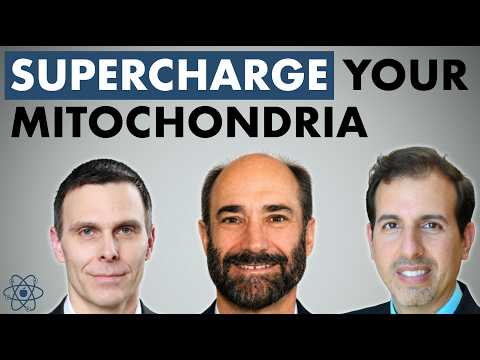
Can You Actually Reverse Mitochondrial Decline? | Roger Seheult | Michael Snyder | Matt Kaeberlein
I. Executive Summary
This panel discussion synthesizes perspectives from Dr. Roger Seheult (pulmonary/critical care), Dr. Michael Snyder (genomics/personalized medicine), and Dr. Matt Kaeberlein (biogerontology) on the biological reversibility of mitochondrial aging. The core thesis posits that mitochondrial dysfunction is a primary, modifiable driver of human age-related morbidity, but the scientific rigor across proposed interventions varies from clinically validated pharmacology to speculative pre-clinical extrapolation.
Dr. Seheult focuses on photobiomodulation (PBM) utilizing red to near-infrared (NIR) wavelengths (670–850 nm). Photons absorbed by mitochondrial chromophores—predominantly Cytochrome c Oxidase (Complex IV)—stimulate electron flux, elevate adenosine triphosphate (ATP) synthesis, and induce cellular signaling cascades. While localized retinal cone photoreceptor recovery is clinically demonstrated, claims regarding systemic “abscopal” mitochondrial rejuvenation and high-concentration extrapineal mitochondrial melatonin production remain largely hypothesis-generating in humans.
Dr. Snyder reviews emerging rejuvenation modalities, including exogenous mitochondrial transplantation, senolytics, GLP-1 receptor agonists (GLP-1 RAs), and dietary nutraceuticals (e.g., NMN, CoQ10). While GLP-1 RAs exhibit Level A cardiovascular and metabolic risk reduction, systemic mitochondrial transplantation and universal senolytic regimens remain strictly experimental or confined to acute ischemia-reperfusion settings. Furthermore, systematic reviews confirm that oral NAD+ precursors like NMN lack robust, reproducible metabolic efficacy in non-deficient, healthy human populations.
Dr. Kaeberlein delivers a rigorous counter-critique against popular longevity dogmas surrounding fasting, autophagy, and caloric restriction (CR). While mTORC1 inhibition via rapamycin reliably extends lifespan in diverse model organisms by derepressing macroautophagy, translating these findings directly to human lifestyle interventions encounters severe translational gaps. Current human assays cannot reliably quantify “productive” in vivo autophagy kinetics. Furthermore, severe CR (e.g., 30–40% restriction) in normative human environments introduces substantial clinical hazards: accelerated sarcopenia, loss of trabecular and cortical bone mineral density (BMD), and impaired cell-mediated immunity against pathogenic challenge. Translating biogerontology to clinical practice requires prioritizing body composition (preserving lean muscle mass and bone density) and validated pharmacotherapies over extreme caloric deprivation or unverified poly-supplementation stacks.
II. Insight Bullets
- Retinal cone photoreceptors possess one of the highest mitochondrial densities in human physiology, making color contrast sensitivity a surrogate functional assay for retinal bioenergetics.
- Age-related decline in retinal mitochondrial ATP production is estimated between 40% and 70%, impairing tritan (blue-yellow) and protan/deutan (red-green) color discrimination.
- Photobiomodulation (PBM) at long visible and near-infrared wavelengths (670–850 nm) photoactivates mitochondrial chromophores, primarily Cytochrome c Oxidase.
- Optical stimulation of Complex IV accelerates mitochondrial electron transport velocity, elevates the inner membrane potential (ΔΨm), and acutely enhances ATP yield.
- Clinical pilot trials demonstrate that morning exposure to 670 nm light transiently improves cone-mediated color contrast thresholds in individuals aged >40 years.
- The proposed systemic “abscopal effect” of PBM—where peripheral tissue irradiation enhances distal, shielded organ bioenergetics—is hypothesized to be mediated by circulating cytokine and extracellular vesicle signaling.
- Reactive oxygen species (ROS)—including superoxide (O2∙−), hydrogen peroxide (H2O2), and hydroxyl radicals (∙OH)—are obligate byproducts of incomplete four-electron reduction at Complex IV.
- Extrapineal melatonin is synthesized locally within mitochondrial matrices across diverse peripheral tissues at concentrations significantly exceeding pineal gland output.
- Mitochondrial melatonin acts as a direct scavenger of free radicals and upregulates endogenous antioxidant defenses, including Superoxide Dismutase (SOD2) and Glutathione Peroxidase (GPx).
- Chronic metabolic pathologies (e.g., obesity, type 2 diabetes, endothelial dysfunction) establish baseline mitochondrial oxidative stress that amplifies acute inflammatory insults.
- Exogenous mitochondrial transplantation involves isolating functional autologous or allogeneic mitochondria and administering them into ischemic or damaged host tissues.
- Pediatric cardiac clinical applications demonstrate that autologous mitochondrial transplantation from skeletal muscle into ischemic myocardium improves weaning success from extracorporeal membrane oxygenation (ECMO).
- Mechanistic studies indicate that transplanted exogenous mitochondria do not merely replace energy production; their internalization triggers endogenous host mitophagy via the PINK1-Parkin pathway.
- Systemic, whole-body intravenous mitochondrial replacement therapy in normative aging remains an unproven hypothesis constrained by delivery kinetics, immune clearance, and tissue homing barriers.
- Cellular senescence involves irreversible cell cycle arrest accompanied by the Senescence-Associated Secretory Phenotype (SASP), which secretes pro-inflammatory cytokines and matrix metalloproteinases.
- Senolytics (e.g., Dasatinib + Quercetin, Fisetin) transiently disable pro-survival senescent cell anti-apoptotic pathways (SCAPs) to induce apoptosis selectively in senescent cells.
- Current human senolytic trials are limited to specific pathological niches (idiopathic pulmonary fibrosis, diabetic nephropathy) and lack validated long-term safety data in healthy populations.
- Autologous and allogeneic stem cell therapies face major translational hurdles in systemic longevity, notably oncogenic transformation risk and poor engraftment efficiency.
- Glucagon-Like Peptide-1 receptor agonists (GLP-1 RAs) reduce major adverse cardiovascular events (MACE) and all-cause mortality in diabetic and obese cohorts through pleiotropic, anti-inflammatory mechanisms.
- GLP-1 RAs exert neuroprotective, nephroprotective, and cardioprotective effects partially independent of direct body weight loss.
- “Microdosing” GLP-1 RAs for longevity in lean, non-diabetic individuals lacks prospective randomized controlled trial (RCT) evidence.
- Vitamin D3 supplementation is clinically supported for correcting verified hypovitaminosis D, but supra-physiological dosing without deficiency provides diminishing or negative returns.
- Co-administration of Vitamin K2 with Vitamin D3 is proposed to optimize calcium carboxylation into osteocalcin and matrix Gla protein, preventing ectopic vascular calcification.
- Oral Nicotinamide Mononucleotide (NMN) reliably elevates circulating NAD+ metabolites, but human meta-analyses show negligible impacts on glycemic control or lipid panels in healthy adults.
- Dietary nitrate from beetroot extract promotes endothelial nitric oxide (NO) generation via the enterosalivary nitrate-nitrite-NO pathway, reducing peripheral vascular resistance.
- Macroautophagy is an evolutionary recycling pathway wherein autophagosomes sequester damaged organelles and protein aggregates for lysosomal degradation.
- Genetic ablation studies in model organisms (C. elegans, Drosophila) demonstrate that intact autophagy machinery is strictly necessary for lifespan extension via caloric restriction or rapamycin.
- Rapamycin binds intracellular FKBP12 to inhibit mTORC1, thereby de-repressing the ULK1 autophagy-initiating kinase complex.
- Intermittent fasting protocols (e.g., 16:8 time-restricted eating) are widely marketed as autophagy inducers, but the precise fasting duration required to stimulate robust human tissue autophagy in vivo remains unestablished.
- Human clinical biogerontology currently lacks non-invasive, validated bioassays to quantify productive in vivo autophagic flux in solid organs.
- Severe caloric restriction (30–40% reduction) yields dramatic lifespan extension in protected rodent laboratory environments, but introduces severe clinical risks in humans.
- The CALERIE trial established that 12–25% caloric restriction in non-obese humans induces significant loss of lean skeletal muscle mass and reductions in areal bone mineral density (BMD).
- Sarcopenia and osteopenia represent critical clinical determinants of frailty, falls, loss of functional independence, and late-life all-cause mortality.
- Rodent models housed in thermoneutral, pathogen-free environments do not reflect the complex immunological and physical stressors faced by free-living humans.
- Nutritional quality and protein adequacy remain mandatory during any caloric deficit to prevent structural protein catabolism.
- Evolutionarily, the mTOR-IGF-1 signaling axis prioritizes growth, cellular translation, and reproduction under nutrient abundance, shifting to somatic maintenance during nutrient scarcity.
- Longevity interventions must balance anti-aging molecular signaling (mTOR down-regulation) against structural somatic integrity (maintaining musculoskeletal tissue).
- Over-extrapolating in vitro or nematode biogerontology mechanisms into aggressive human self-experimentation carries substantial risk of unquantified toxicities.
III. Adversarial Claims & Evidence Table
| Claim from Video / Speaker |
Speaker’s Evidence / Justification |
Scientific Reality (Current Clinical Data) |
Evidence Grade |
Verdict |
|
Photobiomodulation (PBM, 670–850 nm) reverses age-related retinal decline. (Seheult) |
Improvement in cone-mediated color contrast sensitivity in older adults following light exposure. |
Human RCTs confirm morning 670 nm exposure transiently improves tritan and protan/deutan color thresholds in aged retinas via mitochondrial membrane potential upregulation (Shinhmar et al., 2021; PMC11693665). |
Level B |
Strong Support |
|
PBM induces a systemic “abscopal effect” via circulating signaling.(Seheult) |
Body-only illumination with shielded head improved retinal color contrast; altered serum cytokine panels in mice. |
Pre-clinical and human pilot data demonstrate localized PBM alters systemic cytokine profiles and whole-body glucose utilization, but systemic anti-aging efficacy remains unvalidated (Shinhmar et al., 2023; Powner & Jeffery, 2024). |
Level C |
Plausible |
|
Mitochondria produce high levels of melatonin locally via NIR light.(Seheult) |
Extrapineal melatonin synthesis hypotheses (Zimmerman & Reiter) linking sunlight NIR to local ROS scavenging. |
In vitro and biochemical models confirm extrapineal mitochondrial melatonin synthesis, but direct quantification of non-invasive NIR sunlight inducing therapeutic systemic levels in humans is largely theoretical (Tan et al., 2013; Reiter et al., 2020). |
Level D (Translational Gap)
|
Speculative |
|
Systemic mitochondrial transplantation can rejuvenate aged humans.(Snyder) |
Autologous mitochondrial injections in pediatric cardiac ischemia and emerging pre-clinical cellular transfer models. |
Efficacy is demonstrated exclusively in acute focal ischemia (e.g., pediatric cardiac ECMO rescue) via localized injection; systemic IV delivery in healthy humans lacks pharmacokinetic and delivery validation (Emani et al., 2017; Melero-Martin et al., 2024). |
Level C |
Speculative |
|
GLP-1 RAs (Semaglutide/Tirzepatide) act as broad longevity therapeutics. (Snyder) |
Large-scale multi-organ clinical trials demonstrating cardiometabolic, renal, and cognitive improvements. |
Human meta-analyses and Phase 3 CVOTs (SELECT, STEP-HFpEF) confirm reductions in MACE, CV mortality, and all-cause mortality in diabetic/obese cohorts; anti-aging use in lean non-diabetics remains unproven (Lincoff et al., 2023; Oxford Meta-Analysis, 2025). |
Level A |
Strong Support (Target Cohorts)
|
|
Oral NMN supplementation provides definitive clinical anti-aging efficacy. (Snyder) |
Preclinical NAD+ biology and surrogate energy/metabolic markers. |
Systematic reviews show oral NMN safely raises blood NAD+, but fails to produce statistically significant improvements in glycemic control, lipid profiles, or functional lifespan in healthy humans (MDPI Meta-Analysis, 2024; Pfeffer et al., 2022). |
Level A |
Unsupported (Clinical Efficacy)
|
|
Intermittent fasting reliably boosts productive autophagy in humans.(Kaeberlein) |
Critique: Popular claims of fasting-induced autophagy are unverified extrapolations. |
No direct in vivo biomarkers reliably validate that brief fasting (16–24 h) induces productive organ-specific autophagy in humans; cellular assays remain limited to peripheral blood surrogates (Mizushima & Levine, 2020; Stekovic et al., 2019). |
Level C |
Unsupported (Popular Dogma)
|
|
Severe Caloric Restriction (30–40%) is a viable human longevity strategy. (Kaeberlein) |
Critique: Severe CR causes sarcopenia, osteopenia, and immunocompromise in human environments. |
The CALERIE trial confirms 12–25% CR reduces cardiometabolic risk but triggers significant losses in total-body lean mass and femoral/lumbar bone mineral density, elevating frailty risk in late life (Ravussin et al., 2015; Villareal et al., 2016). |
Level B |
Safety Warning |
IV. Actionable Protocol (Prioritized)
=====================================================================
EVIDENCE-BASED TRANSLATIONAL GEROSCIENCE FRAMEWORK
=====================================================================
[HIGH CONFIDENCE TIER: Level A/B Validated Clinical Protocols]
│
├── 1. Targeted Photobiomodulation for Retinal Function:
│ ├── Modality: Narrowband red light (670 nm, ~8 mW/cm2 irradiance).
│ ├── Protocol: 3-minute morning exposure (08:00–10:00) 1–2 times weekly.
│ └── Indication: Mitigating age-related cone contrast sensitivity loss (>40 years).
│
├── 2. GLP-1 Receptor Agonist Pharmacotherapy (Indication-Specific):
│ ├── Agents: Semaglutide, Tirzepatide under standard clinical supervision.
│ ├── Indication: Type 2 Diabetes, Obesity (BMI > 30 or > 27 with comorbidities), ASCVD.
│ └── Outcomes: Significant reduction in MACE, renal decline, systemic inflammation, and all-cause mortality.
│
├── 3. Musculoskeletal Preservation Over Extreme Caloric Deficits:
│ ├── Resistance Training: Progressive overload 3–4x weekly to preserve lean muscle mass.
│ ├── Protein Target: 1.2–1.6 g/kg/day high-quality intact protein to prevent sarcopenia.
│ └── Caloric Intake: Moderate eucaloric or mild energy restriction (5–10%) avoiding bone/muscle wasting.
[EXPERIMENTAL TIER: Level C/D Evidence / High Safety Margin]
│
├── 1. Endothelial Nitric Oxide Support:
│ ├── Dietary Nitrate: Standardized beetroot extract or leafy greens (300–400 mg nitrate).
│ └── Target: Vasodilation, reduction in systemic vascular resistance, endothelial support.
│
├── 2. Pulsed mTORC1 Modulation (Investigational):
│ ├── Intermittent low-dose Rapamycin (3–6 mg weekly) within approved clinical trials.
│ └── Objective: Transient autophagy stimulation while preserving basal mTORC2 metabolic function.
│
├── 3. Micronutrient Correction (Deficiency-Driven):
│ ├── Vitamin D3 (1,000–2,000 IU/day) titrated to target serum 25(OH)D of 30–50 ng/mL.
│ └── Co-administration with Vitamin K2 (MK-7, 90–180 mcg/day) for calcium homeostasis.
[RED FLAG ZONE: Debunked, Unsafe, or Safety Data Absent]
│
├── 1. Extreme Caloric Restriction (< 1,000 kcal/day in adults):
│ └── Risk: Severe bone mineral density depletion (osteopenia), sarcopenia, immune suppression.
│
├── 2. Unregulated Systemic Stem Cell / Mitochondrial “Rejuvenation” Injections:
│ └── Risk: Ectopic tissue formation, pulmonary microembolism, oncogenesis, absence of human phase 3 data.
│
├── 3. High-Dose Unverified Polypharmacy & Unmonitored Senolytic “Hit-and-Run” Protocols:
│ └── Risk: Off-target kinase inhibition (Dasatinib toxicity), hepatic injury, unquantified drug interactions.
=========================================================================
1. Photobiomodulation and Mitochondrial Bioenergetics
-
Chromophore Photoexcitation: Long visible and near-infrared photons (600–900 nm) penetrate biological tissue and are selectively absorbed by metal centers in Cytochrome c Oxidase (CCO / Complex IV), specifically the heme a/a3 and binuclear copper centers (CuA and CuB).
-
Nitric Oxide Dissociation: Under baseline cellular stress, nitric oxide (NO) competitively binds the binuclear catalytic site of CCO, inhibiting oxygen consumption. Photon absorption induces photodissociation of NO from CCO, restoring normal electron flux to molecular oxygen.
-
Proton Gradient and Hormesis: Unblocked electron transport restores the electrochemical proton gradient (ΔμH+) across the inner mitochondrial membrane, driving rotational catalysis of F1F0-ATP synthase. A controlled, transient burst of reactive oxygen species (ROS) activates nuclear factor erythroid 2-related factor 2 (Nrf2) and Peroxisome proliferator-activated receptor gamma coactivator 1-alpha (PGC-1α), initiating antioxidant transcription and mitochondrial biogenesis.
2. Autophagy, Mitophagy, and the mTORC1/AMPK Signaling Axis
-
ULK1 Complex Regulation: Initiation of macroautophagy relies on the unc-51 like autophagy activating kinase 1 (ULK1) complex (ULK1, ATG13, FIP200, ATG101). When nutrients are abundant, activated mTORC1phosphorylates ULK1 at inhibitory residue Ser757, disrupting its interaction with AMPK.
-
Energy Stress Activation: Under energy depletion or pharmacological mTOR inhibition (via rapamycin/sirolimus), the drop in intracellular ATP activates AMPK, which directly phosphorylates ULK1 at activating sites (Ser317 and Ser777) while phosphorylating the TSC1/TSC2 complex and Raptor to silence mTORC1.
-
Vesicle Nucleation and Elongation: Active ULK1 phosphorylates the Class III PI3K complex (VPS34, Beclin-1, p150, ATG14), producing local pools of phosphatidylinositol 3-phosphate (PI3P). This recruits downstream effectors (WIPI2) and initiates two ubiquitin-like conjugation systems: the ATG12–ATG5–ATG16L1 complex and the cleavage/lipidation of cytosolic LC3-I to phosphatidylethanolamine-conjugated LC3-II, which inserts into the expanding autophagosome membrane.
-
Mitophagy (PINK1-Parkin Pathway): Depolarized, damaged mitochondria fail to import and degrade PTEN-induced kinase 1 (PINK1). Accumulated PINK1 on the outer mitochondrial membrane (OMM) recruits and phosphorylates the E3 ubiquitin ligase Parkin, triggering polyubiquitination of OMM proteins (e.g., VDAC1, Mfn1/2). Ubiquitinated mitochondria are bound by autophagy receptors (p62/SQSTM1, OPTN), tethering the damaged organelle to LC3-II-positive autophagosomes for lysosomal clearance.
Produced by Gemini 2.5 Pro