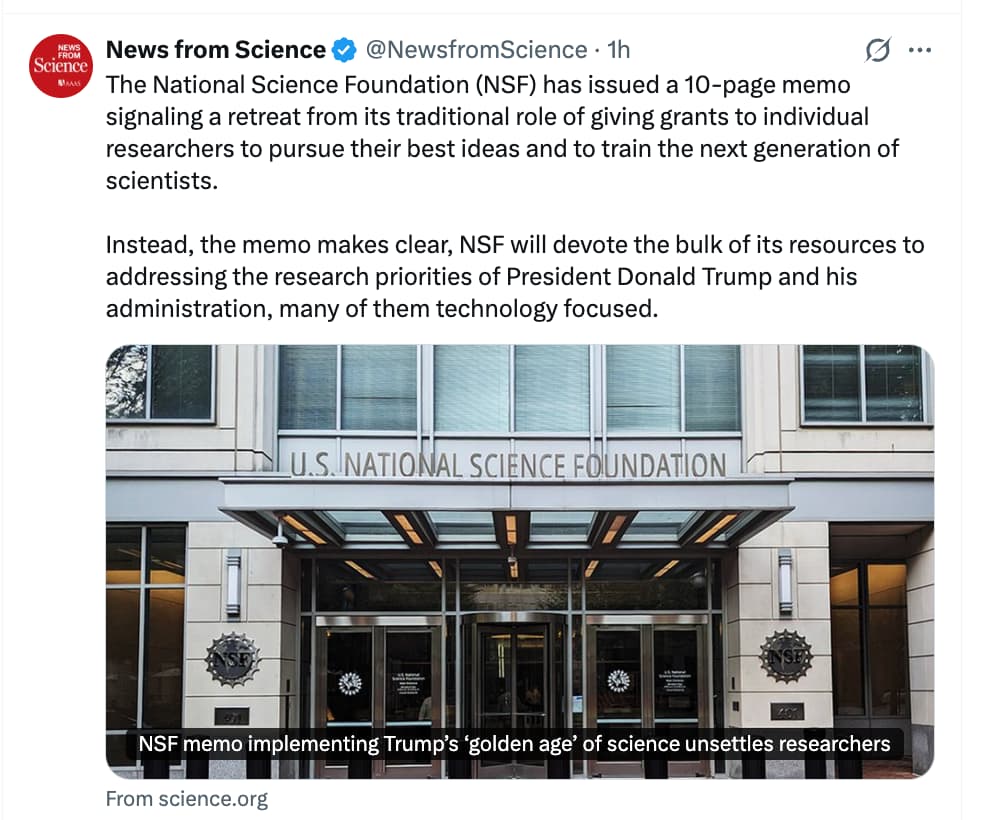
For many U.S. scientists funded by the National Science Foundation (NSF), the agency they know and loved died on 10 September.
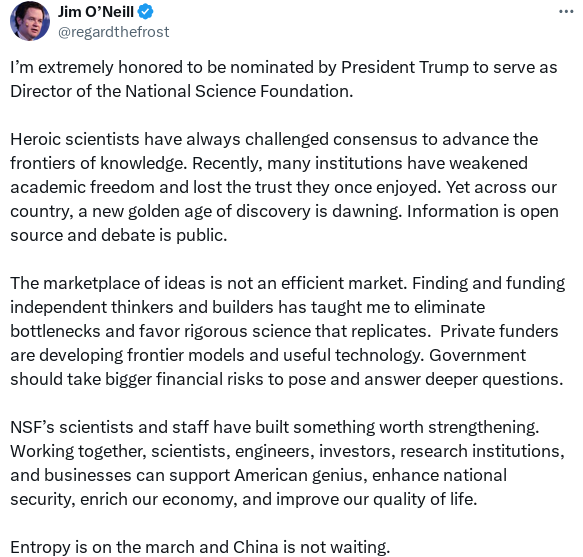
That’s the date NSF issued a 10-page memo signaling a retreat from its traditional role of giving grants to individual researchers to pursue their best ideas and to train the next generation of scientists. Instead, the memo makes clear, NSF will devote the bulk of its resources to addressing the research priorities of President Donald Trump and his administration, many of them technology focused. Those include a previously announced $1.5 billion initiative, called X-Labs, to develop quantum science and artificial intelligence (AI)-driven scientific instrumentation, and two new programs—Grand Research Challenges and Frontier Initiatives—mentioned for the first time in the memo.
White House officials “are laying down the process by which they plan to control NSF,” says engineer Dan Arvizu, former chair of the National Science Board (NSB), its presidentially appointed oversight body. “And I think this is the first step.” An NSF spokesperson declined to answer specific questions about the memo, saying it speaks for itself.
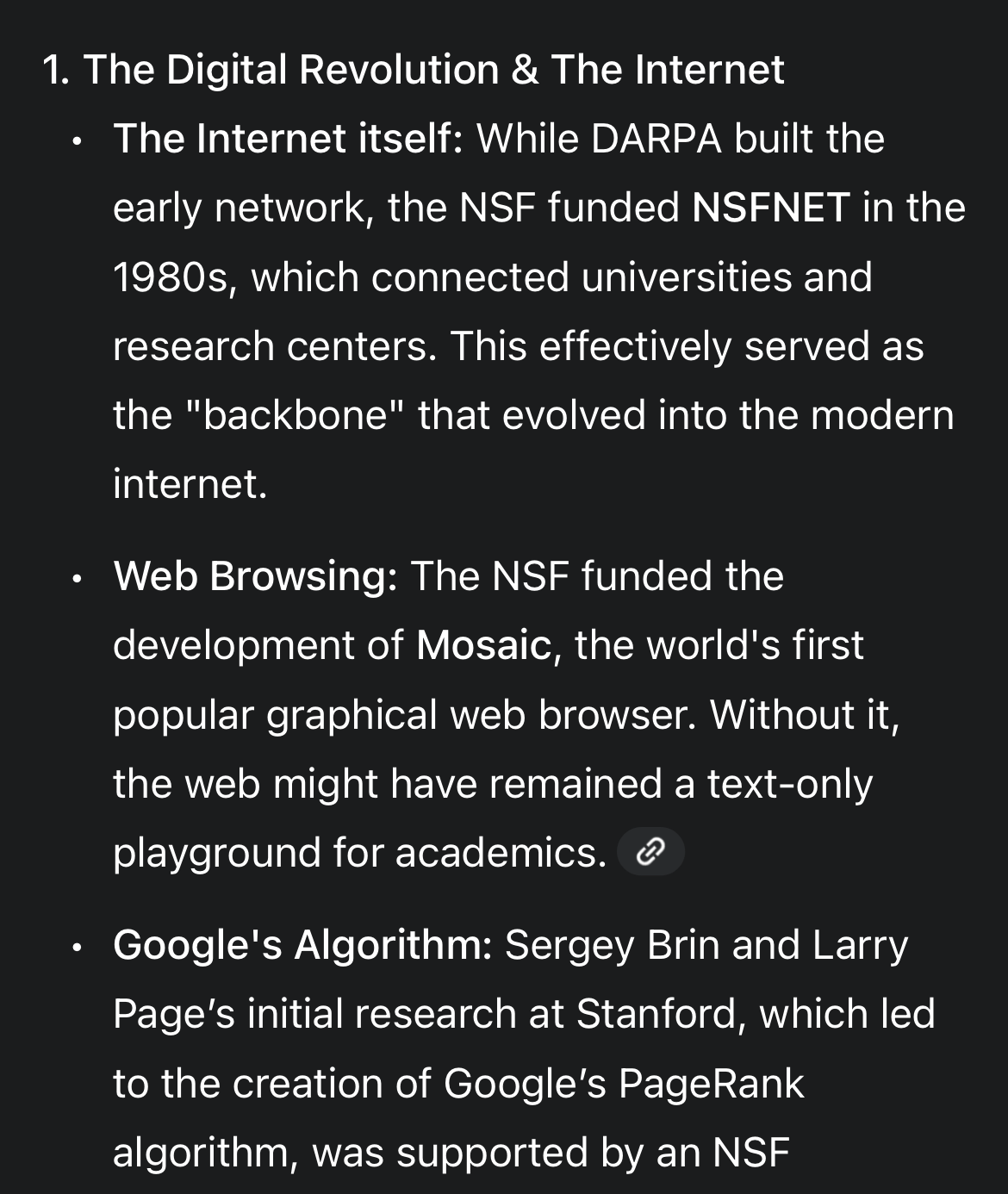
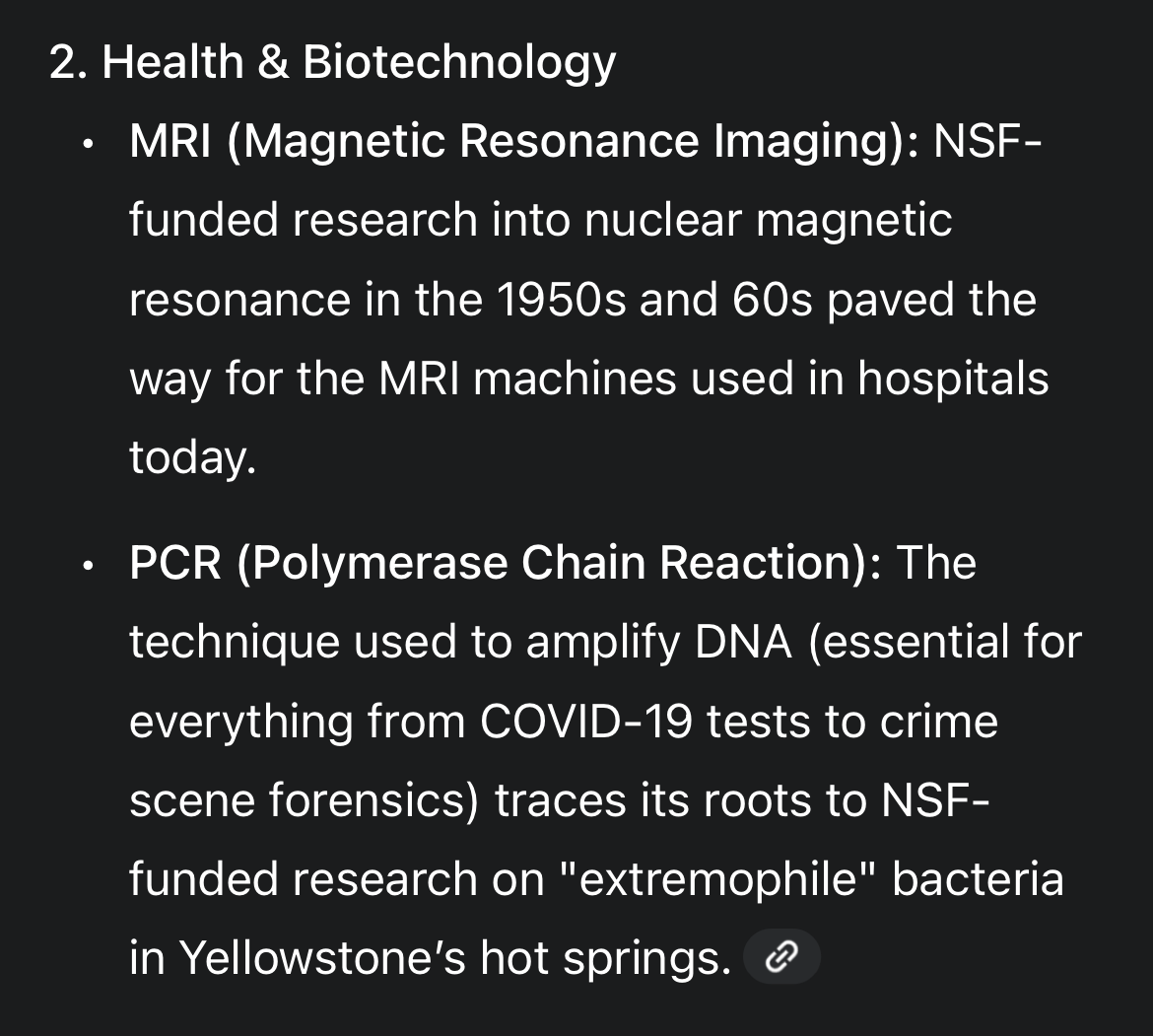
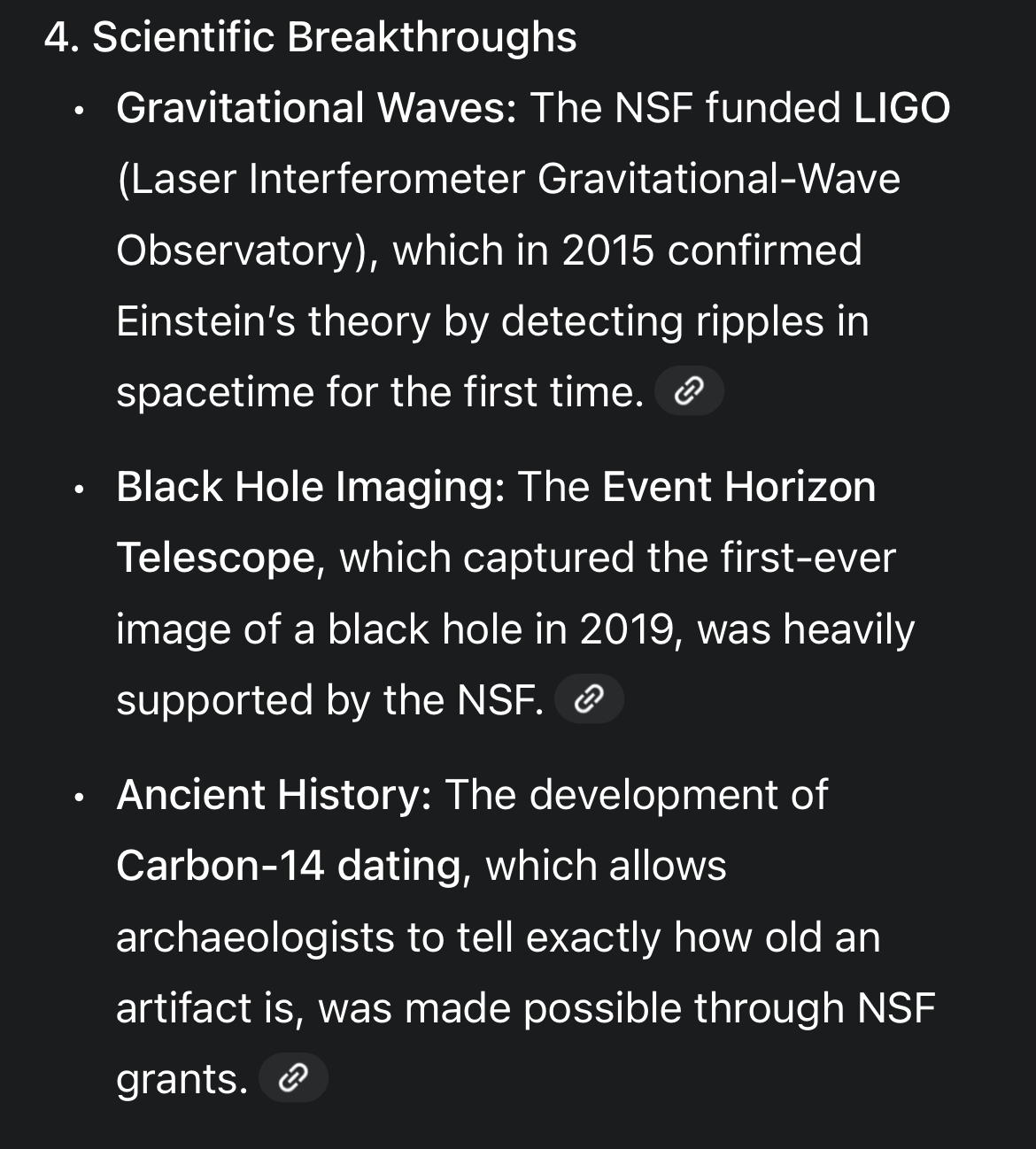
NSF watchers say the memo includes ideas that could help the agency make better decisions about what areas to fund and who should carry out the research. But many scientists worry NSF’s pursuit of alternative funding approaches could threaten the quality of the science it supports.
For example, although the memo voices strong support for what it calls “curiosity-driven, blue-sky research,” Stone suggests NSF needn’t spend a lot of money on such grants. Consistent with that belief, NSF this summer announced 12 funding solicitations covering the agency’s core disciplinary fields that would receive a total of $1.5 billion, an amount that represents just one-sixth of its current $8.8 billion annual budget. The memo says such research “can often be derisked quickly and inexpensively” through an existing funding mechanism that makes relatively small “exploratory” awards to test the viability of the research.
At the same time, the memo says NSF plans to give large awards lasting 5 years or longer “to exceptional researchers … pursuing transformative questions.” That change would address persistent concerns that the average size of an NSF grant hasn’t kept pace with the cost of doing science.
The memo also seeks to blunt criticism that NSF’s merit-review process is too conservative, proposing that individual members of grant-review panels be given a “golden ticket” to champion a controversial idea that might otherwise be squashed by their colleagues. NSF program officers have always had the ability to recommend funding a proposal with mediocre review scores, but empowering reviewers is seen as a good way to avoid “group think.”
However, many scientists who spoke with Science fear the memo ignores potential downsides of these changes. “The central question is not whether NSF should experiment with new mechanisms,” says Leslie Rissler, who this summer left her job as a senior biology administrator at NSF to become dean of the college of science at the University of Montana. Instead, she says, “It’s whether those initiatives will divert support from the universities that maintain the laboratories, field stations, collections, graduate programs, and intellectual capacity on which science itself depends.
NSF’s budget, adjusted for inflation, is essentially the same as it was 20 years ago, and Trump wants to cut it by half next year. Its staff is also depleted after layoffs and resignations.