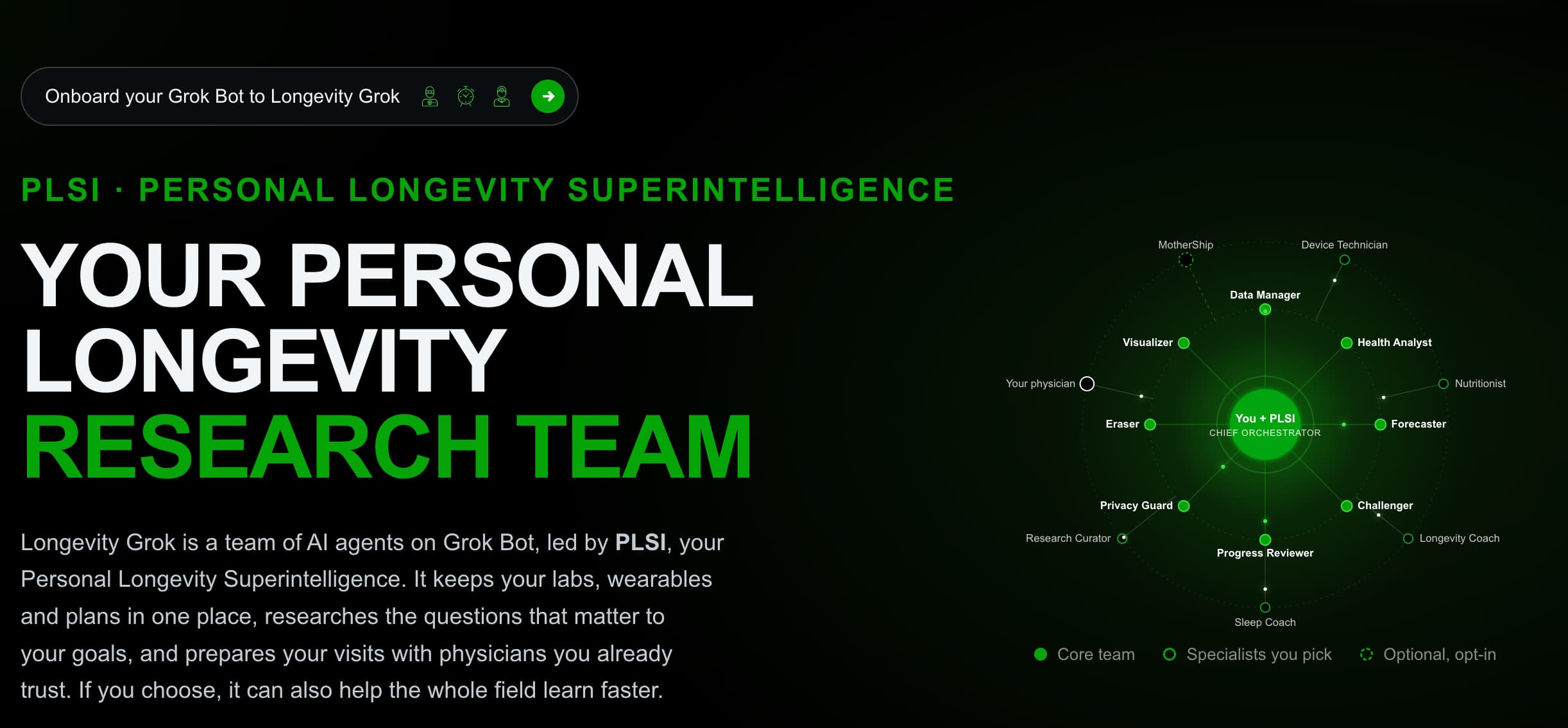
Try this out and let us know your thoughts:

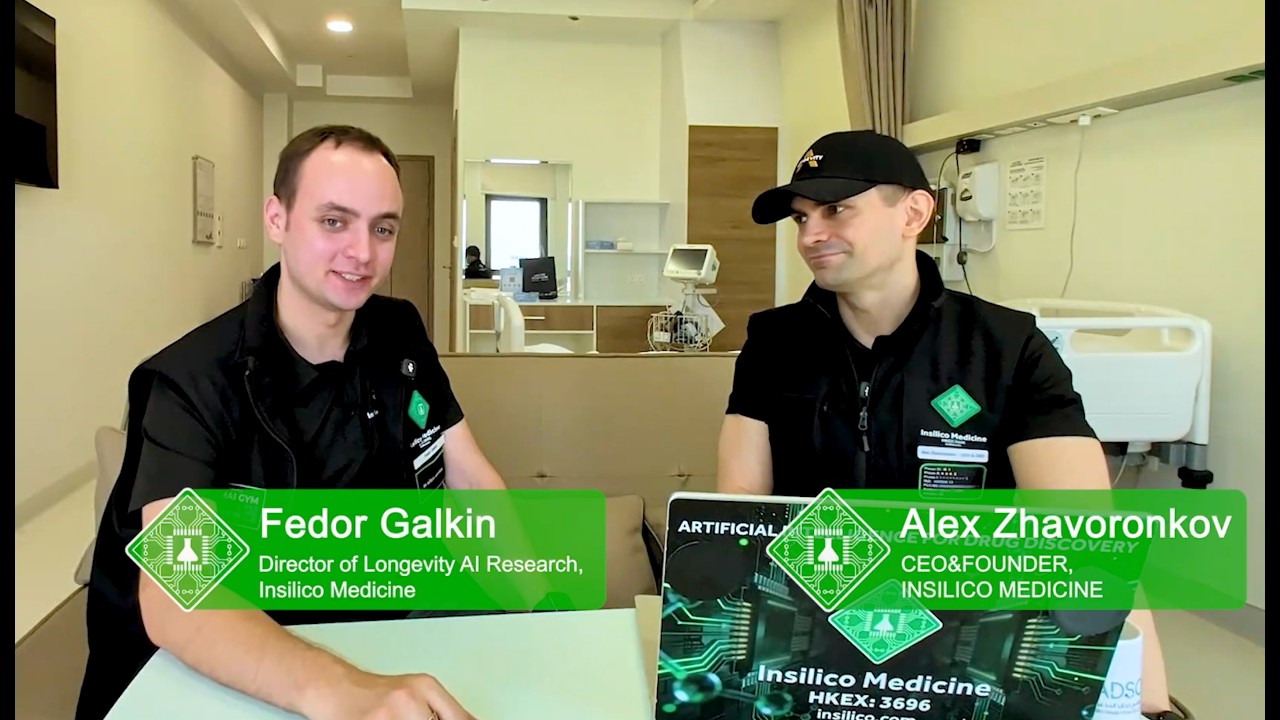
A video intro to the program:

I. Executive Summary
Insilico Medicine’s demonstration introduces PSI, a multi-agent artificial intelligence framework operating on xAI’s Grok infrastructure designed to aggregate fragmented personal biometric streams and automate health optimization workflows.Personal health data traditionally suffers from extreme compartmentalization across independent hardware and software platforms—including continuous actigraphy, electronic food logs, and intermittent longitudinal blood chemistry. This siloed architecture obscures multi-system interactions, such as the convergence of chronic sleep restriction, elevated physiological stress, and escalating atherogenic lipoproteins. PSI addresses this diagnostic fragmentation through a unified conversational environment that coordinates specialized, autonomous agents spanning sleep optimization,biomechanics, clinical nutrition, and translational research.
The platform executes a structured, multi-step pipeline that transitions raw observational tracking into clinical decision-support workflows. Users ingest multi-modal data streams via API integrations with established consumer services, direct open wearable protocols, or structured biomarker document uploads. Rather than delivering unconstrained, hallucination-prone algorithmic recommendations, PSI contextualizes analytical findings against missing physiological variables,explicitly identifying clinical diagnostic blind spots such as absent continuous blood pressure metrics. Interventions targeting atherogenic dyslipidemia—specifically concurrent elevations in low-density lipoprotein cholesterol (LDL-C) and apolipoprotein B (ApoB)—are algorithmically constrained by user-defined schedule logistics and pragmatic behavioral adherence ceilings.
Crucially, the system shifts personal health management from passive retrospective tracking toward prospective,uncertainty-bounded forecasting. PSI projects longitudinal biomarker trajectories across status quo versus intervention scenarios using counterfactual predictive modeling, enforcing scheduled clinical re-evaluation dates for empirical validation. The framework bridges individual self-management with professional clinical governance by programmatically compiling standardized, one-page clinical dossiers and physician communication briefs for primary care review. Furthermore, PSI operationalizes distributed citizen science via its research autopilot function, allowing users to allocate idle compute budgets toward targeted longevity questions, querying platforms like Insilico’s PandaOmics engine, and contributing anonymized, de-identified datasets to community research initiatives without clinical overreach or unsubstantiated biological claims. By automating morning adherence schedules and providing calibrated evidence appraisals for dietary supplements, the platform maintains a practical boundary between algorithmic lifestyle guidance and licensed medical practice. In doing so, it replaces fragmented wellness consumerism with a systematic, closed-loop diagnostic framework that grounds everyday behavioral adjustments in empirical biomarker tracking and rigorous scientific methodology.
II. Insight Bullets
-
Insilico Medicine developed PSI as a personal multi-agent artificial intelligence team engineered to consolidate health data streams and assist longevity workflows.
-
The system is designed to resolve diagnostic fragmentation across commercial tracking applications covering sleep metrics, physical activity, dietary intake, and clinical laboratory records.
-
Deployment is supported via a public open-source software repository or direct onboarding through the official web portal interface.
-
Initial configuration uses a conversational intake process to record baseline lifestyle habits, scheduling constraints,and personalized longevity targets.
-
Users maintain granular privacy control and can selectively omit non-essential demographic identifiers, such as birth year, during system setup.
-
PSI integrates natively with digital health data repositories, including Apple Health, Google Health, open wearable protocols, and the FatSecret nutrition platform.
-
The system accepts historical longitudinal records via structured document uploads encompassing four-month panels of serum biomarkers, actigraphy logs, dietary entries, and perceived stress data.
-
Role-based architectural presets configure the multi-agent system for distinct use cases, specifically individuals,clinical physicians, and laboratory researchers.
-
The individual role coordinates specialized modular agents focused on sleep architecture, physical exercise,medical nutrition therapy, and scientific literature retrieval.
-
Specialist agents resolve conflicting lifestyle recommendations into a single, cohesive daily protocol aligned with user-defined availability.
-
The platform connects directly via API endpoints to Insilico Medicine’s PandaOmics platform (Insilico Medicine) and proprietary aging pathway algorithms for target evaluation.
-
The architecture queries publicly available scientific databases and indexed biomedical literature to address user research inquiries.
-
Users can allocate spare computational usage from xAI Grok toward autonomous background longevity research under strict daily and weekly budget ceilings.
-
The research autopilot feature investigates biological inquiries without user intervention, such as the pathophysiological impact of chronic sleep restriction on peripheral blood biomarkers.
-
Longitudinal multi-metric analytics correlate concurrent elevations in atherogenic lipoproteins (LDL-C and ApoB) with reductions in sleep duration and inconsistent exercise adherence.
-
The “Life Arrow” graphical interface categorizes patient trajectory into historical records on the left, present physiological status in the center, and projected health risks on the right.
-
The analytical engine flags omitted clinical parameters—such as absent blood pressure data—and highlights how these gaps limit cardiovascular risk modeling precision.
-
Algorithmic triage prioritizes clinically significant abnormalities, isolating rising LDL-C and ApoB levels as the primary targets for behavioral modification.
-
Protocol generation incorporates practical constraints, eliciting cooking time limits and weekly exercise thresholds before outputting lifestyle interventions.
-
The resulting lifestyle prescription incorporates increased soluble dietary fiber, mixed aerobic and resistance training, daily postprandial walking, and earlier nocturnal wind-down routines.
-
Multi-agent cross-verification modifies initial protocol proposals by reducing excessive training volume and adopting conservative, uncertainty-adjusted outcome forecasts.
-
Counterfactual predictive trajectory charts compare status quo biomarker projections against intervention adherence, displaying statistical confidence intervals over time.
-
The platform enforces closed-loop accountability by scheduling formal re-testing dates (e.g., three-month intervals) to empirically evaluate ApoB and lipid panel changes.
-
Clinical decision support tools search and compare local physician specialties and provide direct links to clinical booking portals.
-
PSI compiles automated, one-page clinical briefing dossiers and patient email drafts summarizing longitudinal lab trends and proposed interventions for primary care review.
-
Daily execution is reinforced through automated morning checklists delivered via scheduled notifications covering nutrition, specific workout splits, and bedtime goals.
-
The supplement evaluation module evaluates clinical efficacy, adverse event profiles, drug interactions, and financial costs before generating specific physician discussion questions.
-
The clinical configuration assists healthcare providers by summarizing patient records, reviewing published literature, and identifying pertinent clinical trial options.
-
The researcher configuration assists laboratory teams in biological target validation, evidence synthesis, and initial drafting of grant proposals and scientific manuscripts.
-
Users can elect to contribute anonymized biometric records and computational research notes to Insilico Medicine’s collaborative Longevity Mothership initiative.

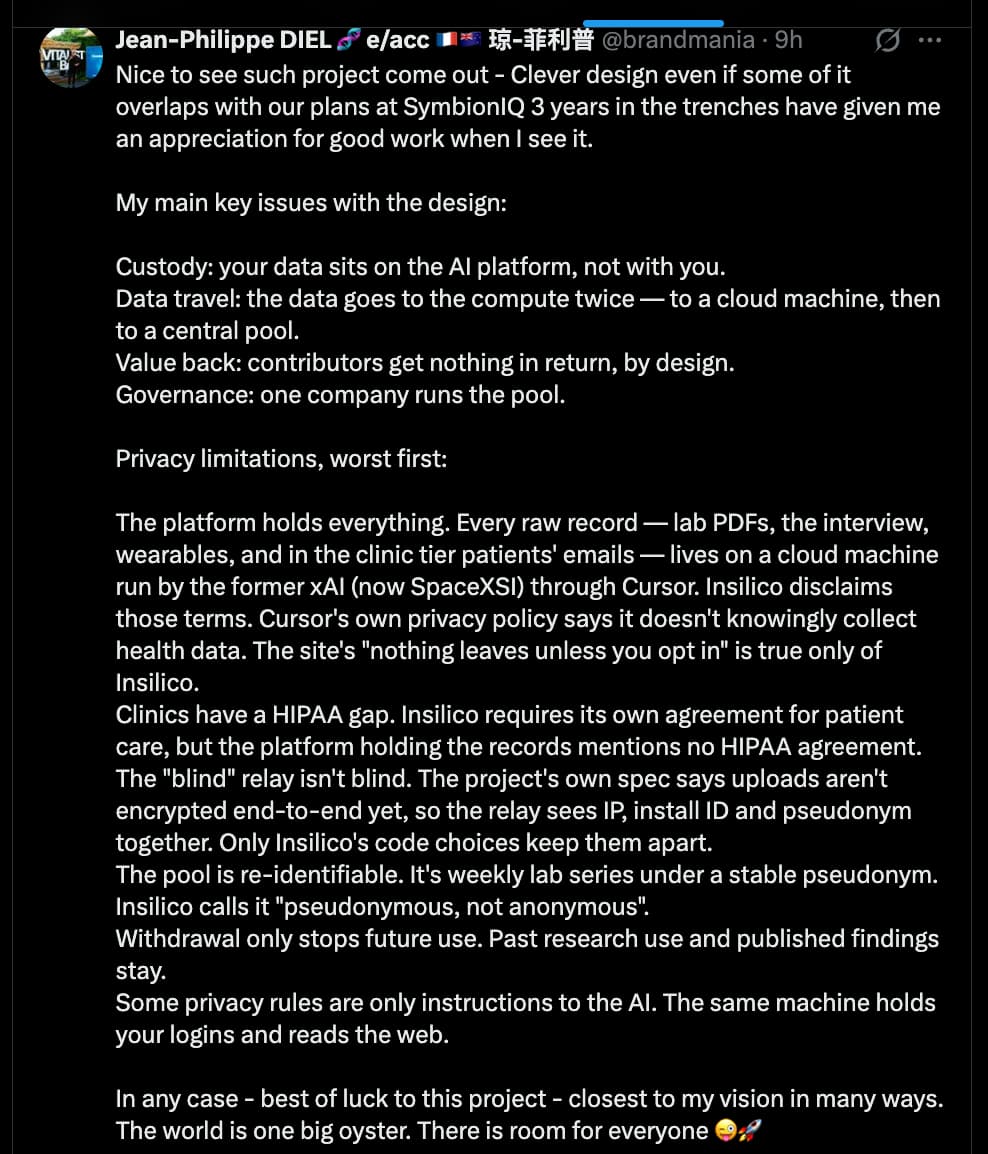
David Sinclair is in on another “opportunity”. No thanks. Super Intelligence - who is pushing this rebranding of AI… we all know… another association that stinks to high heaven. That right there is two giant strikes against it. One day, AI will fulfill its promise as personalized health coach, but that day is not today.