I just found this Longevity-focused Podcast… and it looks reasonably good:
Recent Episodes:
Our full list of good Longevity oriented Podcasts:
I just found this Longevity-focused Podcast… and it looks reasonably good:
Recent Episodes:
Our full list of good Longevity oriented Podcasts:
In this episode of Longevity by Design, host Dr. Gil Blander sits down with Dr. Paola Sebastiani, Professor of Biostatistics at Tufts Clinical and Translational Science Institute. They explore what centenarians reveal about reaching 100, and why there’s no single longevity gene.
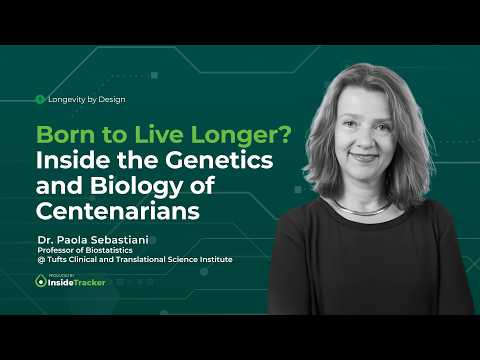
The central thesis of Dr. Paola Sebastiani’s research on centenarians is that extreme longevity is a heterogeneous, polygenic phenotype, not the result of a singular “longevity gene.” Advances in genome-wide association studies (GWAS) and high-throughput multi-omics—specifically proteomics, metabolomics, and lipidomics—reveal that healthy aging depends heavily on the delayed onset of chronic morbidity. Centenarians often shift their disease timelines by two decades compared to the general population, effectively compressing morbidity into the final years of life. Exceptional longevity is defined by this biological resilience, which is notably mediated by sustained low levels of systemic inflammation (a resistance to “inflammaging”) and highly specific genetic profiles. A primary example is the APOE2 variant, which favorably alters lipid metabolism, structural apolipoprotein correlations, and neuroinflammatory pathways, contrasting starkly with the Alzheimer’s-linked APOE4 allele.
Further, the genetic architecture of extreme aging features multiple loci of interest, notably on chromosome 9 and chromosome 6, operating via complex gene-environment and gene-gene interactions. Current evidence underscores that longevity phenotypes result less from the absolute absence of disease-predisposing alleles and more from the presence of protective, compensatory variants that buffer against age-related decline. This heritable resilience is evident in centenarian offspring, who demonstrate a 50% reduction in all-cause mortality and a roughly 60% reduction in dementia risk compared to age-matched peers.
At the physiological level, stable metabolomic and lipidomic signatures differentiate centenarians from the average aging population. Crucially, these signatures strongly correlate with sustained, stable dietary patterns. Centenarians maintain youthful macronutrient profiles, specifically resisting the age-related decline in protein intake and the compensatory rise in carbohydrate consumption. Furthermore, serological traces of flavonoids and cocoa-derived metabolites in centenarians suggest that the sustained intake of specific phytochemicals supports vascular and cognitive health. While emerging fields like gut microbiome analysis show correlative associations with longevity, current direct-to-consumer implementations lack the translational validity and mechanistic clarity required for clinical application. Ultimately, translating centenarian biology into actionable therapeutics involves leveraging proteomics to design interventions that simulate these protective genetic profiles—such as modulating lymphocyte-secreted proteins to reduce systemic inflammation—while adhering to pragmatic, foundational lifestyle protocols that stabilize the metabolome.
High Confidence Tier (Level A/B Evidence)
Experimental Tier (Level C/D Evidence with High Safety Margins)
Red Flag Zone (Claims Debunked or Safety Data Absent)
In this episode of Longevity by Design, host Dr. Gil Blander sits down with Dr. Andrea Maier, Professor in Medicine and Director of the NUS Academy for Healthy Longevity at the National University of Singapore’s School of Medicine. They explore what the evidence shows on supplements, and why “test, then treat” beats guesswork.
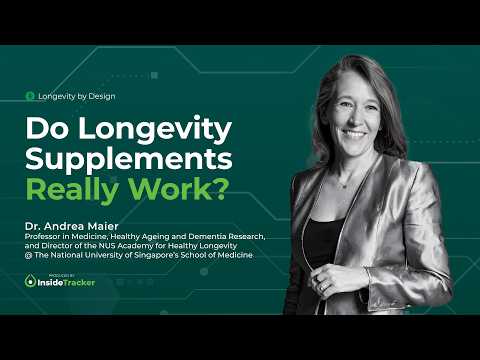
Dr. Andrea Maier’s core thesis is that the longevity supplement and diagnostic market suffers from a critical lack of regulatory oversight, leading to widespread misrepresentation of product efficacy and composition. A systemic review of the industry demonstrates that only roughly 30% of anti-aging supplements (such as NMN) contain the dosage claimed on the label, with many containing no active ingredient at all. Furthermore, the efficacy of longevity interventions is highly heterogeneous; there is no “one-size-fits-all” geroprotector. Instead, translational geroscience requires a personalized, “N-of-1” clinical approach. Interventions must be prescribed conditionally—measuring baseline biological deficits (e.g., assessing initial NAD+ levels before prescribing precursors) and utilizing objective, low-cost clinical biomarkers (like handgrip dynamometry) and continuous digital telemetry (via smart wearables) to verify physiological improvements.
While certain compounds show mechanistic promise, their clinical utility is heavily stratified. Broad-spectrum multivitamins offer zero survival or cognitive benefits for healthy, nutrient-replete individuals, acting only as compensatory mechanisms for specific dietary or pathological deficiencies. Molecules like Alpha-Ketoglutarate (AKG) and Spermidine exhibit promising pleiotropic effects on mitochondrial function and autophagy, respectively, but their human clinical data show only marginal improvements, often serving merely to “polish” the aging trajectories of individuals already maintaining a healthy baseline. Ultimately, the true drivers of extended healthspan remain foundational lifestyle optimization (sleep architecture, zone 2-5 cardiovascular training, Mediterranean diet adherence) supported by precise, individualized, and lab-verified biochemical supplementation.
High Confidence Tier (Level A/B Evidence)
Experimental Tier (Level C/D Evidence with High Safety Margins)
Red Flag Zone (Claims Debunked or Safety Data Absent)
In this episode of Longevity by Design, host Dr. Gil Blander sits down with Dr. Uri Alon, Professor at Weizmann Institute of Science. They explore a systems view of aging that treats longevity as a solvable model, not a grab bag of disconnected theories.
Uri explains aging with a simple story: houses make garbage, trucks remove it, and the village has a threshold for how much damage it can handle. In the body, “garbage” can include damaged and senescent cells, “trucks” can include immune cleanup, and “houses” can include long-lived cells and stem cells that drift over time. The model links this balance to death, disease, and steady decline, and it helps predict which interventions actually change it.
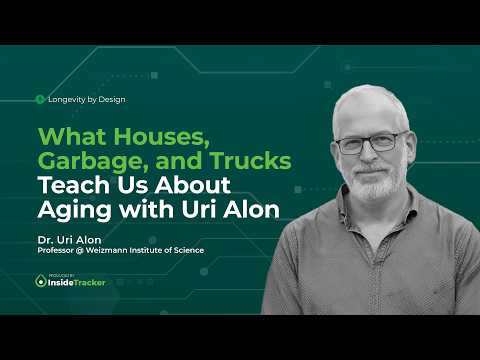
Dr. Uri Alon’s application of systems biology to aging redefines biological senescence not as a chaotic decay, but as a quantifiable, structured process described by a simple tripartite model: Damage Production (Houses), Damage Removal (Garbage Trucks), and the Robustness Threshold (Capacity). In this framework, “Houses” represent stem cells and long-lived cells that accumulate genomic and epigenetic errors over time, becoming factories that produce “Garbage” (senescent, pro-inflammatory zombie cells). The “Garbage Trucks” are the immune system (e.g., NK cells, macrophages) tasked with clearing this damage. As damage production linearly increases and immune capacity saturates or exhausts, the body approaches a “Robustness Threshold,” where routine biological noise (e.g., infections, stress) becomes lethal, explaining the exponential rise in mortality and disease with age.
Crucially, Alon’s revised mathematical analysis of epidemiological data refutes the long-held dogma that lifespan is only 10-20% heritable. By mathematically filtering out historical extrinsic mortality (e.g., early deaths from infections prior to modern medicine), his models demonstrate that lifespan is roughly 50% genetically determined. The remaining 50% is split between intrinsic stochastic biological noise and actionable environmental/lifestyle factors. Currently, lifestyle interventions (exercise, diet, sleep) function solely by increasing the Robustness Threshold—they compress morbidity and increase median lifespan but cannot move the absolute human maximum lifespan wall of roughly 120 years. To extend maximum lifespan, interventions must directly target the core circuitry: either slowing the rate of damage production in the “Houses” (via epigenetic reprogramming or chromatin repair) or actively boosting the “Trucks” and clearing damage (via senolytics and vascular enhancement).
High Confidence Tier (Level A/B Evidence)
Experimental Tier (Level C/D Evidence with High Safety Margins)
Red Flag Zone (Claims Debunked or Safety Data Absent)
In this episode of Longevity by Design, host Dr. Gil Blander sits down with Dr. Nathan Price, Professor and Co-Director at the Buck Institute for Research on Aging. Together, they explore how systems biology, artificial intelligence, and deep health data are changing the way we approach aging and prevention. Nathan explains why looking at single biomarkers falls short and why a network view of biology gives a clearer path to understanding disease and resilience.
Nathan shares how new tools, like genetics, proteomics, and the emerging field of digital twins, can help predict disease risk years in advance and guide more effective, personalized interventions. He also discusses how integrating data from wearables, blood tests, and the microbiome can help people move from reactive medicine to proactive health decisions, allowing for interventions that fit the individual.
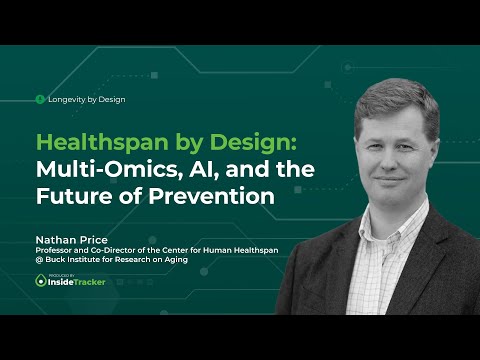
Dr. Nathan Price’s thesis on “scientific wellness” shifts the paradigm of human health from a reactive, disease-oriented model (waiting for clinical symptoms) to a proactive, data-driven systems biology approach. Traditional medicine succeeded in the 20th century by applying a reductionist framework to infectious diseases (one pathogen, one target drug). However, chronic age-related diseases—such as Alzheimer’s, diabetes, and cardiovascular disease—are multifactorial network failures that cannot be solved with single-target interventions. By utilizing dense, personalized multi-omic data (genomics, proteomics, metabolomics, and the microbiome) combined with continuous biometric telemetry, researchers can detect the biological transition from health to disease decades before clinical symptoms appear.
This systems biology approach leverages Polygenic Risk Scores (PRS) and AI-driven “N-of-1” clinical models. The utility of PRS is expanding from explaining less than 1% of phenotypic variance to nearly 20% or more for certain traits. Crucially, a patient’s genetic architecture dictates their response to environmental and lifestyle interventions. For instance, individuals with a high genetic predisposition for elevated LDL cholesterol show zero statistically significant response to lifestyle/dietary interventions, requiring pharmacological assistance, whereas those with a low genetic risk but high clinical LDL respond excellently to lifestyle changes. Furthermore, Artificial Intelligence is rapidly accelerating the synthesis of this complex data, moving the field toward “digital twins”—computational models of a patient’s unique biology capable of running predictive, personalized health simulations to optimize trade-offs (e.g., balancing the mitochondrial energy needed for neuroprotection against the oxidative damage it causes). While solving biological aging is not an immediate prospect, the technological scaffolding to drastically increase individual healthspan via proactive monitoring is already available.
High Confidence Tier (Level A/B Evidence)
Experimental Tier (Level C/D Evidence with High Safety Margins)
Red Flag Zone (Claims Debunked or Safety Data Absent)
In this episode of Longevity by Design, host Dr. Gil Blander sits down with Dr. Ronjon Nag, Adjunct Professor in Genetics at Stanford School of Medicine and President of the R42 Group. Together, they dive into how artificial intelligence is changing the future of health and longevity, from the lab to daily life.
Ronjon explains how systems thinking helps us look at health and aging as complex problems. He shows how real, measurable data, like blood biomarkers and wearable feedback, can guide smart decisions and cut through confusing health advice. He also shares how AI is becoming as common as spreadsheets in the workplace, helping both patients and scientists organize and connect data from many sources.
Dr. Ronjon Nag’s thesis centers on the convergence of Artificial Intelligence (AI) and biotechnology to move longevity from a speculative field to an engineering discipline. Having pioneered neural networks since 1983, Nag argues that the 40-year trajectory of AI development has reached a tipping point where it can effectively decipher the “biological code.” The core argument is that human aging is not a fixed fate but a series of systems-level errors that can be predicted, monitored, and eventually corrected via AI-driven drug discovery, genomic editing, and repurposed vaccines.
Nag introduces a systems thinking approach to the human lifecycle, advocating for lifelong re-education (mid-life pivots in 50s/60s) and a shift from reactive sick-care to proactive genomic surveillance. A critical pillar of his argument is the utilization of AI to accelerate the identification of longevity genes and the development of vaccines for chronic diseases (e.g., cancer or senescent cell targets). This acceleration is intended to bridge the gap toward Longevity Escape Velocity—a state where for every year one lives, science adds more than one year to their life expectancy.
However, Nag balances these high-level engineering goals with “lifestyle medics”: the foundational biological requirements of diet, exercise, sleep, and social connection. He posits that while AI can optimize the discovery of the next blockbuster geroprotector, the “signal” in the data consistently points toward social connectivity as a major, often overlooked, determinant of healthspan. The transcript concludes with the provocative claim that individuals currently under the age of 40 may be the first generation to reach a state of indefinite lifespan extension, provided they maintain biological integrity through current foundational protocols while the engineering infrastructure matures.
In this episode of Longevity by Design, host Dr. Gil Blander sits down with Dr. Terrie Moffitt, University Professor at Duke University. They explore the deep link between mental health, self-control, and the pace of biological aging, showing how early-life mental disorders can shape health decades later.
Terrie describes her work with the decades-long Dunedin study, which tracks health from birth through midlife. She explains how people age at different rates, even when born in the same year and place, and how the “pace of aging” can be measured using biomarkers. Terrie shares that fast agers show early signs of physical and cognitive decline, while those with strong self-control tend to experience better health, stronger relationships, and greater financial stability as they grow older.
Dr. Terrie Moffitt, a principal investigator of the 50-year Dunedin Multidisciplinary Health and Development Study, argues that mental health is a primary, yet historically neglected, driver of biological aging and late-life chronic disease. Her research demonstrates that the trajectory of biological aging is established early in life, often decades before the clinical manifestation of geriatric syndromes. The core thesis is that mental health disorders—which typically peak in early adulthood—act as potent accelerators of physiological decline, potentially through mechanisms of chronic stress, systemic inflammation, and compromised self-regulation.
Central to this work is the development of the DunedinPACE clock, a “speedometer” of aging that measures the rate of physiological change rather than a static snapshot of accumulated damage. Unlike previous epigenetic clocks that estimate chronological age, DunedinPACE tracks the pace of multisystemic decline (encompassing cardiovascular, metabolic, and immune function) across 19 biomarkers. The study’s most significant findings reveal that self-control in childhood is a high-fidelity predictor of aging rates in midlife; children with lower self-control demonstrate a faster pace of biological aging and poorer brain health by age 45.
Furthermore, the data underscores a critical translational insight: treating mental health disorders in early life represents a “golden window” for dementia prevention. By stabilizing psychological and behavioral health early, the chronic physiological strain that leads to late-life neurodegeneration can be significantly mitigated. This research suggests that a shift in clinical priority toward integrating psychiatric care with longevity medicine is essential. Cognitive resilience, maintained through continuous social communication and perspectives-taking, combined with proactive mental health management, offers a pragmatic framework for extending not just lifespan, but the period of healthy functional life.