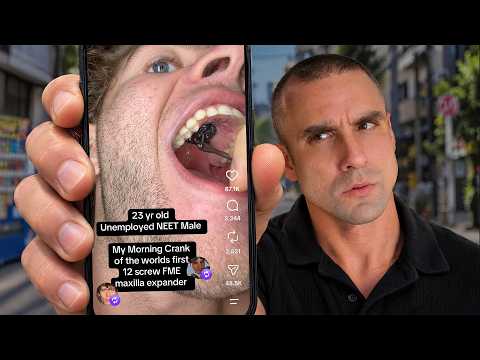
Thoughts from AustraliaLovevity:
This is an issue I think is very important. I’m getting my poor nasal breathing and airway problems treated now, and it is a long and expensive process.If this were identified in my youth it would have been far cheaper, treatment would have been less invasive, and the projected health benefits would be massive as my entire pubertal development would have been unimpeded with poor breathing/oxygenation acting as a bottleneck.
The video touched on allergic reactions leading to mouth breathing and I’m certain this is a causal factor for myself.
I think parents should be not just getting dental checkups for their children, but getting looked at by a good orthodontist who can see these problems and correct them before they crystallize and become much harder to solve.
But saying parents “should” do something is easier said than done. Maybe they’re lazy, or maybe they can’t afford it?
If dental and orthodontics for children were both publicly funded we could prevent a big amount of health spending going forward in my opinion. It would be one of the more economical public health care spends we could do, but it would take 1-2 generations for those savings to manifest.
I think we should make those changes, but that’s another “should”. The reality is initial costs would be targeted as a failure in shorter election cycles for political gains.
Text below is the video transcript summarized with ChatGPT Sol 5.6, citation hallucinations are possible.
1. Executive Summary
The central idea in “Looksmaxxers are accidentally solving this health epidemic” is much broader than sleep apnea. The video argues that many modern humans develop jaws, palates and nasal airways that are smaller or positioned less favorably than they could be, and that this may have consequences extending from appearance and dental crowding to breathing, sleep, cognition, posture, TMJ problems, exercise tolerance, autonomic function and general wellbeing.
There is a legitimate scientific core here. Craniofacial development is plastic, particularly during childhood, and is influenced by more than genetics. Mouth breathing and nasal obstruction are associated with narrower maxillae, high-arched palates, altered facial growth and malocclusion in children, although much of the human evidence is observational. Breastfeeding is associated with lower rates of several malocclusions, and anthropological evidence supports the idea that reduced masticatory loading accompanying softer diets changed human craniofacial morphology. (PubMed)
Where the video becomes especially interesting is its argument that these aren’t merely cosmetic or orthodontic abnormalities. The maxilla forms the floor of the nasal cavity, jaw position influences the space available for the tongue and pharyngeal airway, and severe structural restriction can contribute to sleep-disordered breathing. From there, downstream effects on daytime energy, cognition, mood, cardiovascular physiology and endocrine function become biologically plausible, and several are independently supported in OSA research. (PubMed)
But the evidence becomes progressively weaker as the video moves from craniofacial anatomy affects airway function to poor craniofacial development explains a large fraction of modern ill health. Maxillary expansion and especially maxillomandibular advancement can objectively improve airway physiology in selected patients. By contrast, claims that adult Biobloc treatment can produce enormous forward skeletal growth, or that airway correction routinely cures POTS, anemia, digestive problems, hyperhidrosis or caffeine intolerance, currently rest largely on case reports and anecdotes.
The most important takeaway is therefore not “everyone needs jaw surgery.” It is that structural anatomy is an underappreciated variable in health optimization. Someone can optimize diet, exercise, supplements and sleep hygiene while still having a mechanical bottleneck in breathing or sleep that none of those interventions actually correct.
2. Actionable Insights
Investigate breathing as a structural problem, not just a behavioral one
What it is / what to do: Persistent nasal obstruction, chronic mouth breathing, snoring, dry mouth on waking, difficulty comfortably maintaining nasal breathing, dental crowding, a very narrow/high palate, obvious jaw retrusion or unexplained poor sleep can justify evaluation of the airway rather than simply adding more sleep interventions.
Depending on the suspected problem, that might involve an ENT, sleep physician, orthodontist or maxillofacial surgeon.
Risk rating: Low. Evaluation itself carries little risk and can identify treatable pathology.
Evidence tier: Human observational/clinical evidence.
The key distinction is between function and simply looking at someone’s face. Craniofacial morphology is associated with airway characteristics, but appearance alone cannot diagnose airway impairment.
Treat chronic nasal obstruction
The video discusses deviated septa and enlarged turbinates.
Structural septal deviation, allergic rhinitis, turbinate hypertrophy and other causes of obstruction can make nasal breathing unnecessarily difficult.
Risk rating: Low to Moderate, depending on whether treatment is medical or surgical.
Evidence tier: Human clinical evidence.
Importantly, improving the nose does not necessarily cure obstruction occurring farther down the airway. Nasal surgery generally performs better for improving nasal resistance, subjective breathing, snoring and PAP tolerance than for eliminating OSA itself.
Maxillary expansion in genuinely narrow adults
Expansion can increase transverse maxillary dimensions and alter the nasal cavity.
A meta-analysis of 10 studies containing 257 adults found significantly reduced nasal resistance and a large improvement in subjective nasal-obstruction scores following maxillary expansion. The authors nevertheless concluded that the evidence remained insufficient to recommend expansion primarily as a nasal-breathing treatment. (PubMed)
Risk rating: Moderate to High. The risk varies considerably between expansion techniques and includes dental tipping, periodontal damage, asymmetric expansion, failure to achieve skeletal expansion and bite changes.
Evidence tier: Human interventional, mostly uncontrolled/observational.
For adults with OSA, surgically assisted expansion reduced AHI by about 10 events/hour in a meta-analysis, but the underlying evidence was rated very low quality. (PubMed)
So expansion is real medicine, but the enthusiasm currently exceeds the quality of the evidence.
Maxillomandibular advancement
MMA physically advances the upper and lower jaws, enlarging the skeletal enclosure around the tongue and pharyngeal airway.
This is the most radical intervention discussed in the video, but paradoxically it also has some of the strongest clinical evidence.
A recent meta-analysis covering 31 studies and 1,597 patients found an average reduction in AHI of about 42 events/hour, an increase in oxygen nadir of about 6 percentage points and a large reduction in daytime sleepiness. (PubMed)
Risk rating: High. This is major surgery with a substantial recovery and risks including sensory changes, infection, malocclusion, relapse, hardware complications and unpredictable TMJ effects.
Evidence tier: Human clinical/meta-analysis.
It should therefore be viewed very differently from experimental adult orthotropics. MMA involves surgically repositioning bone and has objective clinical evidence showing large physiological effects.
Side sleeping when breathing deteriorates supine
The creator’s sleep study showed dramatically worse oxygenation and snoring on his back.
That doesn’t mean everyone should sleep laterally, but positional airway collapse is a recognized OSA phenotype.
Risk rating: Low.
Evidence tier: Human RCT.
This is particularly useful when objective testing demonstrates a large supine versus lateral difference.
Weight loss when excess adiposity contributes to airway restriction
Weight reduction can reduce soft tissue surrounding the airway. Interestingly, this includes fat stored inside the tongue.
Risk rating: Low to Moderate, depending on the method used.
Evidence tier: Human interventional.
This gives the video’s structural argument an important qualification: airway restriction isn’t exclusively about bones. Bone, muscle and adipose tissue all determine the available airway.
Mewing / good oral posture
Keeping the lips closed and tongue resting against the palate is normal oral posture and may be useful for establishing nasal breathing when nasal breathing is actually possible.
But claims that ordinary mewing can dramatically remodel an adult skull are another matter.
Risk rating: Low when it simply means comfortable tongue posture without excessive force.
Evidence tier: Mechanistic/developmental evidence for oral posture; speculative for major adult skeletal transformation.
Do not confuse these two propositions:
Oral function influences developing craniofacial anatomy.
and
Consciously mewing as an adult can significantly advance the maxilla.
The first is biologically well supported. The second has not been convincingly demonstrated.
Mouth taping
The creator reports doing this for nine years and feeling substantially better.
Risk rating: Moderate, particularly in someone with significant nasal obstruction.
Evidence tier: Limited human evidence.
This should not be treated as a substitute for diagnosing why someone opens their mouth during sleep. If the body is opening the mouth because nasal airflow is inadequate, physically preventing that compensatory route doesn’t solve the underlying obstruction.
3. Safety Concerns
The biggest danger in this subject is turning a legitimate medical issue into a DIY looksmaxxing project.
A narrow palate, recessed jaw or crooked teeth do not automatically mean someone needs expansion or surgery. Craniofacial anatomy needs to be interpreted alongside symptoms, nasal examination, occlusion, imaging where appropriate and objective sleep testing.
Adult expansion deserves particular caution. Different appliances transmit force differently between teeth, alveolar bone and basal maxillary structures. “I widened my palate 8 mm” does not necessarily mean the underlying skeletal maxilla widened 8 mm.
MMA is considerably more invasive. TMJ outcomes are also not as predictable as the video occasionally implies. A large meta-analysis found that orthognathic surgery improved pre-existing TMD in many patients but also produced new symptoms in a smaller group who were previously asymptomatic. (PubMed) A newer 2026 meta-analysis similarly found improvements in some pain and clicking outcomes, with some recurrence over longer follow-up. (PubMed)
The video’s anecdotes about correcting POTS, anemia, gluten intolerance, hyperhidrosis and caffeine intolerance should not be interpreted as established indications for airway surgery.
And extremely low overnight oxygen saturation, such as the creator’s reported nadir around 54%, belongs firmly in medical sleep-disorder territory rather than self-experimentation.
4. Signals Worth Watching
Adult craniofacial remodeling without surgery
This is arguably the most interesting unresolved part of the video.
John Mew’s Biobloc concept proposes that sustained forces can remodel rather than violently separate adult maxillary structures. The cases shown in the video appear dramatic, including claimed increases from approximately 36 to 44 mm in palatal width and estimates of substantial forward movement.
Bone absolutely remains mechanosensitive in adulthood.
The unresolved question is whether these appliances can produce large, clinically useful basal skeletal changes in mature adults, rather than primarily dentoalveolar movement.
If independently replicated, that would be extremely important because it could potentially occupy a therapeutic space between orthodontics and osteotomy.
What is needed is surprisingly straightforward:
baseline CBCT → standardized intervention → serial CBCT → fixed skeletal landmarks → dental versus skeletal movement decomposition → blinded independent measurement → objective airway outcomes.
Until studies like that exist, the spectacular cases should be treated as signals rather than proof.
Maxillary expansion as airway medicine rather than orthodontics
Expansion has traditionally been thought about largely in orthodontic terms.
The more interesting emerging question is whether transverse deficiency represents an airway phenotype that deserves treatment for functional reasons.
Adult evidence already shows reductions in nasal resistance after expansion. (PubMed)
If future randomized or high-quality prospective trials demonstrate durable improvements in breathing, sleep and quality of life in carefully selected patients, expansion could increasingly cross the boundary from dentistry into airway medicine.
Childhood prevention
This may ultimately matter more than adult treatment.
A 2026 review found a consistent association between childhood mouth breathing and maxillary narrowing, high palates, altered vertical facial development and malocclusion, while emphasizing that heterogeneous observational evidence prevents strong causal conclusions. (PubMed)
That creates an important research question:
Could identifying nasal obstruction, abnormal oral function and restricted craniofacial development early prevent some adult airway disease rather than surgically reconstructing it decades later?
Craniofacial phenotyping
People with superficially similar symptoms can have very different bottlenecks:
nasal resistance → transverse maxillary restriction → mandibular retrusion → large tongue/soft tissue → obesity → collapsible pharynx → neuromuscular control → combinations of these.
Future treatment should increasingly be based on where the mechanical failure occurs, rather than treating “bad sleep” as a homogeneous disorder.
5. Deep Dive
Are modern human jaws actually underdeveloped?
This is where the video’s provocative framing has some genuine anthropological support.
The 2017 PNAS study mentioned in the video examined global human cranial variation across the agricultural transition. It found modest but consistent morphological differences between hunter-gatherers and agricultural populations, particularly in structures involved in mastication. The authors concluded that the changes were consistent with the reduced mechanical demands of softer agricultural diets. (PubMed Central (PMC))
This fits a broader mechanobiological principle.
Bone development is influenced by loading.
Changing chewing demands changes forces generated by the masticatory muscles and transmitted through the craniofacial skeleton.
But “softer food changed human craniofacial morphology” does not establish that virtually everyone today has a pathological skull.
The video jumps too easily between population-level morphological change and individual disease.
Mouth breathing and facial development
This is one of the stronger parts of the argument, especially during childhood.
The 2021 systematic review/meta-analysis found characteristic differences in craniofacial morphology among mouth-breathing children. (PubMed)
The updated 2026 review likewise found consistent associations with:
- maxillary narrowing
- high-arched palate
- altered vertical facial growth
- increased malocclusion
but emphasized heterogeneity and the predominantly observational nature of the evidence. (PubMed)
Directionality is complicated.
A child may mouth-breathe because their nasal airway is obstructed.
Chronic altered oral posture may subsequently affect facial development.
The resulting anatomy may then further impair breathing.
Rather than a simple one-directional pathway, this could become a developmental feedback loop:
nasal obstruction → mouth breathing/oral-posture change → altered craniofacial development → further airway restriction.
That model is more defensible than saying mouth breathing simply “causes ugly faces.”
Breastfeeding
The video proposes a mechanical mechanism: breastfeeding requires coordinated mandibular movement, tongue function, muscular activity and nasal respiration.
There is epidemiological support for an association.
A systematic review/meta-analysis containing 27,023 participants found substantially lower odds of malocclusion among breastfed children, with stronger associations for exclusive and longer-duration breastfeeding. (PubMed)
Another meta-analysis similarly found protective associations with open bite, overjet, posterior crossbite and crowding, although it explicitly noted low study quality and substantial heterogeneity. (PubMed)
Therefore:
Breastfeeding is associated with healthier occlusal development: reasonably supported.
Bottle feeding caused the modern narrow-jaw epidemic: not established.
Pacifier use, thumb sucking, genetics, nasal obstruction, diet texture, socioeconomic factors and numerous other developmental variables complicate the picture.
The nose is not just a smaller mouth
The video correctly emphasizes that nasal breathing has distinct physiology.
The nasal cavity filters, warms and humidifies inspired air and contributes nitric oxide to inspired gas.
But the implied performance consequences are less straightforward.
A 2025 randomized crossover study in highly trained endurance athletes compared oral, oronasal and decongested-oronasal breathing. It found no significant differences in VO₂max, maximum power, ventilation or time to exhaustion between conditions. (PubMed)
So:
nasal breathing has distinct physiological functions: yes.
nasal breathing substantially increases oxygen delivery or athletic performance in healthy people: not established.
This distinction becomes particularly important when someone has actual pathological nasal obstruction. Removing an obstruction can feel transformative without implying that unrestricted nasal breathing is a performance-enhancing intervention in everyone.
From craniofacial anatomy to cognition
The video’s “I’ve been living life on hard mode” anecdotes are believable in people with substantial sleep-disordered breathing.
But the mechanism isn’t simply:
small airway → less oxygen reaches brain → stupid/tired.
Sleep-disordered breathing produces combinations of:
- intermittent hypoxemia
- hypercapnia
- repeated microarousals
- sleep fragmentation
- sympathetic activation
- oxidative stress
- inflammatory signaling
- altered sleep architecture
Children with sleep-disordered breathing show measurable deficits across neurocognitive domains. A 2022 systematic review identified 77 studies, with 63 included in meta-analysis, and found increased neurocognitive impairment. (PubMed)
That makes the broad cognition argument credible.
But mouth breathing itself shouldn’t be equated with brain hypoxia.
ADHD and airway disease
The video mentions a large literature connecting mouth breathing/sleep-disordered breathing with ADHD-like symptoms.
The interesting issue is symptom overlap.
Sleep fragmentation can produce:
poor sustained attention, impaired working memory, impulsivity, emotional dysregulation, daytime fatigue and executive dysfunction.
Those can resemble or exacerbate ADHD.
This does not establish that ADHD is generally caused by craniofacial abnormalities.
A more defensible interpretation is that undiagnosed sleep-disordered breathing can produce or amplify an ADHD-like phenotype in some people, particularly children.
Posture: compelling mechanism, surprisingly weak evidence
The video’s mechanical explanation is intuitive.
Advancing the head can alter upper-airway geometry, so someone with airway restriction might unconsciously adopt forward-head posture.
But this is an excellent example of why mechanistic plausibility isn’t enough.
A systematic review examining mouth breathing and posture in children found only low-quality evidence for an association. All ten included studies had important methodological problems. (PubMed Central (PMC))
So the individual reports of posture dramatically normalizing after jaw surgery are interesting.
They are not yet strong evidence that airway restriction is a major cause of “nerd neck” in the general population.
TMJ and bruxism
The creator’s own case includes severe clenching, enlarged masseters, TMJ deterioration and attempts at Botox and intra-articular hyaluronic acid.
There are plausible relationships between sleep-disordered breathing, arousals, bruxism and jaw mechanics, but this area is messy.
Likewise, orthognathic surgery does not have a predictable one-way effect on TMJ symptoms.
The best evidence suggests some patients improve, some remain unchanged and some develop new symptoms. (PubMed)
This matters because “fix the airway and the TMJ will fix itself” is considerably too strong.
Autonomic function
This is one of the video’s more interesting systemic threads.
Several interviewees describe previously experiencing exaggerated heart rate, palpitations, sweating or extreme responses to caffeine and feeling much calmer after airway correction.
There is a plausible pathway here.
Sleep-disordered breathing repeatedly activates chemoreflex and sympathetic responses during the night. Chronic severe OSA can therefore produce elevated sympathetic activity beyond sleep itself.
That makes improvement in autonomic symptoms following successful treatment biologically plausible.
What remains unproven is whether jaw surgery specifically creates unusually large autonomic benefits beyond those attributable to eliminating sleep-disordered breathing.
The anecdotes about caffeine suddenly becoming tolerable should therefore be viewed as plausible observations requiring study, not established effects of MMA.
Testosterone, growth hormone and body composition
The video repeatedly connects airway dysfunction with hormones.
There is evidence that OSA correlates with lower testosterone in men.
A meta-analysis of 18 studies and 1,823 men found significantly lower testosterone in OSA, including after adjustment for age and BMI, with the clearest association in severe disease. (PubMed)
That does not mean maxillary expansion normally triples testosterone.
Obesity is an enormous confounder, and sleep duration, sleep architecture, age and metabolic health also influence testosterone.
The testimonial about testosterone tripling following expansion is therefore biologically interesting but scientifically very weak.
Similarly, a person gaining muscle after dramatically improving severe sleep-disordered breathing would not be surprising.
Attributing that specifically to “more oxygen” would be too simplistic.
Appearance and function
The video makes a provocative evolutionary argument:
faces associated with larger functional airways may also tend to be perceived as attractive.
There is an interesting hypothesis buried here.
Forward mandibular development, broader dental arches, certain midfacial proportions and facial symmetry can affect attractiveness.
Some of these characteristics may also correlate with airway anatomy.
But the video repeatedly converts statistical associations into biological diagnostics.
Clear skin does not reliably indicate a healthy liver.
A 0.7 waist-to-hip ratio is not a clinical marker of estrogen/progesterone balance.
A strong brow doesn’t let you reconstruct someone’s pubertal testosterone concentration.
An attractive person cannot be assumed to have excellent nocturnal oxygenation.
Jordan Barrett’s appearance tells us essentially nothing reliable about his polysomnography.
The broader evolutionary idea is worth investigating. The specific examples are much too confident.
The longevity connection
This is where the topic becomes especially relevant to a longevity audience.
The direct claim:
“wider jaws extend lifespan”
has essentially no evidence.
But there is a much stronger indirect argument.
Severe airway dysfunction can produce chronic:
- sleep fragmentation
- intermittent hypoxia
- sympathetic activation
- hypertension
- oxidative stress
- metabolic dysfunction
- impaired daytime function
Correcting those abnormalities should matter for healthspan.
What is much harder to demonstrate is lifespan extension from treating OSA. Long-term CPAP evidence, for example, is surprisingly complicated. A systematic review found observational associations with lower mortality but did not find convincing mortality or cardiovascular-event reductions in randomized trials, partly because adherence, selection and study design make these endpoints difficult to test. (PubMed)
So the longevity case should remain carefully phrased:
Severe structural airway dysfunction exposes people to several processes strongly associated with age-related disease. Correcting the dysfunction is clearly valuable, but we do not yet know how much doing so changes lifespan.
6. Claims Requiring Scrutiny
“56% to 95% of people’s jaws didn’t grow as big as they should have.”
Unverified as stated.
Dental crowding and malocclusion are extremely common, but defining an evolutionarily or physiologically “correct” jaw size is much harder. The prevalence depends entirely on what counts as underdevelopment.
Modern soft diets have weakened human facial structure.
Partially supported.
The anthropological evidence does show modest, consistent craniofacial differences between foragers and agricultural populations consistent with reduced masticatory loading. (PubMed Central (PMC))
The evidence does not establish that simply chewing harder foods would reverse modern craniofacial morphology.
Mouth breathing changes children’s faces.
Substantially supported as an association, causality less certain.
Recent reviews consistently find characteristic craniofacial differences among mouth-breathing children, but observational study designs make directionality difficult to establish. (PubMed)
Breastfeeding protects craniofacial development.
Partially supported.
Large meta-analyses show lower rates of several malocclusions among breastfed children. (PubMed)
Calling formula feeding a major cause of modern craniofacial underdevelopment goes substantially beyond those data.
Nasal breathing substantially improves oxygen delivery and athletic performance.
Overstated.
Nasal physiology is genuinely different, but experimental evidence does not show a straightforward performance advantage in healthy athletes. A recent randomized crossover trial found no significant VO₂max or maximal-performance benefit. (PubMed)
Pathological nasal obstruction is a different situation.
Bad airways cause forward-head posture.
Plausible but weakly supported.
A systematic review found only low-quality evidence connecting mouth breathing with postural abnormalities. (PubMed Central (PMC))
The surgical before-and-after anecdotes are intriguing but insufficient to establish causality.
Airway problems can impair cognition.
Supported, particularly through sleep-disordered breathing.
Pediatric SDB is associated with deficits across multiple neurocognitive domains. (PubMed)
But the mechanism should not be reduced to simply “not enough oxygen reaching the brain.”
Airway dysfunction lowers testosterone.
Partially supported.
OSA is associated with lower male testosterone, especially severe OSA. (PubMed)
That does not establish that craniofacial restriction in otherwise healthy people meaningfully suppresses testosterone.
Maxillary expansion improves nasal breathing.
Promising and partially supported.
Meta-analysis shows decreased nasal resistance and substantially improved subjective nasal obstruction following adult expansion. (PubMed)
The authors nevertheless considered the evidence insufficient to recommend expansion primarily for nasal breathing.
Maxillary expansion can improve OSA.
Supported by low-certainty evidence.
A meta-analysis found improvements in AHI, oxygen-desaturation index and daytime sleepiness, but included only five studies and rated the evidence very low quality. (PubMed)
Double-jaw surgery can dramatically improve anatomically driven OSA.
Strongly supported.
The 2025 meta-analysis involving 1,597 patients found very large improvements in AHI, oxygen nadir and daytime sleepiness. (PubMed)
This is one of the video’s best-supported claims.
Adult Biobloc produced 5 to 15 mm of forward maxillary growth.
Unverified.
I could not locate high-quality controlled evidence validating skeletal movements of this magnitude in adults from the treatment described.
Given the magnitude claimed, photographs and practitioner measurements are inadequate evidence.
This is probably the single most important claim in the video that deserves proper independent investigation.
Correct oral posture can continue substantially remodeling the adult face.
Mechanistically possible at some level, clinically unproven at the magnitude claimed.
Adult bone remodels.
That fact alone does not establish that tongue pressure can advance an adult maxilla by clinically large distances.
Airway surgery cured POTS/dysautonomia.
Unverified anecdote.
OSA affects sympathetic physiology, so an autonomic effect is biologically plausible.
That is very different from establishing orthognathic surgery as a treatment for POTS.
Jaw surgery corrected iron-deficiency anemia.
Unverified and poorly explained mechanistically.
The temporal association is interesting but doesn’t establish causality. Iron intake, absorption, blood loss, inflammation and numerous other variables could explain the change.
Airway treatment eliminated hyperhidrosis and digestive problems.
Unverified anecdotes.
Autonomic normalization offers a possible hypothesis for sweating changes, but these effects require actual study.
Expansion tripled testosterone.
Unverified anecdote.
The association between severe OSA and lower testosterone makes an endocrine response plausible, but a threefold increase after expansion cannot be generalized from one testimonial. (PubMed)
Attractive facial structure indicates a good airway.
Plausible population-level overlap, unreliable individually.
Some craniofacial traits influence both appearance and airway geometry.
You cannot infer airway function from attractiveness.
Modern humans are undergoing “pugification.”
Useful metaphor, not a scientific diagnosis.
There is legitimate evidence for population-level changes in craniofacial morphology associated with subsistence and lifestyle. (PubMed Central (PMC))
The analogy dramatically exaggerates how confidently we understand their prevalence, causes and health consequences.
7. Discussion Prompts
How much modern chronic fatigue, poor concentration and poor sleep attributed to lifestyle actually has an unrecognized anatomical component?
If mouth breathing and nasal obstruction during childhood can influence craniofacial development, should airway screening become part of routine pediatric dental and orthodontic care?
If soft diets contributed to smaller modern craniofacial structures, is there a developmental window where increased masticatory loading could meaningfully alter growth?
Why are adult expansion studies still so small if structural expansion produces changes that should be straightforward to quantify with CBCT, rhinomanometry and polysomnography?
Can adult Biobloc actually produce basal skeletal remodeling, or are the striking transformations primarily dentoalveolar movement, mandibular repositioning, posture and photographic effects?
If the reported 5 to 15 mm adult forward-growth cases are genuine, why hasn’t the effect been demonstrated prospectively with independent 3D measurements?
Are we incorrectly treating craniofacial anatomy, nasal obstruction, tongue volume, pharyngeal collapsibility and ventilatory control as one disease simply because they can all produce the same endpoint of poor sleep?
What proportion of the systemic benefits people report after airway reconstruction comes from eliminating intermittent hypoxia versus restoring sleep architecture, reducing sympathetic activity, changing posture, improving nasal breathing, or simply recovering from years of sleep deprivation?
Could the most important intervention in this entire field eventually turn out not to be a better adult expansion device or surgical technique, but preventing abnormal craniofacial development during childhood?
8. Citations
The video’s important named sources and people include John Mew and Mike Mew on orthotropics and oral posture; Harvold and the rhesus-monkey nasal-obstruction experiments; James Nestor and his short-term nasal-obstruction experiment; Weston A. Price on traditional diets and dental development; Clark Spencer Larsen in relation to anthropology and dietary transition; Ron Ead/JawHacks on adult expansion; Elliot Overton and Jordan Peters describing their experiences with orthognathic surgery; and David Denning, Elijah Robin and Dr. Hoon Young Yeo in relation to adult Biobloc/orthotropic treatment.
For independent checking, the particularly useful literature is the 2026 review of mouth breathing and craniofacial development, which finds consistent associations but emphasizes the limitations of predominantly observational evidence. (PubMed) The anthropological evidence for diet-associated craniofacial change comes from Katz, Grote and Weaver’s global comparison of forager and farming skulls. (PubMed Central (PMC))
Breastfeeding and malocclusion have considerably more epidemiological evidence than the video might initially make you expect, including a meta-analysis of more than 27,000 participants, although causality and mechanisms remain less certain. (PubMed)
For adult interventions, the evidence forms a useful gradient. Adult maxillary expansion appears capable of reducing nasal resistance, but the evidence remains insufficient to recommend it simply as treatment for nasal breathing. (PubMed) Expansion for adult OSA shows encouraging but very-low-certainty results. (PubMed) MMA has much stronger evidence, including a recent meta-analysis of 1,597 patients demonstrating large objective improvements in OSA physiology. (PubMed)
The claims about cognition also have genuine supporting literature when framed around sleep-disordered breathing rather than mouth breathing alone. A 2022 systematic review/meta-analysis found neurocognitive impairment across multiple domains in children with SDB. (PubMed) Conversely, the appealing hypothesis connecting airway restriction to forward-head posture remains much less established, with a systematic review finding only low-quality evidence. (PubMed Central (PMC))
The adult Biobloc claims remain the major evidence gap. The video presents several impressive cases, but I could not locate independent controlled evidence demonstrating the magnitude of adult skeletal advancement claimed. Those cases deserve investigation rather than dismissal, but they should not currently be presented as equivalent evidence to surgically measured skeletal expansion or MMA.
I also performed the requested Glasp search. It did not return relevant Glasp material that meaningfully strengthened the analysis, so I have not used secondary Glasp claims in place of the primary literature.
Overall, the video is strongest when it argues that craniofacial structure is an overlooked component of health, and weakest when it implies that one unified “underdeveloped skull” model explains an enormous range of modern health problems. The developmental evidence is compelling enough to take seriously, structural airway interventions can produce very large benefits in appropriately selected people, and the possibility of meaningful nonsurgical adult remodeling deserves much better research. What isn’t justified yet is collapsing dental crowding, attractiveness, posture, cognition, autonomic dysfunction, hormones, exercise performance and chronic disease into one proven causal pathway.