From Alan (who left the Age1 VC firm to start this company):
Prevention has been a game changer for medicine: statins for heart disease, GLP-1s for metabolic dysfunction, and (the OG!) vaccines for viral & bacterial infections.
Why not cancer?
I hopped on a podcast recently to chat about the huge potential of cancer prevention.
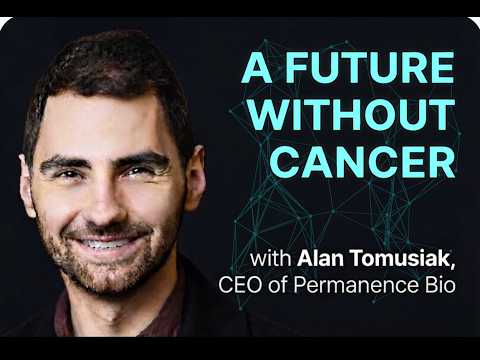
The startup’s website: https://www.permanence.bio
The group hosting the video: https://foreveryoungfilm.substack.com/
I. Executive Summary
The prevailing paradigm in oncology remains overwhelmingly reactive, focusing clinical and financial resources on surgical excision, radiation, and chemotherapy only after malignant transformation has occurred and tumors have established clinical footholds. Alan Tomusiak, founder of Permanence Bio, posits that this reactive approach is fundamentally inefficient and proposes a clinical paradigm shift toward upstream genomic preservation. The core thesis of Permanence Bio is that cancer can be systematically prevented by shielding cellular DNA from the cumulative mutagenic insults that initiate oncogenesis. Rather than relying on traditional dietary or synthetic antioxidants that disperse randomly throughout the cytoplasm and lack molecular targeting, the company is developing site-specific small molecules that directly bind to the chromatin structure, providing a physical and chemical shield at the direct locus of potential mutation.
The molecular framework for this platform is derived from historical data from a late-1970s United States military antiradiation project conducted by the Walter Reed Army Institute of Research, which screened over 7,000 compounds to protect warfighters and civilians from nuclear fallout. While that program yielded powerful radioprotectors like amifostine (WR-2721), severe systemic toxicities such as profound hypotension and emesis, combined with a narrow therapeutic index, prevented widespread non-clinical adoption. Permanence Bio has synthesized hundreds of novel derivatives of these military-grade radioprotectors to optimize intellectual property and therapeutic efficacy while minimizing systemic toxicity.
To overcome the historical translational gaps of radioprotection—specifically the risk of inadvertently shielding existing, undetected cancer cells—the company utilizes a strict screening and counter-screening architecture. Healthy human cells are subjected to a battery of genotoxic stressors, including ionizing radiation, ultraviolet light, and formaldehyde, to verify DNA protection and enhanced high-fidelity repair. Concurrently, candidate molecules are counter-screened against cancer cell lines to ensure they do not protect malignant tissue from destruction. Top-performing hits, which have reportedly achieved a 50% reduction in tumor initiation within rapid-onset animal models, are undergoing IND-enabling evaluation. The platform intends to integrate artificial intelligence to refine these chemical structures, aiming for clinical trial initiation within two to three years.
II. Insight Bullets
- Reactive Oncology Paradigms: Current clinical workflows wait for symptoms, screen for existing pathologies, and treat manifest tumors, leaving an open window for initial oncogenesis.
- Upstream Interventions: Intervening at the pre-tumor phase by protecting DNA avoids the clinical, metabolic, and physical toll associated with late-stage cytotoxic treatments.
- DNA Damage as the Root Cause: Mutations resulting from unrepaired DNA damage are a strict prerequisite for the initiation of the vast majority of solid tumors.
- Failure of Classical Antioxidants: Conventional antioxidants scatter diffusely across the cellular cytoplasm and organelles, failing to provide dense or localized protection at the chromatin level.
- Chromatin-Targeted Shielding: Permanence Bio’s molecules are engineered to physically lock onto the DNA architecture itself, intercepting genotoxic stressors at the direct site of potential mutation.
- Dual Mechanism of Action: The small molecules function both as a preventive physical shield against initial damage and as facilitators of high-fidelity DNA repair mechanisms.
- Military Radioprotector Provenance: The lead compounds trace their chemical lineage back to a late-1970s US military defense program designed to protect soldiers and civilians from nuclear radiation.
- Scale of Historic Screen: The historical US military program screened an extensive library of 7,000 unique chemical compounds to isolate highly potent DNA-protecting agents.
- The Derivative Strategy: Permanence Bio has synthesized hundreds of proprietary derivatives based on original military radioprotectors to bypass historical toxicity and secure new intellectual property.
- Broad-Spectrum Genotoxic Testing: The cellular screening pipeline tests the small molecules against a wide array of environmental and chemical carcinogens, including ionizing radiation, UV light, and formaldehyde.
- The Critical Counter-Screen: To avoid the catastrophic error of protecting malignant cells, all candidate molecules undergo rigorous screening against cancer cell lines to confirm no protective effect is conferred to tumors.
- High-Throughput Analytical Pipeline: Evaluative metrics for cellular health span from simple survival assays to advanced automated microscopy and deep RNA sequencing.
- Transcriptomic Profiling: RNA sequencing is used to rule out candidate molecules that inadvertently upregulate deleterious, inflammatory, or pro-oncogenic pathways in normal tissue.
- AI-Driven Optimization: The long-term strategy involves feeding the screening database into artificial intelligence models to iteratively engineer second-generation genome-stabilizing therapeutics.
- In Vivo Tumor Mitigation: Lead compounds transitioned into animal models of early-stage cancer initiation have demonstrated an approximate 50% decrease in tumor initiation and progression.
- Clinical Trial Timeline: The company projects moving their optimal lead candidates into human Phase I clinical trials within the next two to three years.
- Personal Motivations in Longevity: The founder’s direction was personally catalyzed by the severe side effects and ultimate failure of conventional, late-stage oncology interventions (radiation, steroids) in family history.
- The Fallacy of Late Interventions: Relying entirely on keeping a “falling plane upright” highlights the gross clinical and economic inefficiencies of managing advanced metastatic cascades rather than initial cellular transformations.
- Amifostine as a Historical Precedent: WR-2721 (amifostine) remains the only FDA-approved radioprotector, but its clinical utility is highly constrained due to side effects like severe nausea, vomiting, and hypotension.
- Tissue-Specific Alkaline Phosphatase Activation: Historical radioprotectors like amifostine act as prodrugs, requiring dephosphorylation by alkaline phosphatase, which is typically enriched in healthy tissues compared to acidic tumor microenvironments.
- The Challenge of Prophylactic Regulation: Developing a drug for healthy populations to prevent future mutations requires an unprecedentedly high safety profile and long-term toxicology tracking.
- Translational Gaps from Rodents to Humans: A 50% tumor reduction in rapid-onset rodent cancer models does not automatically translate to equivalent prophylactic efficacy in long-lived human cohorts.
- Epigenetic and Structural Risks: Small molecules that tightly bind to DNA carry a baseline risk of interfering with normal transcription factor binding, chromatin remodeling, and gene expression.
- Genotoxic Diversity: Carcinogens cause diverse forms of damage (e.g., UV causes thymine dimers, formaldehyde causes cross-links, radiation causes double-strand breaks), necessitating a truly versatile molecular shield.
- Shifting Public Health Trajectory: Transitioning public health toward systemic genomic stabilization could drastically lower the global burden of 20 million annual cancer diagnoses and 10 million deaths.