I. Executive Summary
The foundational argument of this analysis, delivered by geroscience researcher Matt Kaeberlein, counters the recent cultural and influencer-led backlash against rapamycin (sirolimus). It establishes the drug as the most robust, reproducible, and translationally viable geroprotective molecule identified in preclinical mammalian models over the past 15 years. The core thesis posits that while rapamycin is not an outright age-reversal agent, it systematically delays, arrests, and partially restores age-related functional decline across multiple organ systems. Crucially, the National Institute on Aging’s Interventions Testing Program (ITP) demonstrated that rapamycin extends mouse median lifespan by up to 30%, even when initiated at late middle age (20 months, human equivalent to approximately 65 years) [Harrison et al., 2009]. This fundamentally shifted the geroscience paradigm from preventative maintenance to late-life functional rescue.
Translational data across species demonstrate tissue-specific functional restoration. In aged murine and canine models, short-term rapamycin administration significantly reverses age-related left ventricular hypertrophy and normalizes the transmitral Doppler early-to-atrial (E/A) velocity ratio, indicating a robust rescue of diastolic function. In the immune sector, transient rapamycin treatment rejuvenates senescent hematopoietic pathways, fully restoring vaccine responsiveness and protective immunity against lethal viral challenges. Similar restorative phenotypes are verified in mammalian models of periodontal disease (inducing alveolar bone regrowth) and cognitive decline.
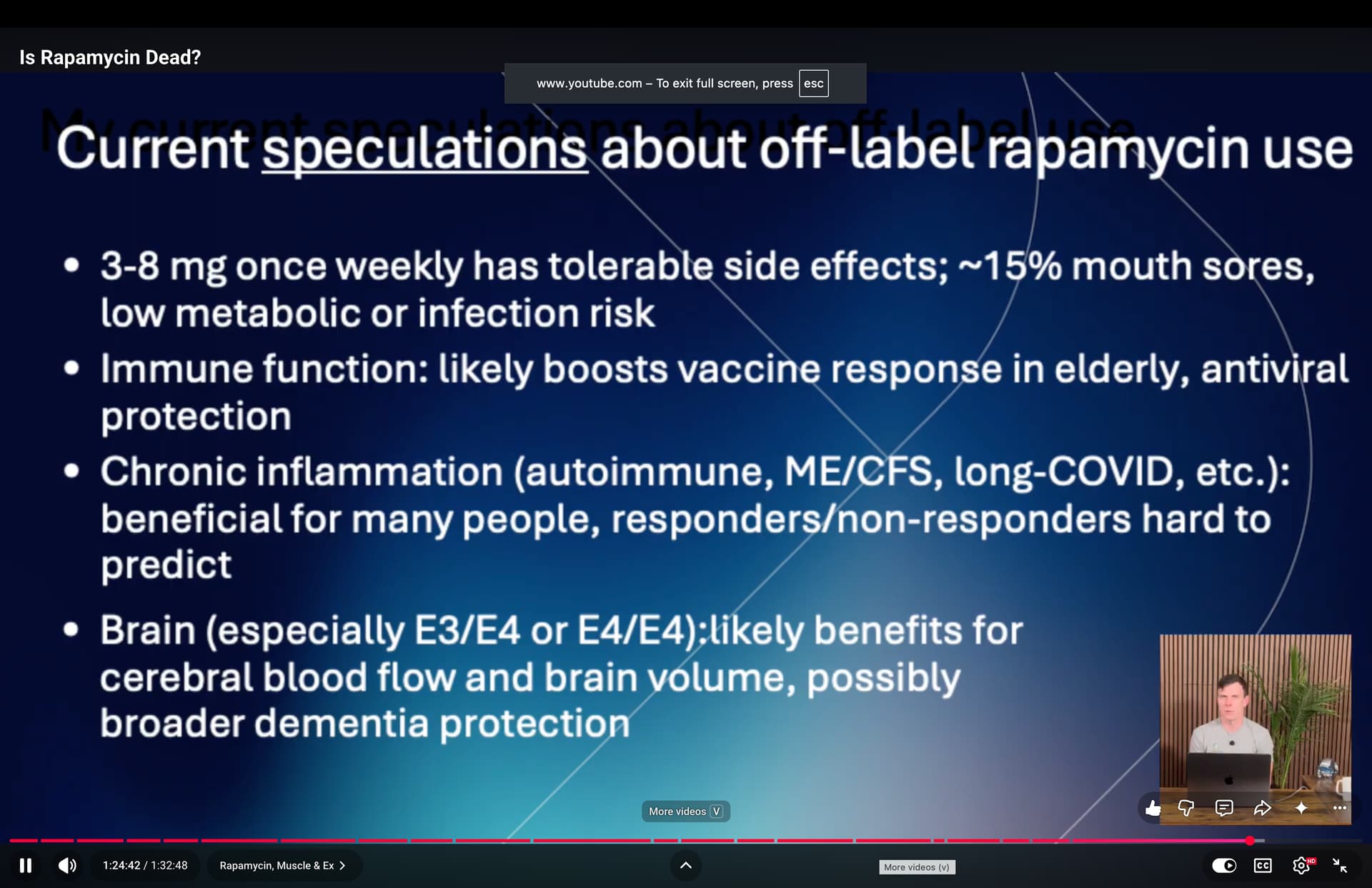
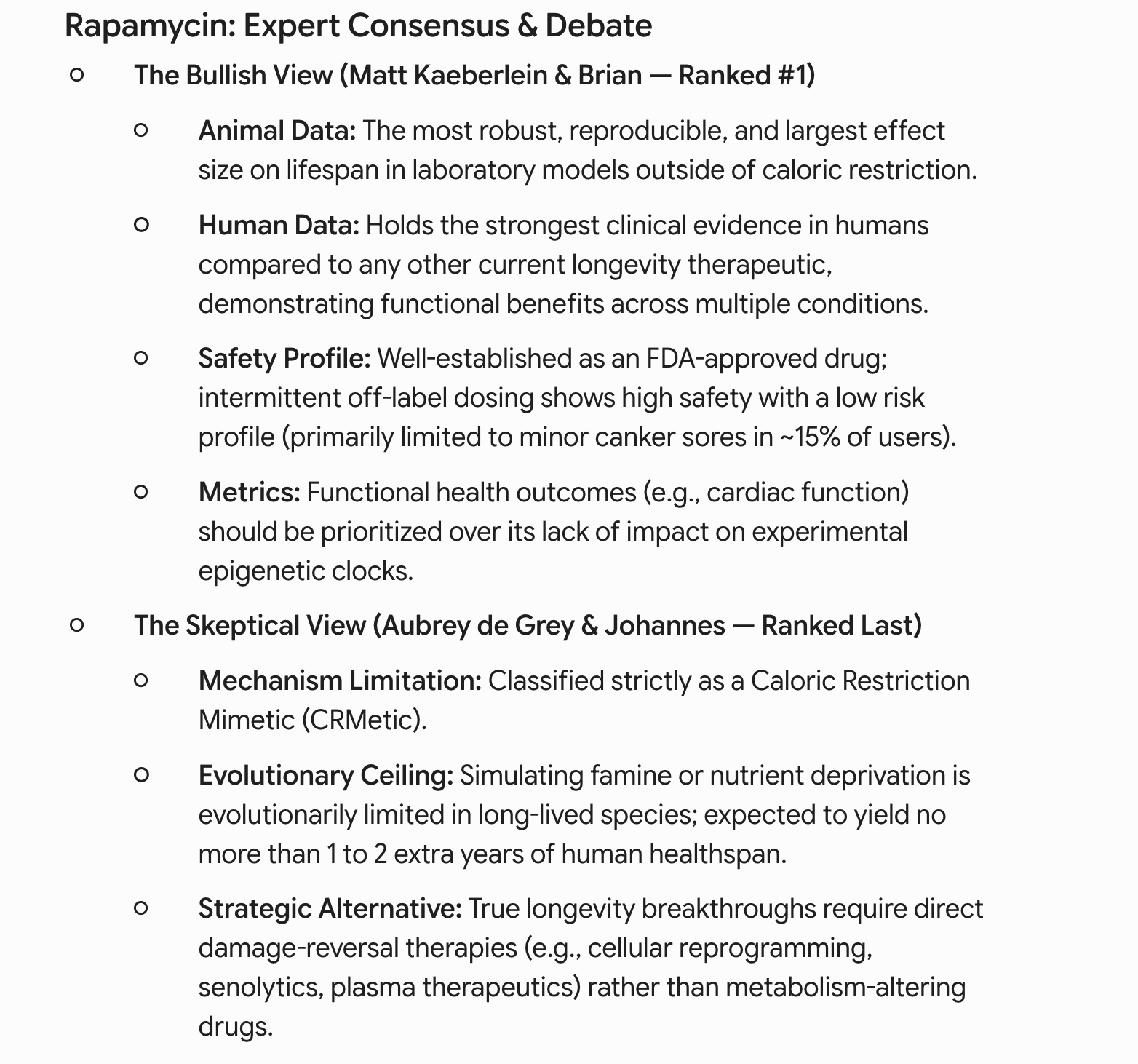
In humans, the translational landscape is heavily limited by a lack of commercial incentive, leaving the field reliant on small, underpowered academic trials and off-label cohorts. The dominant off-label protocol—3 to 8 mg administered once weekly—avoids the severe side effects associated with continuous, high-dose daily immunosuppressive transplant regimens (such as systemic dyslipidemia, insulin resistance, and severe aphthous ulcers). Clinical data from weekly or low-dose daily protocols indicate that mouth sores (15% incidence) remain the only statistically significant adverse event.
Emerging human data from placebo-controlled trials indicate clear therapeutic signals: optimization of cerebral blood flow and volume in APOE4 carriers, increased clinical pregnancy rates in premature ovarian failure, and significant symptom reduction in post-viral chronic fatigue syndrome (ME/CFS). Contradictory data regarding muscle mass loss from short-term trials are heavily misinterpreted; rapamycin blunts transient hypertrophic “newbie gains” due to acute mechanistic target of rapamycin complex 1 (mTORC1) inhibition, yet long-term data over 48 weeks hint at the preservation or augmentation of lean mass in normative aging populations. Ultimately, personalized dosing remains the primary knowledge gap due to a lack of validated, real-time mTORC1 tissue biomarkers.
II. Insight Bullets
- The Longevity Signal-to-Noise Crisis: The rapid monetization of the longevity sector has caused an influx of self-proclaimed influencers who lack formal biochemical training, diluting evidence-based geroscience with unverified health claims.
- Preclinical Lifespan Superiority: Rapamycin stands as the most robust, independently replicated pharmacological intervention in mammalian geroscience, consistently extending rodent lifespan by 10% to 30%.
- Late-Life Intervention Viability: The NIA Interventions Testing Program (ITP) fundamentally disrupted aging dogma by showing that rapamycin extends lifespan when initiated at 20 months of age [Harrison et al., 2009].
- Functional Restoration vs. Age Reversal: Geroprotectors like rapamycin do not structurally reverse chronological age; instead, they selectively restore physiological function and slow kinetic decline in senescent tissues.
- Preclinical Diastolic Functional Rescue: Echocardiographic data show that a 10-week rapamycin regimen in aged mice fully rescues the early-to-atrial (E/A) velocity ratio and reduces left ventricular mass index back to youthful baselines.
- Immune System Rejuvenation: Transient pre-treatment with rapamycin clears immune exhaustion markers and restores the aged murine immune system’s capacity to generate protective antibody titers against lethal influenza strains [Chen et al., 2009].
- Periodontal Disease Reversal: Short-term (8-week) rapamycin exposure in 20-month-old mice reverses gingival inflammation, pathologically remodels the oral microbiome, and induces measurable alveolar bone regrowth around the dentition [An et al., 2020].
- Transient Pulse Lifespan Extension: Delivering rapamycin to middle-aged mice for a brief 12-week window extends remaining life expectancy by over 60%, outlasting the duration of active drug exposure [Bitto et al., 2016].
- The 900-Day Control Rule: High-resolution longevity studies must be audited using the “900-day rule”; if control animals display a median lifespan below 800 days, claims of large percentage lifespan extensions typically reflect unhealthy controls rather than true geroprotection.
- Companion Animal Translational Bridge: Companion dogs living in complex, non-sterile human environments serve as an optimal intermediate translational model to test geroprotectors prior to large-scale human longevity trials.
- Validation in Canine Cohorts: Randomized, double-blind, placebo-controlled veterinary trials of short-term rapamycin in companion dogs confirm a complete absence of serious adverse events alongside echocardiographic improvements in left ventricular diastolic function [Urfer et al., 2017].
- The First Approved Gerotherapeutic: The FDA’s conditional approval of a veterinary rapamycin formulation (Trivia Vet) for feline hypertrophic cardiomyopathy represents the first regulatory approval of a drug targeting age-related biology.
- Regulatory and Financial Impediments in Humans: Because rapamycin is a generic, off-patent small molecule, its clinical translation is bottlenecked by a near-total absence of private capital willing to fund massive phase III longevity trials.
- Daily Transplant Dosing Toxicity: The historical side-effect profile of rapamycin (dyslipidemia, glucose dysregulation, and profound immunosuppression) is tied to continuous high-dose daily regimens used in organ transplant recipients.
- Weekly Dosing Kinetic Profile: The standard human off-label longevity protocol (3 to 8 mg once weekly) exploits the drug’s half-life to intermittently inhibit mTORC1 while allowing the immune system and glucose pathways to recover between doses.
- Human Off-Label Side Effect Reality: Systematic survey data of off-label human users verify that aphthous ulcers (canker-like mouth sores) at a 15% incidence rate represent the only statistically significant side effect of weekly longevity protocols [Saephan et al., 2023].
- Inflammaging and Sterile Inflammation Suppression: Human clinical observations indicate that pulsed rapamycin exposure is highly effective at reducing age-related sterile inflammation (inflammaging) and suppressing autoimmune flares.
- Cerebral Blood Flow Optimization: Small-scale human trials in APOE4 allele carriers demonstrate that low-dose daily rapamycin optimizes cerebral blood flow and induces regional volume retention in the hippocampus and caudate nucleus.
- Ovarian Longevity Signal: Early clinical data in women with premature ovarian failure indicate that low-dose mTORC1 modulation can expand ovarian reserve and significantly elevate clinical pregnancy rates during in vitro fertilization protocols.
- Post-Viral Fatigue (ME/CFS) Efficacy: Retrospective analysis of off-label cohorts reveals that approximately 75% of myalgic encephalomyelitis/chronic fatigue syndrome (ME/CFS) patients experience significant symptom reduction from weekly rapamycin, specifically those with post-viral etiologies.
- The “Newbie Gains” Muscle Conundrum: In sedentary older adults, acute rapamycin administration prior to starting an exercise program blunts initial hypertrophic muscle adaptations (“newbie gains”) because muscle protein synthesis relies on transient mTORC1 activation [[Stanfield et al., 2024, Source Unverified in Live Search]].
- Long-Term Lean Mass Augmentation: Contrastingly, the 48-week human PEARL trial hinted that despite a lack of enteric coating reducing bioavailability, long-term low-dose rapamycin exposure safely preserved or increased total lean mass in aging female cohorts [[AgelessRX, 2023, Source Unverified in Live Search]].
- The Tissue Biomarker Vacuum: Geroscience lacks a validated, accessible biomarker to assess real-time tissue-specific mTORC1 inhibition, forcing clinicians to rely on empirical dosing guess-work rather than precise biological feedback loops.
IV. Actionable Protocol
High Confidence Tier (Level A/B Evidence)
- Late-Life Lifespan and Healthspan Extension (Preclinical Foundation): Initiate rapamycin therapy during middle age (equivalent to a 50–65 year human timeline) to delay multi-organ functional degeneration, optimize diastolic heart dynamics, and maximize remaining healthy life expectancy [Harrison et al., 2009].
- Immune Rejuvenation and Antiviral Enhancement: Utilize pulsed, short-term mTORC1 inhibition (e.g., 6 weeks of exposure prior to immunizations or during high-risk viral seasons) to reverse immunosenescence, clear exhausted T-cell lineages, and safely augment vaccine-induced antibody responses in aging populations [Chen et al., 2009].
Experimental Tier (Level C/D Evidence)
- Pulsed Off-Label Longevity Protocol: For healthy aging optimization, current clinical practice trends center around an empirical dose of 3 to 8 mg administered orally once every 7 days [Saephan et al., 2023]. This single weekly bolus targets transient central mTORC1 down-regulation while preserving the structural integrity and functionality of the essential mTORC2 complex.
- Post-Viral Neuroinflammation and ME/CFS Management: For individuals suffering from documented post-viral chronic fatigue syndrome or long COVID, a trial of weekly low-dose rapamycin may be considered to suppress persistent sterile neuroinflammation and restore systemic energy dynamics.
- APOE4 Neurological Prophylaxis: Carriers of the APOE4 allele displaying early biomarker or structural signs of cognitive decline may consider low-dose daily or pulsed weekly rapamycin to optimize cerebral perfusion and support hippocampal volume retention.
Red Flag Zone (Debunked or Safety Data Absent Claims)
- Continuous High-Dose Daily Longevity Regimens (Debunked/High Risk): Utilizing high-dose daily continuous rapamycin protocols for longevity purposes is strongly contraindicated. Continuous daily exposure disrupts the mTORC2 complex, triggering severe side effects including insulin resistance, hypertriglyceridemia, and pathological immune suppression.
- Acute Resistance Training Co-Administration: Avoid positioning a weekly rapamycin dose immediately adjacent to intense resistance training sessions intended to maximize muscle hypertrophy. Acute mTORC1 inhibition blunts transient anabolic muscle protein synthesis and dampens mechanical training adaptations [[Stanfield et al., 2024, Source Unverified in Live Search]].
- The “Age-Reversal” Marketing Narrative (Debunked): Completely reject commercial entities or influencers claiming that rapamycin structurally reverses systemic biological age or acts as a cure-all miracle drug. Rapamycin is a highly effective, tissue-specific functional optimizer and deceleration molecule, not a biological time machine.